How does a laboratory hydraulic press facilitate the densification of nacre-like structured materials? Optimize Density
Updated 5 months ago
The laboratory hydraulic press facilitates the densification of nacre-like materials by applying unidirectional hot pressing to force the rearrangement of loose platelets and the elimination of internal pores. By delivering high axial pressure—typically around 135 MPa at 120°C—the press transforms loose sedimented deposits into highly aligned, dense structures. This process significantly elevates the ceramic volume fraction from approximately 28 vol% to 67 vol%, establishing the structural integrity required for biomimetic materials.
A laboratory hydraulic press is the critical tool for converting porous, misaligned deposits into high-density composites by providing the mechanical force necessary for platelet rearrangement and pore closure. This transition is fundamental to achieving the high ceramic loading and parallel alignment characteristic of natural nacre.
The Mechanics of Structural Transformation
Forcing Platelet Rearrangement
In the initial stages of synthesis, nacre-like materials often exist as loose deposits with misaligned platelets. The hydraulic press applies a unidirectional load that forces these individual components to overcome internal friction and slide into a more organized, parallel alignment.
Filling Internal Pores
High axial pressure acts directly on the interstitial voids within the material’s "brick-and-mortar" structure. By compressing the material, the press extrudes air and forces the matrix or smaller particles into these gaps, significantly reducing internal porosity.
Achieving High Volume Fraction
The primary objective of this densification is to increase the ceramic volume fraction. By reducing the space between platelets, the hydraulic press can more than double the density of the material, moving it from a sparse 28 vol% to a robust 67 vol%.
The Synergy of Pressure and Temperature
The Advantages of Hot Pressing
While cold pressing can condense powders, the use of 120°C heat during the pressing process softens certain components, making them more compliant. This thermal energy facilitates easier deformation and interlocking of particles under the applied 135 MPa load.
Establishing Geometric Precision
The use of a molding die within the press ensures that the high-pressure environment results in a green body with high geometric precision. This consistency is vital for subsequent processing steps, as it ensures uniform internal density and minimizes the risk of crack defects.
Promoting Contact Intimacy
By increasing the contact area between platelets and the matrix, the hydraulic press establishes the physical foundation necessary for mass diffusion. This "contact intimacy" is a prerequisite for achieving the superior fracture toughness and mechanical strength seen in final nacre-like composites.
Understanding the Trade-offs
Pressure Limits and Material Damage
Applying excessive pressure can lead to the fracturing of the ceramic platelets themselves rather than just their rearrangement. Finding the optimal pressure is a delicate balance; too little pressure leaves the material porous, while too much can compromise the structural integrity of the individual "bricks."
Challenges with Gradient Density
In very thick samples, unidirectional pressing can sometimes result in density gradients, where the material closest to the piston is denser than the material at the bottom of the die. This can lead to warping or internal stresses during the final stages of material fabrication.
Precision vs. Throughput
While a laboratory hydraulic press offers exceptional control over pressure and temperature, it is typically a batch process. Achieving the necessary dwell time for platelet rearrangement means that densification is a slow, methodical procedure that is difficult to scale for mass production.
How to Apply This to Your Research
Making the Right Choice for Your Goal
- If your primary focus is maximizing mechanical strength: Use the full 135 MPa unidirectional hot pressing to ensure the highest possible ceramic volume fraction and parallel alignment.
- If your primary focus is minimizing microscopic defects: Prioritize precise pressure control and a slow application of load to allow platelets to rearrange without fracturing.
- If your primary focus is achieving high geometric precision: Utilize a high-tonnage press with a precision-machined molding die to ensure the green body meets exact dimensional tolerances.
The laboratory hydraulic press remains an indispensable tool for nacre-like material synthesis because it provides the precise mechanical environment required to turn a fragile collection of particles into a high-performance, dense composite.
Summary Table:
| Feature | Action/Mechanism | Impact on Nacre-like Materials |
|---|---|---|
| Pressing Method | Unidirectional Hot Pressing | Forces parallel platelet rearrangement |
| Pressure Level | Typically 135 MPa | Eliminates internal pores and voids |
| Temperature | 120°C (Hot Pressing) | Softens components for better interlocking |
| Volume Fraction | 28 vol% to 67 vol% | Significantly increases ceramic loading |
| Final Result | Green Body Formation | Ensures high geometric precision and toughness |
Elevate Your Material Synthesis with Precision Compaction
Achieving the perfect "brick-and-mortar" structure in biomimetic materials requires precision, power, and reliability. At our facility, we provide complete laboratory sample preparation solutions tailored for material science. We specialize in advanced powder processing and compaction equipment designed to meet the rigorous demands of nacre-like material research.
Our extensive product line includes:
- Hydraulic Presses: A full spectrum featuring Cold/Warm Isostatic Presses (CIP/WIP), standard lab presses, XRF pellet presses, and vacuum hot presses for superior densification.
- Powder Processing: High-performance crushers (jaw/roll), liquid nitrogen cryogenic grinders, and various mills (planetary ball, jet, sand, disc, rotor).
- Sizing & Mixing: Vibratory/air-jet sieve shakers, powder mixers, and defoaming mixers to ensure uniform sample consistency.
Whether you are scaling up ceramic volume fractions or minimizing microscopic defects, our equipment delivers the control you need. Contact us today to find your solution and let our experts help you achieve superior fracture toughness and mechanical strength in your next composite project.
References
- Sebastian Behr, Gerold A. Schneider. Large-scale parallel alignment of platelet-shaped particles through gravitational sedimentation. DOI: 10.1038/srep09984
Mentioned Products
- 6-Ton Small Single-Punch Tablet Press — Laboratory Powder & Granule Tableting Equipment / Tablet Forming Machine
- 5 Ton Single Punch Tablet Press Laboratory Small Batch Production
- Manual Tablet Press with Dual Scale Pressure Gauge for Pharmaceutical Food Chemical Laboratory Sample Preparation
- 6 Ton Variable Frequency Single Punch Tablet Press
- High Speed Swing Type Laboratory Pulverizer for Fine Powder Grinding and Sample Preparation
People Also Ask
- What is the function of a laboratory press in Cr-Ti alloy evaluation? Quantify Fracture Stress & Strength
- What is the function of a laboratory press in assessing the hydrophobic performance of modified vermiculite fillers?
- What is the core function of a laboratory press in the forming of ceramic filter element green bodies? Maximize Density.
- What is the function of a laboratory press in the preparation of ceramic feed rods? Master Density and Precision
- Why is vacuum sealing and flexible packaging necessary for Aluminum Titanate powders during CIP? Ensure Peak Density

Tech Team · PowderPreparation
Last updated on May 14, 2026
Related Products
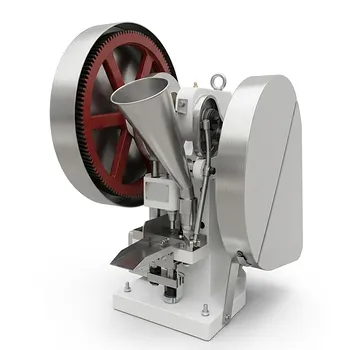
6-Ton Small Single-Punch Tablet Press — Laboratory Powder & Granule Tableting Equipment / Tablet Forming Machine
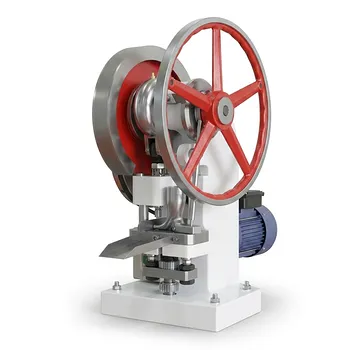
5 Ton Single Punch Tablet Press Laboratory Small Batch Production
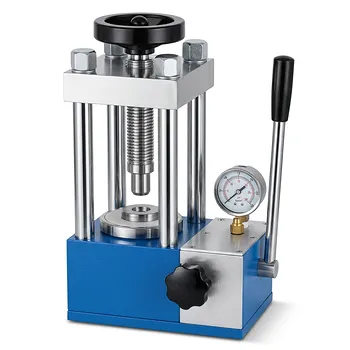
Manual Tablet Press with Dual Scale Pressure Gauge for Pharmaceutical Food Chemical Laboratory Sample Preparation
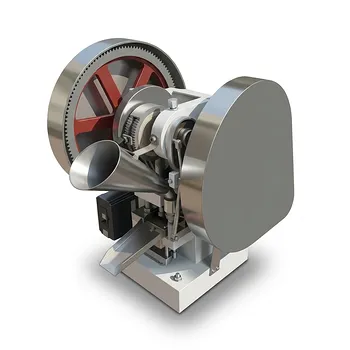
6 Ton Variable Frequency Single Punch Tablet Press
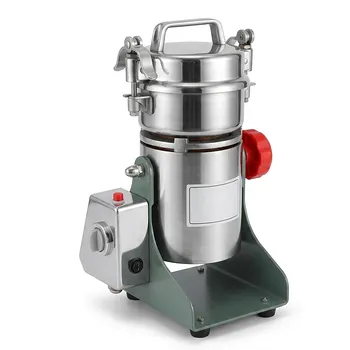
High Speed Swing Type Laboratory Pulverizer for Fine Powder Grinding and Sample Preparation