How does a laboratory hydraulic press assist in sample preparation for determining the high-temperature reducibility of quartz?
Updated 4 months ago
The laboratory hydraulic press is essential for standardizing the physical state of reactants before high-temperature testing.
By compacting finely ground quartz powder and carbon reducing agents into standardized pellets or briquettes, the press ensures that the internal components are uniformly distributed and maintain tight contact. This precise control over pressure eliminates physical packing variables that would otherwise interfere with kinetic experiments, ensuring that measured reduction rates accurately reflect the intrinsic chemical properties of the quartz.
A laboratory hydraulic press eliminates physical packing variables by compacting quartz and carbon into standardized pellets. This ensures that observed reaction rates reflect the intrinsic chemical reducibility of the material rather than variations in sample density or contact surface area.
Achieving Kinetic Accuracy Through Physical Standardization
Eliminating Packing Variables
In high-temperature reducibility studies, the physical arrangement of particles can significantly alter the observed reaction speed. A hydraulic press removes these inconsistencies by applying constant and uniform pressure to every sample. This standardization ensures that any differences in data between tests are the result of the material’s chemistry, not how tightly the powder was packed by hand.
Maximizing Reactant Contact
The reduction of quartz by carbon requires intimate contact between the solid particles for the chemical reaction to proceed efficiently. The high-pressure output of the press forces these particles together, excluding air and minimizing voids. This creates a dense structure that facilitates the steady movement of reactants at a molecular level during the heating process.
Ensuring Internal Uniformity
Precise pressure control allows for the creation of pellets with a uniform internal density. This prevents "hot spots" or uneven reaction zones where the carbon might react faster in loosely packed areas. By achieving a homogenous mixture through compression, researchers can establish a reliable baseline for kinetic modeling.
Structural Integrity and Thermal Stability
Enhancing Green Body Strength
The "green body" (the compacted pellet before heating) must be strong enough to be handled and placed into a high-temperature furnace without crumbling. The hydraulic press increases the packing density of the powder particles, providing the structural integrity needed to withstand the mechanical stresses of the preparation phase.
Controlling Porosity and Heat Transfer
Porosity directly affects how heat is conducted through the sample during high-temperature testing. By using a hydraulic press to achieve a consistent thickness and density, researchers can ensure that heat transfer is predictable and repeatable. This eliminates random interference caused by air pockets, which can act as insulators and skew the results of the reduction test.
Understanding the Trade-offs
Impact of Excessive Pressure
While high pressure is necessary for density, exceeding optimal limits can lead to internal stresses that cause the pellet to crack or laminate. If the pressure is too high, the pellet may fail during the expansion phases of high-temperature heating, leading to inaccurate surface area measurements.
Pressure and Gas Diffusion
In some reduction reactions, the escape of gaseous products (like CO or CO2) is a critical part of the process. If a pellet is pressed to an extreme density, it may inhibit the diffusion of these gases, artificially slowing the measured reduction rate. Researchers must find the "sweet spot" where contact is maximized without completely sealing off the sample's internal porosity.
How to Apply This to Your Project
When preparing quartz samples for reducibility testing, your choice of pressing parameters should align with your specific experimental goals.
- If your primary focus is kinetic precision: Use a hydraulic press with a digital pressure gauge to ensure every pellet is compacted at the exact same megapascal (MPa) setting to isolate chemical variables.
- If your primary focus is material comparison: Maintain a strict ratio of quartz to binder (or reducing agent) and use the press to create pellets with identical dimensions to ensure a fair comparison of different quartz sources.
- If your primary focus is high-temperature stability: Gradually increase the pressure during the molding phase to maximize particle interlocking and prevent the pellet from disintegrating during the thermal ramp-up.
Standardizing the physical state of your quartz samples is the only way to ensure your high-temperature data is both accurate and reproducible.
Summary Table:
| Key Benefit | Impact on High-Temperature Testing |
|---|---|
| Physical Standardization | Eliminates packing variables for consistent kinetic modeling. |
| Reactant Contact | Maximizes contact between quartz and carbon for efficient reduction. |
| Density Control | Ensures uniform heat transfer and prevents localized "hot spots." |
| Green Body Strength | Improves structural integrity for handling and thermal stability. |
| Porosity Management | Balances heat conduction with necessary gas diffusion. |
Elevate Your Material Research with Precision Sample Prep
Achieving accurate high-temperature reducibility data starts with flawless sample preparation. At [Company Name], we provide complete laboratory sample preparation solutions tailored for material science.
Whether you need to process raw quartz with our jaw crushers and planetary ball mills or require precise compaction with our advanced hydraulic presses, we have the expertise to support your workflow. Our extensive line includes:
- Hydraulic Presses: Cold/Warm Isostatic Presses (CIP/WIP), XRF pellet presses, and vacuum hot presses.
- Milling & Grinding: Jet mills, cryogenic grinders, and high-energy ball mills.
- Sieving & Mixing: Sieve shakers and high-efficiency powder/defoaming mixers.
Ready to optimize your lab’s efficiency and data reproducibility?
Contact our technical experts today to find the perfect equipment for your material processing needs.
References
- Jaroslav Legemza, Jaroslav Briančin. New Approach in Research of Quartzes and Quartzites for Ferroalloys and Silicon Production. DOI: 10.3390/met11040670
Mentioned Products
- Ordinary Type Rotary Tablet Press for Pharmaceutical Chemical Food Electronic Industries
- Hydraulic Double Shaft Disperser for High Viscosity Liquid Mixing and Dispersion
- Enhanced 9 Punch Rotary Tablet Press for Powder Compaction
- 6 Ton Variable Frequency Single Punch Tablet Press
- Manual Tablet Press with Dual Scale Pressure Gauge for Pharmaceutical Food Chemical Laboratory Sample Preparation
People Also Ask
- Why is a laboratory hydraulic press required for FT-IR KBr pellets? Achieve Precise Sample Clarity for ZrC–SiC Analysis
- Why is a laboratory hydraulic press required to compress oyster shell powder before XRF analysis? Improve Data Accuracy.
- Why is vacuum sealing and flexible packaging necessary for Aluminum Titanate powders during CIP? Ensure Peak Density
- What are the advantages of using hardened steel molds and graphite spray for titanium powder? Ensure structural integrity
- What role does a high-strength stainless steel mold kit play in the uniaxial die compaction process? Ensuring Precision

Tech Team · PowderPreparation
Last updated on May 14, 2026
Related Products
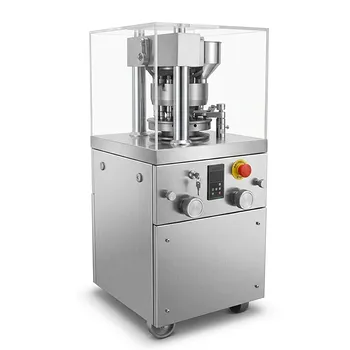
Ordinary Type Rotary Tablet Press for Pharmaceutical Chemical Food Electronic Industries
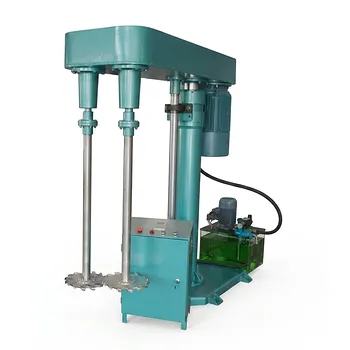
Hydraulic Double Shaft Disperser for High Viscosity Liquid Mixing and Dispersion
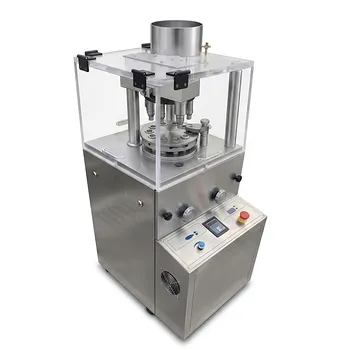
Enhanced 9 Punch Rotary Tablet Press for Powder Compaction
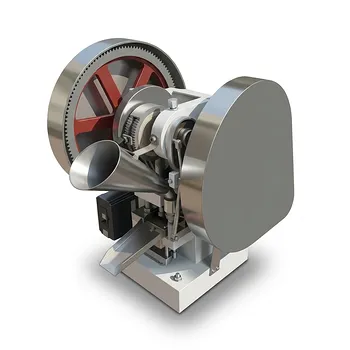
6 Ton Variable Frequency Single Punch Tablet Press
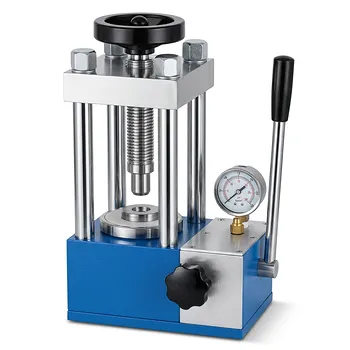
Manual Tablet Press with Dual Scale Pressure Gauge for Pharmaceutical Food Chemical Laboratory Sample Preparation
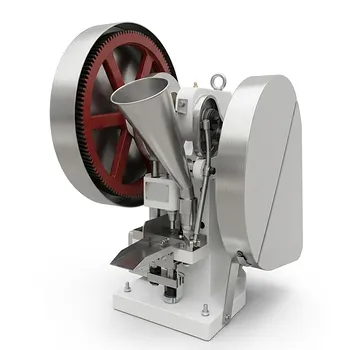
6-Ton Small Single-Punch Tablet Press — Laboratory Powder & Granule Tableting Equipment / Tablet Forming Machine