How does a laboratory hydraulic plunger press simulate HPGR technology? Master Industrial Grinding Scale-Up
Updated 4 months ago
The laboratory hydraulic plunger press serves as a precise proxy for High-Pressure Grinding Roll (HPGR) technology by replicating the "confined bed comminution" mechanism. By applying pressures up to 2500 bar to a material bed within a closed chamber, the press generates the intense inter-particle stress required for material breakage. This environment allows researchers to study reduction ratios, particle shape variations, and packing density in a controlled, bench-top setting.
The core value of a hydraulic plunger press lies in its ability to isolate the physics of high-pressure compression from the mechanical complexity of rotating rolls. By simulating the effective stress environment of industrial equipment, it provides a cost-effective way to predict material behavior, breakage patterns, and final product stability.
Replicating the Physics of Industrial Grinding
The Mechanism of Inter-Particle Stress
Industrial HPGRs work by forcing material between two counter-rotating rolls, creating a compressed "cake." The laboratory press simulates this by using a plunger and a closed chamber to apply vertical force to a static bed of material.
This process focuses on particle-on-particle breakage rather than machine-on-particle impact. The resulting inter-particle stress is what leads to the high reduction ratios characteristic of HPGR technology.
Reaching Extreme Pressure Thresholds
To accurately mirror industrial performance, these presses must reach significantly high pressures, often reaching 2500 bar (250 MPa). This intensity is necessary to overcome the compressive strength of hard ores or specialized proppants.
By achieving these levels, the lab press can simulate the effective stress environment found in deep-earth applications or heavy industrial milling. This allows for the observation of crushing behavior at specific, repeatable pressure points.
Analyzing Material Transformation and Stability
Influencing Particle Morphology and Density
The high-pressure environment within the plunger press significantly alters the physical characteristics of the processed material. It forces a change in particle shape and increases the packing density of the resulting "cake" or tablet.
In pharmaceutical and material science applications, this simulation is vital for studying molecular dynamics. Researchers use the press to understand how high-pressure compression affects the relaxation behavior and long-term storage stability of amorphous materials.
Predictive Modeling for Industrial Scaling
Because the press allows for staged loading and pressure maintenance, engineers can map the exact point of material failure. This data is critical for scaling up to industrial HPGRs, as it defines the energy requirements for specific reduction goals.
The ability to control the rate of compression helps in identifying the optimal pressure for maximum throughput. This prevents over-grinding and reduces energy waste in large-scale operations.
Understanding the Trade-offs and Limitations
Static vs. Dynamic Environments
The primary limitation of a plunger press is that it is a static simulation. While it perfectly replicates the pressure of an HPGR, it does not account for the shear forces and material flow dynamics present in rotating rolls.
Edge Effects and Friction
In a laboratory closed chamber, wall friction can influence the distribution of stress within the material bed. This "edge effect" can lead to slight variations in density that might not occur in the continuous, open-sided discharge of an industrial HPGR.
Lack of Continuous Throughput
A plunger press is a batch process tool. It cannot simulate the "bypass" effect where some material might escape the highest pressure zone, a common occurrence in full-scale roll grinding that affects the final particle size distribution.
How to Apply Lab Results to Your Project
Making the Right Choice for Your Goal
To get the most value from laboratory hydraulic press testing, you must align the testing parameters with your ultimate industrial objectives.
- If your primary focus is energy efficiency in mining: Use the press to determine the minimum pressure required to achieve the desired reduction ratio, reducing the power load on future industrial HPGRs.
- If your primary focus is product shelf-life (e.g., Pharmaceuticals): Utilize staged loading to study how packing density changes influence the molecular stability and moisture resistance of the final tablet.
- If your primary focus is material durability (e.g., Oil & Gas Proppants): Use the crushing cell to simulate the exact effective stress of deep-well environments to verify that the material will not prematurely fail under geological pressure.
By accurately simulating the high-pressure environment of industrial rolls, the laboratory plunger press empowers you to make data-driven decisions that minimize risk and maximize process efficiency.
Summary Table:
| Feature | Lab Plunger Press Simulation | Industrial HPGR Equivalent |
|---|---|---|
| Mechanism | Confined bed comminution in a closed chamber | Continuous bed between counter-rotating rolls |
| Force Application | Static vertical compression | Dynamic roll pressure + moderate shear forces |
| Pressure Capability | Precise control up to 2500 bar (250 MPa) | Extreme industrial-scale crushing pressure |
| Primary Output | Predictive data on breakage & packing density | High-throughput material reduction (Grinding cake) |
| Best Use Case | Batch testing & energy requirement modeling | Continuous large-scale mining & mineral processing |
Optimize Your Material Processing with Precision Engineering
Are you looking to bridge the gap between laboratory research and industrial-scale production? At KinTek, we provide complete laboratory sample preparation solutions tailored for material science. We specialize in high-performance powder processing and compaction equipment designed to deliver repeatable, data-driven results.
Our extensive product line includes:
- Advanced Hydraulic Presses: A full spectrum including Cold/Warm Isostatic Presses (CIP/WIP), standard lab presses, XRF pellet presses, and vacuum hot presses.
- Milling & Grinding: Planetary ball mills, jet mills, and liquid nitrogen cryogenic grinders for achieving exact particle sizes.
- Preparation Tools: High-precision crushers (jaw/roll), sieve shakers (vibratory/air-jet), and specialized powder mixers.
Whether you are simulating HPGR technology or developing new material composites, our equipment ensures you have the accuracy needed to minimize risk and maximize efficiency.
Contact our experts today to find the perfect solution for your lab!
References
- László Tamás, Ádám Rácz. Material Bed Compression Experiments and the Examination of the Bulk Density of the Product. DOI: 10.33030/geosciences.2022.15.110
Mentioned Products
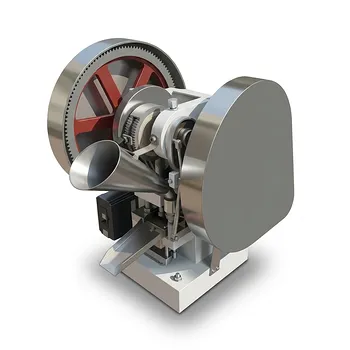
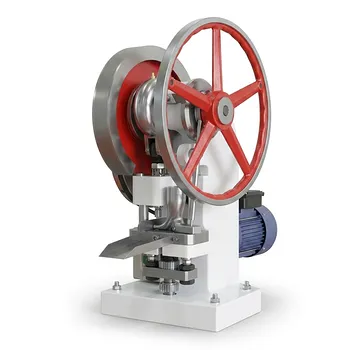
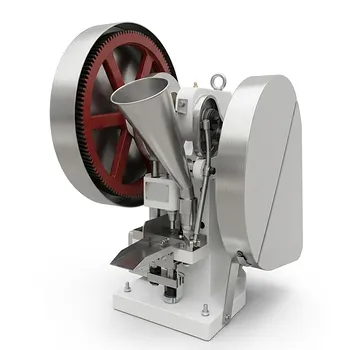
- 6 Ton Variable Frequency Single Punch Tablet Press
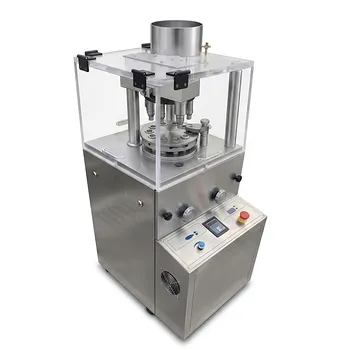
- Enhanced 9 Punch Rotary Tablet Press for Powder Compaction
- 5 Ton Single Punch Tablet Press Laboratory Small Batch Production
- 6-Ton Small Single-Punch Tablet Press — Laboratory Powder & Granule Tableting Equipment / Tablet Forming Machine
People Also Ask
- Why is a laboratory hydraulic press required for FT-IR KBr pellets? Achieve Precise Sample Clarity for ZrC–SiC Analysis
- Why is vacuum sealing and flexible packaging necessary for Aluminum Titanate powders during CIP? Ensure Peak Density
- What are the advantages of using hardened steel molds and graphite spray for titanium powder? Ensure structural integrity
- Why is a laboratory hydraulic press required to compress oyster shell powder before XRF analysis? Improve Data Accuracy.
- What role does a high-strength stainless steel mold kit play in the uniaxial die compaction process? Ensuring Precision

Tech Team · PowderPreparation
Last updated on Jun 03, 2026