How does a vacuum hot press ensure bonding of thin-sheet materials? Achieve High-Strength Solid-State Joints
Updated 4 months ago
Bonding thin-sheet materials through diffusion requires a delicate balance of environment and force. A high-precision vacuum hot press achieves this by applying simultaneous heat and uniaxial pressure within a controlled vacuum to force atomic migration across material interfaces. This solid-state process creates metallurgical bonds without melting the base metals, preserving the precise geometry and mechanical integrity of thin foils and complex laminates.
A vacuum hot press ensures high-quality bonding by eliminating surface oxidation and providing the precise thermal-mechanical energy needed for solid-state atomic diffusion. This method allows for the creation of high-strength, low-distortion joints between similar or dissimilar materials that are often impossible to join through traditional fusion welding.
The Foundation of the Vacuum Environment
Eliminating Interfacial Contamination
Thin-sheet materials, particularly active alloys like titanium or aluminum, oxidize almost instantly when exposed to air at high temperatures. The vacuum environment removes oxygen and contaminants, ensuring that the surfaces of the stacked foils remain chemically clean.
This clean interface is critical because even a microscopic oxide layer can act as a barrier, preventing atoms from moving across the boundary and resulting in a weak or failed bond.
Enabling High-Temperature Stability
The vacuum also allows the equipment to reach the high temperatures necessary for diffusion—often near the material's melting point—without risking combustion or degradation. By operating in a vacuum or an inert argon atmosphere, the press maintains the chemical purity of the entire assembly throughout the long heating cycles required for bonding.
Precision Pressure and Atomic Migration
Uniaxial Pressure for Intimate Contact
Diffusion bonding relies on the two surfaces being in "intimate contact" at the atomic level. The hot press applies precise axial pressure (often reaching 20 MPa or more) to the stacked layers, physically crushing surface asperities (microscopic bumps).
This mechanical force brings the atoms of the two sheets close enough together that their electron clouds can interact, initiating the bonding process.
Facilitating Solid-State Diffusion
Because the vacuum hot press provides constant temperature and pressure, it provides the activation energy needed for atoms to "jump" across the interface. This is known as solid-state diffusion, where the materials join without ever entering a liquid phase.
By avoiding melting, the equipment prevents the formation of brittle intermetallic phases and ensures the bond line eventually disappears, leaving a microstructure that matches the parent material.
Microstructure and Thermal Control
Managing Thermal Expansion Mismatch
When joining dissimilar materials, such as ceramics and metal alloys, differences in thermal expansion can cause the parts to crack as they cool. The high-precision controls of a vacuum hot press allow for specific cooling rates that mitigate these internal stresses.
The equipment effectively "forces" a bond that can withstand the mechanical and thermal loads that would typically tear apart less precise joints.
Preserving Base Material Properties
Traditional welding creates a large "heat-affected zone" that can weaken thin sheets. A vacuum hot press allows for precise control of the microstructure, ensuring that the mechanical properties of the finished component approach those of the original parent materials.
This is particularly vital for complex layered composite components and reinforcement fibers, where maintaining the alignment and integrity of the internal structure is the primary goal.
Understanding the Trade-offs
Cycle Time and Throughput
The primary downside of vacuum hot pressing is the long cycle time. Because diffusion is a time-dependent process occurring in a vacuum, a single batch can take several hours to heat, soak, and cool, making it less suitable for high-volume, low-cost commodity parts.
Equipment Cost and Complexity
Maintaining a high-vacuum, high-temperature, and high-pressure environment requires sophisticated instrumentation and seals. The capital investment for this equipment is significantly higher than for atmospheric furnaces or standard induction welding setups.
Applying This Technology to Your Project
When determining if a vacuum hot press is the right solution for your bonding needs, consider the specific requirements of your materials and the final application of the component.
- If your primary focus is joining reactive or dissimilar metals: Utilize the vacuum environment to prevent oxidation and the precise pressure controls to manage differing thermal expansion rates.
- If your primary focus is maintaining tight geometric tolerances: Leverage the solid-state nature of the process to avoid the distortion and "splatter" typically associated with fusion welding.
- If your primary focus is maximum joint strength in thin foils: Rely on the long-duration, high-pressure cycles to ensure complete atomic diffusion across the entire surface area of the stack.
By mastering the intersection of heat, vacuum, and pressure, the high-precision vacuum hot press transforms individual thin sheets into a single, high-performance monolithic structure.
Summary Table:
| Key Feature | Mechanism in Diffusion Bonding | Primary Benefit |
|---|---|---|
| High Vacuum | Eliminates oxygen and surface contaminants | Prevents oxidation; ensures chemically clean interfaces |
| Uniaxial Pressure | Physically crushes surface asperities | Creates intimate atomic contact between layers |
| Thermal Precision | Provides energy for atomic migration | Facilitates bonding without melting the base metal |
| Controlled Cooling | Mitigates thermal expansion mismatch | Prevents cracking when joining dissimilar materials |
| Solid-State Process | Maintains mechanical integrity | Preserves microstructure and avoids distortion |
Elevate Your Material Research with Precision Bonding Solutions
Achieving perfect metallurgical bonds in thin-sheet materials requires the right balance of force and environment. [Your Brand Name] provides complete laboratory sample preparation solutions for material science, specializing in advanced powder processing and compaction equipment.
Our extensive manufacturing line includes:
- Advanced Hot Presses: Vacuum hot presses, standard lab presses, and XRF pellet presses.
- Isostatic Pressing: Cold/Warm Isostatic Presses (CIP/WIP) for uniform density.
- Milling & Grinding: Planetary ball mills, jet mills, and cryogenic grinders.
- Mixing & Sizing: Powder mixers, defoaming mixers, and vibratory sieve shakers.
Whether you are developing complex layered composites or joining reactive alloys, our high-precision equipment ensures the mechanical integrity and chemical purity your project demands.
Ready to optimize your diffusion bonding process? Contact our experts today for a tailored equipment consultation!
References
- Km. Pooja, Pallavi Chaudhary. Metal matrix composites: revolutionary materials for shaping the future. DOI: 10.1007/s43939-025-00226-6
Mentioned Products
- Dual Cup Vacuum Centrifugal Mixer Planetary Paste Defoaming Machine Industrial Material Processor
- 非介入式材料均质机真空脱泡行星搅拌高粘度混合设备
- High Speed Vacuum Planetary Centrifugal Mixer and Defoamer for Industrial Paste Processing
- High Efficiency Vacuum Planetary Centrifugal Mixer and Defoaming Machine for Industrial Material Research and Precise Laboratory Powder Dispersion
- Industrial Vacuum Kneader for High-Viscosity Silicone, Rubber, and Compound Mixing
People Also Ask
- Why is a vacuum centrifugal defoaming mixer required to process ceramic slurry before 3D printing? Ensure High Density
- Why is a vacuum centrifugal de-foaming mixer required before DIW of PZT ink? Achieve Dense, Bubble-Free Piezo Ceramics
- What are the advantages of centrifugal defoaming mixers for recycled slurries? Achieve Superior Electrode Quality
- Why is centrifugal defoaming necessary for magnetic composite inks? Ensure Void-Free Extrusion for 3D Printing
- Why is vacuum defoaming necessary for PDMS mixtures before microwave irradiation curing? Key to Structural Integrity

Tech Team · PowderPreparation
Last updated on Jun 03, 2026
Related Products
Dual Cup Vacuum Centrifugal Mixer Planetary Paste Defoaming Machine Industrial Material Processor
非介入式材料均质机真空脱泡行星搅拌高粘度混合设备
High Speed Vacuum Planetary Centrifugal Mixer and Defoamer for Industrial Paste Processing
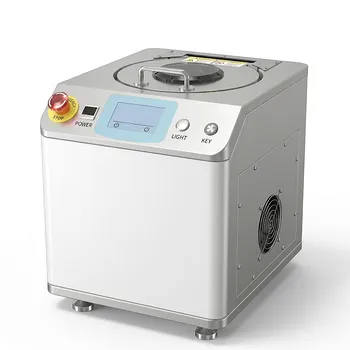
High Efficiency Vacuum Planetary Centrifugal Mixer and Defoaming Machine for Industrial Material Research and Precise Laboratory Powder Dispersion
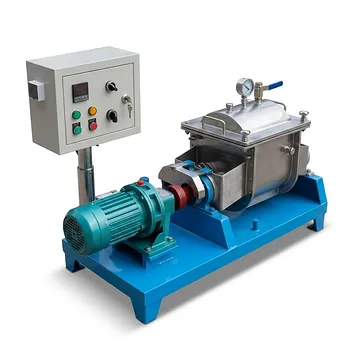
Industrial Vacuum Kneader for High-Viscosity Silicone, Rubber, and Compound Mixing
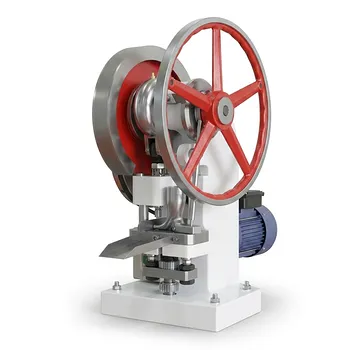
5 Ton Single Punch Tablet Press Laboratory Small Batch Production
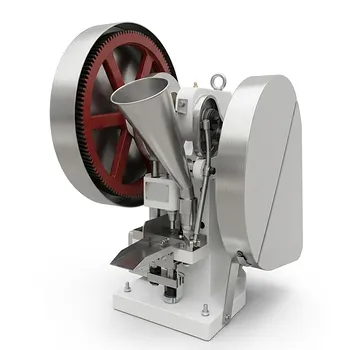
6-Ton Small Single-Punch Tablet Press — Laboratory Powder & Granule Tableting Equipment / Tablet Forming Machine
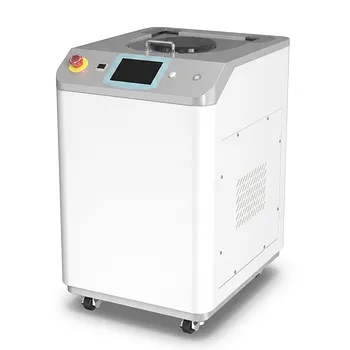
High Viscosity Planetary Centrifugal Mixing and Vacuum Defoaming Machine for Laboratory Material Preparation
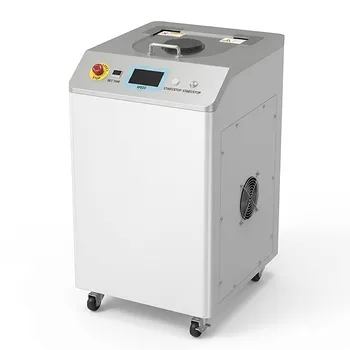
High Viscosity Planetary Centrifugal Vacuum Mixer for Material Defoaming and Uniform Mixing
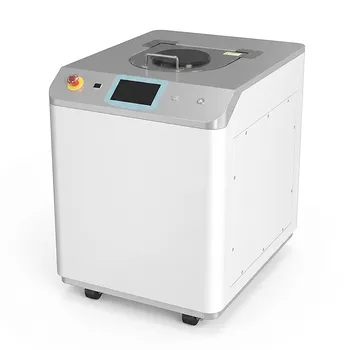
Industrial Planetary Centrifugal Vacuum Defoaming Mixer for High Viscosity Paste and Advanced Material Science
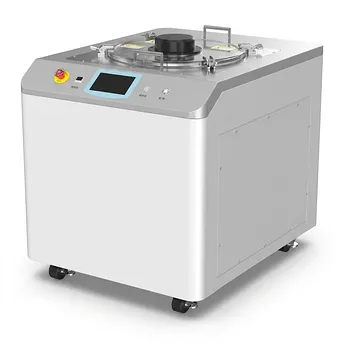
Industrial Planetary Centrifugal Vacuum Defoaming Mixer for High Viscosity Paste and Powder Homogenization
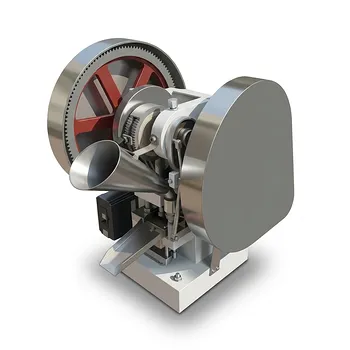
6 Ton Variable Frequency Single Punch Tablet Press