How does a Cold Isostatic Press (CIP) overcome inter-particle friction? Achieve Uniform Density in Advanced Ceramics
Updated 5 months ago
Cold Isostatic Pressing (CIP) overcomes inter-particle friction by applying high-magnitude, isotropic pressure from all directions simultaneously. This uniform pressure, typically ranging from 100 MPa to 400 MPa, is transmitted through a hydraulic medium to a vacuum-sealed flexible mold containing the dry Aluminum Titanate powder. By bypassing the rigid wall friction found in traditional pressing, the process forces particles to physically rearrange through rolling, twisting, and interlocking until they reach 60-65% of their theoretical density.
CIP eliminates the internal friction and pressure gradients common in uniaxial pressing by using an omnidirectional "fluid-like" pressure application. This ensures that Aluminum Titanate particles consolidate uniformly, resulting in a high-density green body with minimal structural defects and no need for solvents.
The Mechanics of Isotropic Pressure
Eliminating Mold Wall Friction
In standard dry pressing, friction between the powder and the rigid mold walls creates significant pressure gradients, leading to uneven density. CIP utilizes a liquid medium to apply balanced, ultra-high pressure across the entire surface of a flexible container. This method effectively removes the drag caused by mold walls, allowing the pressure to penetrate deep into the center of the Aluminum Titanate mass.
Facilitating Particle Rearrangement
As the isotropic pressure increases, it overcomes the static friction that holds dry particles in a loose state. The particles are forced to move relative to one another through rolling and twisting mechanisms. This physical shifting allows the particles to find a more compact orientation, filling internal voids and increasing the overall density of the green body.
Achieving Mechanical Interlocking
Once the particles have rearranged, the continued application of high pressure (up to 400 MPa) drives them into an interlocked state. This mechanical bonding occurs without the use of liquid binders or solvents. The resulting preform is structurally stable enough for subsequent processes like thermal degassing or extrusion molding.
Optimizing the Powder Environment
The Role of Vacuum-Sealed Tooling
For Aluminum Titanate powders to consolidate effectively, they must be housed in a vacuum-sealed flexible container. The vacuum removes air that could otherwise act as a cushion between particles, resisting the compaction force. The flexibility of the mold ensures that the hydraulic pressure is transmitted directly and equally to the powder mass from every angle.
Importance of Initial Powder Flowability
The ability of CIP to overcome friction is highly dependent on the initial state of the powder. Quantitative assessments show that a cohesion index between 11 and 14 indicates excellent free-flowing characteristics. Powders within this range fill the flexible molds more uniformly, which minimizes the formation of density gradients before the pressing even begins.
Elimination of Internal Pores
By applying pressure omnidirectionally, CIP effectively collapses internal pores that would typically be shielded by "bridging" in uniaxial pressing. This uniform compaction significantly improves the density uniformity of the composite ceramic. This uniformity is critical for preventing the deformation and cracking that often occurs during the sintering phase.
Understanding the Trade-offs
Geometrical Limitations and Precision
While CIP is superior for achieving uniform density, it offers less dimensional precision than rigid-die pressing. Because the flexible mold deforms under pressure, the final "green" shape may require additional machining to reach exact tolerances. It is best suited for creating near-net-shape preforms rather than finished, high-precision components.
Cycle Time and Throughput
The CIP process is generally slower than uniaxial pressing due to the time required for sealing the flexible molds and the pressurization/depressurization cycles of the hydraulic chamber. This makes it a premium process reserved for technical ceramics like Aluminum Titanate where structural integrity is more critical than high-volume throughput.
Implementing CIP for Aluminum Titanate Production
To maximize the benefits of Cold Isostatic Pressing in your manufacturing workflow, consider the following strategic applications:
- If your primary focus is maximizing green density: Ensure the powder is vacuum-sealed at pressures exceeding 200 MPa to drive particle interlocking to at least 60% of theoretical density.
- If your primary focus is preventing sintering cracks: Prioritize the use of granulated powders with a cohesion index of 11-14 to ensure uniform mold filling and eliminate initial density gradients.
- If your primary focus is structural stability for secondary forming: Use CIP as a pre-densification step (at 400 MPa) to create stable preforms suitable for subsequent extrusion or degassing.
By leveraging the isotropic nature of the pressure, you can transform dry Aluminum Titanate powder into a high-performance ceramic preform that maintains its integrity through the most demanding thermal cycles.
Summary Table:
| Feature | Mechanism of Action | Impact on Material Quality |
|---|---|---|
| Isotropic Pressure | Applies 100-400 MPa from all directions | Eliminates pressure gradients and mold wall friction |
| Particle Shifting | Forces rolling, twisting, and interlocking | Reaches 60-65% theoretical density without binders |
| Vacuum Tooling | Removes air cushioning between particles | Prevents internal pores and structural bridging |
| Flow Optimization | Uses cohesion index (11-14) powders | Minimizes density gradients during initial filling |
Elevate Your Material Research with Precision Compaction
At [Company Name], we provide complete laboratory sample preparation solutions tailored for material science. Our expertise in powder processing ensures your advanced ceramics, like Aluminum Titanate, achieve maximum density and structural integrity.
Our extensive product range includes:
- Advanced Presses: Cold/Warm Isostatic Presses (CIP/WIP), standard lab presses, and vacuum hot presses.
- Powder Processing: Planetary ball mills, jet mills, and high-performance mixers (powder and defoaming).
- Material Preparation: Jaw/roll crushers and precision sieve shakers.
Whether you need to eliminate sintering cracks or optimize green density, our team is ready to support your workflow. Contact us today to find the perfect CIP solution for your laboratory!
References
- Ramanathan Papitha, Roy Johnson. Pressure slip casting and cold isostatic pressing of aluminum titanate green ceramics: A comparative evaluation. DOI: 10.2298/pac1304159p
Mentioned Products
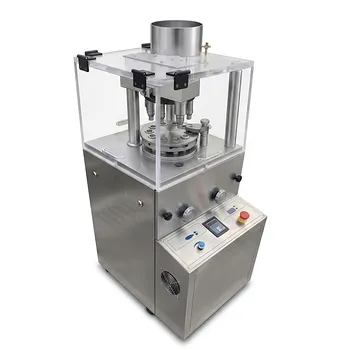
- Enhanced 9 Punch Rotary Tablet Press for Powder Compaction
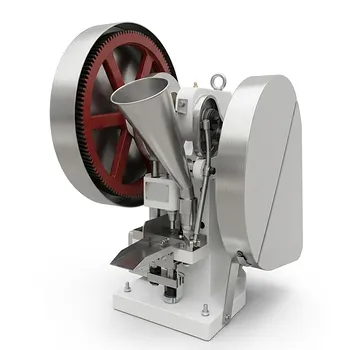
- 6-Ton Small Single-Punch Tablet Press — Laboratory Powder & Granule Tableting Equipment / Tablet Forming Machine
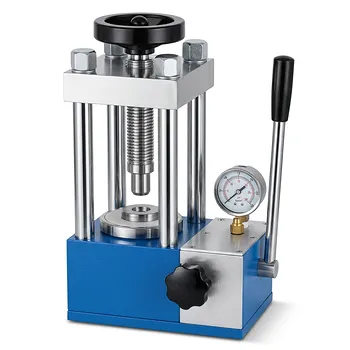
- Manual Tablet Press with Dual Scale Pressure Gauge for Pharmaceutical Food Chemical Laboratory Sample Preparation
People Also Ask
- What is the purpose of adding lubricants like zinc stearate during Al-Al2O3 powder pressing? Achieve Superior Density
- Why is a laboratory hydraulic press required for FT-IR KBr pellets? Achieve Precise Sample Clarity for ZrC–SiC Analysis
- What role does a high-strength stainless steel mold kit play in the uniaxial die compaction process? Ensuring Precision
- Why is a laboratory hydraulic press required to compress oyster shell powder before XRF analysis? Improve Data Accuracy.
- Why is vacuum sealing and flexible packaging necessary for Aluminum Titanate powders during CIP? Ensure Peak Density

Tech Team · PowderPreparation
Last updated on May 14, 2026