How do high-precision loading and rotating punches achieve densification? Master Advanced Powder Processing
Updated 4 months ago
Material densification in advanced powder processing is achieved through the simultaneous application of axial force and rotational shear. This dual-action approach uses a high-precision loading system to pack particles tightly while a high-speed rotating punch generates the intense heat and plastic strain necessary for bonding. Together, these mechanisms facilitate dynamic recrystallization, allowing for full densification in as little as 10 seconds.
The core of this technology lies in the synergy between mechanical packing and rapid metallurgical transformation, where axial pressure and rotational energy combine to eliminate porosity and bond particles at a molecular level.
The Role of the High-Precision Loading System
Establishing Particle Proximity
The high-precision loading system is responsible for applying a specific axial force directly to the powder bed. This force reduces the initial volume of the powder by forcing particles into the closest possible proximity.
Ensuring Uniform Density
By maintaining precise control over the downward pressure, the system ensures that the initial packing is consistent throughout the material. This consistency is vital for preventing structural weak points during the subsequent heating and shearing phases.
The Mechanics of the Rotating Punch
Generating Frictional Heat
As the punch rotates at high speeds, it creates intense frictional heat at the interface between the punch and the powder. This localized energy rapidly raises the temperature of the particles, making them more malleable.
Inducing Plastic Shear Strain
The rotation does more than create heat; it applies plastic shear strain across the material layers. This mechanical deformation breaks down particle boundaries and encourages the atoms to rearrange into a more stable, solid structure.
The Synergistic Mechanism of Densification
Dynamic Recrystallization
The combination of high axial pressure and intense rotational shear triggers dynamic recrystallization. This process allows new, strain-free grains to form and grow while the material is still being deformed, leading to a refined microstructure.
Accelerated Physical Bonding
Because these forces act in concert, physical bonding occurs much faster than in traditional sintering methods. The synergy allows for complete material densification to be achieved within a very narrow timeframe, often as short as 10 seconds.
Understanding the Trade-offs
Calibration Complexity
The primary challenge of this system is the complex balance required between rotation speed and axial force. If the rotation is too fast relative to the pressure, excessive heat may degrade the material; if the pressure is too high, the punch may face premature wear.
Material Thermal Sensitivity
While the speed of the process is an advantage, it generates significant energy that may not be suitable for all heat-sensitive alloys. Careful monitoring is required to ensure the frictional heat does not exceed the material's melting point or cause unwanted phase changes.
How to Apply This to Your Project
Making the Right Choice for Your Goal
To successfully implement this densification method, you must align your equipment settings with your specific production requirements:
- If your primary focus is maximum throughput speed: Prioritize the synchronization of high-speed rotation and rapid axial loading to hit the 10-second densification window.
- If your primary focus is microstructural refinement: Adjust the loading system to maintain higher axial pressure, which can enhance the effects of dynamic recrystallization.
- If your primary focus is tool longevity: Implement a graduated loading curve to reduce the initial mechanical shock on the rotating punch during the first few seconds of contact.
By mastering the interaction between axial force and rotational shear, you can achieve unprecedented levels of density and structural integrity in powder-based components.
Summary Table:
| Mechanism | Primary Component | Role in Densification |
|---|---|---|
| Axial Force | High-Precision Loading System | Establishes particle proximity and ensures initial packing uniformity. |
| Frictional Heat | Rotating Punch | Rapidly increases particle malleability at the contact interface. |
| Plastic Shear | Rotating Punch | Breaks particle boundaries and induces molecular-level atomic rearrangement. |
| Synergy | Combined System | Triggers dynamic recrystallization for full densification in ~10 seconds. |
Elevate Your Material Research with Precision Powder Solutions
Achieving perfect material densification requires the right balance of force and technology. At Our Laboratory Solutions, we specialize in providing complete laboratory sample preparation equipment tailored for advanced material science and powder processing.
Whether you are refining microstructures or maximizing production throughput, our extensive product line is designed to deliver consistent, high-quality results:
- Advanced Compaction: A full spectrum of hydraulic presses, including Cold/Warm Isostatic Presses (CIP/WIP), standard lab presses, and Vacuum Hot Presses for high-density bonding.
- Superior Milling & Grinding: From Planetary Ball Mills and Jet Mills to Liquid Nitrogen Cryogenic Grinders for perfect particle size control.
- Sample Preparation: High-performance crushers, sieve shakers (vibratory/air-jet), and precision powder/defoaming mixers.
Why choose us? We don't just sell equipment; we provide the expertise to help you calibrate the complex balance between rotation, pressure, and thermal sensitivity.
Contact our technical team today to find your solution and take the first step toward unprecedented structural integrity in your components.
References
- Kimia Jamshidi, Hamed Jamshidi Aval. Microstructure and corrosion resistance of AZ91- Hydroxyapatite composites processed via deformation-driven metallurgy. DOI: 10.1007/s10856-025-06942-y
Mentioned Products
- Enhanced 9 Punch Rotary Tablet Press for Powder Compaction
- Ordinary Type Rotary Tablet Press for Pharmaceutical Chemical Food Electronic Industries
- Stainless Steel Rotary Vibrating Sieve High Precision Circular Vibratory Separator Industrial Powder Grading Machine Multi Layer Sifting Equipment
- 6 Ton Variable Frequency Single Punch Tablet Press
- 6-Ton Small Single-Punch Tablet Press — Laboratory Powder & Granule Tableting Equipment / Tablet Forming Machine
People Also Ask
- What is the purpose of adding lubricants like zinc stearate during Al-Al2O3 powder pressing? Achieve Superior Density
- Why is a laboratory hydraulic press required for FT-IR KBr pellets? Achieve Precise Sample Clarity for ZrC–SiC Analysis
- What role does a high-strength stainless steel mold kit play in the uniaxial die compaction process? Ensuring Precision
- Why is a laboratory hydraulic press required to compress oyster shell powder before XRF analysis? Improve Data Accuracy.
- Why is vacuum sealing and flexible packaging necessary for Aluminum Titanate powders during CIP? Ensure Peak Density

Tech Team · PowderPreparation
Last updated on Jun 03, 2026
Related Products
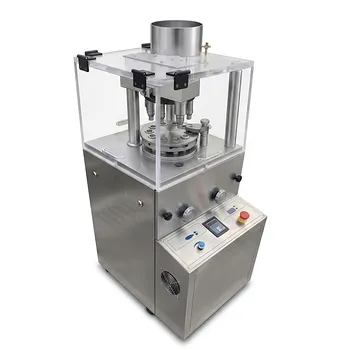
Enhanced 9 Punch Rotary Tablet Press for Powder Compaction
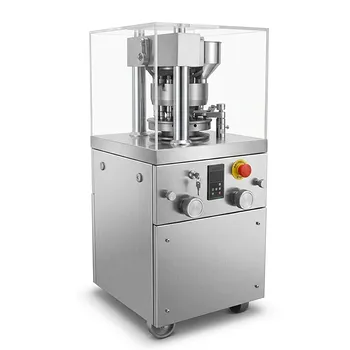
Ordinary Type Rotary Tablet Press for Pharmaceutical Chemical Food Electronic Industries
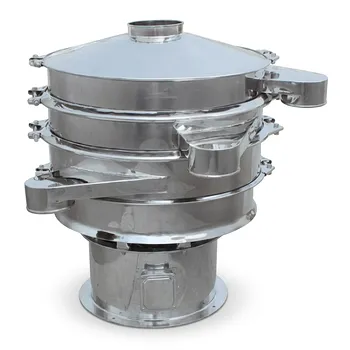
Stainless Steel Rotary Vibrating Sieve High Precision Circular Vibratory Separator Industrial Powder Grading Machine Multi Layer Sifting Equipment
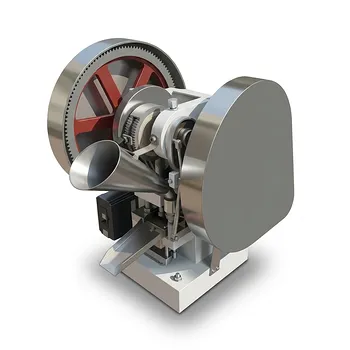
6 Ton Variable Frequency Single Punch Tablet Press
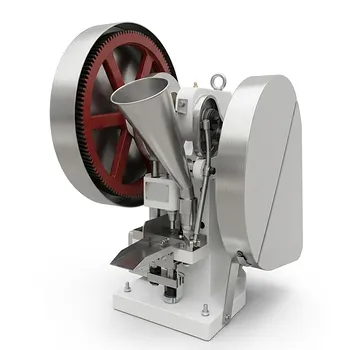
6-Ton Small Single-Punch Tablet Press — Laboratory Powder & Granule Tableting Equipment / Tablet Forming Machine
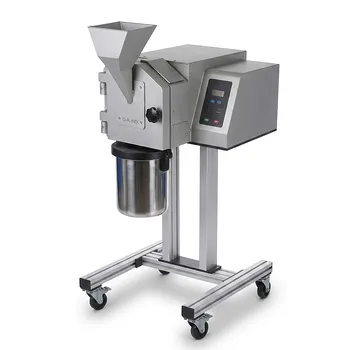
Industrial Rotor Beater Mill for High Speed Impact and Shear Grinding in Laboratory Sample Preparation
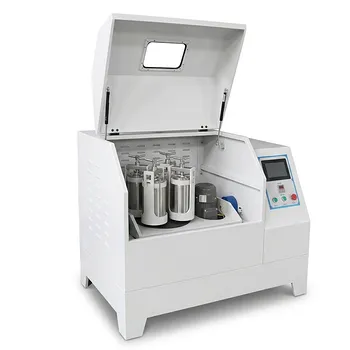
360° Rotating Omnidirectional Laboratory Planetary Ball Mill for Homogeneous Ultra-Fine Grinding and Mixing