How do the design and placement of charging inlets and discharge outlets affect the efficiency of a plowshare mixer?
Updated 3 months ago
The efficiency of a plowshare mixer is fundamentally dictated by the strategic positioning and geometry of its ports. Top-mounted charging inlets enable precise ingredient control and flexible loading, while bottom-mounted discharge outlets ensure rapid emptying. When these components are geometrically aligned with the vessel's contour, they eliminate stagnant areas and maximize production throughput.
Core Takeaway: Proper inlet and outlet design transforms a mixer from a simple vessel into a precision instrument. By minimizing "dead zones" and enabling rapid batch turnover, these features directly impact both the consistency of the final product and the overall speed of the production line.
Optimizing Material Introduction via Top Inlets
Precision in Material Ratios
Charging inlets located at the top of the vessel allow for the simultaneous or sequential addition of various raw materials. This gravity-fed approach facilitates precise ratio control for complex formulations, such as blending polypropylene and polyethylene granules.
Workflow Versatility
The top-mounted design supports various loading methods, from manual additions to automated pneumatic systems. This flexibility allows operators to adapt the charging sequence to the specific flow characteristics of their materials, preventing clumping before the mixing cycle begins.
Enhancing Turnover with Bottom Discharge Outlets
Accelerating Production Cycles
The discharge outlet is positioned at the bottom of the vessel to utilize gravity for rapid emptying. By minimizing the time required to clear the chamber, the system significantly improves production turnover efficiency between batches.
Eliminating Dead Zones through Geometric Matching
To ensure a high-quality blend, the discharge valve's configuration must match the internal shape of the vessel. This alignment eliminates dead zones—stagnant areas where material can hide from the plowshare blades—ensuring a 100% complete discharge.
Understanding the Trade-offs
Seal Integrity vs. Discharge Speed
While larger discharge outlets allow for faster emptying, they require more robust and complex sealing mechanisms. High-speed mixing creates internal pressure and centrifugal force, meaning larger valves must be precision-engineered to prevent leakage.
Flush-Fitting Valves vs. Maintenance Complexity
Flush-fitting valves are superior for eliminating dead zones, but they can be more difficult to maintain than standard butterfly valves. Organizations must balance the need for total material discharge against the downtime required for cleaning and seal replacement.
Making the Right Choice for Your Goal
To maximize the performance of your plowshare mixer, consider the following recommendations based on your operational priorities:
- If your primary focus is maximum throughput: Prioritize a large-diameter, bottom-center discharge outlet equipped with a rapid-acting pneumatic valve.
- If your primary focus is product purity: Select flush-fitting discharge valves that perfectly contour to the vessel wall to prevent cross-batch contamination.
- If your primary focus is complex formulation: Opt for multiple top-mounted inlets to allow for the staged introduction of additives without interrupting the mixing vortex.
Investing in the correct port configuration is the most effective way to optimize your mixing cycle and ensure long-term production reliability.
Summary Table:
| Feature | Strategic Design | Impact on Efficiency |
|---|---|---|
| Top Charging Inlets | Gravity-fed, multi-port access | Precise ratio control and flexible material introduction. |
| Bottom Discharge Outlets | Centrally located, large diameter | Maximizes gravity flow for rapid emptying and high turnover. |
| Geometric Matching | Flush-fitting with vessel contour | Eliminates stagnant "dead zones" and prevents contamination. |
| Valve Actuation | High-speed pneumatic systems | Reduces downtime between batches and ensures seal integrity. |
Elevate Your Material Processing with KinTek’s Advanced Solutions
Optimizing your mixing efficiency is just the beginning. At KinTek, we provide complete laboratory sample preparation solutions for material science, specializing in high-performance powder processing and compaction equipment.
Whether you are looking to eliminate dead zones in your mixing cycle or require precision-engineered equipment for sample prep, our extensive product line has you covered:
- Advanced Mixing: Plowshare mixers, powder mixers, and high-speed defoaming mixers.
- Milling & Grinding: Planetary ball mills, jet mills, and liquid nitrogen cryogenic grinders for ultra-fine results.
- Crushing & Sieving: Jaw/roll crushers and vibratory/air-jet sieve shakers.
- Compaction Excellence: A full spectrum of hydraulic presses, including Cold/Warm Isostatic Presses (CIP/WIP), XRF pellet presses, and vacuum hot presses.
Ready to maximize your lab's throughput and consistency? Our experts are here to help you select the perfect configuration for your specific material needs.
Contact KinTek Today for a Professional Consultation
References
- Yaohua Zhu, Xinbo Chen. Structure optimization of <i>mixer ploughshare</i> through orthogonal experiment based on DEM simulation. DOI: 10.1051/itmconf/20224702048
Mentioned Products
- Industrial Planetary Centrifugal Vacuum Defoaming Mixer for High Viscosity Paste and Powder Homogenization
- Inclined Mixer for Homogeneous Powder Blending and Grinding
- Multi Dimensional Universal Mixer for High Uniformity Powder Blending
- High-Speed Simple Disperser for Efficient Mixing, Dispersion, and Emulsification
- Horizontal Ribbon Mixer for Dry Powder and Slurry Blending
People Also Ask
- What are the advantages of planetary centrifugal mixers for LSM-CeO2 slurries? Superior Results
- Why is a planetary centrifugal defoaming mixer essential in battery slurry? Achieve High Homogeneity & Degassing
- What process advantages do planetary gravity mixers provide for r-GO/RuO2 electrodes? Achieve Superior Nanoscale Dispersion
- What is the function of industrial planetary centrifugal mixers in 3D printing inks? Achieve Perfect Homogenization
- What are the primary advantages of planetary centrifugal mixers? Master Bladeless Mixing & Vacuum Defoaming

Tech Team · PowderPreparation
Last updated on Jun 03, 2026
Related Products
Industrial Planetary Centrifugal Vacuum Defoaming Mixer for High Viscosity Paste and Powder Homogenization
Inclined Mixer for Homogeneous Powder Blending and Grinding
Multi Dimensional Universal Mixer for High Uniformity Powder Blending
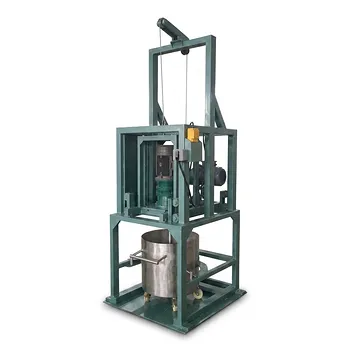
High-Speed Simple Disperser for Efficient Mixing, Dispersion, and Emulsification
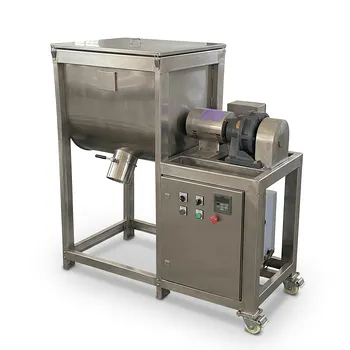
Horizontal Ribbon Mixer for Dry Powder and Slurry Blending
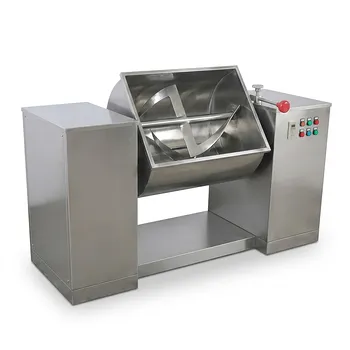
Horizontal Trough Mixer for Uniform Powder and Paste Blending
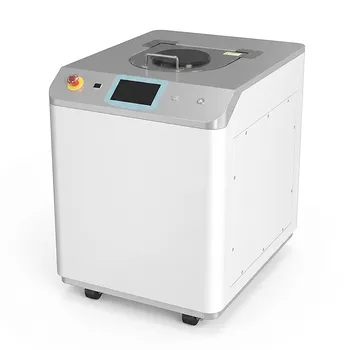
Industrial Planetary Centrifugal Vacuum Defoaming Mixer for High Viscosity Paste and Advanced Material Science
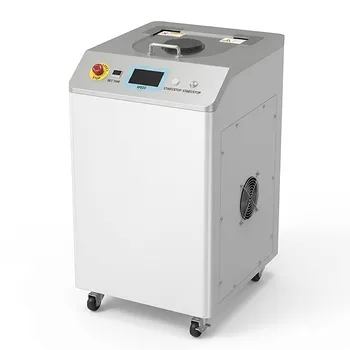
High Viscosity Planetary Centrifugal Vacuum Mixer for Material Defoaming and Uniform Mixing
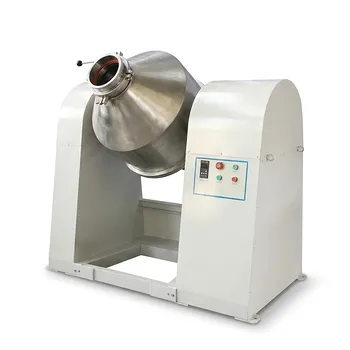
Industrial Double Cone Mixer for Powder Blending and Homogeneous Mixing
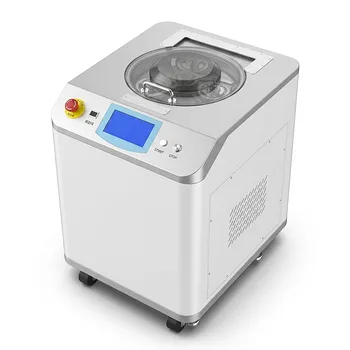
Dual Cup Vacuum Centrifugal Mixer Planetary Paste Defoaming Machine Industrial Material Processor
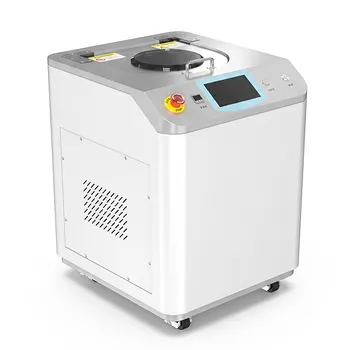
High Speed Vacuum Planetary Centrifugal Mixer and Defoamer for Industrial Paste Processing
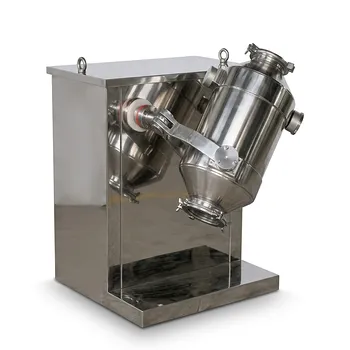
Three-Dimensional Motion Mixer for Laboratory Powder and Granule Blending
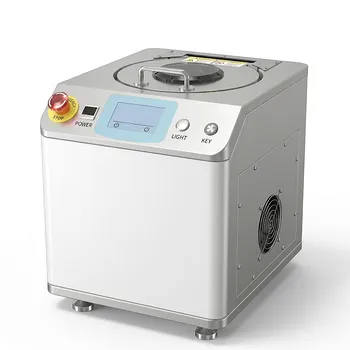
High Efficiency Vacuum Planetary Centrifugal Mixer and Defoaming Machine for Industrial Material Research and Precise Laboratory Powder Dispersion
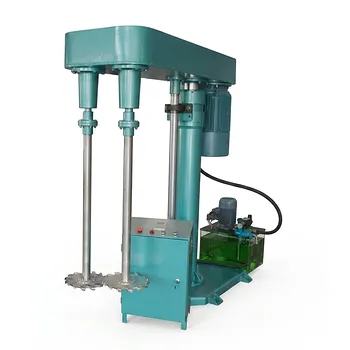
Hydraulic Double Shaft Disperser for High Viscosity Liquid Mixing and Dispersion
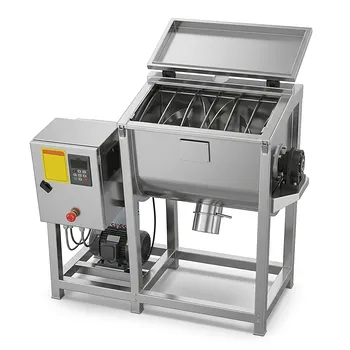
Horizontal Ribbon Mixer for Uniform Powder and Slurry Mixing