How do industrial-grade ball mills and standard sieve shakers contribute to the preparation of ceramic-based composite powders?
Updated 5 months ago
Industrial-grade ball mills and standard sieve shakers are the twin pillars of ceramic powder preparation, responsible for transforming raw materials into refined, homogeneous precursors. These tools work in tandem to reduce particle size to the micrometer scale and strictly control the size distribution, ensuring that functional fillers are perfectly integrated. This precise mechanical processing is the direct precursor to achieving high-density "green bodies" and superior mechanical strength in the final sintered composite.
The synergy between high-energy grinding and precision sieving determines the microstructural integrity of ceramic composites. By optimizing these processes, engineers can maximize sintering efficiency and eliminate the internal defects that lead to material failure.
The Role of Industrial Ball Mills in Refinement
High-Energy Grinding and Surface Area
Industrial ball mills utilize mechanical impact and shear forces to reduce raw materials from millimeter-scale fragments to micrometer-scale powders. This reduction significantly increases the specific surface area of the particles, which directly enhances their surface reactivity. This increased reactivity serves as a critical driving force for the chemical reactions that occur during the subsequent sintering process.
Homogeneous Distribution of Functional Fillers
These mills are essential for ensuring a thorough mixture of ceramic matrices with functional fillers, such as zirconia or metallic aluminum. By processing these materials together, the ball mill achieves an atomic-level uniform distribution of various components. This homogeneity prevents "clumping" of fillers, which is vital for maintaining consistent mechanical properties throughout the entire material.
Particle Refinement for Advanced Materials
In specialized applications like precursor-derived ceramics (PDCs) or sea shell powder composites, ball mills grind dried resins or coarse fragments into extremely fine powders. This refinement typically involves hours of grinding to ensure the powder is fine enough to react with liquid binders or other matrix elements. This level of refinement is necessary to establish the foundation for high-quality green body formation.
Precision Classification with Standard Sieve Shakers
Controlling Particle Size Distribution (PSD)
Standard sieve shakers, often utilizing mesh sizes of 125, 63, and 25 micrometers, allow for the precise classification of ground powders. By filtering the powder through these specific gradients, manufacturers can achieve a targeted particle size distribution. This control is fundamental for high-density filling, as it allows smaller particles to occupy the gaps between larger ones.
Eliminating Agglomerates for Processing Stability
A primary function of the sieve shaker is to remove particle agglomerates—clumps of powder that form during drying or storage. Removing these oversized particles is essential for preventing blockages in downstream equipment, such as extrusion nozzles or 3D printing heads. Consistency in particle size ensures the surface smoothness and internal homogeneity of 3D-printed filaments and components.
Optimizing Layer-by-Layer Manufacturing
In powder-based 3D printing, consistent particle size is critical for smooth powder layering. Sieve shakers ensure that each layer is deposited uniformly, which maintains high resolution during the printing process. Without this classification step, the structural integrity of the final ceramic component could be compromised by voids or uneven density.
Understanding Technical Trade-offs and Limitations
The Risk of Media Contamination
While high-energy ball milling is effective, it carries the inherent risk of material contamination from the grinding media (the balls themselves). As the balls wear down, small amounts of the media material can be incorporated into the ceramic powder. This can alter the chemical purity of the composite and potentially degrade its thermal or electrical properties.
Balancing Grinding Time and Energy
There is a point of diminishing returns in ball milling where additional grinding time does not significantly reduce particle size but continues to consume high levels of energy. Over-grinding can also lead to excessive cold welding or the formation of unwanted amorphous phases. Engineers must carefully calibrate grinding cycles to balance refinement with energy efficiency.
Sieve Blinding and Mesh Wear
Standard sieve shakers are prone to mesh blinding, where fine particles become lodged in the openings, reducing the efficiency of the classification. Furthermore, the abrasive nature of ceramic powders can cause mesh wear over time, leading to inaccuracies in particle size control. Frequent maintenance and the use of ultrasonic cleaning are often required to maintain precision.
Making the Right Choice for Your Powder Preparation
How to Apply This to Your Project
- If your primary focus is maximizing mechanical strength: Prioritize high-energy ball milling for extended durations to maximize surface area and ensure the most uniform distribution of fillers.
- If your primary focus is 3D printing or extrusion reliability: Focus on multi-stage sieving with fine mesh sizes (below 63 micrometers) to eliminate all agglomerates that could cause equipment downtime.
- If your primary focus is low-temperature sintering: Use high-efficiency milling to increase the chemical potential difference of the powder, allowing for densification at lower thermal thresholds.
By mastering the mechanical refinement of ball mills and the distributive precision of sieve shakers, you provide the essential foundation for high-performance ceramic engineering.
Summary Table:
| Equipment | Core Function in Preparation | Impact on Material Quality |
|---|---|---|
| Industrial Ball Mill | High-energy grinding & homogenization | Increases surface reactivity and ensures uniform filler distribution. |
| Standard Sieve Shaker | Particle size classification (PSD) | Eliminates agglomerates to ensure smooth layering and high-density filling. |
Elevate Your Material Research with Professional Grade Equipment
Achieving the perfect ceramic composite requires precision at every stage of sample preparation. At [Company Name], we provide complete laboratory sample preparation solutions for material science, specializing in high-performance powder processing and compaction equipment.
Whether you are refining precursors or manufacturing advanced green bodies, our extensive product line is designed to meet your strictest requirements:
- Size Reduction: Jaw and roll crushers, liquid nitrogen cryogenic grinders, and high-energy mills (planetary ball, jet, sand/bead, disc, and rotor).
- Classification & Mixing: Vibratory and air-jet sieve shakers with precision test sieves, plus advanced powder and defoaming mixers.
- Compaction & Sintering Prep: A full spectrum of hydraulic presses, including Cold/Warm Isostatic Presses (CIP/WIP), standard lab presses, XRF pellet presses, and vacuum hot presses.
Ready to optimize your powder processing workflow? Contact our technical experts today to find the ideal solution for your laboratory needs.
References
- Оксана Саввова, O. V. Shaligina. Investigation of mechanical properties of spinelcontaining glassceramic materials. DOI: 10.35857/2663-3566.124.12
Mentioned Products
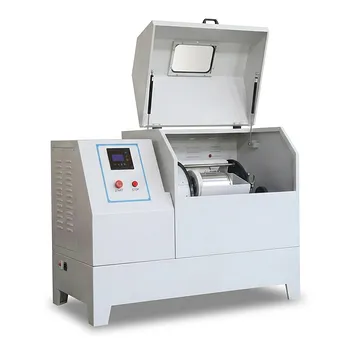
- Heavy Duty Horizontal Planetary Ball Mill for Efficient Industrial Grinding and Sample Preparation
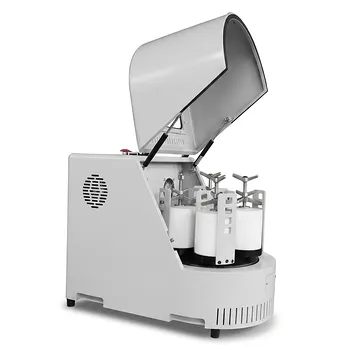
- Vertical Semi Circular Planetary Ball Mill for Laboratory Precision Grinding
- Vertical Production Planetary Ball Mill for High Throughput Powder Processing
- Vertical Square Planetary Ball Mill for Laboratory Sample Preparation and Nanoscale Grinding
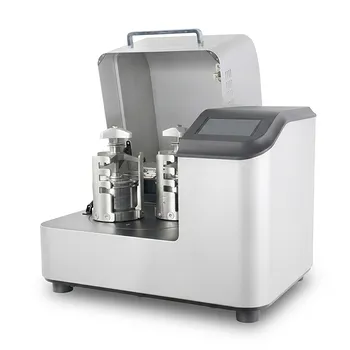
- High Energy Planetary Ball Mill for Nano Scale Grinding and Mechanical Alloying
People Also Ask
- Why grind lime-pozzolan specimens for TG/DTA for 3 mins? Master sample prep for high-precision thermal analysis.
- What is the role of a planetary ball mill in the mechanical activation of ZTA powder? Boost Sintering Performance
- What is the function of a planetary ball mill in wollastonite ceramic prep? Achieve Molecular Homogenization & Reactivity
- How does a planetary ball mill contribute to the homogenization of trace elements? Achieve Sub-Micron Uniformity
- What is the function of a high-performance planetary ball mill in AMZ laminates? Master Ceramic Homogenization.

Tech Team · PowderPreparation
Last updated on May 14, 2026
Related Products
Heavy Duty Horizontal Planetary Ball Mill for Efficient Industrial Grinding and Sample Preparation
Vertical Semi Circular Planetary Ball Mill for Laboratory Precision Grinding

Vertical Production Planetary Ball Mill for High Throughput Powder Processing

Vertical Square Planetary Ball Mill for Laboratory Sample Preparation and Nanoscale Grinding
High Energy Planetary Ball Mill for Nano Scale Grinding and Mechanical Alloying
Dual Station Planetary Ball Mill 24L
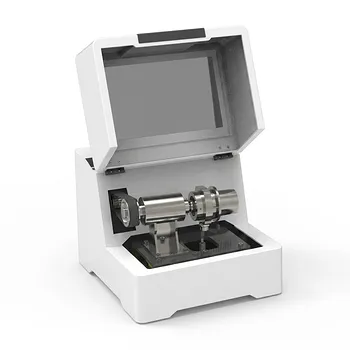
Single Tank High Energy Vibratory Ball Mill for Laboratory Grinding and Mixing

Miniature Planetary Ball Mill with Vacuum Grinding and High Efficiency for Laboratory Sample Preparation
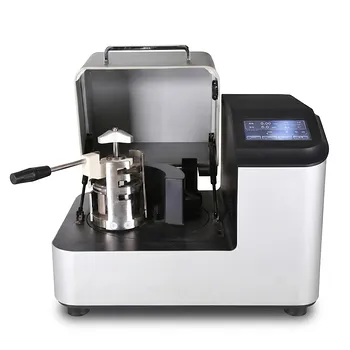
High Energy Laboratory Planetary Ball Mill for Nano Grinding and Material Science Sample Preparation

High Energy Omnidirectional Planetary Ball Mill 16L
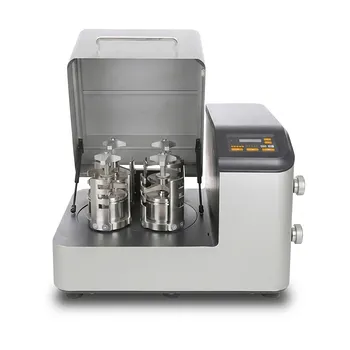
High Energy Planetary Ball Mill for Nano Scale Grinding and Colloidal Mixing in Material Science Research

360° Rotating Omnidirectional Laboratory Planetary Ball Mill for Homogeneous Ultra-Fine Grinding and Mixing
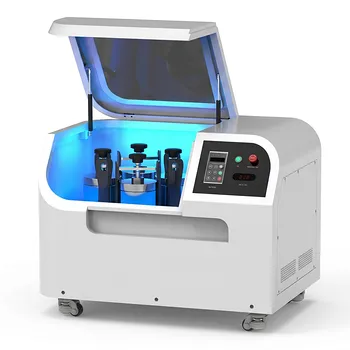
Planetary Ball Mill 12L
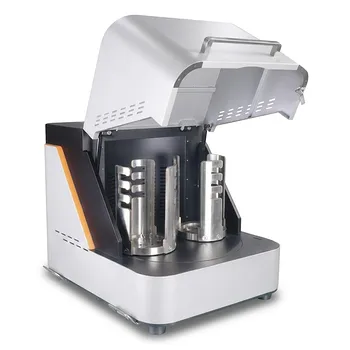
High Energy Laboratory Planetary Ball Mill for Nano Grinding and Colloidal Mixing of Hard and Brittle Materials
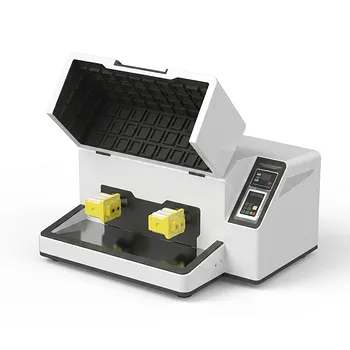
Multi-Platform Nanoscale High-Energy Vibratory Ball Mill
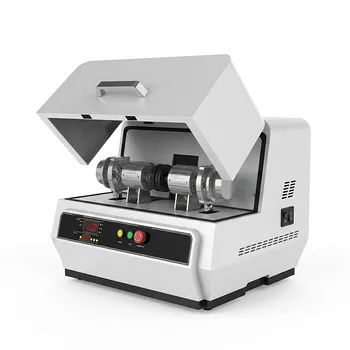
Dual Jar High Energy Vibratory Ball Mill
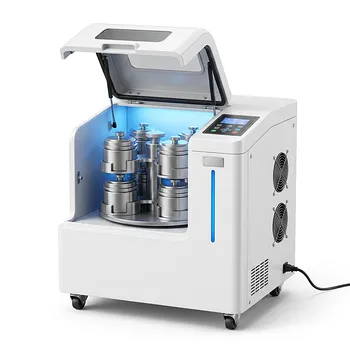
High Energy Omnidirectional Planetary Ball Mill 20L
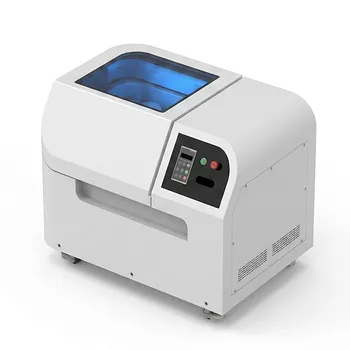
8L Planetary Ball Mill for Laboratory Grinding and Sample Preparation
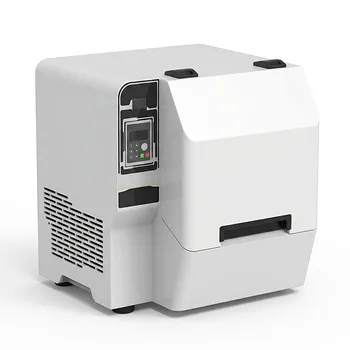
Nano High Energy Vibratory Ball Mill for Laboratory Sample Preparation