How do high-frequency vibration and compaction equipment ensure the quality of sandcrete block formation? Boost Strength
Updated 5 months ago
High-frequency vibration and compaction equipment ensure sandcrete block quality by utilizing mechanical energy to induce a "thixotropic" state in the mortar mixture. This process forces sand and cement particles into the tightest possible spatial arrangement while simultaneously purging trapped air pockets. The result is a high-density, low-porosity block that consistently meets the rigorous compressive strength standards required for structural safety.
Quality sandcrete production relies on maximizing material density through mechanical vibration, which temporarily transforms a stiff mortar mix into a fluid-like state to achieve optimal particle packing and long-term structural durability.
The Mechanics of Thixotropic Transformation
Inducing Fluidity in Stiff Mortar
High-frequency vibration applies rapid mechanical pulses to the wet mortar, causing a phenomenon known as thixotropy. This effect temporarily reduces the internal friction of the mixture, allowing a relatively dry, stiff mix to behave like a fluid.
Optimizing Particle Arrangement
In this fluid-like state, individual sand and cement particles are free to move and settle into the smallest possible volume. This optimal arrangement ensures that the cement paste thoroughly coats every sand grain, creating a more uniform and cohesive internal structure.
The Expulsion of Internal Air
As the particles shift into their dense configuration, they displace trapped air, forcing it to the surface as bubbles. Eliminating internal voids is critical because air pockets act as "weak points" that can lead to structural failure under load.
The Role of Compaction in Structural Integrity
Maximizing Density and Reducing Porosity
Compaction equipment applies physical pressure alongside vibration to consolidate the mass. By maximizing density, the equipment ensures the block has the mass required to resist crushing forces and environmental wear.
Compliance with NIS 87:2007 Standards
The primary metric for sandcrete quality is compressive strength, often governed by standards like NIS 87:2007. Mechanical compaction is the only reliable way to reach the density levels necessary to consistently hit these regulated strength targets.
Enhancing Durability and Moisture Resistance
Low porosity is a direct byproduct of effective compaction. A denser block with fewer voids is significantly more resistant to water penetration, which prevents chemical degradation and increases the lifespan of the finished structure.
Understanding the Trade-offs
The Risk of Material Segregation
Excessive vibration can lead to segregation, where heavier aggregates sink to the bottom and water or fine cement paste rises to the top. This creates an uneven strength distribution and can actually weaken the finished block.
Energy Demands and Equipment Wear
Maintaining high-frequency equipment requires significant investment and regular maintenance. The intense mechanical stress that compacts the sandcrete also wears down the machinery, necessitating a balance between production speed and equipment longevity.
Applying These Principles to Your Production
Effective block formation requires a balance of mix design, vibration frequency, and compaction duration to achieve a superior final product.
- If your primary focus is meeting structural strength standards: Ensure your equipment is calibrated to the specific frequency required to induce thixotropy for your specific sand-to-cement ratio.
- If your primary focus is reducing production waste: Monitor vibration times closely to prevent material segregation, which often results in brittle blocks that crack during the curing phase.
- If your primary focus is long-term block durability: Prioritize the removal of air voids through combined vibration and heavy compaction to minimize water absorption.
By mastering the mechanical forces of vibration and compaction, you transform a simple mixture of sand and cement into a high-performance building component.
Summary Table:
| Key Mechanism | Action on Mortar | Impact on Block Quality |
|---|---|---|
| Thixotropy | Induces fluid-like state in stiff mix | Optimal particle packing & uniform coating |
| Air Expulsion | Forces trapped air bubbles to surface | Eliminates weak points & increases density |
| Pressure Compaction | Consolidates material mass | Higher compressive strength (NIS 87:2007) |
| Porosity Reduction | Minimizes internal voids | Enhanced moisture resistance & durability |
Elevate Your Material Preparation Standards
Achieving structural excellence in material science requires precision engineering and reliable equipment. Whether you are optimizing sandcrete density or processing advanced powders, our complete laboratory sample preparation solutions are designed to deliver consistent, high-performance results.
At our facility, we specialize in a comprehensive range of powder processing and compaction equipment, including:
- Advanced Compaction: Cold/Warm Isostatic Presses (CIP/WIP), standard lab presses, XRF pellet presses, and vacuum hot presses.
- Precision Milling: Planetary ball, jet, sand/bead, and cryogenic grinders.
- Material Processing: Sieve shakers, powder mixers, and industrial crushers.
Ready to enhance your lab's efficiency and product durability? Contact us today to discuss how our specialized machinery can meet your specific structural and research requirements.
References
- Michael Nwabueze Anosike, A. A. Oyebade. Sandcrete Blocks and Quality Management in Nigeria Building Industry. DOI: 10.32738/jeppm.201201.0005
Mentioned Products
- Enhanced 9 Punch Rotary Tablet Press for Powder Compaction
- Small Ceramic Structure Laboratory Sand Mill Nanoscale Grinding Dispersion Equipment Seal-less Screen-less Design
- Horizontal Jaw Crusher Medium Hard Material Crushing Laboratory Sample Preparation Equipment
- Laboratory Benchtop Jaw Crusher for Hard Brittle Materials Primary Size Reduction and Sample Preparation
People Also Ask
- What is the purpose of adding lubricants like zinc stearate during Al-Al2O3 powder pressing? Achieve Superior Density
- Why is a laboratory hydraulic press required for FT-IR KBr pellets? Achieve Precise Sample Clarity for ZrC–SiC Analysis
- What role does a high-strength stainless steel mold kit play in the uniaxial die compaction process? Ensuring Precision
- Why is a laboratory hydraulic press required to compress oyster shell powder before XRF analysis? Improve Data Accuracy.
- Why is vacuum sealing and flexible packaging necessary for Aluminum Titanate powders during CIP? Ensure Peak Density

Tech Team · PowderPreparation
Last updated on May 14, 2026
Related Products
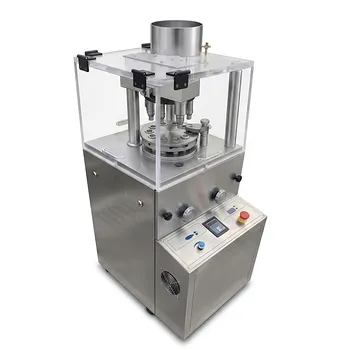
Enhanced 9 Punch Rotary Tablet Press for Powder Compaction
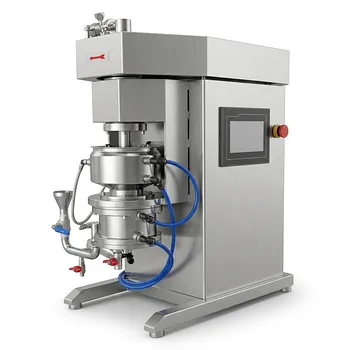
Small Ceramic Structure Laboratory Sand Mill Nanoscale Grinding Dispersion Equipment Seal-less Screen-less Design
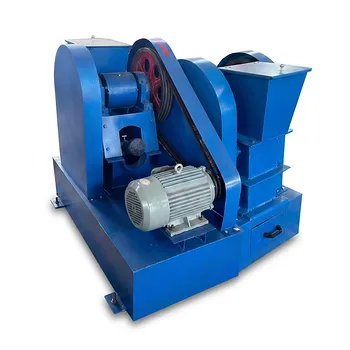
Horizontal Jaw Crusher Medium Hard Material Crushing Laboratory Sample Preparation Equipment