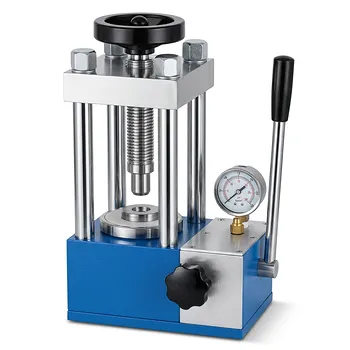
How are laboratory hydraulic presses utilized in the performance evaluation of antibacterial powder raw materials?
Updated 4 months ago
Standardizing sample geometry and density is the primary function of a laboratory hydraulic press when evaluating antibacterial ceramic powders. By applying precise, uniaxial pressure, the press transforms raw powders into uniform pellets or granules that allow for the accurate measurement of biological activity, such as zones of inhibition and bacterial kill rates.
A laboratory hydraulic press is essential for eliminating physical variables—like inconsistent porosity or surface area—ensuring that any observed antibacterial effect is purely a result of the material's chemical properties rather than its physical form.
The Role of Compaction in Standardizing Test Specimens
Achieving Geometric and Surface Consistency
The hydraulic press uses high-pressure molding to create pellets with flat, uniform surfaces. These smooth surfaces are critical for diffusion methods, as they allow for direct and even contact with agar plates or bacterial suspensions.
Standardized shapes, such as cylindrical pellets, provide a consistent geometric model for testing. This uniformity ensures that when antibacterial glazes are subsequently applied, the base material does not introduce unexpected structural variations.
Controlling Green Density for Biological Accuracy
By applying precise axial pressure—often ranging from 35 MPa to over 140 MPa—the press increases the packing density of the powder particles. This process reduces internal porosity, which is vital for obtaining reproducible results in biological assays.
Consistent density ensures that the surface area exposed to bacteria remains the same across all test samples. Without this control, "Zone of Inhibition" (ZOI) data would be scientifically invalid, as variations in density would alter the rate at which antibacterial agents leach from the sample.
Impact on Downstream Analytical Accuracy
Minimizing Internal Defects and Stress
Controlled pressure environments help minimize internal stress concentrations and micro-defects within the resulting "green body." Reducing these defects is essential to prevent the sample from cracking or deforming during the evaluation process.
High-pressure compaction provides the necessary structural strength for the material to survive subsequent handling. This allows researchers to move samples between different testing phases—from biological screening to mechanical stress tests—without compromising the integrity of the specimen.
Ensuring Repeatable Sintering Behavior
In ceramic applications, the performance of an antibacterial powder is often linked to how it behaves during firing. The hydraulic press ensures that the green density is uniform, which is the foundational requirement for predictable sintering shrinkage.
When density is consistent, researchers can accurately use dilatometry to study densification curves. This allows for a precise understanding of how the antibacterial powder will integrate into a final ceramic product without causing unexpected dimensional changes.
Understanding the Trade-offs and Pitfalls
The Risk of Density Gradients
While hydraulic presses provide uniform pressure, uniaxial dry pressing can sometimes lead to internal density gradients. These gradients occur due to friction between the powder and the mold walls, potentially leading to uneven shrinkage during sintering.
Over-Pressing and Particle Damage
Applying excessive pressure (e.g., exceeding the material's structural limits) can lead to particle crushing or "spring-back" effects. If the pressure is too high, the stored elastic energy may cause the pellet to delaminate or crack once it is ejected from the mold.
Contamination and Material Sensitivity
In the context of antibacterial testing, cross-contamination within the steel mold is a significant risk. Any residue from previous batches can skew biological results, making rigorous cleaning protocols for the press and die sets mandatory.
How to Apply This to Your Project
Recommendations Based on Your Evaluation Goals
- If your primary focus is initial biological screening: Use a consistent, moderate pressure to create flat pellets that maximize surface contact with agar for clear Zone of Inhibition (ZOI) measurements.
- If your primary focus is industrial ceramic integration: Prioritize achieving a specific green density (e.g., using 1000 kg/cm²) to ensure the powder's sintering shrinkage aligns with your base ceramic body.
- If your primary focus is mechanical R&D (e.g., dental materials): Utilize high-pressure compaction to minimize internal porosity, ensuring that measurements like Young’s modulus are representative of the material's true potential.
By utilizing a laboratory hydraulic press to standardize the physical state of antibacterial powders, researchers can transform raw data into a definitive assessment of material performance.
Summary Table:
| Feature | Impact on Antibacterial Evaluation |
|---|---|
| High-Pressure Compaction | Standardizes green density and eliminates physical variables like porosity. |
| Geometric Consistency | Creates flat, uniform surfaces for accurate Zone of Inhibition (ZOI) measurements. |
| Structural Integrity | Minimizes internal defects and cracking during biological and mechanical testing. |
| Sintering Control | Ensures repeatable shrinkage behavior and accurate densification curves. |
Precision Sample Preparation for Material Science Excellence
Standardizing your test specimens is the foundation of reliable antibacterial research. KINTEK provides complete laboratory sample preparation solutions tailored for material science, specializing in advanced powder processing and compaction equipment.
Our extensive product line empowers researchers to achieve the highest levels of accuracy:
- Compaction Equipment: Manual/Automatic Hydraulic Presses, Cold/Warm Isostatic Presses (CIP/WIP), XRF Pellet Presses, and Vacuum Hot Presses.
- Powder Processing: Crushers (jaw/roll), Liquid Nitrogen Cryogenic Grinders, and various Mills (Planetary Ball, Jet, Sand/Bead, Disc, Rotor).
- Analysis & Mixing: Sieve Shakers (Vibratory/Air-jet) with precision meshes, plus Powder and Defoaming Mixers.
Whether you are refining antibacterial glazes or developing high-performance dental ceramics, our equipment ensures your results are driven by chemical properties, not physical inconsistencies.
Contact KINTEK today to optimize your laboratory workflow
References
- Оксана Саввова, Y. Afanasenko. DEVELOPMENT OF A METHODOLOGICAL APPROACH TO THE DEVELOPMENT OF BACTERICIDAL GLAZES FOR CERAMIC TILES. DOI: 10.33042/2522-1809-2020-1-154-71-76
Mentioned Products
- Ordinary Type Rotary Tablet Press for Pharmaceutical Chemical Food Electronic Industries
- Hydraulic Double Shaft Disperser for High Viscosity Liquid Mixing and Dispersion
- 6-Ton Small Single-Punch Tablet Press — Laboratory Powder & Granule Tableting Equipment / Tablet Forming Machine
- Enhanced 9 Punch Rotary Tablet Press for Powder Compaction
- 5 Ton Single Punch Tablet Press Laboratory Small Batch Production
People Also Ask
- Why is a laboratory hydraulic press required for FT-IR KBr pellets? Achieve Precise Sample Clarity for ZrC–SiC Analysis
- Why is a laboratory hydraulic press required to compress oyster shell powder before XRF analysis? Improve Data Accuracy.
- Why is vacuum sealing and flexible packaging necessary for Aluminum Titanate powders during CIP? Ensure Peak Density
- What are the advantages of using hardened steel molds and graphite spray for titanium powder? Ensure structural integrity
- What role does a high-strength stainless steel mold kit play in the uniaxial die compaction process? Ensuring Precision

Tech Team · PowderPreparation
Last updated on Jun 03, 2026
Related Products
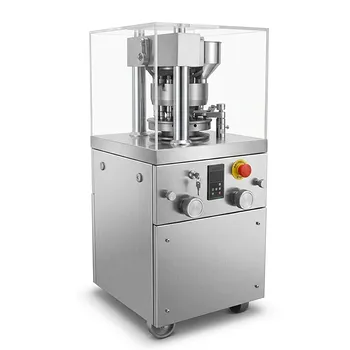
Ordinary Type Rotary Tablet Press for Pharmaceutical Chemical Food Electronic Industries
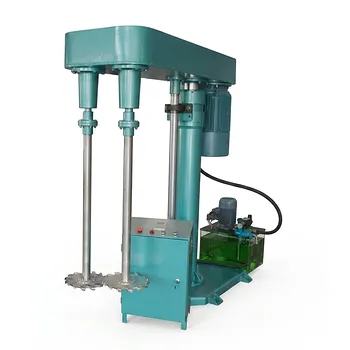
Hydraulic Double Shaft Disperser for High Viscosity Liquid Mixing and Dispersion
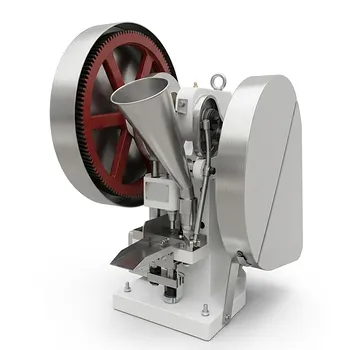
6-Ton Small Single-Punch Tablet Press — Laboratory Powder & Granule Tableting Equipment / Tablet Forming Machine
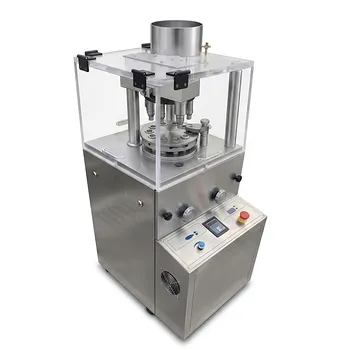
Enhanced 9 Punch Rotary Tablet Press for Powder Compaction
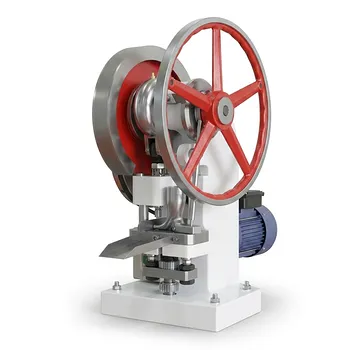
5 Ton Single Punch Tablet Press Laboratory Small Batch Production
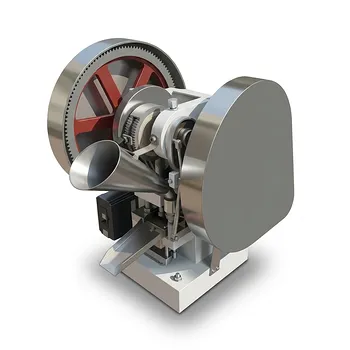
6 Ton Variable Frequency Single Punch Tablet Press