How are different sizes of zirconia grinding beads utilized in lignin nanoparticle extraction? Optimize Nano-Refinement
Updated 4 months ago
Lignin nanoparticle extraction relies on a multi-stage grinding strategy that transitions from larger to smaller zirconia beads to balance impact energy with collision frequency. The process typically begins with larger beads, such as 0.5 mm, to perform preliminary crushing and coarse exfoliation of raw material. This is followed by a secondary stage using finer beads, often 0.1 mm, which provide the high-density contact points necessary to refine particles to the nanometer scale while ensuring a consistent size distribution.
Core Takeaway: A stepped grinding approach leverages the high density of zirconia to provide high-impact energy for initial material breakdown and high-frequency collisions for final nano-refinement, maximizing efficiency while maintaining chemical purity.
The Mechanics of Multi-Stage Grinding
The extraction of lignin nanoparticles is not a single-step event but a strategic reduction of particle size. By utilizing different bead sizes, operators can precisely control the energy transfer into the lignin slurry.
Primary Crushing with Larger Media
Initial grinding stages utilize larger zirconia beads, typically ranging from 0.3 mm to 0.6 mm. These beads possess greater mass, allowing them to generate the high impact energy required to break down large bulk powders and coarse lignin structures.
Without this initial stage, smaller beads would often lack the kinetic energy necessary to overcome the structural integrity of the raw material. This phase focuses on preliminary crushing and prepares the slurry for ultra-fine processing.
Nano-Refinement with Micro-Media
Once the material is coarsely refined, the process shifts to micro-sized beads, often 0.1 mm in diameter. These smaller beads significantly increase the number of effective collision points and the specific surface area within the grinding chamber.
This high collision frequency creates intense shear forces, which are essential for reaching nanometer-scale fineness. This stage is critical for ensuring the final lignin product has a narrow particle size distribution.
The Role of Zirconia Properties in Lignin Extraction
Zirconia is the preferred material for these beads due to its unique physical and chemical characteristics. These properties ensure that the mechanical energy of the mill is converted effectively into particle reduction.
High Hardness and Density
The high density of zirconia allows even small beads to maintain sufficient momentum during the milling process. This density, combined with extreme hardness, ensures that the beads can withstand the rigorous forces of a high-energy mill without fracturing.
Minimizing Impurity Contamination
Lignin nanoparticles are often used in applications where purity is paramount. The high wear resistance of zirconia minimizes media loss, which prevents metallic or ceramic impurities from contaminating the lignin. This preserves the chemical and optical integrity of the final nanoparticles.
Understanding the Trade-offs
While a multi-stage approach is highly effective, it introduces specific technical challenges that must be managed.
Heat Generation and Fluid Resistance
As bead size decreases, the fluid resistance within the grinding chamber increases. This can lead to significant heat generation, which may degrade temperature-sensitive lignin structures if the cooling system is inadequate.
Energy Limits and Media Selection
Smaller beads provide more contact points but have lower individual impact energy. If the bead size is reduced too early in the process, the beads may lack the energy to break remaining large particles, leading to "dead zones" in the grinding process where no further reduction occurs.
How to Apply This to Your Project
To optimize your lignin extraction process, you must match the bead size sequence to your specific target particle size and equipment capabilities.
- If your primary focus is reaching sub-100nm particles: Utilize a final stage of 0.1 mm beads to maximize the collision frequency and shear contact points.
- If your primary focus is maximizing throughput and energy efficiency: Ensure the primary crushing stage (0.5 mm) is given sufficient time to reduce the bulk material before transitioning to finer media.
- If your primary focus is preventing nanoparticle agglomeration: Use a combination of bead sizes to maintain high shear forces, which helps keep particles separated during the final grinding phase.
Selecting the correct sequence of zirconia bead sizes transforms a high-energy mechanical process into a precise tool for nanostructure engineering.
Summary Table:
| Grinding Stage | Bead Size | Primary Function | Key Benefit |
|---|---|---|---|
| Primary Crushing | 0.3 mm – 0.6 mm | Coarse exfoliation of raw material | High impact energy for bulk breakdown |
| Nano-Refinement | ~0.1 mm | High-density contact & refinement | Shear forces for sub-100nm particle size |
| Final Polishing | Micro-media | Eliminating "dead zones" | Narrow and consistent size distribution |
Elevate Your Material Research with Precision Powder Solutions
Achieving perfect lignin nanoparticle extraction requires more than just the right bead size—it demands high-performance equipment designed for precision. We provide complete laboratory sample preparation solutions for material science, specializing in advanced powder processing and compaction.
Our extensive product line includes:
- Grinding & Milling: Planetary ball mills, jet mills, and liquid nitrogen cryogenic grinders for ultra-fine refinement.
- Crushing & Sieving: Jaw/roll crushers and vibratory/air-jet sieve shakers for precise particle control.
- Compaction Excellence: A full spectrum of hydraulic presses, including Cold/Warm Isostatic Presses (CIP/WIP), vacuum hot presses, and XRF pellet presses.
- Mixing: High-efficiency powder and defoaming mixers.
Ready to optimize your extraction efficiency and purity? Contact us today to discover how our specialized equipment can transform your laboratory workflow and deliver superior material results.
References
- Kazuhiro Shikinaka, Yuichiro Otsuka. Nonflammable UV protective films consisting of clay and lignin with tunable light/gas transparency. DOI: 10.1039/d1ra04096k
Mentioned Products
- Horizontal Bead Mill for Nanoscale Grinding and Advanced Material Powder Processing
- Laboratory Horizontal Bead Mill for Nanomaterial Wet Grinding and Material Science Research
- Vertical Nano Bead Mill for Ceramic Materials with Permanent Magnet Motor and High Efficiency Grinding
- Nano Laboratory Bead Mill Desktop Sub Micron Sand Mill Screenless Seal Less Powder Grinder
- Laboratory Small Horizontal Sand Mill for Nano Materials Wet Grinding
People Also Ask
- How does the bead filling rate affect the grinding performance and equipment wear in a bead mill? Optimization Guide
- Why is it necessary to precisely control the grinding media loading ratio? Master Nanosuspension Yield & API Stability
- Why is a ceramic lining preferred over stainless steel for a bead mill? Protect Enzymes and Ensure Biomass Purity
- Why is an external cooling circulation system necessary during the high-speed operation of a bead mill? Protect Integrity
- Why is the filling rate of grinding beads strictly controlled during the material milling process? Optimize Efficiency.

Tech Team · PowderPreparation
Last updated on Jun 03, 2026
Related Products
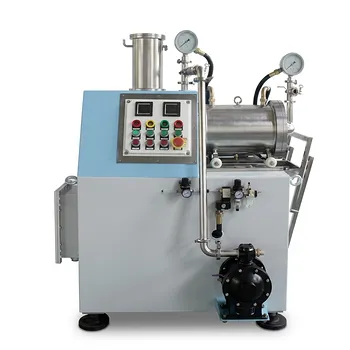
Horizontal Bead Mill for Nanoscale Grinding and Advanced Material Powder Processing
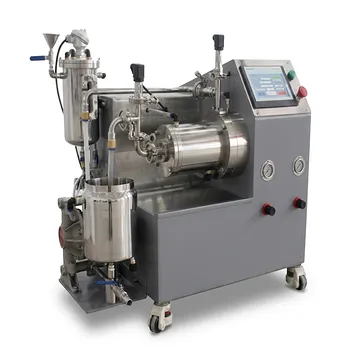
Laboratory Horizontal Bead Mill for Nanomaterial Wet Grinding and Material Science Research
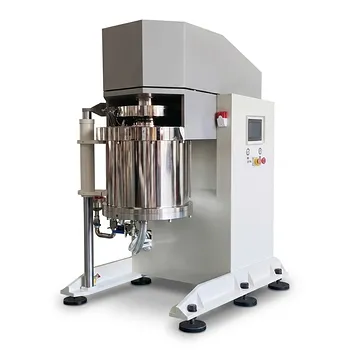
Vertical Nano Bead Mill for Ceramic Materials with Permanent Magnet Motor and High Efficiency Grinding
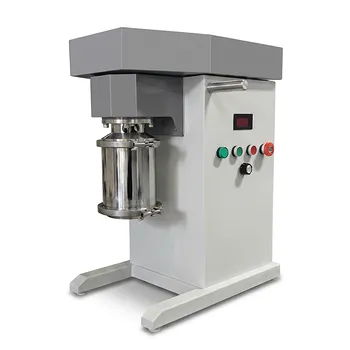
Nano Laboratory Bead Mill Desktop Sub Micron Sand Mill Screenless Seal Less Powder Grinder