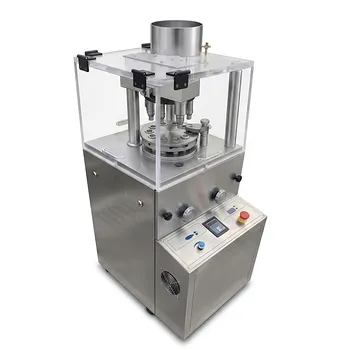
How are a laboratory hydraulic press and KBr powder utilized in PVDF FTIR analysis? Master Crystal Structure Prep.
Updated 4 months ago
Sample preparation using a laboratory hydraulic press and Potassium Bromide (KBr) powder is the standard method for creating a light-transmitting medium required for FTIR analysis. By compressing a mixture of PVDF fibers and KBr into a thin, transparent pellet, researchers enable infrared light to pass through the sample rather than scattering off its surface. This process is critical for identifying the specific absorption peaks, such as the 840 cm⁻¹ peak, which correlates to the piezoelectric beta-phase of the PVDF crystal structure.
The KBr pellet technique serves to transform solid, opaque PVDF fibers into a translucent optical window. This allows for high-resolution transmission spectroscopy, providing the clarity needed to quantify the internal molecular vibrations and crystalline phases of the material.
The Role of Potassium Bromide (KBr) as a Carrier
Maintaining Infrared Transparency
Potassium Bromide (KBr) is utilized primarily because it is highly transparent in the infrared waveband. Unlike many other solids, it does not have significant absorption peaks in the regions where PVDF characteristics are measured, acting as an "invisible" support for the sample.
Ensuring Homogeneous Sample Dispersion
PVDF fibers are scraped into fine particles and mixed thoroughly with the KBr powder. This ensures that when the mixture is compressed, the polymer is evenly distributed throughout the matrix, allowing the infrared beam to capture a representative average of the material’s molecular structure.
Facilitating Thin-Film Transmission
Because PVDF fibers in their raw state are often too thick or dense for infrared light to penetrate, the KBr acts as a diluent. This dilution allows the creation of a pellet thin enough to satisfy Beer-Lambert law requirements, ensuring the resulting spectral peaks are not "bottomed out" or saturated.
The Function of the Laboratory Hydraulic Press
Eliminating Light Scattering
The primary purpose of the laboratory hydraulic press is to exclude air trapped between powder particles. By applying several tons of pressure (often up to 5 t/cm²), the press eliminates internal voids and air pockets that would otherwise cause infrared light to scatter, which would result in a noisy or unreadable spectrum.
Creating Dense Molecular Bonding
High pressure forces the KBr and PVDF particles to achieve dense bonding, effectively fusing them into a single, solid disk. This uniform density is essential for achieving the "optical quality" transparency required for the infrared beam to travel through the pellet without significant attenuation.
Precision in Pellet Thickness
The use of high-hardness alloy dies within the press ensures that the resulting pellet is flat and of uniform thickness. Consistency in thickness is vital for quantitative evaluation, as it allows researchers to accurately compare the intensity of absorption peaks across different samples.
Quantifying PVDF Crystal Structure
Identifying the Beta-Phase Peak
In PVDF analysis, the 840 cm⁻¹ absorption peak is the definitive marker for the beta-phase, which is responsible for the material's piezoelectric activity. A well-prepared KBr pellet provides the high signal-to-noise ratio necessary to distinguish this peak from the alpha-phase and other structural noise.
Evaluating Piezoelectric Potential
By measuring the area or intensity of specific peaks captured through the transparent pellet, researchers can calculate the relative percentage of different crystalline phases. This data directly informs how the fiber will perform in sensors, actuators, or energy-harvesting applications.
Understanding the Trade-offs and Pitfalls
The Impact of Humidity
KBr is highly hygroscopic, meaning it readily absorbs moisture from the air. If the powder is not kept perfectly dry, water peaks will appear in the FTIR spectrum, which can overlap with and obscure the functional groups of the PVDF fibers.
Pressure Sensitivity
Applying insufficient pressure results in an opaque, "cloudy" pellet that scatters light and degrades spectral quality. Conversely, excessive pressure or improper die alignment can crack the pellet or damage the high-precision alloy surfaces of the press.
Concentration Errors
If the ratio of PVDF to KBr is too high, the pellet will be too dark for the IR beam to pass through, leading to "flat-topped" peaks. If the concentration is too low, the characteristic vibrations of the PVDF may be too weak to accurately quantify the crystalline phases.
How to Apply This to Your Project
To achieve the most accurate crystal structure analysis for PVDF fibers, consider the following tactical recommendations:
- If your primary focus is Quantitative Phase Analysis: Use an analytical balance to maintain a strict sample-to-KBr ratio (typically 1:100) to ensure reproducible peak intensities.
- If your primary focus is Spectral Resolution: Apply pressure for at least 60 to 120 seconds to allow the KBr to "flow" and eliminate all microscopic air voids.
- If your primary focus is Avoiding Contamination: Thoroughly clean the hydraulic press dies with acetone or ethanol between every sample to prevent cross-contamination of fiber residues.
Mastering the transition from solid fiber to transparent KBr pellet is the fundamental requirement for unlocking the deep structural data of PVDF via FTIR.
Summary Table:
| Component | Primary Function | Impact on FTIR Analysis |
|---|---|---|
| KBr Powder | Infrared-transparent carrier | Ensures a clear optical window without background interference. |
| Hydraulic Press | High-pressure compaction | Eliminates air voids and light scattering for a clean spectrum. |
| Hardness Alloy Dies | Precision shaping | Produces uniform pellet thickness for accurate quantitative data. |
| PVDF/KBr Mixture | Homogeneous dispersion | Allows the IR beam to capture representative molecular vibrations. |
Elevate Your Material Analysis with Professional Sample Prep
Precise crystal structure analysis starts with perfect sample preparation. At our core, we provide complete laboratory sample preparation solutions for material science, specializing in advanced powder processing and compaction equipment.
Whether you need to produce high-quality KBr pellets or require specialized processing for advanced polymers, our extensive product line has you covered:
- Compaction Excellence: A full spectrum of hydraulic presses, including Cold/Warm Isostatic Presses (CIP/WIP), standard lab presses, XRF pellet presses, and vacuum hot presses.
- Powder Processing: High-performance crushers, liquid nitrogen cryogenic grinders, and various mills (planetary ball, jet, and rotor).
- Precision Refinement: Sieve shakers, powder mixers, and defoaming mixers to ensure sample homogeneity.
Ready to optimize your lab's workflow? Contact our experts today to discover how our specialized equipment can enhance your research accuracy and efficiency.
References
- José Augusto Souza Gomes da Silva, N.M. Trindade. Structural characterization of polymeric nanofibers of polyvinylidene fluoride (PVDF). DOI: 10.1590/0104-1428.20220117
Mentioned Products
People Also Ask
- What is the purpose of adding lubricants like zinc stearate during Al-Al2O3 powder pressing? Achieve Superior Density
- Why is a laboratory hydraulic press required for FT-IR KBr pellets? Achieve Precise Sample Clarity for ZrC–SiC Analysis
- What role does a high-strength stainless steel mold kit play in the uniaxial die compaction process? Ensuring Precision
- Why is a laboratory hydraulic press required to compress oyster shell powder before XRF analysis? Improve Data Accuracy.
- Why is vacuum sealing and flexible packaging necessary for Aluminum Titanate powders during CIP? Ensure Peak Density

Tech Team · PowderPreparation
Last updated on Jun 03, 2026