Why Your Aluminum Composite Is Failing: The Thermodynamic Blind Spot Pressureless Sintering Can’t Fix
Aug 29, 2026
The Moment the Microscope Tells You the Truth
You’ve blended the powders with obsessive precision.
You’ve poured the mixture into a die, filled the furnace, waited through the long ramp and the longer soak.
When the part emerges, it looks whole. But cross-section it, polish it, and scan under the electron beam—and there they are.
Tiny voids. A network of porosity that the naked eye would never catch but that finite-element analysis already screams about.
At the interface between the aluminum matrix and the carbon nanotube reinforcement, brittle phases lurk like rust.
This is not a material failure.
This is a process failure.
Pressureless sintering, for all its simplicity, leans on capillary forces and atomic diffusion. For some powders, that’s enough. For aluminum-matrix composites—loaded with reinforcements that resist densification—it’s a thermodynamic blind spot.
The system does what physics allows. It doesn’t do what an engineer needs.
Two Forces Are Better Than One
Vacuum hot pressing (VHP) doesn’t abandon heat. It marries heat to mechanical pressure—up to 120 MPa of uniaxial force pushing atoms into the spaces they’d never fill on their own.
Think of ordinary sintering as letting gravity settle a sandpile. Think of hot pressing as taking a piston and actively forcing the grains to interlock.
The vacuum environment strips away adsorbed gases and oxide films that would otherwise sabotage bonding. The combined result is density—often 99.7% of theoretical—that turns composite design from a wish into a predictable equation.
The Mechanical Collapse of Hidden Voids
In pressureless sintering, pores shrink only when the surface energy of the particles pulls them shut.
Reinforcements like hexagonal boron nitride or carbon nanotubes build “house-of-cards” structures that resist that pull. They’re springy, geometrically recalcitrant.
A uniaxial press doesn’t ask for permission. At 50, 80, 120 MPa, it forces the aluminum matrix to plastically flow. Creep mechanisms activate. The skeleton of reinforcements collapses into a mosaic of metal, and residual voids no longer survive.
Why Vacuum Is Not Just a Purity Fetish
Heat in the presence of oxygen turns aluminum’s natural surface oxide into a barrier to bonding.
Worse, carbon-based reinforcements react with aluminum above certain temperature thresholds to form aluminum carbide (Al₄C₃)—a brittle ceramic phase that loves to nucleate cracks.
A vacuum hot press pulls out the adsorbed moisture, the trapped air, the volatiles. It lowers the processing temperature because mechanical force does part of the thermal job.
The result: clean surfaces that wet each other, and interfaces free of the microscopic fracture initiation sites that doom pressureless parts.
The Grain Size Paradox
Engineers often chase density by raising temperature. But high heat coarsens grain structure. You trade porosity for a microstructure that bends instead of breaks. It’s a miserable trade.
Vacuum hot pressing unwinds that knot. Since pressure assists densification, sintering happens at lower temperatures and shorter soak times.
Grain boundaries don’t have time to migrate wildly. What comes out of the die is not only dense but fine-grained—delivering both strength and toughness in a single cycle.
And because the material consolidates inside a precision mold under uniaxial load, the near-net shape often needs minimal post-machining. For metal-matrix composites that eat cutting tools, that dimensional control is not a luxury; it’s a cost-avoidance machine.
But You Can’t Mold a Turbine Blade
A fair-minded engineer also sees the geometry tax.
Vacuum hot pressing is uniaxial. That means plates, discs, simple cylinders.
If your design demands complex internal channels or intricate 3D curves, pressureless sintering still holds a geometry advantage—at least for green-body forming.
Cycle times can feel long, because the mold itself must heat and cool with the material. And the capital cost of a hydraulic press, high-strength graphite tooling, and vacuum pumps dwarfs that of a basic sintering furnace.
Yet for the right applications—aerospace load plates, thermal management substrates, wear-resistant discs—the gains in mechanical properties outweigh those limitations by a factor that makes the cost argument sound like false economy.
The Overlooked Chain: Powder Preparation Defines the Ceiling
Even the finest vacuum hot press cannot fix a bad blend.
This is where a systematic approach to sample preparation separates genuine material breakthroughs from laboratory stalemates.
Before compounds reach the hot press, they must be crushed, milled, mixed, and sieved into a uniform, contamination-free feedstock.
- Jaw crushers and roll crushers reduce bulk starting materials without introducing thermal damage.
- Liquid nitrogen cryogenic grinders embrittle tough or ductile metals, producing fine, oxidation-free powders.
- Planetary ball mills, jet mills, and sand mills create the particle size distributions and reinforcement dispersion that determine final homogeneity.
- Sieve shakers and test sieves validate granulation, because a single oversized particle in a composite disc can nucleate a failure cascade.
When these sample preparation steps are integrated into the workflow, the vacuum hot press becomes not just a densification tool but the culmination of a quality-controlled process chain.
That’s the difference between hoping for a good result and engineering one.
A Spectrum of Pressure, Matched to the Material
Advanced composites also benefit from complementary compaction technologies that address different material geometries and stress states.
While a vacuum hot press delivers uniaxial pressure under thermal and atmospheric control, Cold and Warm Isostatic Presses (CIP/WIP) apply uniform hydrostatic pressure from all directions—ideal for eliminating density gradients in large blanks or complex preforms before sintering.
Standard lab presses handle quick prototyping and calibration. XRF pellet presses prepare samples for elemental analysis, turning the very same material into a metrology ally.
Having the full spectrum at hand means the laboratory never has to force-fit a material into the wrong tool. The tool fits the material’s physical needs.
Recommendations from the Interface Outward
Choosing a processing route is not a philosophical exercise. It’s a decision tree with clear branches.
- Maximizing mechanical performance? Use vacuum hot pressing to push density toward theoretical and bond reinforcements to the matrix with near-zero interfacial damage.
- Preventing brittle Al₄C₃ formation? Exploit the vacuum environment and lower processing temperatures to lock out carbon-aluminum reactions.
- Processing reinforcement-rich compositions above 3 wt%? Choose hot pressing; pressureless sintering cannot overcome the physical resistance of densely packed fibers, tubes, or platelets.
- Building a production workflow? Start from the powder’s origin—crush, mill, sieve, and mix before a single die is loaded.
Vacuum hot pressing isn’t just a heating step. It’s a thermo-mechanical treatment that transforms an aluminum composite from a porous possibility into a near-theoretical reality.
Comparative Signature
| Feature | Vacuum Hot Pressing (VHP) | Pressureless Sintering |
|---|---|---|
| Densification driver | Heat plus uniaxial pressure (25–120 MPa) | Capillary forces and diffusion |
| Achievable density | Up to 99.7% of theoretical | Frequently limited by residual porosity |
| Grain structure | Fine, preserved by shorter cycles | Coarsened by prolonged high temperature |
| Interfacial chemistry | Clean, oxidation-free, limited Al₄C₃ | Susceptible to oxide layers and brittle phases |
| Geometry freedom | Simple shapes only | Complex green-body geometries possible |
From Powder to Performance
The story of a great aluminum composite never begins in the hot press alone.
It begins with the right crushing, the right milling, the right sieving—the upstream steps that decide whether the material will become a benchmark or a cautionary tale.
When those steps align, the vacuum hot press does what it was designed to do: squeeze out the last remnants of porosity, suppress grain growth, and lock in the mechanical performance that the microstructure’s design promised.
That philosophy—integrating the full sample preparation chain from powder processing to final compaction—is what transforms material science labs from hopeful kitchens into precision manufacturing environments.
For teams developing the next generation of CNT‑reinforced aluminum, metal‑ceramic hybrids, or functionally graded materials, the equipment is not an expense. It’s the laboratory’s most decisive collaborator.
Quick Links
Suggested Products
Dual Cup Vacuum Centrifugal Mixer Planetary Paste Defoaming Machine Industrial Material Processor 非介入式材料均质机真空脱泡行星搅拌高粘度混合设备 High Speed Vacuum Planetary Centrifugal Mixer and Defoamer for Industrial Paste Processing High Efficiency Vacuum Planetary Centrifugal Mixer and Defoaming Machine for Industrial Material Research and Precise Laboratory Powder Dispersion Industrial Vacuum Kneader for High-Viscosity Silicone, Rubber, and Compound MixingFurther Reading
The Invisible Architect of Failure: Why a Bubble in Your Resin-GelMA Mix Casts a Shadow on Your Entire Print The Hidden Disorder in Your Battery Slurry—and the Precision Tool That Destroys It The Most Important Mixer in Your Lab Isn’t a Mixer. It’s an Insurance Policy Against Defects. The 3-Minute Transformation: How Mixing Speed Reveals the Hidden Architecture of Next-Gen Batteries When Two Extra Minutes Define a Skyscraper: The Precision Mixing Protocol That Nanomaterials Demand
PowderPreparation
Last updated on May 14, 2026
Related Products
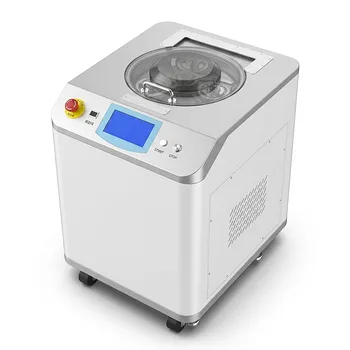
Dual Cup Vacuum Centrifugal Mixer Planetary Paste Defoaming Machine Industrial Material Processor
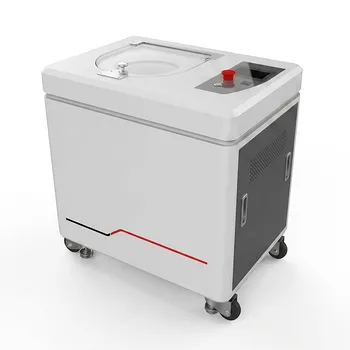
非介入式材料均质机真空脱泡行星搅拌高粘度混合设备

High Speed Vacuum Planetary Centrifugal Mixer and Defoamer for Industrial Paste Processing
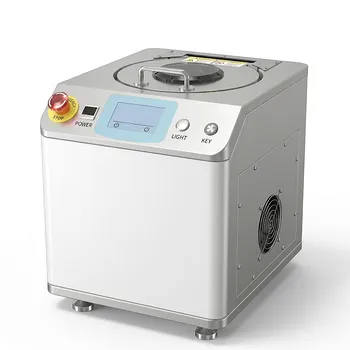
High Efficiency Vacuum Planetary Centrifugal Mixer and Defoaming Machine for Industrial Material Research and Precise Laboratory Powder Dispersion
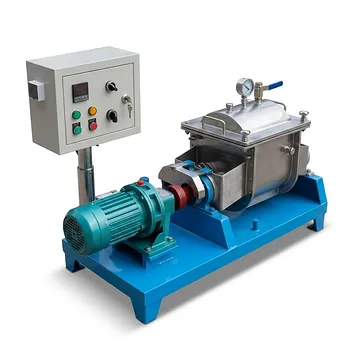
Industrial Vacuum Kneader for High-Viscosity Silicone, Rubber, and Compound Mixing
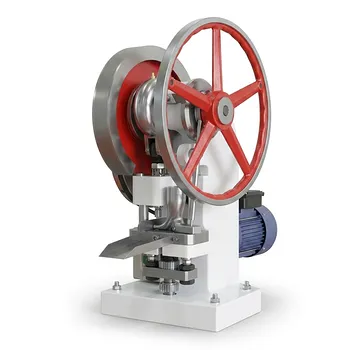
5 Ton Single Punch Tablet Press Laboratory Small Batch Production
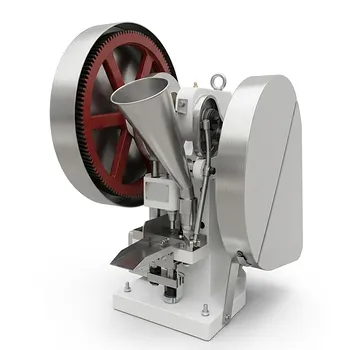
6-Ton Small Single-Punch Tablet Press — Laboratory Powder & Granule Tableting Equipment / Tablet Forming Machine

High Viscosity Planetary Centrifugal Mixing and Vacuum Defoaming Machine for Laboratory Material Preparation
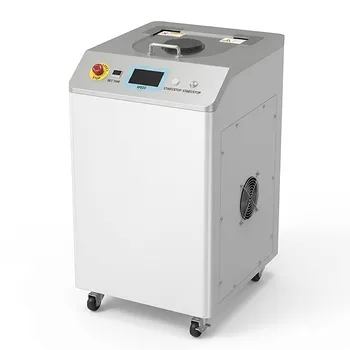
High Viscosity Planetary Centrifugal Vacuum Mixer for Material Defoaming and Uniform Mixing

Industrial Planetary Centrifugal Vacuum Defoaming Mixer for High Viscosity Paste and Advanced Material Science
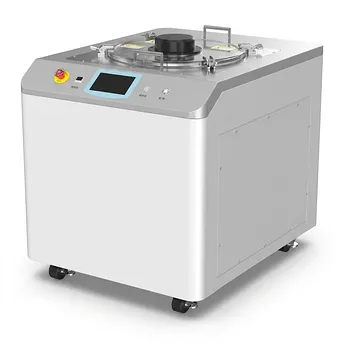
Industrial Planetary Centrifugal Vacuum Defoaming Mixer for High Viscosity Paste and Powder Homogenization
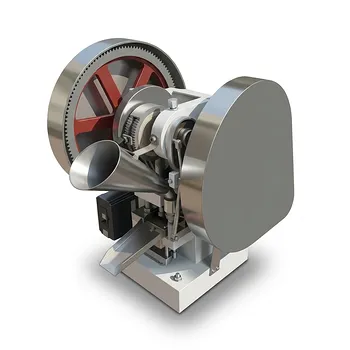
6 Ton Variable Frequency Single Punch Tablet Press