The 81:19 Gamble: Why Imperfect Mixing Silently Kills Your Optical Ceramic
Aug 21, 2026
The Invisible Architecture of Failure
The crystal rod looked perfect under room light. Dense, polished, flawless. But under a 1.5-micron laser pulse, it fractured in less than forty seconds. The post-mortem revealed not a thermal shock failure, but a ghost: a microscopic pocket of pure Erbia that had shifted the local eutectic point by a fraction of a percent. The entire component—a year of work—was already dead the moment the raw powders were blended.
We tend to obsess over the extremes of materials processing. The thousand-degree furnaces. The directional solidification rigs that cost more than a house. The final polishing stations. But high-performance ceramics like Al₂O₃-Er₃Al₅O₁₂ reveal an uncomfortable truth: catastrophic flaws are usually born in the quiet, unglamorous step of powder mixing, long before any of the impressive hardware turns on.
Why the Eutectic Won't Forgive You
Al₂O₃-Er₃Al₅O₁₂ is not a random mixture. It’s a precisely engineered two-phase eutectic system. The Alumina (Al₂O₃) and the Erbium Aluminum Garnet (Er₃Al₅O₁₂) need to solidify together in a coupled growth mode that produces interpenetrating, fault-tolerant microstructures. But that beautiful coupled growth only happens at one specific composition.
The Arithmetic That Rules the Melt
- 81 mol% Al₂O₃
- 19 mol% Er₂O₃
Deviate from this ratio even slightly, and the solidification front becomes confused. Instead of a synchronized dance, you get nucleation bursts, solitary dendrites, and phases that should never have appeared.
The Micro-Pocket Problem
Imagine you mix the powders perfectly at the macro scale—a scoop from the top matches a scoop from the bottom. Most engineers would stop there and feel satisfied. But inside that “homogeneous” powder, aggregates of pure alumina and pure erbia still exist as 50-micron neighborhoods. When your furnace ramps to 1800°C, those neighborhoods become isolated micro-crucibles, each deciding its own local solidification path. The result is a ceramic rod that looks uniform from the outside but harbors a mosaic of structural contradictions inside.
The mixing process is the only mechanism that disarms these micro-pockets before they become permanent.
What the Mixer Actually Decides
Powder mixing is not just about “combining ingredients.” It sets four critical destinies that no downstream process can fully rescue.
1. Stoichiometric Precision at the Micron Scale
Mechanical forces—shear, impact, compression—have to overcome van der Waals agglomerates and disperse each oxide particle until the 81:19 ratio is statistically true at the particle neighborhood level. This is the difference between a melt that solidifies as a single cooperative front and a melt that fragments into chaotic multi-phase growth.
2. The Stability of Directional Solidification
A stable solidification front is sensitive to constitutional supercooling. If the melt composition varies by even 2 mol% across millimeters, the front oscillates. It creates banding, voids, and eutectic colony boundaries. These defects are not recoverable; they are grown into the crystal permanently. Homogeneous mixing keeps the melt chemistry steady, and a steady melt keeps the solidification front flat.
3. Reaction Kinetics and the Speed of Creation
You aren't just mixing Al₂O₃ and Er₂O₃—you are setting up the solid-state reaction that forms Er₃Al₅O₁₂ garnet. The more intimately the particles are contacted, the shorter the diffusion distances. A high-surface-area contact network lets the garnet phase nucleate faster and finish more completely before grain growth takes over. Slow kinetics leave unreacted oxides that act as stress concentrators during cooling.
4. The Green Body as a Promise
When you press that mixed powder into a pellet, the uniformity of packing and moisture distribution determines how evenly it shrinks during sintering. A poorly mixed body develops density gradients, warps, and internal stresses that no amount of post-machining can truly heal. The green body inherits the mixer's memories.
The Psychology of Invisible Risk
There is a behavioral trap in high-end ceramics processing. As the complexity of the final component increases, our attention shifts almost entirely to the visible, expensive stages: the isotropic pressing, the vacuum hot pressing, the precisely ramped furnaces. We mentally discount the quiet, low-temperature mixing step because it looks trivial.
But risk concentrates precisely where we stop looking. In a study of aerospace ceramic failures, over 30% of in-service fractures traced back not to sintering errors, but to compositional fluctuations locked in during raw material blending. The mixer—a humble machine often sitting in a corner—holds more control over the final crystal quality than the directional solidification furnace downstream.
It’s a classic Morgan Housel asymmetry: the inputs that look small and boring often carry the greatest long-term consequences. The powder mixer is the compound-interest engine of the ceramics world.
Where the Process Can Still Break (and How to Fix It)
No single mixer solves everything. Every choice introduces a trade-off, and those trade-offs are where disciplined engineering separates a working part from a scrap.
Contamination: The Silent Eutectic Shifter
High-energy ball milling gives beautiful dispersion. But the milling media—zirconia, stainless steel, tungsten carbide—sheds. A few parts per million of foreign metal oxide can shift the eutectic temperature, nucleate unwanted phases, or create dielectric loss centers. The solution is not to avoid milling; it’s to match the media chemistry to the target ceramic and to know when to stop.
Equipment lens: High-purity planetary ball mills with alumina-lined jars and alumina balls preserve the chemical signature while delivering the mechanical energy required to break agglomerates. For contamination-critical batches, jet milling eliminates media contact entirely by using particle-on-particle impact.
Agglomeration vs. Dispersion
The same forces that break particles apart can also weld them back together through cold-welding or electrostatic attraction. Over-mixing creates harmful re-agglomerates that pack unevenly in the die. The process window is narrow.
Equipment lens: 3D powder mixers that use chaotic, multi-directional motion can achieve statistical homogeneity with minimal shear heat and without the dead zones common to conventional tumblers. When combined with gentle defoaming mixers, they preserve the green-body flowability that compaction demands.
From Mixed Powder to Dense Compact: The Complete Chain
Even perfectly mixed powder becomes useless if it doesn't consolidate correctly. A holistic solution must bridge mixing, sieving, pressing, and sintering without introducing new inhomogeneities.
- Particle size control after mixing: Vibratory sieve shakers and air-jet sieves remove rogue aggregates before they enter the press, ensuring a mono-modal distribution that densifies predictably.
- Isostatic pressing for uniform green density: Cold Isostatic Pressing (CIP) or Warm Isostatic Pressing (WIP) applies uniform pressure from all directions, erasing the density gradients that uniaxial pressing can leave behind.
- Controlled atmosphere sintering: Vacuum hot presses maintain the chemical homogeneity you fought for during mixing, applying heat and pressure simultaneously to close residual porosity without oxidation of sensitive garnet phases.
This isn't four separate operations. It's an unbroken process chain. The mixer sets the chemical potential; the press and furnace realize it as a physical solid.
| Process Stage | Technical Risk | Engineering Solution |
|---|---|---|
| Raw Powder Blending | Micron-scale compositional imbalance | High-energy planetary ball mill or jet mill with alumina-compatible media |
| Post-Mix Agglomeration | Uneven packing and shrinkage | Air-jet sieving + 3D chaotic mixing for gentle re-homogenization |
| Green Body Formation | Density gradients, laminations | Cold/Warm Isostatic Pressing (CIP/WIP) for isotropic compaction |
| Final Densification | Phase instability, residual porosity | Vacuum hot pressing maintaining precise thermal and mechanical profiles |
Designing Your Process for the Crystal, Not the Output Number
There is a moment every ceramics engineer knows. You open the furnace, and the glow of a fully dense, structurally perfect Al₂O₃-Er₃Al₅O₁₂ rod fills the viewport. That moment is an echo of decisions made weeks earlier at the mixing station.
If your primary goal is microstructural stability under laser fluence, the mixing step must be non-negotiable in its rigor—the 81:19 ratio should be verified at the sub-micron scale, not the batch average. If your priority is reaction speed and throughput, the mixer must maximize particle contact area without crossing into re-agglomeration. If optical purity is the performance gate, then every material that touches the powder—from the mixer walls to the pressing die—must not donate a single alien atom.
We build complete laboratory sample preparation solutions that treat the entire workflow as an integrated system. From jaw crushers for initial size reduction, through cryogenic grinders for temperature-sensitive batches, to planetary ball mills and jet mills that establish eutectic homogeneity, all the way to isostatic presses and vacuum hot presses that make that homogeneity permanent. The laboratory stops being a collection of independent instruments and becomes a single, coherent material-creation pipeline.
The crystal doesn't know about your furnace temperature controller. It only knows the chemistry it was given. In Al₂O₃-Er₃Al₅O₁₂, that chemistry begins and ends with how well you mixed the powders.
Quick Links
Suggested Products
V-Type Powder Mixer for Uniform Blending of Dry Powders and Granules Multi Dimensional Universal Mixer for High Uniformity Powder Blending Inclined Mixer for Homogeneous Powder Blending and Grinding Horizontal Trough Mixer for Uniform Powder and Paste Blending Industrial Double Cone Mixer for Powder Blending and Homogeneous MixingFurther Reading
The Mixing Fallacy: Why Your Composite Flour’s Uniform Color Is a Costly Illusion The Invisible Variable: Why Your Soil Test Data Is Lying to You The Micrometer Trigger: Why a Laboratory Powder Mixer Defines Effervescent Tablet Success When Trace Elements Dictate Strength: Mastering the Mixing of NiTiZn Alloys for Additive Manufacturing The Invisible Architect of Powder: How a Single Additive Saves Ductile Metals from Themselves
PowderPreparation
Last updated on May 14, 2026
Related Products
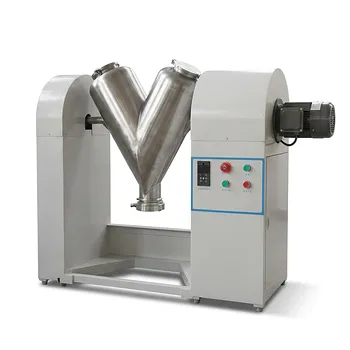
V-Type Powder Mixer for Uniform Blending of Dry Powders and Granules
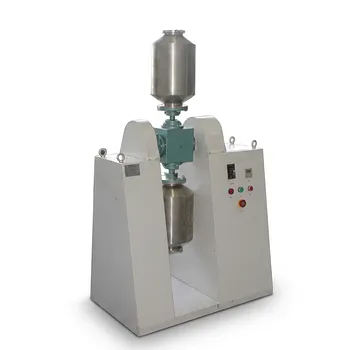
Multi Dimensional Universal Mixer for High Uniformity Powder Blending
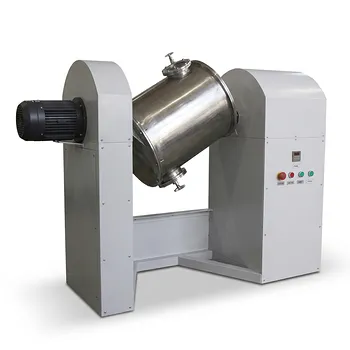
Inclined Mixer for Homogeneous Powder Blending and Grinding
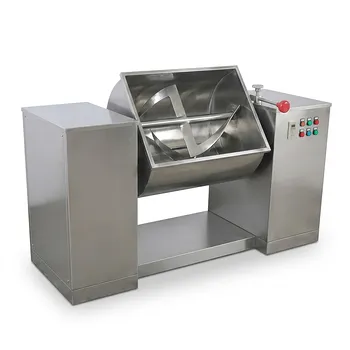
Horizontal Trough Mixer for Uniform Powder and Paste Blending
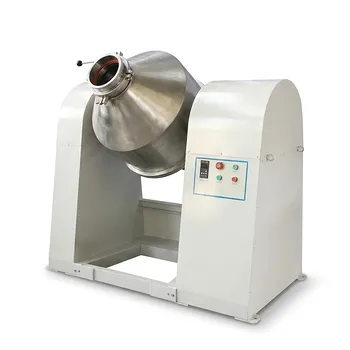
Industrial Double Cone Mixer for Powder Blending and Homogeneous Mixing
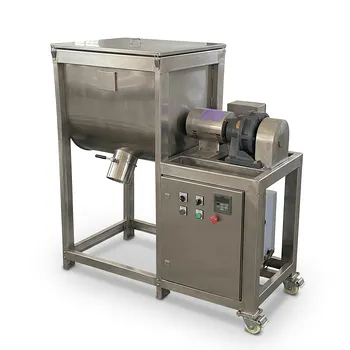
Horizontal Ribbon Mixer for Dry Powder and Slurry Blending
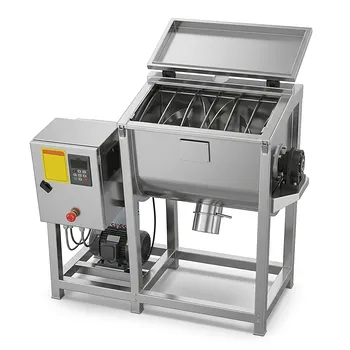
Horizontal Ribbon Mixer for Uniform Powder and Slurry Mixing
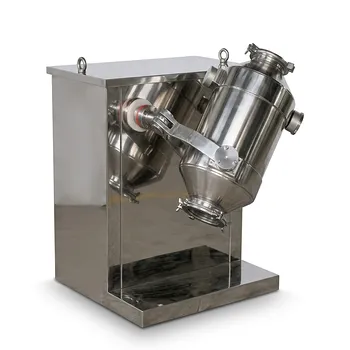
Three-Dimensional Motion Mixer for Laboratory Powder and Granule Blending
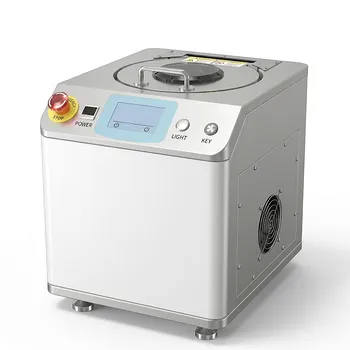
High Efficiency Vacuum Planetary Centrifugal Mixer and Defoaming Machine for Industrial Material Research and Precise Laboratory Powder Dispersion
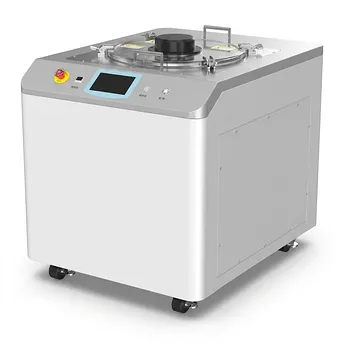
Industrial Planetary Centrifugal Vacuum Defoaming Mixer for High Viscosity Paste and Powder Homogenization
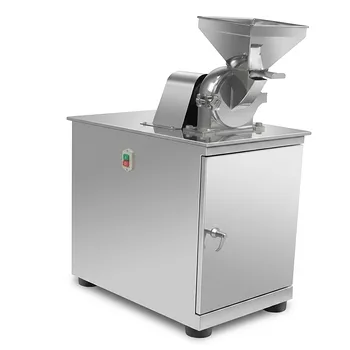
Universal Laboratory Pulverizer Grinder for Small Batch Powder Processing and Material Science Research
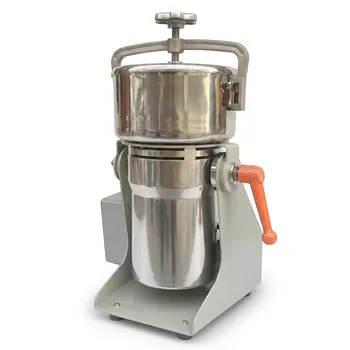
High Speed Laboratory Grinder Efficient Stainless Steel Powder Pulverizer Universal Material Science Mill for Sample Preparation
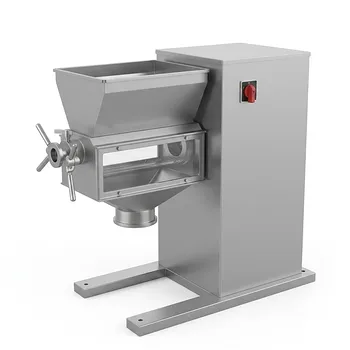
Industrial Swing Granulator for Powder Processing in Pharma Food and Chemical Industries
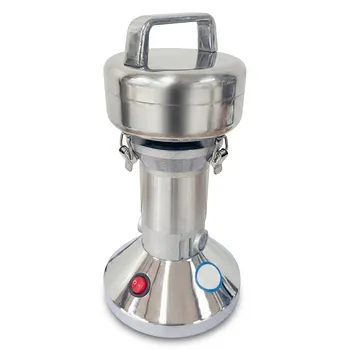
Small Trace Sample High Speed Pulverizer Grinder Laboratory Powder Mill
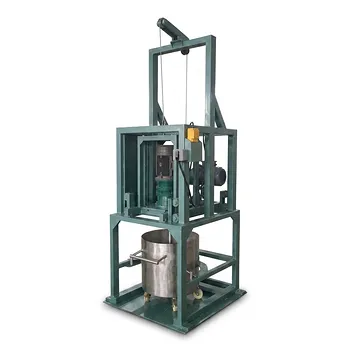
High-Speed Simple Disperser for Efficient Mixing, Dispersion, and Emulsification

Vertical Production Planetary Ball Mill for High Throughput Powder Processing

Automatic Vibrating Powder Feeder for Laboratory Material Processing Precision Vibratory Hopper Feeder for Granular and Powder Material Handling Industrial Grade Vibrating Tray Feeder for Consistent Material Sample Preparation
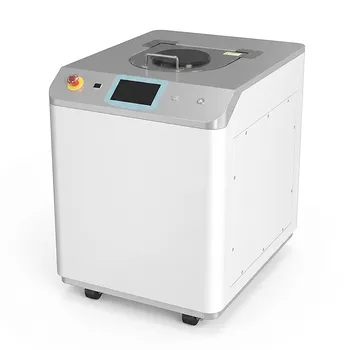
Industrial Planetary Centrifugal Vacuum Defoaming Mixer for High Viscosity Paste and Advanced Material Science
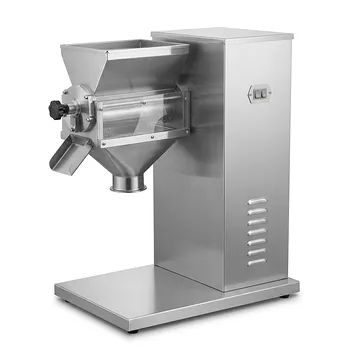
Small Swing Granulator Efficient Powder Granulation for Pharmaceutical Chemical Food Industries