The Transparent Window: How Pressure and Salt Engineer a Path of Light Through Ancient Walls
Jul 04, 2026
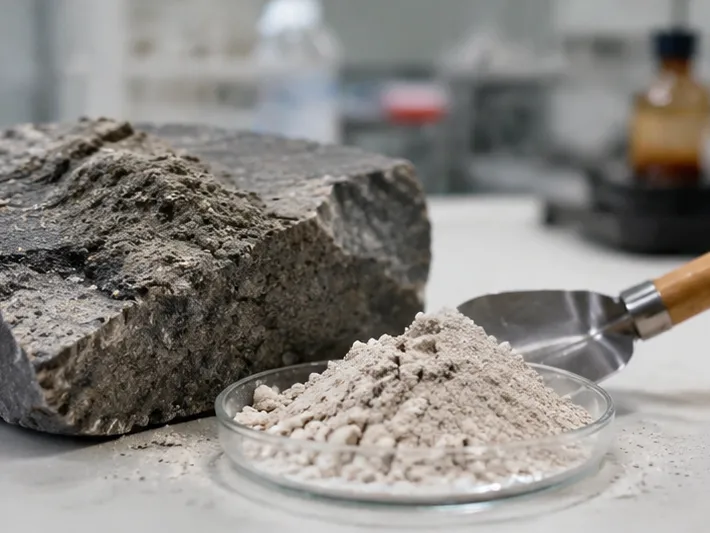
A conservator stands before a twelfth-century chapel wall. The mortar between the stones has held for eight hundred years, but now it needs repair. Match the composition wrong, and the new mortar will crack differently from the old, creating fissures that gather water and accelerate decay. She needs to know the exact recipe: how much slaked lime, volcanic ash, or river sand the original masons mixed.
She scrapes a few milligrams of powder into a vial. This dust holds the answers, but it won’t give them up easily. Under an infrared spectrometer, raw mortar acts like a wall of fog—every grain scatters the beam sideways, burying chemical signals inside an optical noise storm.
The central problem is not chemistry. It’s physics. To make an opaque solid answer questions with light, you have to engineer it into something transparent.
The Physics of Seeing Through a Solid
Why Raw Mortar Blocks Light
Mortar particles are micro-crystals with jagged edges. When infrared light hits them, each surface becomes a tiny mirror, bouncing photons at unpredictable angles. The detector ends up receiving almost none of the original beam.
Scattering is not a property of the material’s composition. It’s a structural flaw, a geometric chaos that hides the truth inside the opacity.
The Salt Matrix: KBr as a Neutral Carrier
Potassium Bromide does something remarkable: it squeezes into the spaces between mortar particles and becomes a solid, continuous bridge. KBr has no infrared fingerprint of its own across the mid-IR range where the mortar’s story is written. It’s a silent stage, letting the sample perform alone.
When you dilute the mortar powder into pure KBr, you’re not just mixing two powders. You’re surrounding every opaque grain with a material that light can travel through as if it were empty space.
This turns the problem from one of surface chaos into one of bulk transparency—an engineering challenge that compression can solve.
Why Pressure Becomes the Tool of Clarity
A Force That Erases Air
Even a perfectly mixed KBr-mortar blend is full of microscopic air pockets. Air interfaces are refractive index cliffs; each one scatters light. To eliminate them, you need force—several metric tons of it, applied evenly across a precisely machined die.
A laboratory hydraulic press doesn’t just squash the powder. It collapses the voids, forcing particles to cold-weld into a continuous glassy disk. The air, the enemy of light transmission, is driven out.
From Powder to Optical Window
Under pressure, the irregular grains within the KBr melt together without heat. The result is a pellet that behaves optically like a single crystal. The mortar fragments, now suspended in this transparent medium, intercept the infrared beam along a known path length, absorbing energy only at their characteristic vibrational frequencies.
This transformation is pure engineering romance. A handful of dust, pressed between two polished anvils, becomes a window through which a spectrometer can whisper to the past.
The Chemical Fingerprints That Pressure Reveals
Reading the Marks of Binders
Calcium carbonate, the heart of lime mortar, sings at three infrared wavenumbers: 712 cm⁻¹, 874 cm⁻¹, and a broad peak near 1437 cm⁻¹. When the pellet achieves uniform thickness and optical flatness, these peaks rise sharp and unmistakable against a quiet baseline.
The conservator can distinguish hydraulic lime—which set under water—from air-cured lime, because the former contains different silicate structures forged by the reaction between lime and pozzolan. That distinction dictates the entire repair strategy.
Seeing the Sand Itself
Quartz, the most common aggregate, has its own set of vibrations below 1200 cm⁻¹. In a poorly prepared pellet, those silica signals sink under a blanket of background scatter. With enough pressure and the right particle size distribution, they emerge clear. The conservator can not only identify the presence of sand but infer its granulometry from subtle shifts in band shape.
Decoding Centuries of Weathering
Sulfates and nitrates invade ancient mortar through groundwater and polluted air. Their telltale carbonyl and sulfate bands overlap with the lime signals at times, demanding high spectral resolution. Only a pellet with minimal scattering can deliver the signal-to-noise ratio needed to peel those overlapping fingerprints apart, revealing whether the mortar’s current state reflects the original design or a slow alteration since.
The Tensions Inherent in the Method
The Hygroscopic Trap
KBr drinks moisture from the air. Within minutes, an improperly handled pellet can absorb enough water to create a broad OH peak around 3400 cm⁻¹. That peak might belong to the antique mortar’s original hydrates, or it might be today’s humidity—only dry KBr, heated in an oven before pressing, ensures the difference is not a guess.
The Particle Size Paradox
If mortar grains are too large, they leave shadows—regions where light hits a massive crystal and scatters before reaching the detector. If they’re ground too aggressively, the heat of milling can alter some mineral phases. The art lies in finding a size distribution fine enough to behave as part of the KBr continuum, yet reached without damaging the sample’s structural integrity.
Destruction as a Prerequisite for Understanding
The KBr pellet method demands that you destroy the sample. That single milligram can never be returned to the wall. But the data gained often prevents a much larger destruction: the wrong restoration that spalls a fresco or erodes an entire façade over the next fifty years. There’s a conservation calculus here—sacrifice the micro to save the macro, a logic that only becomes comfortable when the preparation is so perfect that the sacrifice yields a complete chemical biography.
Engineering the Perfect Pellet: A Workflow, Not a Single Machine
Generations of researchers have learned that the KBr pellet is only as good as the steps that precede it. The press is the final act, not the whole story. That’s why laboratories serving the heritage science community gravitate toward integrated sample preparation systems.
The Grinding Phase
Before KBr meets mortar, both deserve individual attention. A jaw crusher or roll crusher can reduce larger fragments. A planetary ball mill can push particle sizes down to the micron range without excessive heat. If the sample contains heat-sensitive phases—such as hydrated binder minerals that might dehydrate above 60°C—a liquid nitrogen cryogenic grinder freezes the material into brittleness, letting it shatter under impact without thermal alteration.
The Sizing Gate
Vibratory sieve shakers and air-jet sieves classify the milled powder. The goal is a narrow size distribution around a few micrometers, because consistency in particle size translates directly to consistency in light transmission. A single oversized grain can create a starburst of scatter in an otherwise perfect pellet.
The Mixing Heart
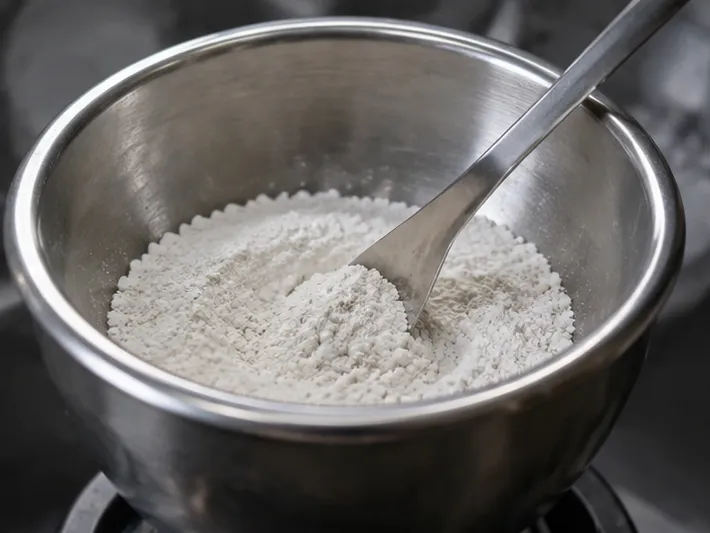
Even after grinding, mortar and KBr need to become one. A powder mixer—simple, yet precise—homogenizes the blend at a ratio typically between 1:100 and 1:200. If the mixture isn’t uniform, each pellet will tell a different story, undermining reproducibility. A defoaming mixer can also eliminate trapped air before the press even touches the powder.
The Pressing Moment
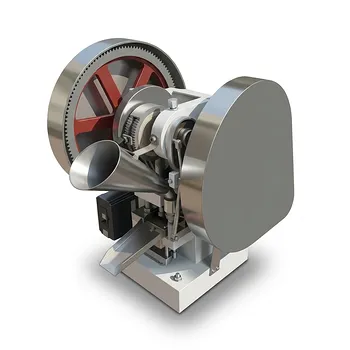
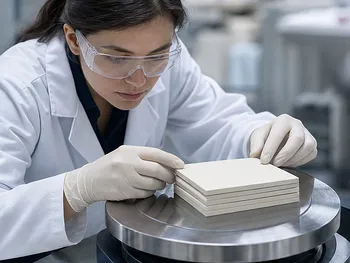
This is where the laboratory hydraulic press takes the stage. A well-engineered press applies force smoothly and steadily, preventing shear that could crack the nascent pellet. Flat platens and precision-ground dies ensure the pellet’s surfaces are optically parallel. For many labs, standard press models with 15 to 25 tons of capacity handle KBr pellets with ease. Others choose dedicated XRF pellet presses designed to deliver repeatable pressure profiles and automatic ejection.
Beyond KBr, the same presses serve broader preparation needs. Isostatic pressing—both cold and warm—offers a way to consolidate powders into complex shapes or achieve densities impossible with uniaxial pressing alone. Vacuum hot presses extend that capability to materials that must never see oxygen during consolidation. While these move beyond typical KBr pellet preparation, they reflect a deeper truth: the science of pressing spans an entire spectrum of curiosity, from historic mortar to advanced ceramics.
A Simple Table for the Hands-On Conservator
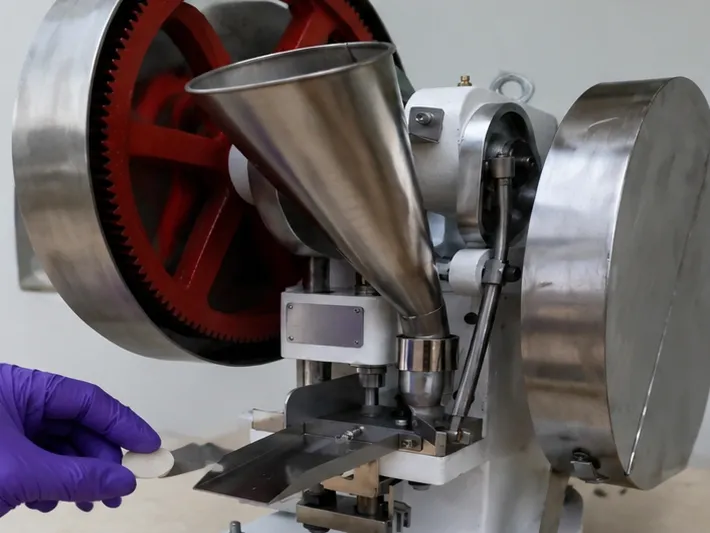
Remember these relationships when you prepare a pellet next time.
| Process Step | What It Solves | What to Watch |
|---|---|---|
| Drying KBr | Eliminates ambient moisture peaks | Oven at 110°C, store in desiccator |
| Fine grinding | Prevents scattering shadows from large grains | Cryo-grinding for heat-sensitive phases |
| Uniform mixing | Ensures representative sampling | 1-2 mg mortar per 200 mg KBr |
| Flat pressing | Creates optical window; maximizes signal | ~10 tons for a 13 mm pellet, hold for 1-2 minutes |
| Immediate analysis | Beats the hygroscopic clock | Scan within minutes of ejection |
Unlocking the Walls’ Hidden Archive
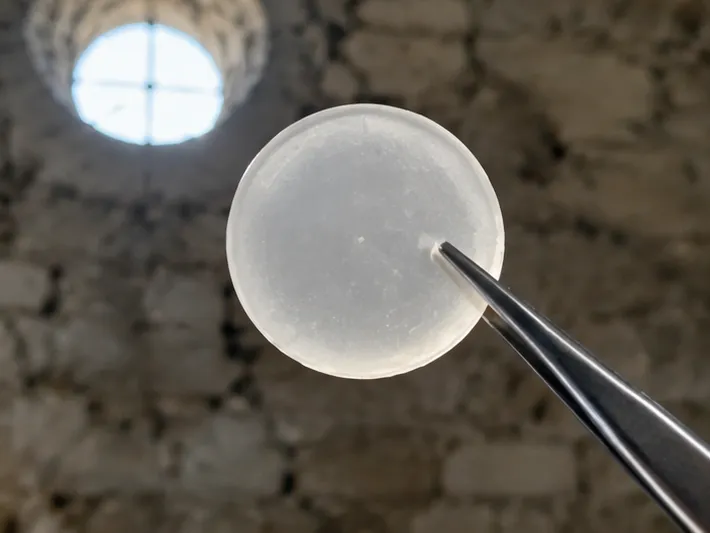
Every KBr pellet is a negotiation between destruction and revelation, between the chaos of powder and the order of optical flatness. The machines that grind, sieve, mix, and press are not just laboratory appliances. They’re the engineering framework that turns a stubborn ancient solid into a transparent witness, letting infrared photons carry chemical messages from the twelfth century into a detector, and from there into the decisions that will let the chapel walls stand another hundred years.
When your next project hangs on the clarity of a spectrum, the preparation chain matters as much as the spectrometer itself. From crushers and cryogenic grinders to hydraulic presses built for exacting pellet reproducibility, the right sample preparation system doesn’t just save time. It transforms uncertainty into evidence.
Quick Links
Suggested Products
6-Ton Small Single-Punch Tablet Press — Laboratory Powder & Granule Tableting Equipment / Tablet Forming Machine Enhanced 9 Punch Rotary Tablet Press for Powder Compaction Ordinary Type Rotary Tablet Press for Pharmaceutical Chemical Food Electronic Industries Small Hammer Crusher for Brittle Material Crushing in Mining Metallurgy and Lab Sample Preparation Manual Tablet Press with Dual Scale Pressure Gauge for Pharmaceutical Food Chemical Laboratory Sample PreparationFurther Reading
From Dust to Data: How Precision Laboratory Presses Forge Truth in Mineral Testing The Layers That Wouldn’t Lie Flat: Why Nine Sheets of Ceramic Demand a Laboratory Press That Thinks in Microns The Hidden Fracture: Why Ceramic Feed Rods Fail Before the First Melt The Invisible Architect: How Compaction Psychology Shapes Your LSM Ceramic’s Fate The Invisible Architect of Powder: How a Single Additive Saves Ductile Metals from Themselves
PowderPreparation
Last updated on May 15, 2026
Related Products
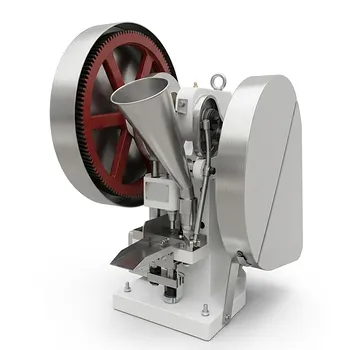
6-Ton Small Single-Punch Tablet Press — Laboratory Powder & Granule Tableting Equipment / Tablet Forming Machine
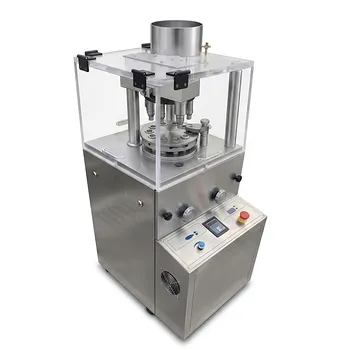
Enhanced 9 Punch Rotary Tablet Press for Powder Compaction
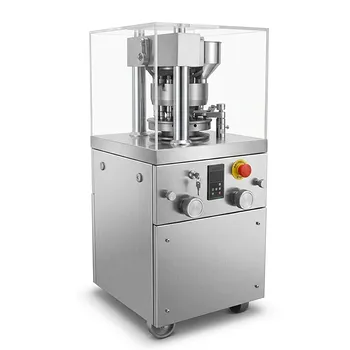
Ordinary Type Rotary Tablet Press for Pharmaceutical Chemical Food Electronic Industries
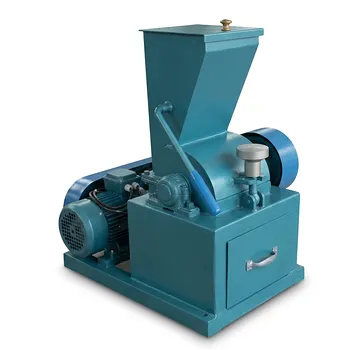
Small Hammer Crusher for Brittle Material Crushing in Mining Metallurgy and Lab Sample Preparation
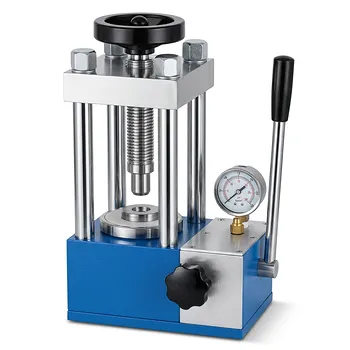
Manual Tablet Press with Dual Scale Pressure Gauge for Pharmaceutical Food Chemical Laboratory Sample Preparation