The Breaking Point: What a Hydraulic Press Reveals About Concrete—and Our Own Biases
Jun 19, 2026
The Sound a Structure Makes Before It Fails
You don’t hear it in the building. You hear it in the lab.
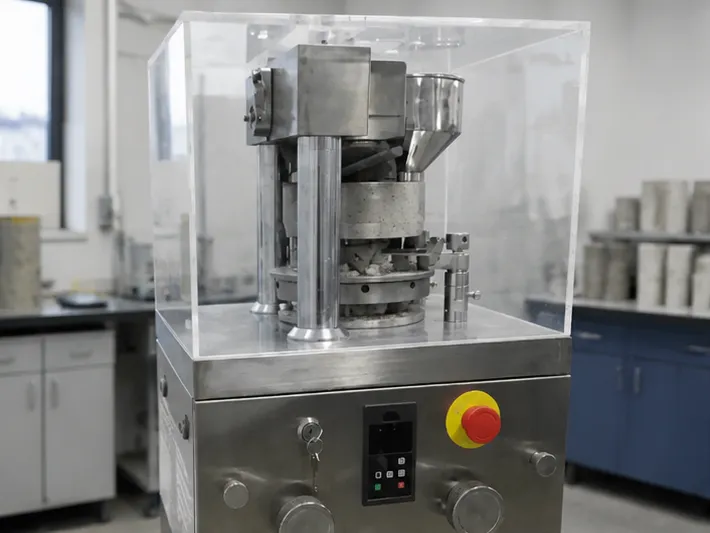
A concrete cylinder sits between two hardened steel platens. Hydraulic fluid begins to move. Somewhere inside the specimen, micro-cracks propagate. Then, in a fraction of a second, the cylinder ruptures with a sharp crack. The digital readout freezes.
That number—the peak load in kilonewtons—will determine whether a bridge opens, a dam gets signed off, or a mix design gets scrapped. It is one of the most democratically trusted numbers in civil engineering.
And it is terrifyingly easy to get wrong.
Engineers treat the hydraulic press as an oracle. In reality, it is a translator. It turns physical failure into digits, but it cannot filter out the noise introduced by the process itself. If we misunderstand what the machine actually measures, we build false confidence into our structures.
Why Concrete Strength Is Not a Material Property
We speak of “40 MPa concrete” as if it were a fixed attribute, like density or color. It is not.
Compressive strength is a system response. Change the loading rate, the specimen’s end condition, or the machine’s stiffness, and the same mix design can report numbers 15% apart. The hydraulic press does not measure an inherent truth—it measures the interaction between a carefully defined protocol and a heterogeneous brittle solid.
This is where psychology intrudes.
When a test result matches our expectation, we trust the machine. When it doesn’t, we doubt the operator, the curing, the aggregate—anything but the press. That asymmetry of suspicion is expensive. It hides calibration drift and procedural sloppiness until a series of tests, or worse, a structural element, reveals the error.
The Three Variables That Corrupt Your Data
A laboratory hydraulic press is designed to remove ambiguity. In practice, three variables slip past even conscientious technicians.
1. Loading Rate: The Speed of Deception
Concrete is strain-rate sensitive. Load it too quickly, and the specimen appears stronger. Too slowly, and micro-cracking accumulates, lowering the apparent ultimate strength. International standards specify a constant stress rate (often 0.2–1.0 MPa/s) precisely because human intuition about “slow and steady” cannot be trusted.
Modern servo-controlled presses maintain this rate within fractions of a percent. Without that control, you are not measuring your mix design. You are measuring your pump.
2. Specimen Parallelism: The Geometry Tax
A 150 mm cube that is 0.5 mm out of square concentrates stress on one edge. The failure initiates there, not through the bulk. The recorded strength drops not because the concrete is weak but because the load introduction was uneven.
High-precision presses use spherical-seated upper platens to compensate for minor angular errors. They can correct small sins, but they cannot resurrect a poorly ground specimen. The data will still say “failure,” but it won’t say why.
3. Calibration Fade: The Drift in the Background
Load cells and pressure transducers drift. A machine that hasn’t been verified against a reference standard in 12 months may be 2% off. Two percent sounds trivial—until you multiply it across a 10,000-specimen quality control program or a critical safety factor of 1.4.
Regular calibration with traceable load standards is the only defense. The press doesn’t know it’s lying. It simply converts pressure into digits, faithfully, wrongly.
How the Press Becomes a Materials Discovery Engine
When the variables are tamed, the hydraulic press transforms from a pass/fail device into a quantitative analytical instrument.
Nanomaterials and the Search for Ductility
Cementitious matrices are brittle by nature. Researchers add carbon nanotubes or graphene oxide at fractions of a percent. The press measures the subtle shift in post-peak behavior—not just the maximum load, but the area under the curve. That area is toughness, and toughness is what keeps a building standing during an earthquake.
The Fiber Bridging Effect
Steel or polymer fibers don’t prevent the first crack. They bridge the crack after it forms, transmitting stress across the fracture plane. A well-calibrated press captures the load drop, then the plateau, then the final decay. That signature tells you the fiber volume fraction wasn’t just mixed in—it was working.
Recycled Aggregates and the Truth About Sustainability
Replacing natural stone with crushed recycled concrete sounds virtuous. The press quantifies the penalty. A 10% replacement might lower strength by 3%; a 50% replacement might drop it by 15%. Whether that penalty is acceptable depends on the safety factors embedded in the design. Without the press, you’re guessing. With it, you’re negotiating with reality.
The Hidden Chain: Why Sample Preparation Is Part of the Test
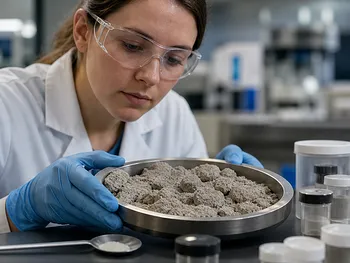
A hydraulic press only sees the specimen in front of it. If that specimen was poorly prepared—inadequately mixed, improperly cured, or cut from a non-representative batch—the machine reports a perfect failure of a flawed proxy.
This is where the laboratory workflow matters as much as the press itself.
| Workflow Step | Risk if Ignored | Equipment Required |
|---|---|---|
| Aggregate Crushing | Unrepresentative particle size distribution skews packing density | Jaw crushers, roll crushers |
| Powder Milling (for micro-analysis) | Incomplete reactions in alternative cements | Planetary ball mills, jet mills |
| Sieve Classification | Unknown fines content alters water demand | Vibratory sieve shakers, air-jet sieves |
| Mixing and Defoaming | Entrapped air voids weaken the matrix | Planetary mixers, defoaming mixers |
| Specimen Compaction | Inconsistent density inside the mold | Standard lab presses, isostatic presses |
When a hydraulic press delivers an unexpected strength value, the root cause sits further upstream in this chain more often than engineers admit. Addressing that chain systematically—with crushers, mills, sieves, and mixers designed for material science workflows—removes the variables that make compressive strength appear erratic.
When Isostatic Logic Enters the Lab
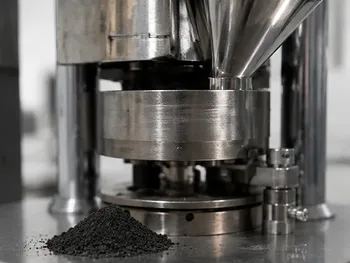
Uniaxial compression is the standard for concrete, but materials development increasingly reaches for isostatic pressing when producing uniform test specimens from powders.
A Cold Isostatic Press (CIP) applies pressure uniformly through a liquid medium. The resulting green body has homogeneous density—no gradients, no lamination cracks. For researchers testing novel cementitious powders, geopolymers, or ceramic-reinforced composites, CIP-prepared specimens eliminate the density variability that confuses mechanical test results.
The same logic extends to XRF pellet presses for chemical analysis. If you want to know the elemental composition of a cement or an alternative binder, you need a pellet with a perfectly flat, uncontaminated surface. A dedicated press, designed to hit the exact tonnage every time, removes the operator’s thumb from the scale.
Reconciling the Psychology with the Physics
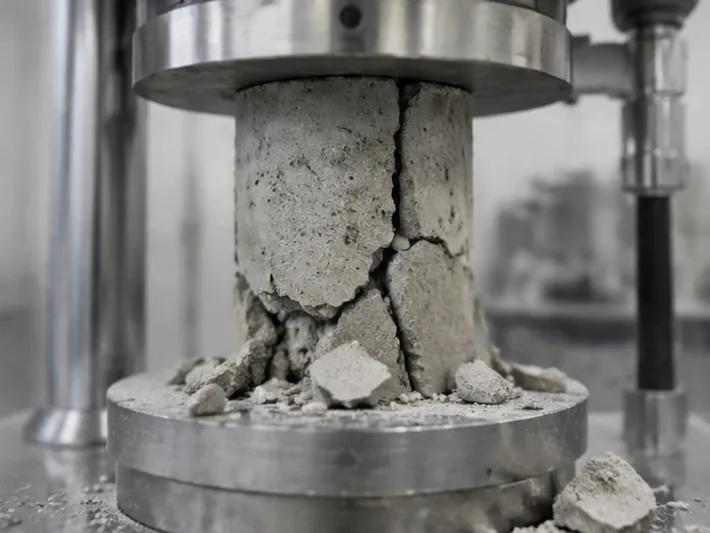
Every hydraulic press test presents a choice: trust the number or question it.
Engineers who understand the fragility of the measurement chain do both. They trust the number because they have controlled the loading rate, verified the specimen geometry, calibrated the load cell, and prepared the sample with instruments that don’t introduce undisclosed variance.
The machine becomes a witness, not a judge.
That shift in mindset changes how labs purchase equipment. They start looking for presses with closed-loop servo control, with documented platen parallelism, with calibration certificates traceable to national standards. They invest in the upstream tools—crushers, mills, sieve shakers, mixers—that make the downstream number defensible.
A Solution That Covers the Entire Measurement Chain
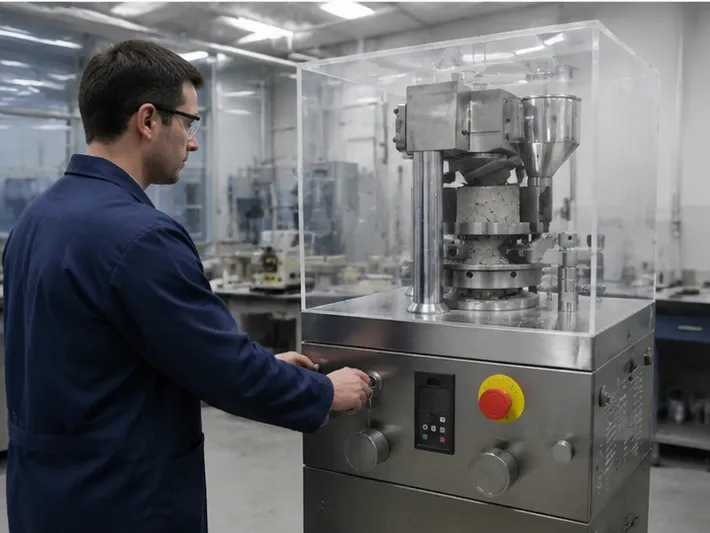
We build laboratory sample preparation and testing systems for exactly this reality.
When you need to crush aggregate from a quarry and produce standardized specimens, our jaw crushers and roll crushers give you controlled particle size reduction. When you’re developing low-carbon cements and need to mill to analytical fineness, our planetary ball mills and jet mills deliver reproducible particle size distributions. When gradation matters, our vibratory sieve shakers and air-jet sieves quantify the fractions that determine packing and water demand.
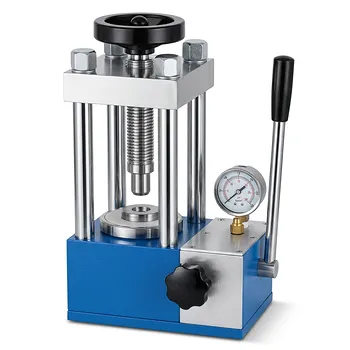
And when it is time to condense all that preparation into a single, decisive number, our hydraulic press portfolio offers:
- Standard Lab Presses with rigid frames and precise pressure control for everyday concrete cylinder and cube testing
- XRF Pellet Presses that deliver flat, dense surfaces for spectroscopic analysis of raw materials
- Cold and Warm Isostatic Presses for producing test specimens with isotropic density—critical for powder-based material research
- Hot Presses and Vacuum Hot Presses for advanced composites and ceramics that push beyond conventional concrete
Every unit is engineered to remove the operator-dependent variables that undermine data trust. Servo-controlled loading rates, digital pressure transducers, and certified calibration protocols turn the hydraulic press from a potential source of error into the most reliable witness in the lab.
The Machine That Sets the Standard
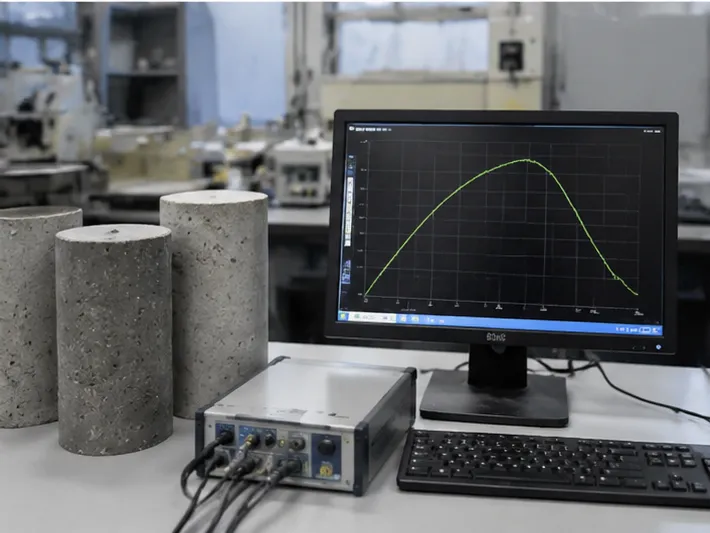
Concrete will continue to be the world’s most ubiquitous structural material. Its sustainability, its safety margins, and its next-generation formulations all depend on numbers that cannot be disputed.
Those numbers don’t come from concrete. They come from the instruments we choose to interrogate it.
Choose instruments that refuse to flatter your expectations. Choose a workflow that leaves no step unaccounted for, from the first crush of the aggregate to the final fracture of the cylinder. That is how data stops being a story we tell ourselves and starts being a foundation we can build on.
Quick Links
Suggested Products
Ordinary Type Rotary Tablet Press for Pharmaceutical Chemical Food Electronic Industries Hydraulic Double Shaft Disperser for High Viscosity Liquid Mixing and Dispersion 6-Ton Small Single-Punch Tablet Press — Laboratory Powder & Granule Tableting Equipment / Tablet Forming Machine Enhanced 9 Punch Rotary Tablet Press for Powder Compaction 5 Ton Single Punch Tablet Press Laboratory Small Batch ProductionFurther Reading
The Invisible Architect: How Compaction Psychology Shapes Your LSM Ceramic’s Fate The Cracks You Don’t See: How Pressing Errors Sabotage Self-Reinforced Beta-Si3N4 Ceramics The Invisible Bridge: How Controlled Pressure Shapes the Future of Ceramic-Steel Brazing The 15-Ton Truth: Why Your Elemental Analysis Is Only as Good as Your Pellet The Moment of Truth in Solid‑Lubricant Composites: Why Your Hydraulic Press Decides Everything
PowderPreparation
Last updated on May 15, 2026
Related Products
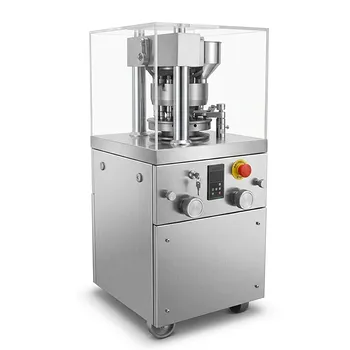
Ordinary Type Rotary Tablet Press for Pharmaceutical Chemical Food Electronic Industries
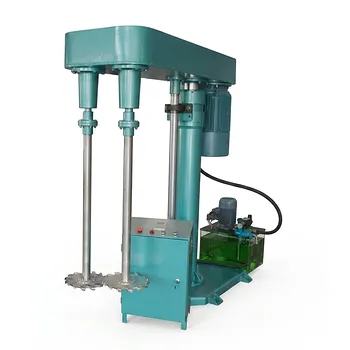
Hydraulic Double Shaft Disperser for High Viscosity Liquid Mixing and Dispersion
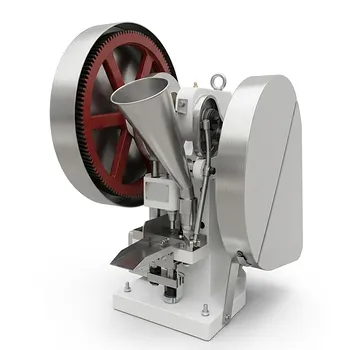
6-Ton Small Single-Punch Tablet Press — Laboratory Powder & Granule Tableting Equipment / Tablet Forming Machine
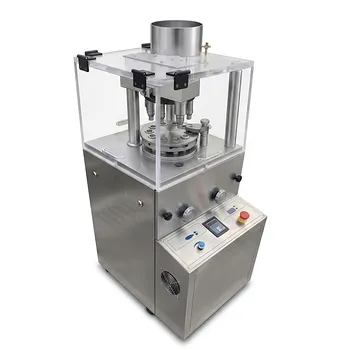
Enhanced 9 Punch Rotary Tablet Press for Powder Compaction
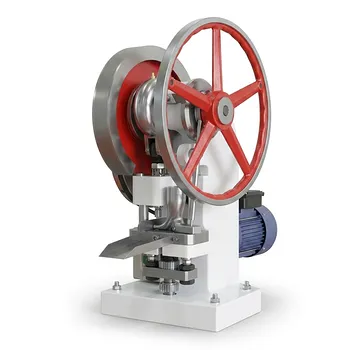
5 Ton Single Punch Tablet Press Laboratory Small Batch Production
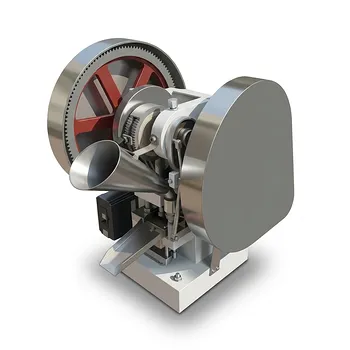
6 Ton Variable Frequency Single Punch Tablet Press