The Stronger You Grind, the Weaker It Flows: The Counterintuitive Art of Gentle Drum Mixing
Aug 03, 2026
The Moment the Nozzle Stutters
The nozzle stuttered. Barely perceptible—a flicker in the gas flow, like a heartbeat skipping once.
To the operator, it was just a blip. Pressures were nominal. Temperatures locked. Yet under the microscope, the cold-sprayed polymer coating told a different story: a ghost-like band of porosity, invisible to the naked eye, running through the deposit.
The powder had passed every sieve test. It was dry, specified, certified. Inside the feed hopper, however, a quiet conspiracy was unfolding.
Van der Waals forces and capillary bridges were coaxing particles into soft flocks. These clumps could be crushed between thumb and forefinger, but they stubbornly resisted the gentle draw of gravity into the nozzle throat. The coating wasn’t failing because of bad chemistry. It was failing because the powder had lost its ability to flow like a liquid.
Here, instinct screamed for more violence. “Run it through the high‑energy mill again. Crush the agglomerates.”
That instinct is often wrong.
The Hidden Architecture of a Clump
Not all lumps are created equal. This is the first lesson the powder rheology teaches—and the first one we forget when a process goes sideways.
We tend to see any clump as an enemy that must be shattered. But there is a fundamental difference between a hard aggregate and a soft agglomerate.
- Hard aggregates are particles fused by sintering, chemical bonding, or partial melting. They require fracture mechanics: high‑energy impacts that split solid bridges.
- Soft agglomerates are held together by surface forces—electrostatics, moisture, or weak interlocking. They don’t need to be crushed; they need to be persuaded apart.
In polymer powder processing, most post‑storage clumps fall into the soft category. They form quietly during transport, under the weight of the powder column, or from ambient humidity.
If you attack a soft agglomerate with a high‑shear mill, you may solve the immediate clump. But you also risk creating new, charged surfaces that accelerate re‑clumping. You spend money and energy to make the problem worse.
The engineering bias is seductive: when flow fails, add energy. The counterintuitive truth is that this material needs the opposite—a controlled, low‑intensity cascade.
A Drum Mixer Does Not Grind. It Unravels.
Picture a rotating cylinder, half‑filled with powder. No blades, no hammers, no media.
As the drum turns, the powder bed lifts and continuously cascades. The particles fall, collide with the container wall, and slide past each other in a rolling surface layer.
This is the core mechanism: mechanical impact without fracture.
Through this rhythmic tumbling, a drum mixer brings three precise forces to bear on soft agglomerates:
- Surface attrition. The outer surfaces of clumps wear away particle by particle, like river stones smoothing. No sudden breakage—just a gradual reduction to primary particles.
- Shear in the flowing layer. The velocity gradient at the surface of the powder bed stretches and separates clusters. It’s a viscous‑like flow that dismantles cohesion without fragmentation.
- 3D spatial redistribution. Multi‑axis or three‑dimensional drum motions ensure that no pocket remains static. Every granule sees the same mechanical history, eliminating “dead zones” where agglomerates could hide and grow.
It is not a violent process. It is patience, mechanized.
The Fluid That Isn’t
Once de‑agglomerated, the polymer powder behaves less like a solid and more like a fluid.
This is the state a cold spray system or an extrusion feeder desperately needs. The powder must exit the hopper with the consistency of a dense liquid—constant mass flow, no bridging, no ratholing.
A drum mixer’s true gift is not just breaking clumps. It’s restoring fluidity.
When the powder is fluid:
- The feed rate becomes a constant, not a variable.
- The pressure in the spray nozzle stops oscillating.
- The velocity of particles at impact stabilizes.
- The coating builds up in uniform, predictable layers.
In short, the drum mixer becomes the guardian of process stability. The nozzle never stutters because the material arriving at it has already been tamed.
A Psychological Bias Toward Violence
There is a deeply human reason we over‑mill our powders.
A high‑energy planetary ball mill screams with power. The noise, the heat, the visible destruction—they all signal that “something is happening.” A slow‑turning drum mixer, by contrast, is almost silent. It looks like it’s doing nothing.
We equate noise with effectiveness. This is the psychological trap.
The same bias shows up beyond the lab. We over‑train athletes until they break down. We over‑water plants until roots rot. We mistake intensity for progress.
In powder processing, the result is over‑processing. Extended drum mixing can eventually round off particles, wear down surface texture, and subtly change aerodynamic drag. The fluidity might look better, but the deposition efficiency drops.
The art is knowing the line.
A correctly specified drum mixer, run for the right duration, delivers exactly the mechanical energy needed to free the agglomerates—and then stops. It respects the material enough not to overwork it.
The Limits of a Gentle Tumble
Of course, the drum mixer is not a universal solvent for all powder ills. Acknowledging its boundaries is what makes it a precision tool—not a blind hammer.
It cannot break hard aggregates. If your powder contains fused bridges, the tumbling cascade simply lacks the fracture energy. That job belongs to jaw crushers, jet mills, or planetary ball mills upstream.
It cannot create new particle sizes. Drum mixing targets agglomerates, not primary particle distribution. If your PSD is wrong, sieving and classification must come before or after.
It can, if misused, degrade morphology. Too many revolutions will smooth sharp edges, generate fines, and potentially alter flow behavior in ways that harm coating performance.
This is why the drum mixer is not a standalone miracle. It is one precisely tuned stage in a larger sequence.
The Complete Ecosystem: From Crusher to Compact
The astute lab manager soon realizes that powder processing is a chain, not a single link. A drum mixer solves the fluidity crisis just before the nozzle. But what prepared the powder to reach that point? And what happens after the mix?
For a polymer coating line—or any advanced powder route—the workflow often looks like this:
| Stage | Purpose | Equipment Typically Needed |
|---|---|---|
| Primary crushing | Reduce large, hard feedstock | Jaw crusher, roll crusher |
| Cryogenic milling | Embrittle tough, ductile materials | Liquid nitrogen cryogenic grinder |
| Fine milling / de‑agglomeration | Particle size control and soft agglomerate dispersion | Planetary ball mill, jet mill, drum mixer |
| Classification & sieving | Verify and narrow particle distribution | Vibratory sieve shaker, air‑jet sieve shaker |
| Homogenization | Blend multiple components uniformly | Powder mixer, defoaming mixer |
| Compaction / shaping | Consolidate into test specimens or pre‑forms | Cold isostatic press (CIP), XRF pellet press, vacuum hot press |
A drum mixer lives in the middle of this ecosystem. Feed it poorly pre‑crushed particles, and its gentle energy is wasted. Neglect sieving afterward, and out‑of‑spec fines will still ruin the spray.
But when the chain is designed end‑to‑end, each piece reinforces the next. The press sees a consistent powder. The nozzle sees a fluid. The coating sees a legacy of control.
Falling into Order
There is a quiet elegance to a rotating drum: powder lifted by friction, cascading under its own weight, gently unmaking the clusters that static and time had built.
No cutting. No grinding. Just a controlled, repetitive fall.
When the drum stops, the polymer powder is chemically unchanged. Physically, it has been transformed. It will flow when asked. It will spray with uniformity. The pressure gauge will hold steady.
Order, it turns out, does not always require more force. Sometimes, it simply requires the right motion applied with patience—and the awareness that the most aggressive tool is rarely the wisest.
To build that wisdom into your own powder workflow, from the first crush to the final compact, reach out to a team that lives this physics every day. Contact Our Experts to design an integrated sample preparation chain that turns unpredictable powders into precise, repeatable results.
Quick Links
Suggested Products
Three-Dimensional Motion Mixer for Laboratory Powder and Granule Blending Industrial Double Cone Mixer for Powder Blending and Homogeneous Mixing Inclined Mixer for Homogeneous Powder Blending and Grinding Horizontal Trough Mixer for Uniform Powder and Paste Blending Horizontal Ribbon Mixer for Uniform Powder and Slurry MixingFurther Reading
The Hidden Variable: Why Your Composite’s Fate is Decided Before the Sintering Furnace Even Warms Up The Silent Choreographer: How 3D Powder Mixing Dictates the Purity of Ti₂SnC MAX Phases The Micrometer Trigger: Why a Laboratory Powder Mixer Defines Effervescent Tablet Success When Two Extra Minutes Define a Skyscraper: The Precision Mixing Protocol That Nanomaterials Demand The Invisible Variable: Why Your Soil Test Data Is Lying to You
PowderPreparation
Last updated on May 14, 2026
Related Products
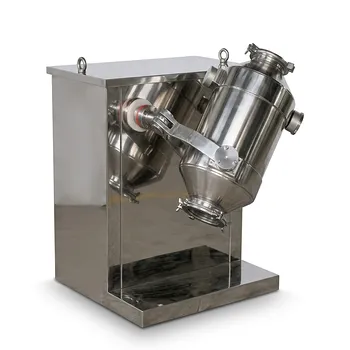
Three-Dimensional Motion Mixer for Laboratory Powder and Granule Blending
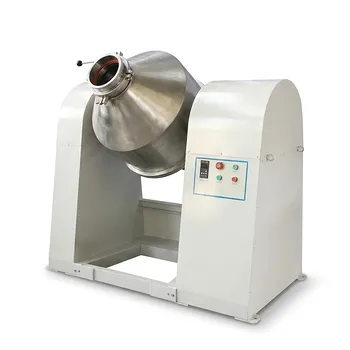
Industrial Double Cone Mixer for Powder Blending and Homogeneous Mixing
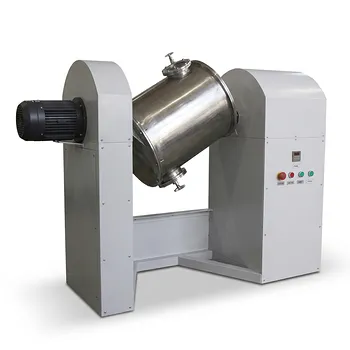
Inclined Mixer for Homogeneous Powder Blending and Grinding
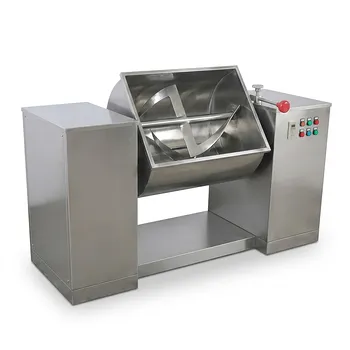
Horizontal Trough Mixer for Uniform Powder and Paste Blending
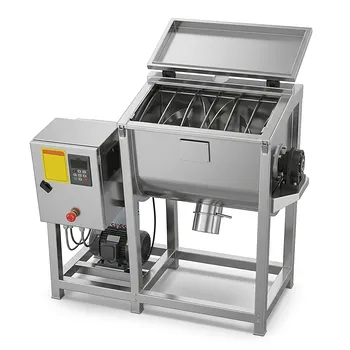
Horizontal Ribbon Mixer for Uniform Powder and Slurry Mixing
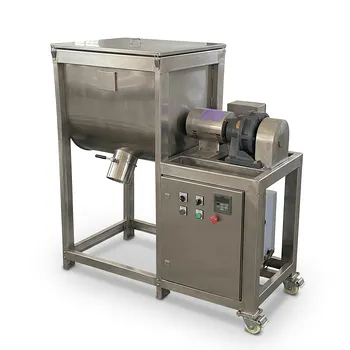
Horizontal Ribbon Mixer for Dry Powder and Slurry Blending
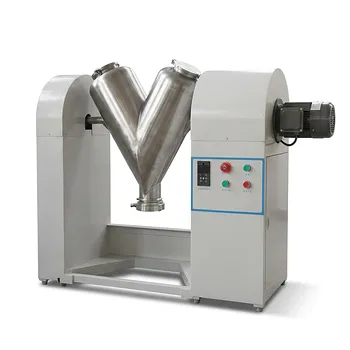
V-Type Powder Mixer for Uniform Blending of Dry Powders and Granules
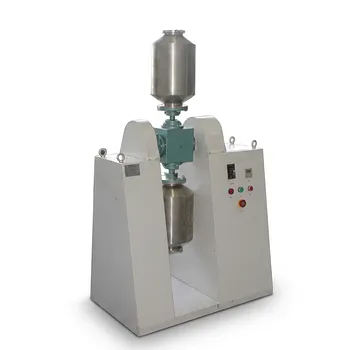
Multi Dimensional Universal Mixer for High Uniformity Powder Blending