The Sintering Speed Trap: Why Precision Vacuum Hot Pressing Still Wins the Race for W18O49 and Beyond
Sep 15, 2026
The 2 A.M. Frustration in the Lab
A postdoc stares at a cracked pellet. It was supposed to be single-phase W18O49, the tungsten oxide with tantalizing thermoelectric promise. Instead, she has a coarse-grained disc with ghost peaks of WO2 in the XRD pattern. The traditional vacuum hot press ran at 1100°C for four hours. The result? Disordered grain growth, incomplete phase transformation, and a density stuck at 89%.
Across the hall, a colleague talks about Spark Plasma Sintering. “60 minutes,” he says. “97% density. Perfect phase.” Her grant can’t cover the SPS time. But here’s the thing: the hot press in her lab is a basic model. Its temperature uniformity is sloppy. Its powder preparation is an afterthought. She assumes the technology is the ceiling. It’s not.
In material science, we often fall into a cognitive trap. We believe that a radical new tool is the only answer, when the quieter answer is mastering the tools we already have. The real story of W18O49 isn’t SPS versus traditional hot pressing. It’s about how deeply you control the variables upstream of the die.
The Overlooked Lever: Powder Before Pressure
Why SPS Feels Like Magic
Industrial SPS uses pulsed DC current to create internal Joule heating. It generates sparks between particles, cleans surfaces, and achieves heating rates up to 100 K/min. You get in-situ synthesis of W18O49 from WO3 and WO2 in under an hour. Grains stay fine. Density tops 99%.
It is genuinely brilliant. But it also comes with geometry limits, high capital costs, and pulsed-power maintenance that scares off many labs.
The Forgotten Frontier
Conventional vacuum hot pressing relies on external radiation. Heating is slower. If your powder is agglomerated, reactive, or inhomogeneous, the long dwell times invite trouble: grain coarsening, volatile element loss, incomplete reactions.
But what if the powder enters the die already activated?
This is where precision powder processing changes the economics. When you combine high-energy planetary ball milling, controlled atmosphere sieving, and defoaming mixing, you don’t need a spark to clean and activate particle surfaces. The mechanical energy has already done that job.
- Planetary ball mills reduce WO3 and WO2 to a submicron, intimately mixed blend. Particle contact area skyrockets.
- Air-jet sieving strips fine agglomerates, ensuring uniform packing density inside the graphite mold.
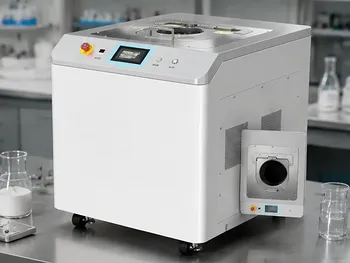
- Vacuum or centrifugal mixers eliminate voids and entrapped gases before the die even closes.
With a powder this well-prepared, a modern vacuum hot press with precise ramping profiles and tight temperature uniformity can achieve stunning results that blur the line with SPS.
Pressure as a Choreographer
The Hidden Power of Axial Stress
In the dance of tungsten and oxygen atoms, pressure is the choreographer. SPS uses axial pressure to induce preferred grain orientation in W18O49, which enhances anisotropic thermoelectric properties. Traditional hot presses do exactly the same thing—if you can maintain that pressure uniformly at the target temperature and hold it with micron-level parallelism.
A high-end vacuum hot press with servo-hydraulic control applies pressure with less than ±0.5% deviation over hours. The ram stays perfectly perpendicular. This is not your grandfather’s lab press. It’s a precision instrument that replicates the crucial mechanical boundary conditions of SPS—pressure, dwell time, controlled atmosphere—while giving you freedom on sample shape.
And here’s the psychological shift: instead of fighting the long dwell, you use it to let the W18O49 phase fully order itself. With particle surfaces already activated, the extra time becomes a refinement stage, not a grain-growth penalty.
A Side-by-Side Reality Check
| Factor | SPS (Industrial) | Optimized Vacuum Hot Pressing |
|---|---|---|
| Heating mechanism | Internal Joule effect (pulsed DC) | External radiation with precision power control |
| Cycle time | < 1 hour | 2–4 hours (but with batch flexibility) |
| Phase purity (W18O49) | Very high (in-situ) | Very high (when powder is pre-activated via milling) |
| Grain size | Ultra-fine (growth suppressed) | Fine to medium (manageable with controlled ramp/soak) |
| Relative density | 97–99%+ | 97–98%+ achievable |
| Shape flexibility | Limited to symmetric, current-path-friendly shapes | Complex disks, rings, near-net shapes |
| Capital cost | Very high | Moderate |
| Operator skill | High (electrical + mechanical) | Mechanical, widely accessible |
The table doesn’t declare a universal winner. It reveals a pragmatic truth: for most labs and pilot lines chasing W18O49—or any advanced oxide—a modern, precisely controlled vacuum hot press supported by rigorous powder preparation delivers the performance that matters, without locking you into a single expensive asset.
The Psychology of “Good Enough” Technology
We are wired to chase novel solutions. The SPS paper with its steep heating curves and 99.8% density is sexy. But in materials engineering, reliability and flexibility compound quietly. A vacuum hot press that works every day, on multiple materials, with interchangeable tooling and straightforward maintenance, creates more cumulative insight than a finicky SPS that sits idle half the year.
The breakthrough for W18O49 isn’t a pulse current. It’s realizing that the synthesis path starts when you choose your milling media, not when you close the sintering circuit.
Building Your Own Sintering Advantage
Start with the Powder
- High-energy milling: Use a planetary ball mill to bring WO3 and WO2 down to nanoscale homogeneity. Particle surface activation here mimics what SPS does with sparks.
- Precision sieving: A vibratory or air-jet sieve shaker ensures you sinter from a tight particle size distribution, eliminating differential shrinkage.
- Defoaming and mixing: Remove trapped air to minimize hot-press outgassing and void formation.
Dial In the Hot Press
- Pressure control: Apply a two-stage profile—low pressure during outgassing, then ramp to 30–50 MPa at the sintering plateau.
- Temperature ramp: A modern PID-controlled vacuum hot press can follow a multi-segment profile that mimics SPS’s rapid heating (within the limits of the graphite element) while avoiding thermal shock.
- Atmosphere: Maintain a clean vacuum or flowing argon. Oxygen partial pressure matters tremendously for tungsten oxides.
Verify the Output
Measure density, XRD, and SEM. The result should be a single-phase W18O49 disc with >97% density and oriented grains. Not in 60 minutes, perhaps, but in an afternoon—and with the ability to scale to shapes an SPS would reject.
The Quiet Giant in Your Toolbox
Spark plasma sintering will continue to push boundaries. But the quiet giant—and the one most accessible to material innovators—remains the well-engineered vacuum hot press, fed by a complete powder preparation line. That combination doesn’t just synthesize W18O49. It synthesizes process confidence.
When you control the powder, you control the phase. When you master the pressure, you master the grain. The rest is just heat and time—two variables you can measure and optimize without a million-dollar pulsed power supply.
For those ready to transform their oxide powder into recording-breaking ceramics, the path often runs through smarter sample preparation, not just faster sintering. Contact Our Experts
Quick Links
Suggested Products
Dual Cup Vacuum Centrifugal Mixer Planetary Paste Defoaming Machine Industrial Material Processor 非介入式材料均质机真空脱泡行星搅拌高粘度混合设备 High Speed Vacuum Planetary Centrifugal Mixer and Defoamer for Industrial Paste Processing High Efficiency Vacuum Planetary Centrifugal Mixer and Defoaming Machine for Industrial Material Research and Precise Laboratory Powder Dispersion Industrial Vacuum Kneader for High-Viscosity Silicone, Rubber, and Compound MixingFurther Reading
The Invisible Architect of Failure: Why a Bubble in Your Resin-GelMA Mix Casts a Shadow on Your Entire Print The Hidden Disorder in Your Battery Slurry—and the Precision Tool That Destroys It The Most Important Mixer in Your Lab Isn’t a Mixer. It’s an Insurance Policy Against Defects. The 3-Minute Transformation: How Mixing Speed Reveals the Hidden Architecture of Next-Gen Batteries When Two Extra Minutes Define a Skyscraper: The Precision Mixing Protocol That Nanomaterials Demand
PowderPreparation
Last updated on May 14, 2026
Related Products
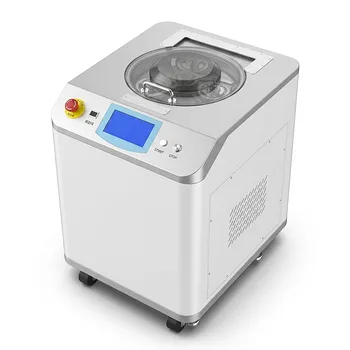
Dual Cup Vacuum Centrifugal Mixer Planetary Paste Defoaming Machine Industrial Material Processor
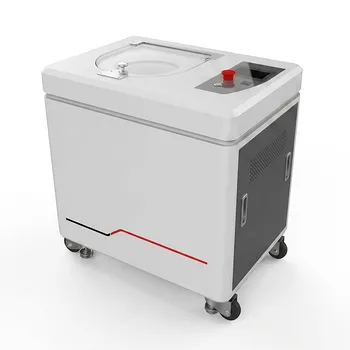
非介入式材料均质机真空脱泡行星搅拌高粘度混合设备
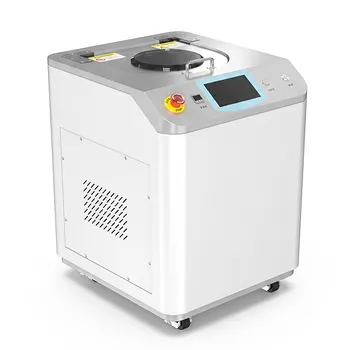
High Speed Vacuum Planetary Centrifugal Mixer and Defoamer for Industrial Paste Processing
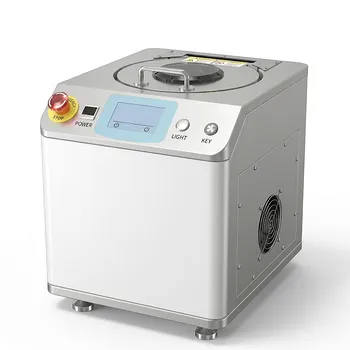
High Efficiency Vacuum Planetary Centrifugal Mixer and Defoaming Machine for Industrial Material Research and Precise Laboratory Powder Dispersion
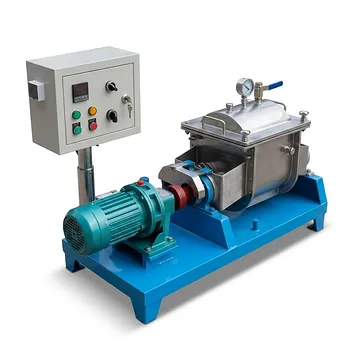
Industrial Vacuum Kneader for High-Viscosity Silicone, Rubber, and Compound Mixing
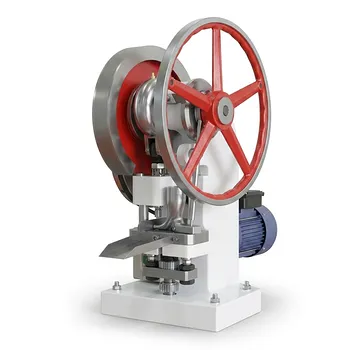
5 Ton Single Punch Tablet Press Laboratory Small Batch Production
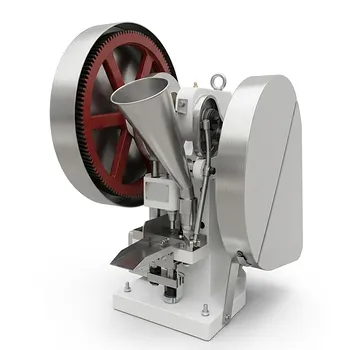
6-Ton Small Single-Punch Tablet Press — Laboratory Powder & Granule Tableting Equipment / Tablet Forming Machine
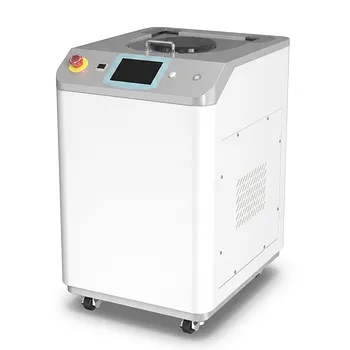
High Viscosity Planetary Centrifugal Mixing and Vacuum Defoaming Machine for Laboratory Material Preparation
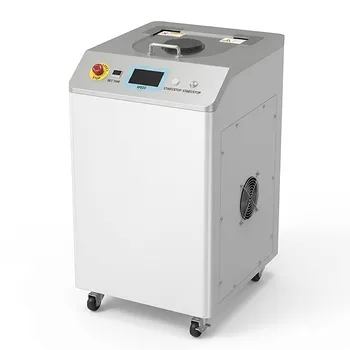
High Viscosity Planetary Centrifugal Vacuum Mixer for Material Defoaming and Uniform Mixing
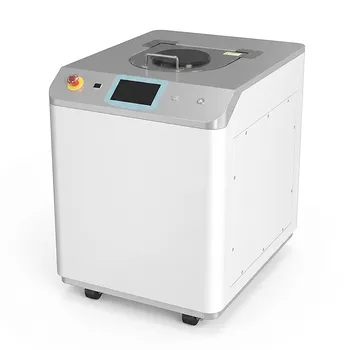
Industrial Planetary Centrifugal Vacuum Defoaming Mixer for High Viscosity Paste and Advanced Material Science
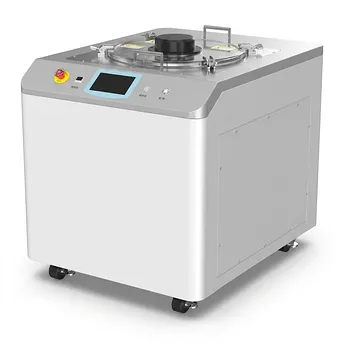
Industrial Planetary Centrifugal Vacuum Defoaming Mixer for High Viscosity Paste and Powder Homogenization
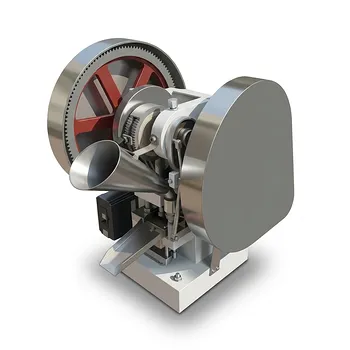
6 Ton Variable Frequency Single Punch Tablet Press