The Shape of Resistance: How Precision Sieving Turns Sinter Ore into Trustworthy Engineering Data
Aug 14, 2026
The Pile at the Furnace Floor
The engineer stands in front of a mound of sinter ore. It looks like a geology accident—sharp edges, irregular lumps, dust. Somewhere inside this jagged landscape of iron-bearing clumps, the physics of airflow will either make a furnace efficient or bleed it dry of energy. But right now, the ore is just a pile of questions. The engineer needs an answer, not a guess.
This is where the romance of raw material meets the discipline of measurement. And the first tool that makes sense of the chaos is almost embarrassingly simple: a set of test sieves.
The Problem with Irregularity
Sinter ore is not a polite, uniform powder. It’s a fractured, fused aggregate with a size distribution that seems designed to frustrate prediction. In its natural state, every handful is a statistical riddle. Big gaps, tiny fragments, elongated shards—all jumbled together.
The trouble is, in a sinter bed, airflow resistance depends dramatically on particle size. The way gas moves through a packed column of particles is governed by the equivalent diameter of those particles, by the void spaces between them, and by the tortuosity of the path the air must travel. When sizes vary wildly, the pressure drop becomes an average of extremes, hiding the real physical mechanisms.
Ask any researcher who has tried to correlate “average particle diameter” with airflow data from unsieved ore: the scatter in the data is not noise. It’s the sound of uncontrolled variables laughing at you.
The Gatekeeper of Size
Test sieves do something that sounds mundane but is philosophically radical: they impose a language of size on a material that has none. A sieve with a 14mm mesh doesn’t care about the shape of a particle; it asks one simple question: “Does your second-largest dimension fit through this square?”
With a stack of sieves, you force the chaotic mass into discrete, standardized ranges—10–18mm, 18–30mm, 30–40mm. Suddenly, the material is no longer a continuum of confusion. It’s a set of well-defined experimental fractions.
This transformation is not just practical. It’s psychological. The engineer who sieves is no longer taking orders from the raw material. The raw material is now taking orders from the experiment.
A Calibrated Language for Pressure Drop
When you test each sieved fraction in an airflow column, something beautiful happens. Pressure drop stops being a vague outcome and starts becoming a function. You can plot resistance factor against particle diameter and watch the curve emerge—often following an inverse power law, with smaller particles causing disproportionate increases in resistance.
- The 30–40mm fraction lets air glide through with minimal obstruction.
- The 18–30mm fraction begins to show measurable drag.
- The 10–18mm fraction ramps up the resistance fast.
- Fines below 5mm often cause a regime shift, where permeability collapses.
None of this quantitative insight is possible without sieving. The sieve turns a raw observation—“more pressure drop with smaller particles”—into a predictable engineering relationship. That relationship becomes the basis for furnace charge design, for blower power calculations, for the entire economics of ironmaking.
The Psychology of Variable Isolation
We love control. Morgan Housel often writes about the gap between what we can predict and what we can control, and how wise engineers narrow that gap by isolating the few variables that can be trusted. Sieving is exactly that: a deliberate, physical act of variable isolation.
Instead of asking, “How does this pile of ore behave?”, you ask, “How does a narrowly defined particle fraction behave?” The standard deviation of particle size within a test run collapses. The scatter in your pressure-drop data shrinks. Confidence intervals tighten. The model starts to feel less like a weather forecast and more like a law of nature.
This is why labs that invest in precise sieving tend to produce data that other engineers actually trust. Control isn’t a luxury. It’s the difference between science and storytelling.
Where Sieves Reach Their Limits
Test sieves are magnificent simplifiers, but they have blind spots. They sort by the second-largest dimension, which means two particles that pass the same mesh can have very different volumes or surface areas if their aspect ratios vary. A long, needle-like grain and a squat, cubic lump can both fit through the same square, yet they’ll create different airflow resistance.
Then there’s the quiet drift of sieve wear. Meshes stretch, get dented, accumulate fatigue. A 14mm sieve that has seen years of service may no longer deliver what its label promises. Grading drift creeps in, and before you know it, your longitudinal study is comparing apples to slightly smaller apples.
The best labs treat sieves like precision instruments, not commodity consumables. They calibrate. They inspect mesh integrity. They record cumulative hours of use. But they also recognize that sieving doesn’t begin with the sieve—it begins with how the material was crushed, ground, mixed, and handled upstream.
The Full Canvas: Beyond Sieving Alone
And here we arrive at a deeper truth: a sieve is only as good as the sample that reaches it. In material science, the act of sieving is one station on a longer journey—size reduction, mixing, compaction, and grading form an interconnected chain of sample preparation.
Imagine you’re studying how sinter ore particle size affects bed permeability. Your raw feedstock includes large cobbles, fines, and agglomerates. Before sieving can even begin, you need consistent, representative sub-samples. That calls for:
- Precision crushing (jaw or roll crushers) to reduce oversize lumps without generating excessive fines.
- Cryogenic grinding if your ore is tough or temperature-sensitive, preserving its structural properties.
- Milling (planetary ball mills, jet mills, rotor mills) when you need to study fine-particle behavior or produce uniformly fine fractions.
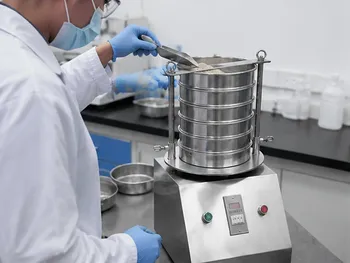
Then comes the sieving itself—using vibratory or air-jet sieve shakers equipped with certified test sieves—to separate your precisely prepared material into narrow size bands. Finally, when your experimental plan requires pellets for XRF analysis or controlled-density plugs for permeability tests, you turn to hydraulic presses: standard lab presses, XRF pellet presses, even cold/warm isostatic presses for uniform compaction.
In other words, the most reliable airflow experiments are not the ones with the best sieve shaker. They are the ones with the most thoughtful, integrated sample preparation workflow—from crusher to sieve to press.
Building a Robust Experiment from the Ground Up
Your sieving strategy should mirror your research goal. A few guiding principles:
- For mathematical modeling, use narrow sieve ranges. The narrower the fraction, the less the shape factor ambiguity matters, and the cleaner your correlation between equivalent diameter and pressure drop.
- For industrial simulation, reconstruct realistic size distributions by blending accurately sieved fractions in known mass proportions. Your lab-scale bed should be a miniature mirror of the production charge.
- For pressure drop optimization, isolate and quantify the effect of fines. A dedicated sub-5mm sieved fraction will tell you exactly how much those tiny particles are hurting permeability—and whether a pre-screening process upstream could pay for itself in reduced fan power.
Above all, maintain your sieves with the same seriousness you maintain your analytical instruments. Periodic mesh inspections, calibration records, and routine monitoring of openings prevent the silent drift that turns good data into questionable data.
| Core Function | Practical Application | Impact on Research |
|---|---|---|
| Particle Classification | Sorts irregular ore into 14mm, 24mm, 35mm ranges | Transforms unpredictable raw materials into controlled samples |
| Variable Isolation | Isolates diameter as a physical variable | Enables quantitative measurement of airflow resistance per size |
| Flow Regime Analysis | Determines equivalent particle diameter | Provides data to predict air movement in industrial-scale furnaces |
| Precision Calibration | Regular mesh checks prevent grading drift | Ensures long-term consistency and repeatable experimental data |
The Romance of Knowing
There is a quiet thrill in taking something as unruly as a pile of sinter ore and turning it into a clean, repeatable measurement. It’s not about the sieve itself—it’s about what the sieve represents: the engineer’s refusal to accept opacity, the insistence that even a jagged rock can speak a predictable language.
When your research demands that same relentless precision, the right tools aren’t just helpful—they are the foundation of every reliable model. From jaw crushers and planetary ball mills that prepare your feedstock, to sieve shakers and precision meshes that define your size fractions, to hydraulic presses that form reproducible pellets for further testing, the quality of your data is built long before the airflow rig starts.
Contact Our Experts to build a sample preparation workflow that turns your raw material into truth, one precisely defined grain at a time.
Quick Links
Suggested Products
Laboratory Vibratory Test Sieve Shaker for Precision Particle Size Analysis and Powder Grading 三维电磁微量振动筛分仪 Laboratory Air Jet Sieving Machine for Fine Powder Particle Size Analysis and Deagglomeration Tapping Oscillating Sieve Shaker for Dry and Wet Particle Size Analysis Dry Three Dimensional Vibratory Sieve ShakerFurther Reading
The Sieve Never Lies: How a Simple Stack of Mesh Became the Lab’s Ultimate Truth-Teller The Grain Size That Held Up Cathedrals: A Sieve Analysis Story The 0.15 mm Question: Why Sieve Grading Is the Quiet Foundation of Reliable Lightweight Mortar The Sieve and the Mind: Why Your Soil Test Results Depend on Replacing Human Fatigue with Engineered Consistency The Quiet Gravity of a Perfect Mix: How Sieves and 3D Tumblers Engineer Certainty in Drug Formulation
PowderPreparation
Last updated on May 14, 2026
Related Products

Laboratory Vibratory Test Sieve Shaker for Precision Particle Size Analysis and Powder Grading

三维电磁微量振动筛分仪
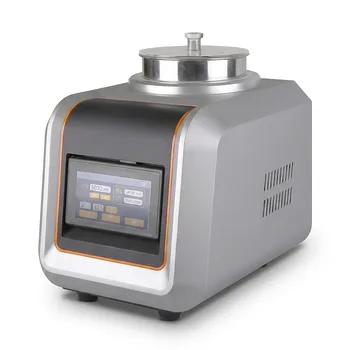
Laboratory Air Jet Sieving Machine for Fine Powder Particle Size Analysis and Deagglomeration

Tapping Oscillating Sieve Shaker for Dry and Wet Particle Size Analysis

Dry Three Dimensional Vibratory Sieve Shaker

Three Dimensional Rotary Vibrating Sieve

Heavy Duty Dry Three Dimensional Vibratory Sieve Shaker for Particle Separation

Stainless Steel Rotary Vibrating Sieve High Precision Circular Vibratory Separator Industrial Powder Grading Machine Multi Layer Sifting Equipment
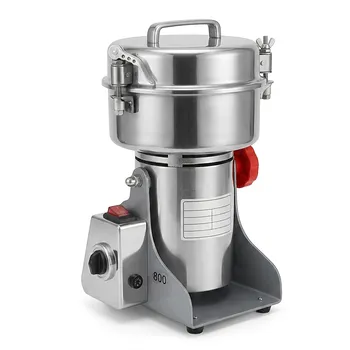
Small High-Speed Laboratory Grinder for Rapid Sample Preparation
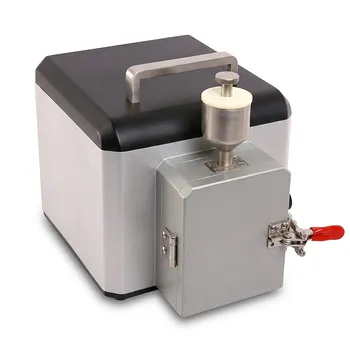
Portable Cutting Mill for Laboratory Sample Preparation and RoHS WEEE Compliance Testing
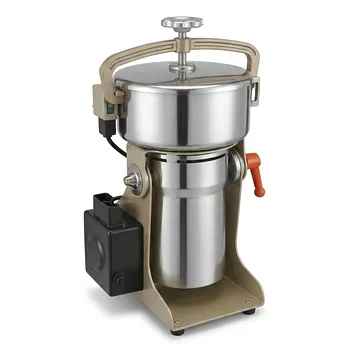
Multifunctional High Efficiency High Speed Laboratory Grinder
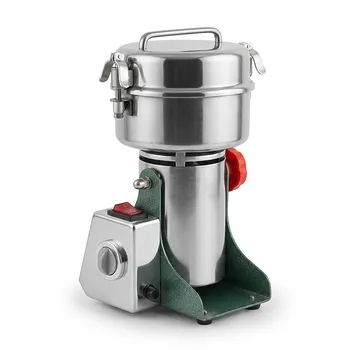
Small High-Speed Swing Grinder for Laboratory Sample Preparation
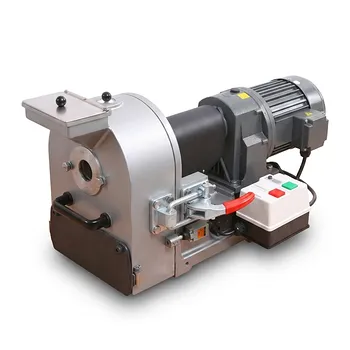
Laboratory Disc Mill for Fine Sample Preparation of Hard and Brittle Materials