The Particle Truth: Why a Manual Hydraulic Press Holds the Key to Accurate Conductivity Data
Oct 05, 2026
The Day the Data Lied
She had spent six months perfecting a PEDOT-activated carbon composite. Electron microscopy showed a beautiful interpenetrating network. The electrochemical promise was enormous. Then came the four-probe measurement — three different resistivity values from three pellets out of the same synthesis batch.
She blamed the potentiostat. She recalibrated the probes. She synthesized the material again. The inconsistency remained.
The real culprit wasn’t in the electronics. It was hiding in the space between grains that had never truly met. The most important instrument in her conductivity lab wasn’t the analyzer. It was a manual hydraulic press that she had been treating as an afterthought.
The Invisible Insulator: Contact Resistance
A composite powder, no matter how fine, is an archipelago of insulating gaps. Each grain touches its neighbor only at a few asperities. The rest of the space is filled with air — an insulator with a resistivity 10¹⁶ times higher than the solid.
When current flows from probe to pellet, it must cross thousands of these high‑resistance junctions. The measured value isn’t the material’s intrinsic conductivity. It’s a lottery of microscopic contact quality.
We trust our spectrometers, our electron microscopes, our impedance analyzers. But the pellet itself is the first electrical component in the measurement chain, and loose powder is a component riddled with defects.
When Two Grains Don’t Really Meet
- Surface oxides and adsorbed moisture add a resistive skin to each particle.
- Point contacts create localized Joule heating, skewing measurements.
- Repeated measurements on loose powder show standard deviations that mask any real material trend.
Researchers often chase exotic models to explain noisy data. In many cases, the answer is far simpler: the particles never felt enough pressure to form a continuous solid.
What Happens Under 10 kN: A Love Story of Particles
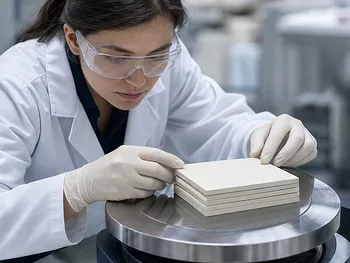
Placing powder in a die and bringing the manual hydraulic press down is a physical ballet. First, grains slide and rearrange. Porosity collapses from 60% to maybe 20%. Then comes plastic deformation — even hard ceramic particles yield at contact points when stress exceeds their local elastic limit.
This is where the material finds its voice. Under sustained axial pressure, van der Waals forces begin to dominate. The mass transforms from a collection of strangers into a cohesive green body. Internal pores heal. Electron clouds from adjacent surfaces overlap just enough to let current flow as if the solid had always been continuous.
It’s a moment of engineer’s romance: thousands of jagged fragments surrender their individuality to become a single, unified conductor.
| Property | Loose Powder | Pressed Pellet (10 kN) |
|---|---|---|
| Measured Resistivity | Wildly variable, often 2–5× too high | Stable, repeatable within ±2% |
| Sample Handling | Disintegrates at touch | Robust green body for four-probe fixtures |
| Intrinsic Transport Information | Obscured by contact artifacts | True bulk electron pathway revealed |
The Delicate Art of Squeezing: Pitfalls of Pressing
Not all pressure is helpful.
The Over‑Compaction Trap
When force exceeds a material’s fracture threshold, the green body can develop microscopic cracks during pressure release. It’s called springback: the pellet expands unevenly, and a hairline network of fissures becomes the new contact resistance. A pellet that looks perfect to the eye can be electrically compromised.
The Wall‑Friction Shadow
As powder compresses inside a steel die, friction against the die walls creates a density gradient. The top of the pellet can be 5–10% denser than the bottom. In conductivity terms, that translates to current channeling through one face and an artificially low resistivity that doesn’t represent the bulk.
Precision matters. A press with perfectly parallel plates, a high‑quality polished die set, and a controlled force application cycle turns these potential artifacts into manageable variables.
You Can’t Press What You Haven’t Milled: The Complete Ecosystem
The hydraulic press is the climactic act, but sample preparation starts long before the pellet.
Upstream Truth
- Jaw and roll crushers reduce brittle precursors to uniform grit.
- Liquid nitrogen cryogenic grinders embrittle tough polymers so they can be milled without degrading.
- Planetary ball mills and jet mills achieve sub‑micron particle sizes, eliminating internal voids that a press alone cannot close.
- Air‑jet sieve shakers remove oversized grains that would seed density defects.
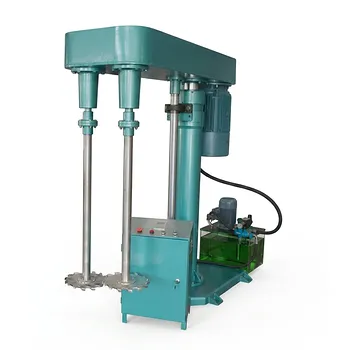
- Defoaming mixers ensure the composite blend is homogeneous — no carbon‑rich clumps, no polymer‑only zones.
When the powder that enters the die already has a tight particle size distribution and perfect component dispersion, the press’s job becomes prediction rather than hope.
The Right Press for the Right Truth
A material’s final application dictates the pressing process, and a single press type cannot serve all truths.
| Pressing Technology | Typical Force/Pressure | Use Case in Conductivity Research |
|---|---|---|
| Manual Lab Press | 0–15 kN | Quick pellets for four‑probe screening of polymer composites |
| XRF Pellet Press | 10–40 kN | High‑density pellets that double as XRF samples for composition check |
| Hot Press | Up to 20 kN + 300°C | Thermoelectric or conductive composites needing heat‑assisted sintering |
| Cold/Warm Isostatic Press (CIP/WIP) | Up to 300 MPa | Large samples with no wall‑friction gradient, ideal for bulk transport anisotropy studies |
| Vacuum Hot Press | Heat + pressure under vacuum | Eliminates trapped gases for battery electrode films and humidity‑sensitive materials |
Each press answers a different question. The barrier to honest data isn’t whether pressure was applied, but whether the right pressure was applied in the right way.
The Trust Paradox: We Calibrate Instruments but Ignore the Pellet
There is a psychological quirk in materials laboratories. A researcher will spend an hour running calibration standards on a $50,000 impedance spectroscope but will press a pellet with whatever press happens to be available, at whatever pressure feels “enough.”
We trust complexity. A manual hydraulic press is a simple machine — a piston, a gauge, a handle. It doesn’t boot up. It doesn’t log data. So we assume it cannot be the bottleneck. Yet that unassuming press literally manufactures the electronic pathway that every downstream instrument measures. If it is inconsistent, everything else becomes noise.
Morgan Housel would argue that the most profound risks hide in the boring, mechanical things we stop questioning. In conductivity research, the manual hydraulic press is that thing.
A Pressing Protocol for Honest Data
Matching pressing parameters to your specific research goal turns a source of artifact into a robust experimental variable.
- Intrinsic electron transport model systems: Press to maximum densification (just below cracking) with clean, polished dies. The goal is to eliminate particle‑to‑particle junctions entirely so that four‑probe data reflects only the material network.
- Battery electrode evaluation: Replicate industrial calendering pressures — often 300–400 MPa — to create porosities that match real cells. Ionic and electronic conductivity measured on such pellets will then predict cell‑level behavior.
- Mechanical‑electrical synergy tests: Use standardized molds and identical pressure profiles to generate pellets uniform enough for simultaneous conductivity and Young’s modulus measurements, revealing structure‑property relationships.
- High‑throughput screening: A manual lab press with a quick‑release die accelerates reproducibility when dozens of compositions must be compared on the same basis.
From the First Crush to the Final Pellet
The path from raw composite powder to meaningful conductivity data runs through the quiet, physical act of pressing. Every step before it — crushing, milling, sieving, mixing — prepares the powder for that one decisive moment when particles become a solid. The manual hydraulic press is where potential becomes a pellet and a pellet becomes a truth.
The next time your data misbehaves, don’t simply question the formula. Question the pellet. Then give it the pressure it deserves.
Ready to turn your composite powders into precise, repeatable pellets that deliver data you can trust? Contact Our Experts
Quick Links
Suggested Products
Manual Tablet Press with Dual Scale Pressure Gauge for Pharmaceutical Food Chemical Laboratory Sample Preparation 5 Ton Single Punch Tablet Press Laboratory Small Batch Production 6-Ton Small Single-Punch Tablet Press — Laboratory Powder & Granule Tableting Equipment / Tablet Forming Machine Enhanced 9 Punch Rotary Tablet Press for Powder Compaction 6 Ton Variable Frequency Single Punch Tablet PressFurther Reading
The Layers That Wouldn’t Lie Flat: Why Nine Sheets of Ceramic Demand a Laboratory Press That Thinks in Microns The Hidden Fracture: Why Ceramic Feed Rods Fail Before the First Melt From Dust to Data: How Precision Laboratory Presses Forge Truth in Mineral Testing The Crack in the Crucible: A Systems Approach to Perfect Bismuth Ferrite Targets and the Hidden Physics of Powder Compaction The Invisible Architect: How Compaction Psychology Shapes Your LSM Ceramic’s Fate
PowderPreparation
Last updated on May 14, 2026
Related Products
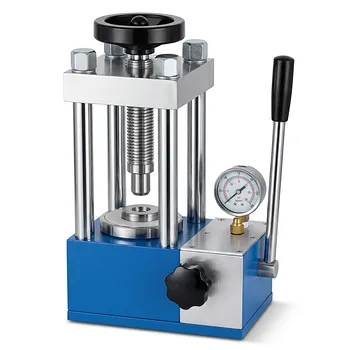
Manual Tablet Press with Dual Scale Pressure Gauge for Pharmaceutical Food Chemical Laboratory Sample Preparation
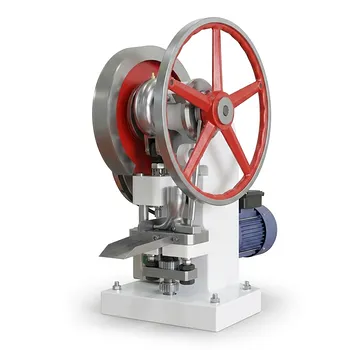
5 Ton Single Punch Tablet Press Laboratory Small Batch Production
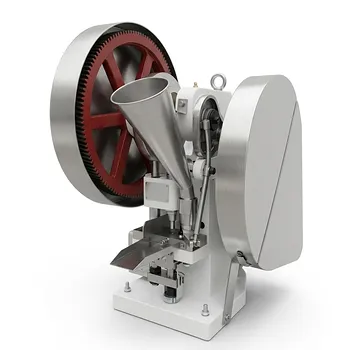
6-Ton Small Single-Punch Tablet Press — Laboratory Powder & Granule Tableting Equipment / Tablet Forming Machine
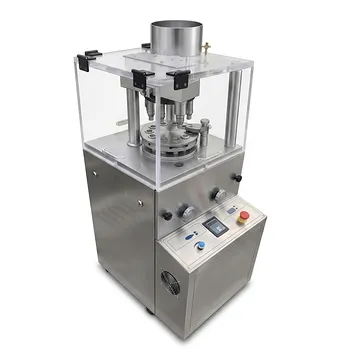
Enhanced 9 Punch Rotary Tablet Press for Powder Compaction
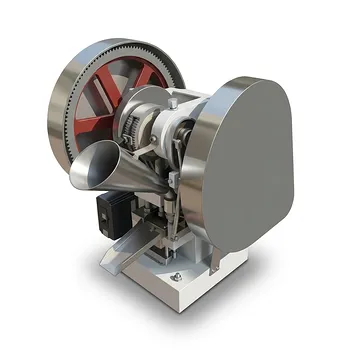
6 Ton Variable Frequency Single Punch Tablet Press
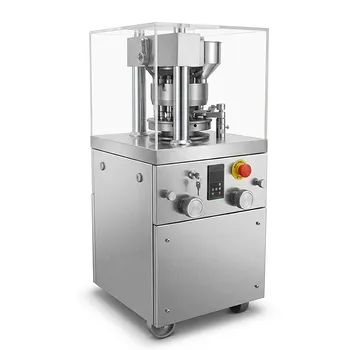
Ordinary Type Rotary Tablet Press for Pharmaceutical Chemical Food Electronic Industries