The Alchemy of Disorder: How a Vacuum Hot Press Turns Soft Sheets into Ultra-Hard Glass
May 26, 2026
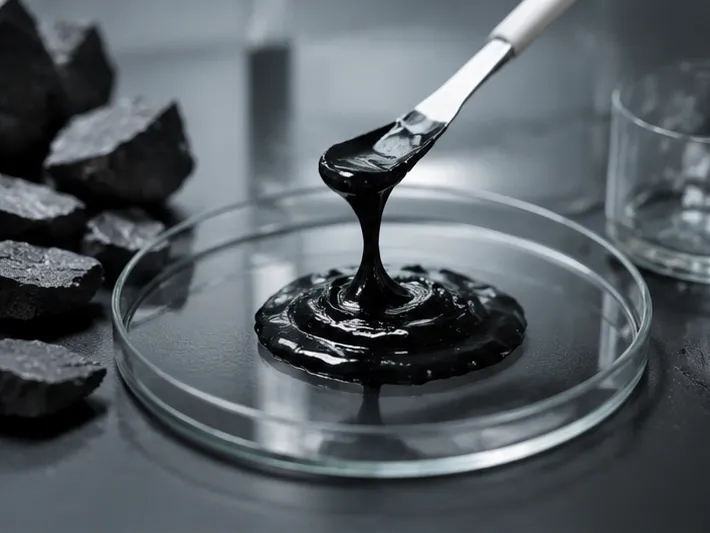
The Problem with Perfect Layers
You start with a stack of graphene oxide sheets. They shimmer under a microscope, orderly and fragile. You imagine turning them into a hard, glassy solid that resists scratches and deformation. But when you apply heat, something counterintuitive happens: the material swells into a brittle foam. The very steps meant to harden it destroy its integrity.
This is the fundamental tension at the heart of Graphenic Glass synthesis. You want a disordered, isotropic solid—a glass—but your precursor is a layered, crystalline powder. The transition requires breaking a structure nature seems determined to preserve. Most process failures come not from a lack of energy, but from a failure to synchronize it.
Atul Gawande once wrote that the hardest part of surgery isn’t the cutting, but the orchestration: “making sure a hundred things go right.” Synthesizing Graphenic Glass demands the same kind of orchestration. And the vacuum hot press is the instrument that conducts the entire thermal–mechanical symphony.
Why We Struggle with Disordered Strength
Humans love order. In material science, we are taught to align fibers, grow crystals, and line up polymer chains. Strength usually follows structure. But a glass is strong because it has no long-range order. Its atoms are stuck in a frozen liquid state—chaotic, but dense and hard.
Morgan Housel often notes that the best investing strategy is the one you can stick with emotionally. Similarly, the best processing strategy for a glassy carbon is the one that accepts—and even harnesses—disorder. You must let go of the idea that your carbon layers will align beautifully. They must be nudged out of alignment, and then locked in place before they can rebel.
The vacuum hot press does exactly this. It uses three tightly coupled tasks to transform soft, ordered precursor sheets into an isotropic glass that can scratch quartz.
Task #1: Thermal Reduction—Stripping Oxygen without Burning the Framework
Graphene oxide isn’t pristine carbon. It’s decorated with hydroxyl, epoxy, and carboxyl groups. You need to remove those oxygen functionalities to approach a pure carbon network. That requires heat—typically around 800°C.
But carbon at 800°C in air doesn’t hang around. It oxidizes, vaporizes, vanishes. This is where the vacuum environment becomes non-negotiable. By evacuating the chamber or purging it with inert gas, you remove the oxidizer before it can attack the host. You’re letting the carbon clean itself without destroying its skeleton.
What happens if you rush this step
If you ramp temperature too fast, oxygen groups decompose violently. The sheets degas like popcorn, creating internal channels that weaken the final part. The vacuum hot press, however, lets you pace the evolution of gases, preventing a runaway reaction. The result is a chemically stable carbon framework, ready for the next phase.
Task #2: Mechanical Densification—Squeezing Out the Ghosts
Once oxygen leaves, it leaves behind vacancies. Those nanosized voids want to grow. Gases trapped between layers push them apart, turning your dense precursor into an aerogel if you’re not careful.
Here’s where the axial pressure of the hot press does something almost magical. It applies continuous, uniaxial force that counteracts the internal gas pressure. As layers try to puff up, the press says, “No. Stay close.” This constraint promotes diffusion creep, a plastic flow that fills voids and eliminates closed porosity.
A psychological parallel
Think of it as the physical equivalent of resisting an emotional overreaction. The material wants to expand in response to stress—much like a person wants to lash out. The press provides a steady, non-punitive counterforce that guides the material toward a denser, more stable state. What emerges isn’t a foamy mess, but a near-theoretically-dense solid.
Task #3: Engineering Isotropic Chaos
So far, you’ve removed oxygen and squashed the layers together. But the carbon atoms still remember their sheet-like origins. Van der Waals forces between basal planes keep them semi-ordered. To get a true glass, you must break that memory.
High temperature alone isn’t enough. It might anneal the layers, even start graphitizing them. But graphitization is the enemy: it creates long-range order and directional softness. You need disorder. The coupled action of heat plus pressure supplies the activation energy to overcome Van der Waals sticking while simultaneously forcing atoms to relocate randomly within a confined space.
The result is an isotropic carbon network—the atoms are packed tightly, but their positions are uncorrelated over large distances. It looks messy under a diffraction pattern, and that’s exactly the point. This structural randomness gives Graphenic Glass its isotropic hardness. No weak cleavage planes, no directional fragility.
The Tightrope of Process Control
Every step above contains a trade-off. Push temperature too high, and you nucleate graphite crystals that ruin the glassy nature. Apply pressure too early, and trapped gases form microcracks as they fight the clamping force. Over-compress at the wrong moment, and you destroy tooling.
The relationship between temperature and structural integrity follows an inverted-U curve. At a certain sweet spot—often near 800°C for many GO precursors—you maximize reduction and diffusion while staying just below the crystallization threshold. Meanwhile, the pressure profile must shadow the gas evolution curve. This requires precise synchronization.
How our systems manage the tension
This is precisely where a well-designed vacuum hot press distinguishes itself from a simple heated platen. Our equipment gives you:
- Programmable multi-stage pressure profiles that ramp force in lockstep with your heating cycle.
- Real-time vacuum/inert gas control to maintain ppm-level oxygen exclusion even when the material outgasses.
- High-stiffness frame and precision tooling to apply uniform pressure without bending or creating stress concentrations.
When you can choreograph these variables, the process becomes repeatable. That repeatability turns an exotic lab curiosity into a scalable material.
Matching Process Settings to Your Material Goals
The knobs you turn depend on what you prize most. Here’s a practical guide for tuning your vacuum hot press:
- If maximum hardness is the priority: Use higher axial pressure during the peak reduction phase. Aim to approach the material’s poroelastic limit without exceeding it. Dwell long enough to allow complete diffusional pore closure.
- If defect prevention is critical: Apply a slow heating ramp (e.g., 2–5°C/min) through the gas release window, and delay full pressure until the degassing rate has subsided. This prevents internal blistering.
- If chemical purity is non-negotiable: Validate vacuum level and chamber leak rate before the run. Use an inert gas backfill/flush cycle to scrub residual oxygen from the powder bed. A high-integrity seal design protects your carbon bonds.
Beyond the Press: A Complete Sample Preparation Ecosystem
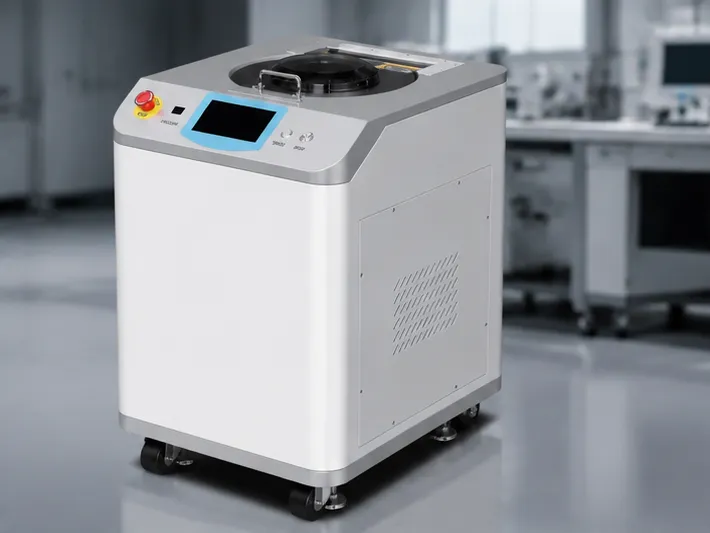
A vacuum hot press doesn’t operate in isolation. To produce Graphenic Glass reliably, you need the precursor to be consistent—particle size, shape, and agglomeration state all matter. That’s why we supply not just the final compaction equipment, but the entire upstream preparation chain:
- Crushers and mills: Jaw crushers, roll crushers, planetary ball mills, jet mills—whatever it takes to reduce your precursor to the target particle size distribution.
- Cryogenic grinding solutions: Liquid nitrogen cryogenic grinders for materials that are heat-sensitive or ductile at room temperature.
- Sieve shakers and test sieves: Vibratory and air-jet sieving to certify the size fraction before loading the hot press.
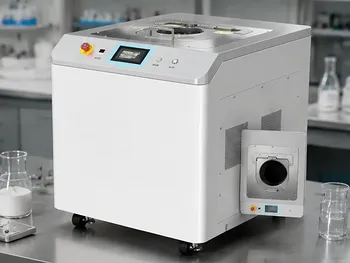
- Mixers and defoaming systems: Powder mixers to homogenize additives, and defoaming mixers to remove entrapped air from slurry-based precursors.
When every piece of equipment talks the same quality language, your vacuum hot pressing stage inherits a powder that behaves predictably. That’s how you get from “it worked once” to “it works every batch.”
Summary of Transformation Tasks
| Transformation Task | Mechanism | Key Outcome |
|---|---|---|
| **Thermal Reduction** | Controlled heating in vacuum removes oxygen functional groups | Chemically stable carbon framework |
| **Mechanical Densification** | Axial pressure suppresses layer expansion and drives diffusion creep | Near-theoretical density, high hardness |
| **Structural Engineering** | Coupled thermal–mechanical energy breaks Van der Waals order | Isotropic, glassy carbon with no long-range order |
| **Environment Control** | Vacuum or inert atmosphere maintenance throughout cycle | No oxidative degradation, preserved carbon bonds |
The Romanticism of Controlled Chaos
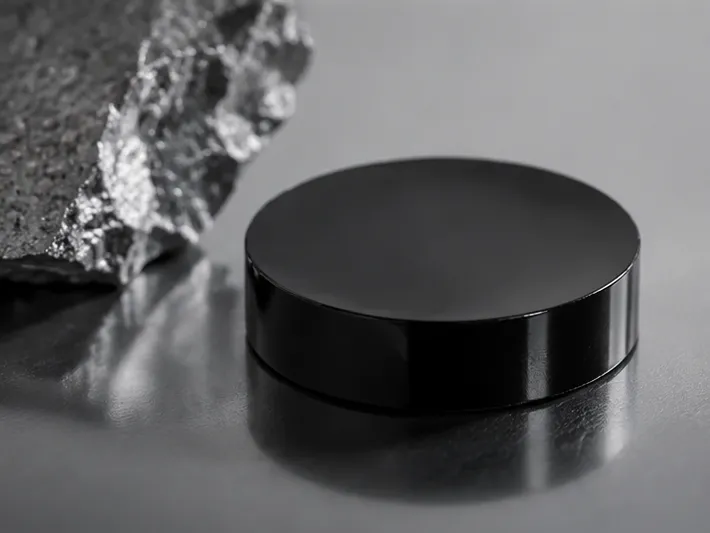
It can feel wrong to spend so much effort creating disorder. But that’s the beauty of it: you’re using high heat and precise pressure not to assemble a perfect crystal, but to freeze a fleeting liquid-like state into a permanent, durable form. You’re capturing entropy and turning it into performance.
In a world obsessed with optimization, a vacuum hot press reminds us that sometimes the best structure is no structure at all—just enough kinetic energy and constraint to trap a random arrangement before it can relax into weakness. That is the engineer’s version of alchemy: turning chaos into glass.
If you’re ready to bring that level of control to your own material synthesis, we’re here to help. Whether you need to scale up Graphenic Glass production or explore new amorphous carbon frontiers, our vacuum hot presses and complementary powder processing equipment provide the synchronized environment your process demands. Contact Our Experts
Quick Links
Suggested Products
Dual Cup Vacuum Centrifugal Mixer Planetary Paste Defoaming Machine Industrial Material Processor 非介入式材料均质机真空脱泡行星搅拌高粘度混合设备 High Efficiency Vacuum Planetary Centrifugal Mixer and Defoaming Machine for Industrial Material Research and Precise Laboratory Powder Dispersion High Speed Vacuum Planetary Centrifugal Mixer and Defoamer for Industrial Paste Processing Industrial Vacuum Kneader for High-Viscosity Silicone, Rubber, and Compound MixingFurther Reading
The Invisible Architect of Failure: Why a Bubble in Your Resin-GelMA Mix Casts a Shadow on Your Entire Print The Hidden Disorder in Your Battery Slurry—and the Precision Tool That Destroys It The Most Important Mixer in Your Lab Isn’t a Mixer. It’s an Insurance Policy Against Defects. The 3-Minute Transformation: How Mixing Speed Reveals the Hidden Architecture of Next-Gen Batteries When Two Extra Minutes Define a Skyscraper: The Precision Mixing Protocol That Nanomaterials Demand
PowderPreparation
Last updated on May 15, 2026
Related Products
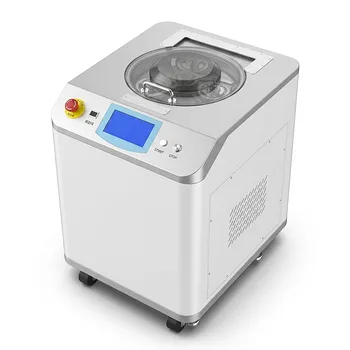
Dual Cup Vacuum Centrifugal Mixer Planetary Paste Defoaming Machine Industrial Material Processor
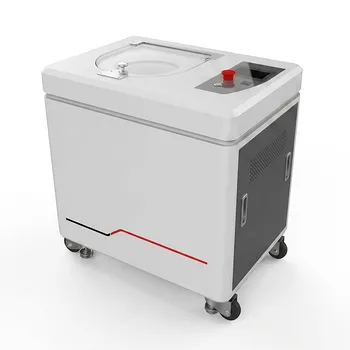
非介入式材料均质机真空脱泡行星搅拌高粘度混合设备
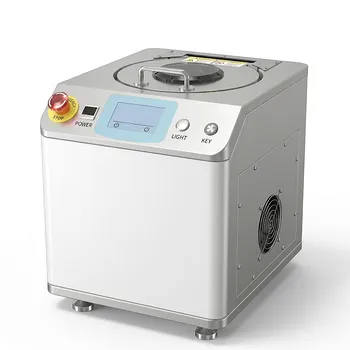
High Efficiency Vacuum Planetary Centrifugal Mixer and Defoaming Machine for Industrial Material Research and Precise Laboratory Powder Dispersion
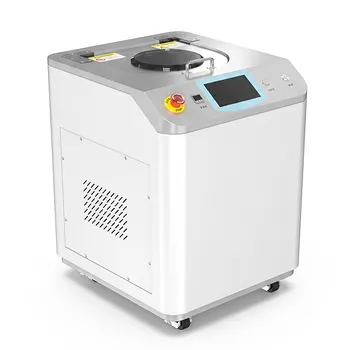
High Speed Vacuum Planetary Centrifugal Mixer and Defoamer for Industrial Paste Processing
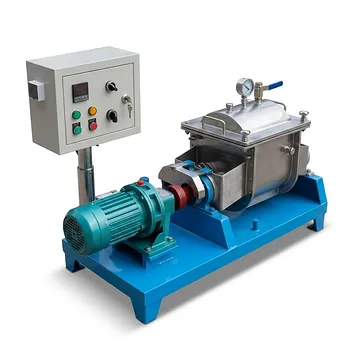
Industrial Vacuum Kneader for High-Viscosity Silicone, Rubber, and Compound Mixing
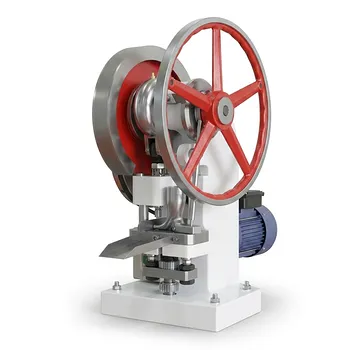
5 Ton Single Punch Tablet Press Laboratory Small Batch Production
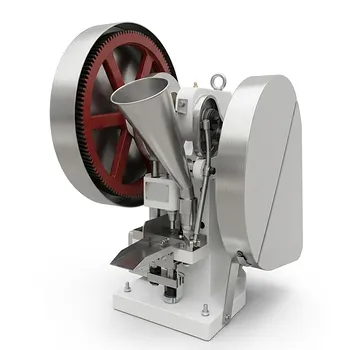
6-Ton Small Single-Punch Tablet Press — Laboratory Powder & Granule Tableting Equipment / Tablet Forming Machine
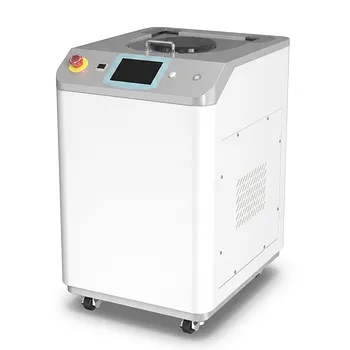
High Viscosity Planetary Centrifugal Mixing and Vacuum Defoaming Machine for Laboratory Material Preparation
High Viscosity Planetary Centrifugal Vacuum Mixer for Material Defoaming and Uniform Mixing
Industrial Planetary Centrifugal Vacuum Defoaming Mixer for High Viscosity Paste and Advanced Material Science
Industrial Planetary Centrifugal Vacuum Defoaming Mixer for High Viscosity Paste and Powder Homogenization
6 Ton Variable Frequency Single Punch Tablet Press