The Invisible Split: Why a Coating’s Failure Is Decided Hours Before It’s Applied
Sep 18, 2026
The Defect You Can’t Polish Out
A researcher stares at a dried polymer film under a microscope. It looks like a topographic map of a badlands—peaks, craters, and barren spots where the coating simply refused to function. You can’t buff these errors out. You can’t cure them with heat. The flaw is baked into the material’s history.
The mistake wasn’t made during the dip-coating process. It wasn’t the substrate’s fault. The failure occurred hours, maybe days, earlier in a sealed container spinning on a bench. It was a mixing failure.
We tend to believe that chemistry alone dictates performance. But for complex suspensions like polycaprolactone (PCL) loaded with functional nanoparticles, the physics of the mix matters more than the chemistry of the ingredients. If you don’t care about the stir, the stir won’t care about your film.
The Weight of a Long Chain
Polycaprolactone doesn’t simply “mix.” It resists.
A bag of PCL pellets is a bundle of high-molecular-weight chains tangled in a low-energy state. They are thermodynamically content to stay tangled. When you drop them into a solvent like chloroform, three things happen in sequence:
- Wetting: The solvent coats the pellet surface.
- Swelling: Solvent molecules penetrate the interstitial spaces, pushing chains apart.
- Dissolution: Chains finally untangle and drift into the bulk liquid phase.
That last step is a slow, energy-intensive migration. Without constant mechanical agitation, the swollen pellet becomes a gelatinous prison. A core of undissolved polymer hides inside a semi-permeable shell of solvated chains.
The Concentration Gradient Lie
Let that mixture sit undisturbed for an hour. Carefully extract a sample from the top and another from the bottom. The top is thin, solvent-rich soup. The bottom is viscous syrup. You didn’t make one solution; you made a gradient.
Coating with this gradient means depositing structural inconsistency directly onto your substrate.
The Little Clump That Ruins Everything
If the polymer is difficult, the nanoparticles are defiant.
TiO2@Ag/γ-CD MOF nanoparticles—or any high-surface-area filler—arrive in your lab already clustered. The enemy isn’t chemistry. It’s van der Waals forces. Particles cling to each other to minimize their surface energy, forming micro-agglomerates that act as single, massive units.
Visualize the failure mode:
- A single agglomerate lands on a thin-film coating.
- It becomes a stress concentrator.
- Under load or environmental exposure, the film fractures precisely at that point.
- Your antimicrobial agent is now a defect site.
The shear forces generated by a stirrer are the only thing standing between a functional nanostructure and a pinprick of failure.
48 Hours Isn’t a Long Time—It’s the Necessary Time
Why do protocols demand painfully long mixing durations? Three physical realities dictate this timeline.
1. Viscosity is a moving target. As PCL chains enter the liquid phase, they entangle with each other. The solution’s viscosity climbs. This thickened fluid then resists the movement of the stirrer shaft, reducing shear transmission. The motor must fight to maintain turbulence. A cheap magnetic stir bar decouples from the magnetic field at high viscosities—it spins, but the fluid stands still.
2. Diffusion is too slow. If you switched the mixer off, entropic forces would eventually smooth the concentration gradients. Eventually. But that timeline is measured in weeks, not minutes. Molecular diffusion in a viscous polymer solution is a poor substitute for convective mixing.
3. Stability is a dynamic process. You aren’t just dissolving; you’re constructing a metastable suspension. The nanoparticles, once separated, want to re-agglomerate. The polymer chains, once dissolved, want to settle. Constant motion maintains a dynamic equilibrium where particles remain suspended in a network of solvated chains.
The economic consequence is blunt: stopping the process two hours early isn’t a time-saving. It’s a batch-canceling error.
The Balancing Act: 3 Trade-offs in High-Energy Mixing
Prolonged mixing is necessary, but it is not benign. Every rotation of the shaft imposes a cost. Wise processing means navigating three hazards.
1. Heat vs. Homogeneity
A high-torque overhead stirrer generates friction. In a volatile solvent like chloroform (boiling point ~61°C), a poorly vented system builds vapor pressure. You lose solvent. The solution concentrates. Your carefully calculated PCL-to-solvent ratio drifts.
The solution: Digital stirrers with real-time speed feedback maintain consistency without runaway acceleration. A closed-loop system prevents solvent escape while allowing gas exchange.
2. Shear vs. Chain Integrity
Polymers are long molecules. Mechanical shear from high-RPM mixing can physically snap molecular backbones. The result is a bimodal molecular weight distribution—some chains intact, some catastrophically shortened.
Degraded chains mean a brittle film. You traded homogeneity for strength.
The solution: High-torque, not high-speed. A mixer designed for viscous materials delivers the necessary shear at modest RPMs, preserving chain length while achieving dispersion.
3. Time vs. Production Pressure
Longer mixing times reduce throughput. The temptation is to sacrifice protocol duration for the sake of queued experiments. But here’s the psychological trap: a poorly mixed batch doesn’t fail loudly during mixing. It fails quietly during application, wasting not just time but the entire downstream workflow.
A Decision Framework for Coating Integrity
The choice of stirring equipment determines which physical regime you operate in. Choose based on your primary failure mode.
| If Your Primary Concern Is… | Your Processing Need Is… | The Right Tool Addresses… |
|---|---|---|
| Film Uniformity | Constant-speed, long-duration mixing to eliminate viscosity gradients | Digital overhead stirrers with speed-control loops that don't drift over time |
| Nanoparticle Functionality | High-torque shear to overcome agglomeration energy | Power-driven mixers that maintain coupling even in high-viscosity fluids |
| Batch-to-Batch Repeatability | Exact replication of mixing energy across experiments | Stirrers with programmable RPM and duration settings, not just analog dials |
| Suspension Longevity | True homogeneous dispersion, not just "wetted" dispersion | Systems that prevent settling and separation during the entire coating window |
Beyond the Beaker: The Full Preparation Chain
Focused attention on the stirring step reveals a broader truth: the final coating’s quality is an inheritance from the entire upstream preparation process. The polymer pellets arrive with a certain particle size distribution. The nanoparticles carry surface moisture. The solvent has trace impurities.
Process control isn’t one thing. It’s a chain.
- Before Mixing: The raw PCL pellets require milling to increase surface area, speeding dissolution. A jaw crusher or planetary ball mill reduces particle size prior to solvent contact, transforming slow surface erosion into rapid chain untangling.
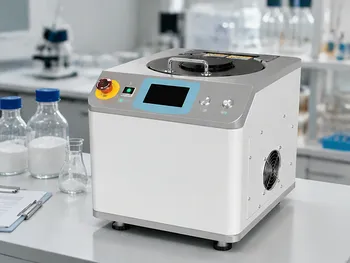
- During Mixing: High-viscosity stirring demands overhead mixers with the torque to match the fluid’s resistance. A powder mixer designed for thick pastes ensures convective motion throughout the entire vessel volume.
- For Advanced Composites: When functional fillers resist dispersion even under shear, a defoaming mixer removes entrained air—another defect vector—while simultaneously aiding agglomerate breakdown under vacuum or pressure.
- Post-Processing Quality Control: After preparation, verifying the absence of oversized agglomerates via sieve shakers with analytical test sieves is the definitive checkpoint. If the suspension fails to pass a defined mesh, it goes back for further processing.
The Compaction Parallel: A Lesson from Powder Metallurgy
The story of a failed coating echoes in another material science domain: powder compaction.
Consider a cold isostatic press (CIP). It applies uniform pressure from all directions to a powder sealed in a flexible mold. If the powder isn’t perfectly mixed prior to filling the mold, no amount of isostatic pressure can fix the inhomogeneity. The sintered part will warp or contain density gradients that become structural flaws.
Similarly, a hot press or vacuum hot press relies on the precise particle packing of the raw powder. A poorly dispersed feed material yields a component with trapped porosity. In sample preparation for XRF, the final pellet must represent the bulk composition with absolute fidelity—a requirement that forces precise grinding and mixing protocol.
The parallel is exact: Compaction reveals the hidden structure of the powder, just as coating reveals the hidden structure of the suspension. In both cases, the process equipment—whether it's a laboratory press or a stirring system—is a truth machine. It exposes shortcuts you thought you could get away with.
The Quiet Satisfaction of a Flawless Film
There’s a moment in the lab that doesn’t make it into papers. You lift a substrate from a coating bath. The liquid sheet is uniform, optically perfect. You know—before curing, before testing, before the spectrometer confirms it—that the preparation was correct.
That confidence comes from understanding that a functional material is built in the silent hours of mixing, long before anyone sees the result. The stirrer is the first architect of performance.
When your research demands that level of precision, the solution begins with sample preparation equipment designed for exactly these physical realities—from crushers and cryogenic grinders for raw material processing to planetary ball mills for nanoparticle dispersion, from defoaming mixers for air-free suspensions to the full spectrum of laboratory presses that validate your final material structure.
A material’s destiny is written in its processing history. Write it carefully. [Contact Our Experts](#ContactForm)
Quick Links
Suggested Products
Horizontal Ribbon Mixer for Uniform Powder and Slurry Mixing High Viscosity Planetary Centrifugal Mixing and Vacuum Defoaming Machine for Laboratory Material Preparation High Efficiency Vacuum Planetary Centrifugal Mixer and Defoaming Machine for Industrial Material Research and Precise Laboratory Powder Dispersion 360° Rotating Omnidirectional Laboratory Planetary Ball Mill for Homogeneous Ultra-Fine Grinding and Mixing Three-Dimensional Motion Mixer for Laboratory Powder and Granule BlendingFurther Reading
When Two Extra Minutes Define a Skyscraper: The Precision Mixing Protocol That Nanomaterials Demand The Micrometer Trigger: Why a Laboratory Powder Mixer Defines Effervescent Tablet Success The Invisible Variable: Why Your Soil Test Data Is Lying to You The Mixing Fallacy: Why Your Composite Flour’s Uniform Color Is a Costly Illusion The 81:19 Gamble: Why Imperfect Mixing Silently Kills Your Optical Ceramic
PowderPreparation
Last updated on May 14, 2026
Related Products
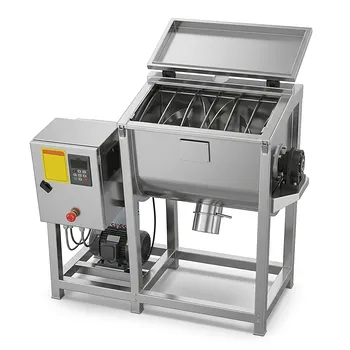
Horizontal Ribbon Mixer for Uniform Powder and Slurry Mixing
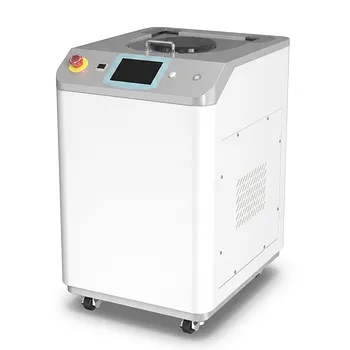
High Viscosity Planetary Centrifugal Mixing and Vacuum Defoaming Machine for Laboratory Material Preparation
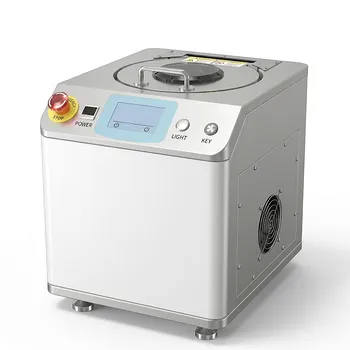
High Efficiency Vacuum Planetary Centrifugal Mixer and Defoaming Machine for Industrial Material Research and Precise Laboratory Powder Dispersion
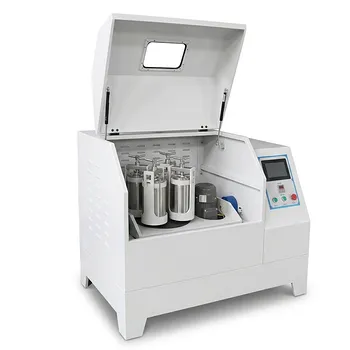
360° Rotating Omnidirectional Laboratory Planetary Ball Mill for Homogeneous Ultra-Fine Grinding and Mixing
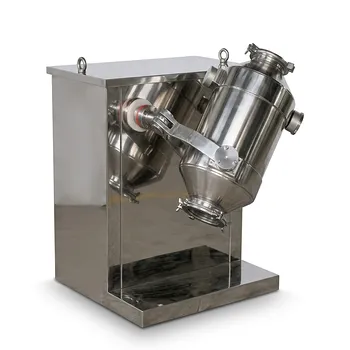
Three-Dimensional Motion Mixer for Laboratory Powder and Granule Blending
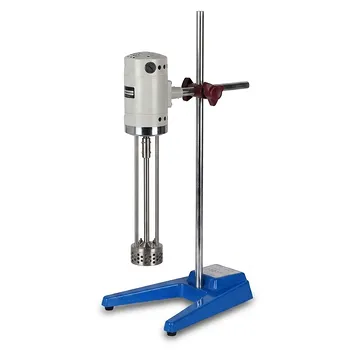
High Shear Laboratory Emulsifier for Mixing and Homogenization
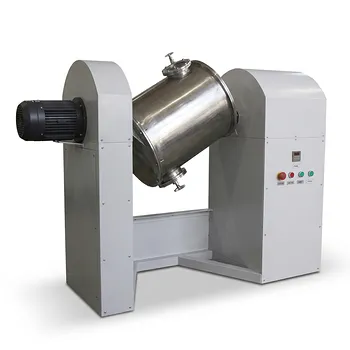
Inclined Mixer for Homogeneous Powder Blending and Grinding
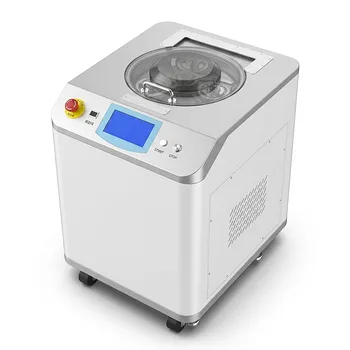
Dual Cup Vacuum Centrifugal Mixer Planetary Paste Defoaming Machine Industrial Material Processor
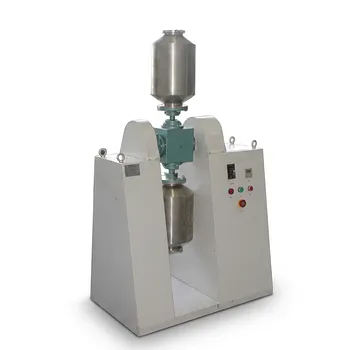
Multi Dimensional Universal Mixer for High Uniformity Powder Blending
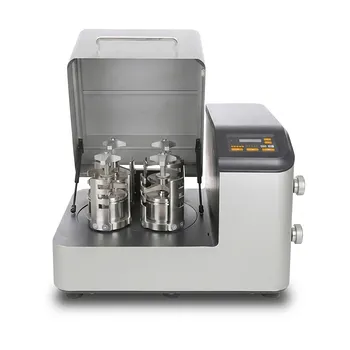
High Energy Planetary Ball Mill for Nano Scale Grinding and Colloidal Mixing in Material Science Research
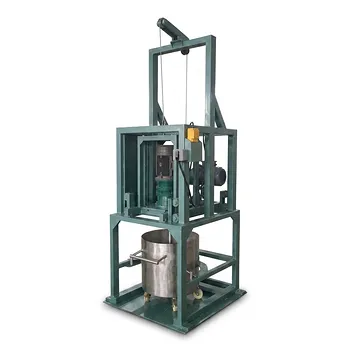
High-Speed Simple Disperser for Efficient Mixing, Dispersion, and Emulsification
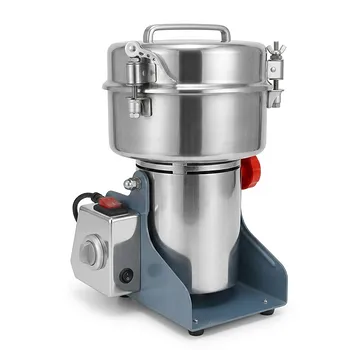
Small High-Speed Grinder for Efficient Laboratory Sample Preparation
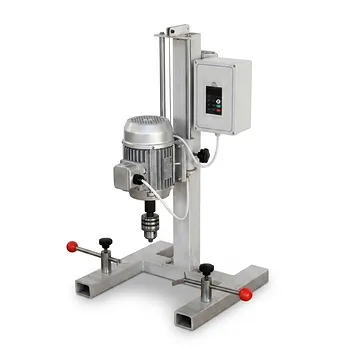
Laboratory Disperser and Sand Mill for Grinding Dispersing Emulsifying
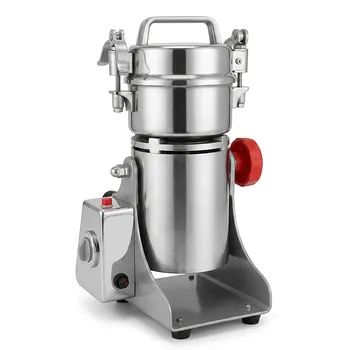
Industrial High Speed Small Sample Pulverizer Swing Type Laboratory Grinder for Powder Processing
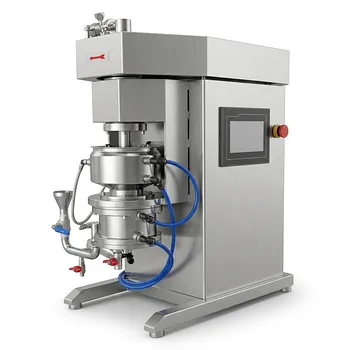
Small Ceramic Structure Laboratory Sand Mill Nanoscale Grinding Dispersion Equipment Seal-less Screen-less Design
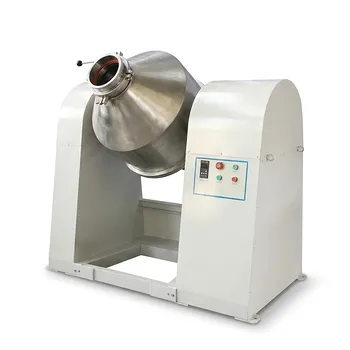
Industrial Double Cone Mixer for Powder Blending and Homogeneous Mixing
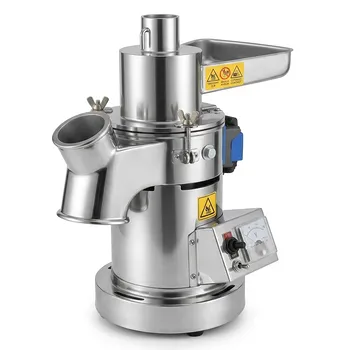
Continuous Feeding Grinder High Efficiency Pulverizer for Lab Sample Preparation
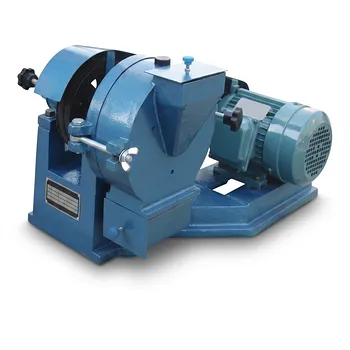
Laboratory Disc Mill for Ore and Mineral Sample Preparation
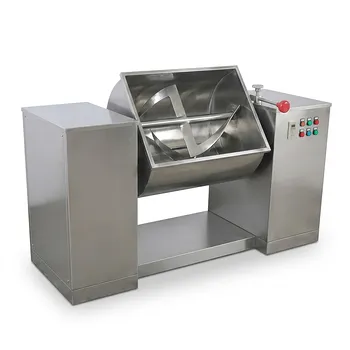
Horizontal Trough Mixer for Uniform Powder and Paste Blending