The Invisible Flaw That Dooms Coatings: How Powder Homogeneity Shapes Cold Spray Performance
Aug 31, 2026
The Morning a Coating Engine Died
It was a Thursday when another high-performance polymer coating failed. The nozzle clogged. The spray pattern flickered. Microscopy later showed what the spray booth logs could not: ceramic nanoparticle agglomerates had formed a hard, abrasive slug that blocked the line. The feedstock powder looked fine to the naked eye. But inside the feed hopper, invisible segregation had already sentenced the run to failure.
Most operators blame the spray parameters. They will adjust gas temperature, standoff distance, and traverse speed. Yet the root cause is almost always older, quieter, and upstream: the powder itself.
The Psychology of Neglected Uniformity
We are wired to focus on the active stage of any process. The spray gun’s hiss feels more real than a mixer humming in a separate room. This is the human tendency Morgan Housel identifies: we obsess over what we can see and hear in real time, undervaluing the invisible, slower forces that actually govern outcomes.
In powder-based cold spray, the mixing step is exactly that invisible force. It determines whether every gram of powder is a perfect microcosm of the whole feedstock — or a variable bullet in a game of composition roulette.
Why Polymer Cold Spray Is a Mixing Nightmare
Polymer cold spray accelerates composite powders to supersonic speeds without melting them. The feedstock typically marries a ductile polymer matrix (low density, soft) with hard functional additives — glass, ceramics, carbon fibers — that are dense and abrasive.
Gravity has a natural agenda: it separates. When you pour a bucket of mixed sand and pebbles, the pebbles rise. In a hopper on its way to a nozzle, the same physics works silently. Add vibration, gas flow, and pipe bends, and you have a powerful segregation engine.
Three Systemic Traps in Feedstock Preparation
1. The “Good Enough” Visual Inspection Trap
A powder may look uniformly gray, yet at the microscale be riddled with polymer-rich zones and additive clusters. The human eye catches color variations, not density-driven segregation. This false sense of security is the starting point of most coating failures.
2. The Over-Mixing Fallacy
Fear of non-uniformity leads some teams to mix for 12, 24, even 48 hours. They imagine time equals quality. But polymers, especially sensitive semi-crystalline powders, degrade under prolonged mechanical action. Particle morphology rounds off, fines generation spikes, and flowability collapses. You trade one invisible flaw for another.
3. The “We Have a Mixer” Assumption
Not all mixing is created equal. A simple tumble blender moves powder in a 2D plane, leaving stagnant corners where denser particles settle. A V-blender may split and recombine, but segregation persists when densities diverge heavily. Only a true multi-axis spatial motion can defeat the gravity bias.
A 3D Mixer’s Quiet Engineering Romance
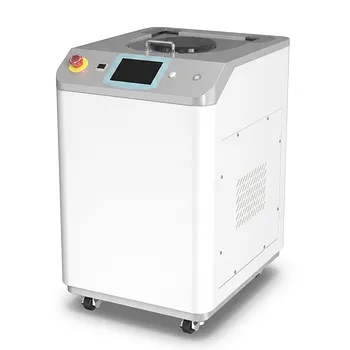
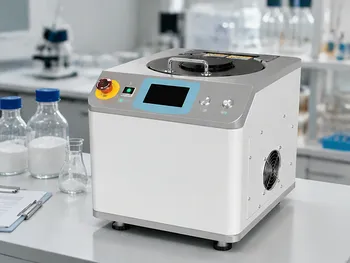
This is where the high-precision 3D mixer enters — a device that feels like a gyroscope for powders. Its motion is a simultaneous dance of rocking, rotation, and flipping. It doesn’t just stir; it makes the powder flow through three-dimensional space as if gravity has lost its coordinates.
The physics is almost romantic: every particle, regardless of mass or density, is continuously randomized. There is no “bottom” where the heavies sleep. There is no “dead zone” where the fines hide. The entire volume participates in a gentle, chaotic redistribution that reaches a state of microscale homogeneity without violence.
How Microscopic Order Emerges from Chaos
Think of a city street after a carnival: confetti, heavier napkins, light plastic wrappers. A wind gust that blows only from the east shifts the mess sideways. But a swirl — a vortex that lifts, turns, and changes direction — mixes all objects uniformly into a new layer. The 3D mixer is that vortex for powders.
It creates a stable random distribution. The ceramic particles become spaced at a consistent mean free path throughout the polymer. Not bonded, not alloyed, but arranged so that any random gram you scoop mirrors any other. That is the raw premise of cold spray reliability.
The Four Functions That Save a Coating Run
1. Eliminating Dead Zones
Traditional mixers leave corners and pockets untouched. The 3D motion ensures every cubic centimeter of the powder bed is repeatedly lifted and repositioned. No particle gets to sit still and nurse a density bias.
2. Neutralizing Density Gaps
A glass bead is 2.5 times denser than a polymer grain. In a static pile, it sinks. Under 3D mixing, it is caught in a continuous flow that does not allow a stable settling direction. Both particle types stay in suspension relative to each other, like swimmers in a re-circulating pool whose depth doesn’t sort them.
3. Achieving Microscale Dispersion
The goal is not “mixed enough.” It is “statistically identical anywhere.” High-precision 3D mixers achieve this without grinding additives into the polymer. The morphology remains pristine: polymer grains keep their shape, ceramic particles keep their sharp edges.
4. Protecting Particle Integrity
Because the motion is controlled and multi-axial — not a single aggressive shear plane — the energy input is gentle and distributed. Mixing cycles can be tuned to hours, not days. You avoid the attrition that turns a flowable powder into a dusty, static-charged mess.
Mapping the Mixing Choice to Your Real Priority
No single blending protocol fits every coating goal. The right choice depends on what you protect most.
| If Your Priority Is… | The Right Mixing Strategy |
|---|---|
| Coating consistency | Prioritize a 3D mixer with multi-axial compound motion to eliminate microscopic composition fluctuations. |
| Nozzle and feed line life | Use efficient cycles to fully disperse hard additives, preventing abrasive clusters. |
| Preserving original particle morphology | Control speed and duration, relying on spatial motion rather than aggressive shear. |
| Fast process development | Choose 3D mixers that reach mixing equilibrium quickly, slashing trial times. |
Beyond Mixing: The Whole Powder Preparation Chain
A mixer alone cannot salvage powder that was poorly crushed, sieved, or stored. The coating lab is an ecosystem: jaw crushers reduce raw polymer chunks, planetary ball mills or cryogenic grinders produce fine powders, air-jet and vibratory sieve shakers classify fractions with precision, and hydraulic presses (including Cold/Warm Isostatic Presses, vacuum hot presses, and XRF pellet presses) consolidate feedstock for reference specimens.
Our laboratories provide exactly this ecosystem. When a research group confronts a cold spray failure, we don’t only look at their mixer. We ask: What was the particle size distribution before blending? Were fines removed? Did the powder absorb moisture in storage and agglomerate before it even entered the hopper? The answer often spans multiple stations.
The Psychologist’s View of a Perfect Feedstock
There is a deep satisfaction in powder that flows like water — a state where every differential settling instinct has been neutralized. You pour it, and it behaves as one material, not a committee of particles with separate agendas.
Morgan Housel would note that the best systems are those where reliability is built so early that operators stop worrying about it. They forget the mixer exists. That forgetting is the highest compliment to sample preparation: the process becomes boring because the crisis never arrives.
The cold spray gun consumes powder like a heart consumes oxygen. Feed it inhomogeneity, and it stutters. Feed it a truly homogenized feedstock, and it produces coatings with isotropic properties, layer after layer.
Are You Ready to Design an Invisible Safety Net?
You don’t need to see the mixer work to trust it. You need to see the coating cross-section under the microscope and find no agglomerate ghosts, no composition gradients, no telltale striations. That is the moment you realize the base of your process is solid.
We engineer complete sample preparation workflows for material scientists who refuse to let an invisible flaw determine their results. From high-precision 3D powder mixers to liquid nitrogen cryogenic grinders, from air-jet sieves to isostatic presses, the building blocks of reliable cold spray feedstock are in your hands.
Contact Our Experts to map your powder preparation chain and eliminate the segregation that hides in your hopper.
Quick Links
Suggested Products
V-Type Powder Mixer for Uniform Blending of Dry Powders and Granules Horizontal Ribbon Mixer for Dry Powder and Slurry Blending Multi Dimensional Universal Mixer for High Uniformity Powder Blending Horizontal Ribbon Mixer for Uniform Powder and Slurry Mixing Horizontal Trough Mixer for Uniform Powder and Paste BlendingFurther Reading
The Mixing Fallacy: Why Your Composite Flour’s Uniform Color Is a Costly Illusion The Invisible Variable: Why Your Soil Test Data Is Lying to You The 81:19 Gamble: Why Imperfect Mixing Silently Kills Your Optical Ceramic The Micrometer Trigger: Why a Laboratory Powder Mixer Defines Effervescent Tablet Success When Trace Elements Dictate Strength: Mastering the Mixing of NiTiZn Alloys for Additive Manufacturing
PowderPreparation
Last updated on May 14, 2026
Related Products
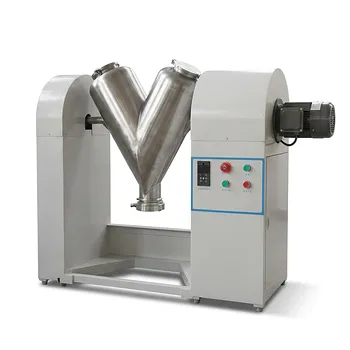
V-Type Powder Mixer for Uniform Blending of Dry Powders and Granules
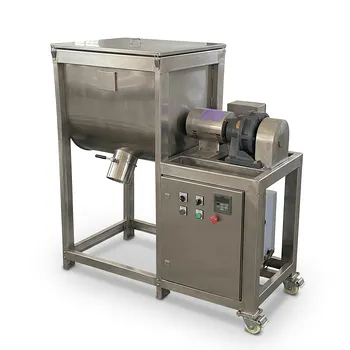
Horizontal Ribbon Mixer for Dry Powder and Slurry Blending
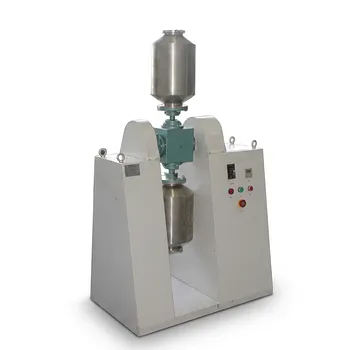
Multi Dimensional Universal Mixer for High Uniformity Powder Blending
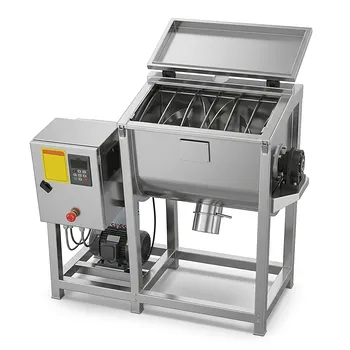
Horizontal Ribbon Mixer for Uniform Powder and Slurry Mixing
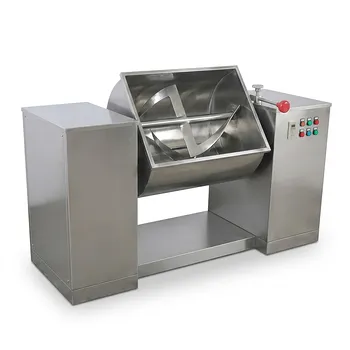
Horizontal Trough Mixer for Uniform Powder and Paste Blending
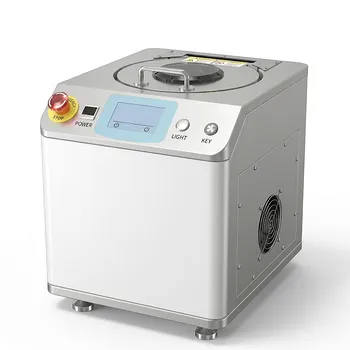
High Efficiency Vacuum Planetary Centrifugal Mixer and Defoaming Machine for Industrial Material Research and Precise Laboratory Powder Dispersion
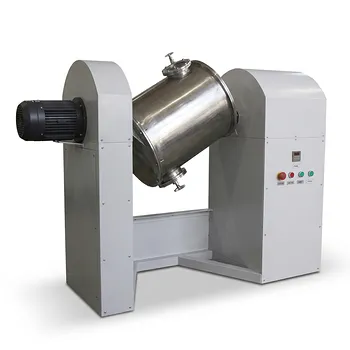
Inclined Mixer for Homogeneous Powder Blending and Grinding
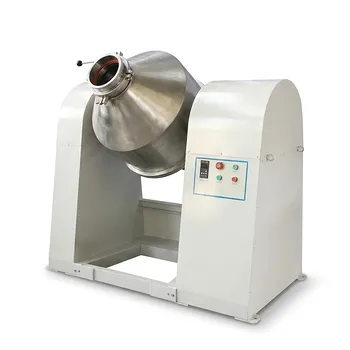
Industrial Double Cone Mixer for Powder Blending and Homogeneous Mixing
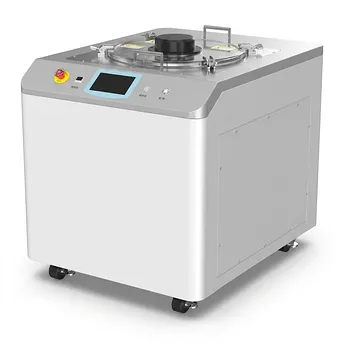
Industrial Planetary Centrifugal Vacuum Defoaming Mixer for High Viscosity Paste and Powder Homogenization
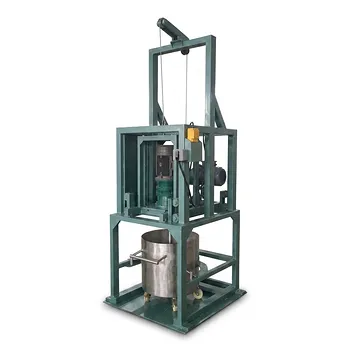
High-Speed Simple Disperser for Efficient Mixing, Dispersion, and Emulsification
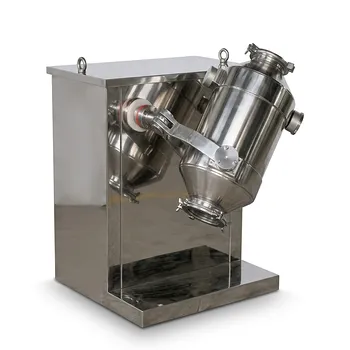
Three-Dimensional Motion Mixer for Laboratory Powder and Granule Blending
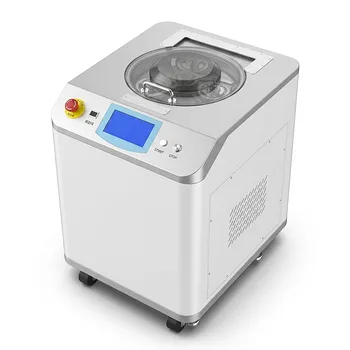
Dual Cup Vacuum Centrifugal Mixer Planetary Paste Defoaming Machine Industrial Material Processor
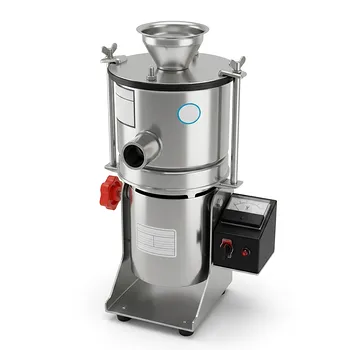
Air Guided Ultrafine Pulverizer High Speed Laboratory Powder Grinder for Chemical and Material Processing
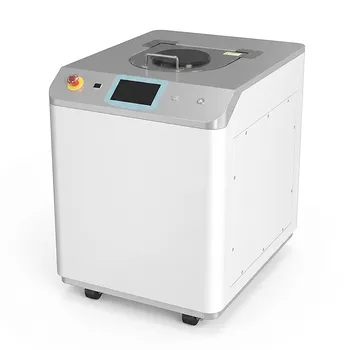
Industrial Planetary Centrifugal Vacuum Defoaming Mixer for High Viscosity Paste and Advanced Material Science
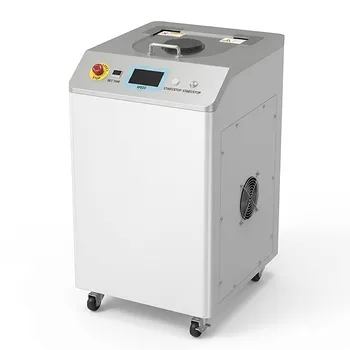
High Viscosity Planetary Centrifugal Vacuum Mixer for Material Defoaming and Uniform Mixing
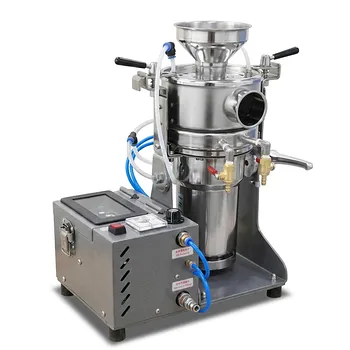
Water Cooled Pulse Jet Ultrafine Grinder
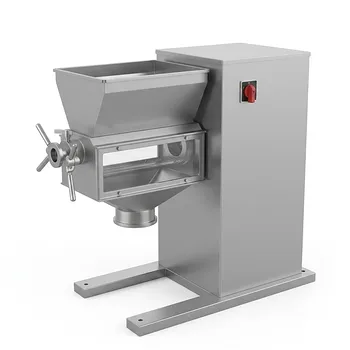
Industrial Swing Granulator for Powder Processing in Pharma Food and Chemical Industries
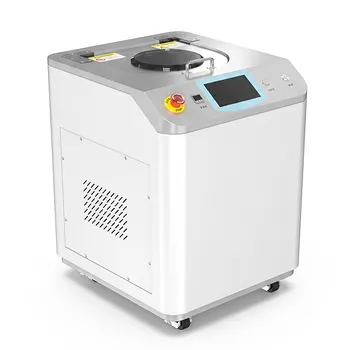
High Speed Vacuum Planetary Centrifugal Mixer and Defoamer for Industrial Paste Processing