The Invisible Failure Point: How Vacuum Systems Inside Hydraulic Presses Save Artificial Stone from Itself
Jul 18, 2026
The Moment of Truth Inside the Press
You cannot see them during production. When the massive hydraulic ram descends onto the raw mixture of quartz, resin, and pigments, everything looks solid. The vibration settles the aggregates. The pressure compacts them into a slab shape. The operators check their gauges, cycle times, and temperatures. It all appears textbook.
And yet, six months later, a customer calls. A countertop has a hairline crack. A bathroom vanity is staining around the soap dish. A polished surface has developed a cloudy, white haze near the core.
This is not a resin failure. It is not a mixing error. It is a void problem. The enemy was invisible air, and it was sealed inside the stone during those critical seconds when the press should have been breathing for the mixture.
To understand why this happens, we have to go back inside that press chamber right at the moment of truth—and look at the silent work of the vacuum system.
The Hidden Defect: Micro-Bubbles and the Psychology of “Good Enough”
When we think about manufacturing artificial stone, we obsess over surface defects. A scratch, a color inconsistency, a polished gloss level—we see those. But the most dangerous defects are the ones we cannot see without destructive testing.
They are called micro-bubbles, and they form when air gets trapped in the mixture during compaction. The hydraulic press applies hundreds of tons of force, and at first glance that force should squeeze out all the air. But the reality is messier: the mixture is a viscous, semi-solid mass. As pressure builds, it seals off escape channels before all the air has been pushed out.
A production manager who trusts only the pressure gauge might think, “We hit the right tonnage, so the slab is dense.” That is an intuitive but flawed assumption. Without an active vacuum system, you are simply compressing air pockets into smaller, more pressurized pockets—tiny spheres of weakness embedded in the finished material.
This is the psychology of the “good enough” press cycle. The process looks right. The numbers match. But inside, the stone is already compromised.
What the Vacuum System Actually Does: A Systematic Defense
A properly integrated vacuum system inside a hydraulic press performs the one task that raw mechanical force cannot: it extracts the gas and moisture before and during the moment the mixture collapses into a solid.
It is helpful to think of the vacuum as the press’s lungs. While the ram pushes down, the vacuum pulls out. This simultaneous push-pull transforms a chaotic compaction event into a controlled densification.
Active Air Extraction
As the vibration stage begins—the “V” in VCV—the vacuum starts drawing. The vibration fluidizes the mixture momentarily, allowing the trapped air bubbles to travel upward and out through the vacuum ports. Without this active airflow, the vibration would simply rearrange bubbles, not remove them.
Moisture Removal and Resin Integrity
Air is not the only intruder. Tiny amounts of residual moisture, either from the aggregates or from the environment, can become trapped as well. Moisture interferes with the resin’s ability to bond with the mineral surface. Under vacuum, this moisture vaporizes and is evacuated before it can create weak interfacial zones between the stone particles and the polymer binder.
- Without vacuum: moisture remains, creating invisible channels that later lead to staining and micro-cracking.
- With vacuum: the resin bonds directly to clean aggregate surfaces, forming a monolithic composite.
Preventing the “White Spot” Phenomenon
A classic failure signature of poor vacuum performance is the appearance of white spots or cloudy patches slightly below the polished surface. These are actually clusters of micro-bubbles that collapsed during polishing but left behind porous regions. The vacuum prevents these by removing the air before the resin cures and locks the void in place.
The Cost of Ignoring Voids: From Porosity to Premature Failure
To appreciate the vacuum system, you must understand what happens in its absence.
| Key Function | Material Impact | Real-World Failure |
|---|---|---|
| Air Extraction | Eliminates entrapped micro-bubbles | Without it: internal voids become stress concentrators, crack initiation points |
| Moisture Removal | Improves resin-aggregate binding | Without it: weak bonding zones lead to staining and reduced flexural strength |
| Porosity Reduction | Increases material density | Without it: high apparent porosity allows liquid absorption, freezing-thaw damage |
| Structural Reinforcement | Minimizes internal flaws | Without it: the stone fails unpredictably under bending or impact loads |
These are not hypothetical risks. A slab with an apparent porosity that is a fraction of a percent too high might pass visual inspection but absorb enough moisture over years to swell, discolor, and crack in freeze-thaw cycles. The void is the seed of every warranty claim that cannot be explained by abuse.
The Engineer’s Balance: Timing, Calibration, and Seals
A vacuum pump bolted onto a press is not enough. The system must be engineered into the process with an understanding of the material’s behavior.
The Critical Synchronization
If vacuum is applied too early, when the mixture is still fluffy and the vibration has not yet begun, the air pathways might not be connected. If applied too late, when the mass is already compacting, the escape routes are closed and the vacuum pulls on nothing but a sealed top surface.
The ideal sequence is to ramp up vacuum during the initial vibration phase, maintaining a high flow rate as the material compacts, then holding a deep vacuum as the final pressure is reached. This requires a controller that understands the stages, not just an on/off valve.
Seal Integrity in a Dirty Environment
Artificial stone production is brutally hard on equipment. Fine abrasive dust, sticky resin aerosols, and aggressive cleaning cycles create an environment that degrades vacuum seals rapidly. A small leak around a door seal or a clogged vacuum port can reduce the vacuum level from 99% to 80% without any visible warning. The press still runs. The operator still sees a vacuum gauge showing “something.” But the air extraction is incomplete, and the micro-bubbles remain.
Regular maintenance protocols—visual inspection of seals, cleaning of vacuum filters, and periodic helium leak tests—are not optional. They are what separates a reliable production line from one that slowly drifts into producing defective stone. This is the “invisible work” that exceptional manufacturers bake into their daily routine.
Beyond the Broken Slab: The Psychology of Durability
There is a deeper lesson here for anyone scaling artificial stone production. The defect you create today—by skimping on vacuum parameters, delaying maintenance, or choosing a press without proper vacuum integration—does not appear on your balance sheet next month. It appears next year, or the year after, in a customer’s home.
The home cook who puts a hot pan on a countertop and sees a sudden crack spiral outward. The facility manager who notices a dark, spreading stain around a sink. These people are not thinking about your vacuum pump. They are thinking about your brand.
In that sense, the vacuum system is a trust-building mechanism. It generates an invisible quality that the market does not directly ask for but absolutely penalizes when it is missing. It is the engineering answer to the oldest business truth: the cheapest production cycle is the one that does not have to be re-done.
Engineering the Solution: Vacuum-Integrated Hydraulic Presses
When you move from understanding the problem to implementing the fix, the difference is always in the equipment’s philosophy. Most hydraulic presses can be retrofitted with a vacuum chamber. But a press designed from the ground up for vacuum-assisted VCV operates with a different set of priorities.
You need:
- Deep vacuum capability that can achieve and hold levels below the vapor pressure of residual moisture.
- Synchronized control logic that ties vacuum ramp-up to vibration timing and pressure curves.
- Robust chamber construction with seals designed for long-term exposure to abrasive and sticky environments.
- Ease of service so that daily cleaning does not become a disincentive to proper maintenance.
This is where specialized laboratory and production-scale hydraulic presses become the bottleneck—or the breakthrough—for stone manufacturers.
At KinTek, we build complete solutions for material science and powder processing, including a full spectrum of hydraulic presses engineered for these demanding applications. Our vacuum hot presses and customizable press configurations are designed to treat vacuum not as an accessory, but as a core functional element of the compaction cycle. The goal is simple: give the manufacturer absolute control over the invisible battle inside the press so that the finished stone emerges dense, impermeable, and structurally honest.
The Final Void
Every artificial stone slab carries within it a record of the moment it became solid. If the vacuum system did its job, that record is one of purity—a nearly pore-free composite ready for decades of service. If not, the slab is an archive of micro-bubbles, each one a small betrayal of the promise made to the customer.
Investing in properly engineered vacuum compaction is not about chasing a specification on a data sheet. It is about deciding what kind of manufacturing legacy you want to leave: one defined by invisible defects and callbacks, or one built on the quiet confidence that your stone is exactly as strong as it looks.
Quick Links
Suggested Products
Dual Cup Vacuum Centrifugal Mixer Planetary Paste Defoaming Machine Industrial Material Processor 非介入式材料均质机真空脱泡行星搅拌高粘度混合设备 High Speed Vacuum Planetary Centrifugal Mixer and Defoamer for Industrial Paste Processing High Efficiency Vacuum Planetary Centrifugal Mixer and Defoaming Machine for Industrial Material Research and Precise Laboratory Powder Dispersion Industrial Vacuum Kneader for High-Viscosity Silicone, Rubber, and Compound MixingFurther Reading
The Invisible Architect of Failure: Why a Bubble in Your Resin-GelMA Mix Casts a Shadow on Your Entire Print The Hidden Disorder in Your Battery Slurry—and the Precision Tool That Destroys It The Most Important Mixer in Your Lab Isn’t a Mixer. It’s an Insurance Policy Against Defects. The 3-Minute Transformation: How Mixing Speed Reveals the Hidden Architecture of Next-Gen Batteries When Two Extra Minutes Define a Skyscraper: The Precision Mixing Protocol That Nanomaterials Demand
PowderPreparation
Last updated on May 14, 2026
Related Products
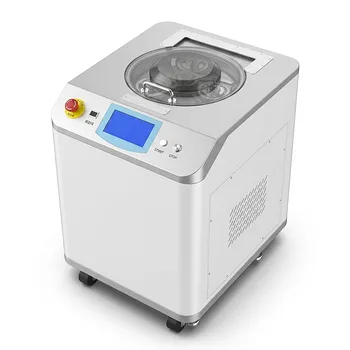
Dual Cup Vacuum Centrifugal Mixer Planetary Paste Defoaming Machine Industrial Material Processor
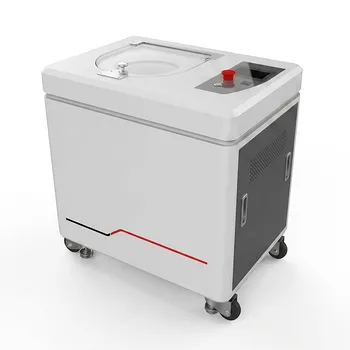
非介入式材料均质机真空脱泡行星搅拌高粘度混合设备
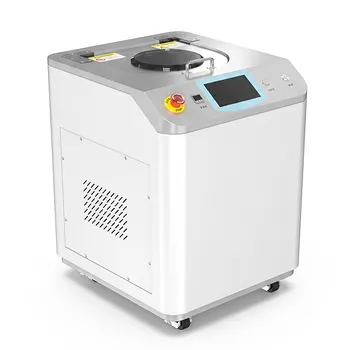
High Speed Vacuum Planetary Centrifugal Mixer and Defoamer for Industrial Paste Processing
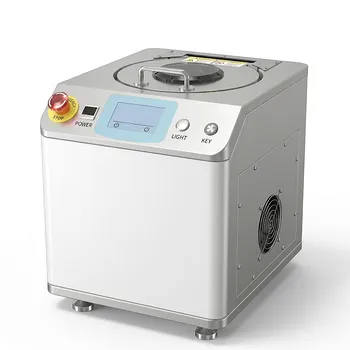
High Efficiency Vacuum Planetary Centrifugal Mixer and Defoaming Machine for Industrial Material Research and Precise Laboratory Powder Dispersion
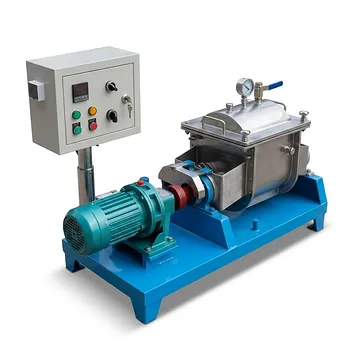
Industrial Vacuum Kneader for High-Viscosity Silicone, Rubber, and Compound Mixing
5 Ton Single Punch Tablet Press Laboratory Small Batch Production
6-Ton Small Single-Punch Tablet Press — Laboratory Powder & Granule Tableting Equipment / Tablet Forming Machine
High Viscosity Planetary Centrifugal Mixing and Vacuum Defoaming Machine for Laboratory Material Preparation
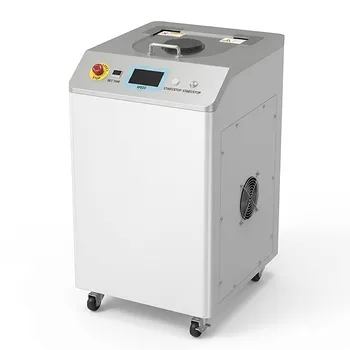
High Viscosity Planetary Centrifugal Vacuum Mixer for Material Defoaming and Uniform Mixing
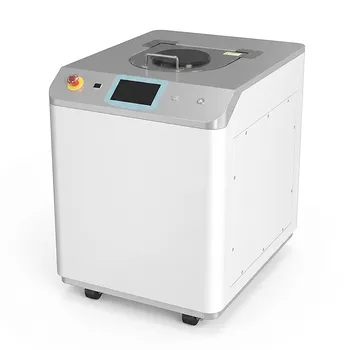
Industrial Planetary Centrifugal Vacuum Defoaming Mixer for High Viscosity Paste and Advanced Material Science
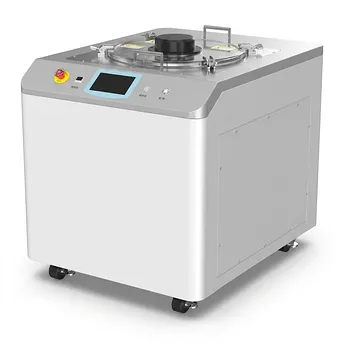
Industrial Planetary Centrifugal Vacuum Defoaming Mixer for High Viscosity Paste and Powder Homogenization
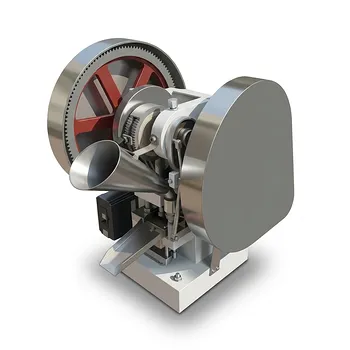
6 Ton Variable Frequency Single Punch Tablet Press