The Delicate Truth About Lightweight Concrete: It All Hinges on a Single Number
May 20, 2026
The Day the Concrete Didn’t Breathe
The quality engineer stared at the compression test result. The lightweight concrete cylinder had failed—not spectacularly, but quietly, 15% below spec. The cement paste was the same. The water ratio was perfect. Yet the structure was already showing micro-cracks.
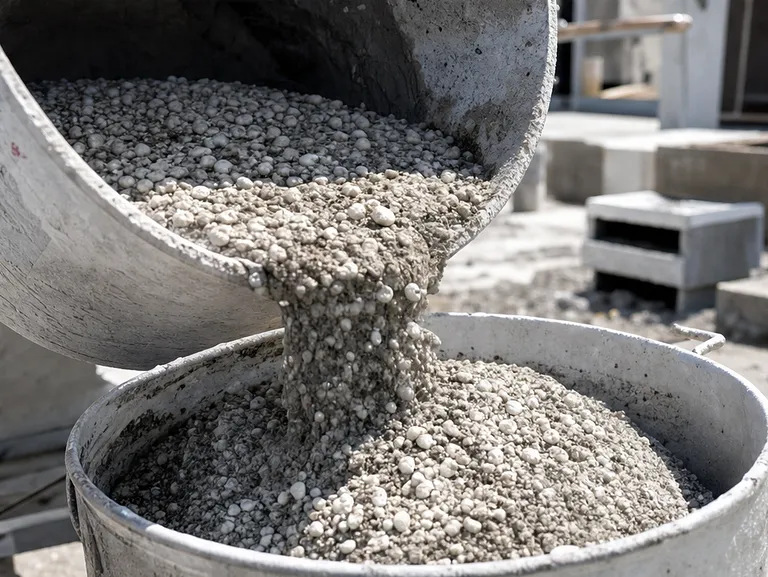
He sliced a sample and held it to the light. The expanded perlite aggregates were packed too loosely, leaving hungry voids no amount of cement could fill. Somewhere in the supply chain, a crucial number had drifted without anyone noticing. That number was the fineness modulus.
We tell ourselves that concrete is a recipe you follow. It is not. It is a packing problem governed by a single, fragile metric that most labs calculate poorly because they treat sieving as a simple task.
The Hidden Metric: Fineness Modulus
The fineness modulus is a single figure that sums up the entire particle size distribution of an aggregate. It is derived from the cumulative percentages of residue retained on a stack of standard sieves.
A lower modulus means the aggregate skews fine; a higher modulus signals more coarse particles. In expanded perlite, this number does more than describe size. It predicts how the particles will nest together in a hardened matrix.
When the modulus is too low, excess surface area demands more cement paste. When it jumps too high, internal voids go unfilled, weakening the structural skeleton. The margin between those failure modes is often microscopic.
Why Manual Sieving Lies to You
Expanded perlite barely respects gravity. The grains are airy, porous, and friction-locked. If you shake a stack of sieves by hand, you will not separate them. You will just rearrange the stack in a way that feels productive.
Surface forces hold lightweight particles in place. Without controlled mechanical energy, the fines cling to the coarse grains, and the data you record is not reality—it is a polite fiction your fingers created.
Manual sieving introduces operator variability, fatigue, and a dangerous psychological bias: when you have invested five minutes in shaking, you will convince yourself the separation is complete because you want to be done.
The Mechanical Soul of Accuracy
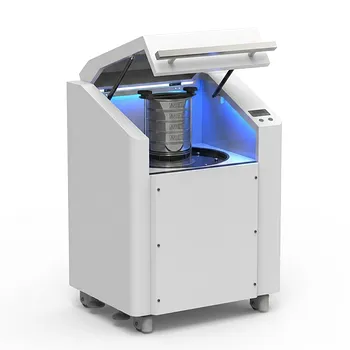
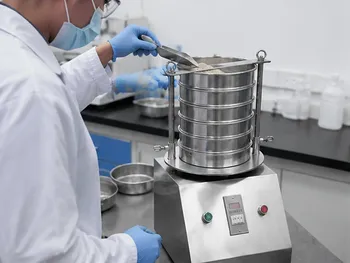
A vibratory sieve shaker changes the physics of the problem. By applying consistent, three-dimensional motion, it forces each perlite particle to briefly levitate, rotate, and fall again. The particle stack dynamically rearranges as fines migrate downward and coarse grains rise.
Our high-precision vibratory shakers deliver adjustable amplitude and duration, so you can tune the energy to match the fragility of expanded perlite. This transforms sieving from a guessing game into a reproducible material test.
Mechanical vibration ensures every particle faces the sieve aperture multiple times. The statistical probability of a particle passing—or being correctly retained—approaches near certainty. That is the difference between a gradation curve you can trust and one that quietly destroys a mix design.
The Sieve Stack: A Ladder of Precision
Standard testing sieves provide the calibrated rungs. Each mesh aperture is manufactured within micron-level tolerances, transforming an ordinary metal frame into a measurement instrument.
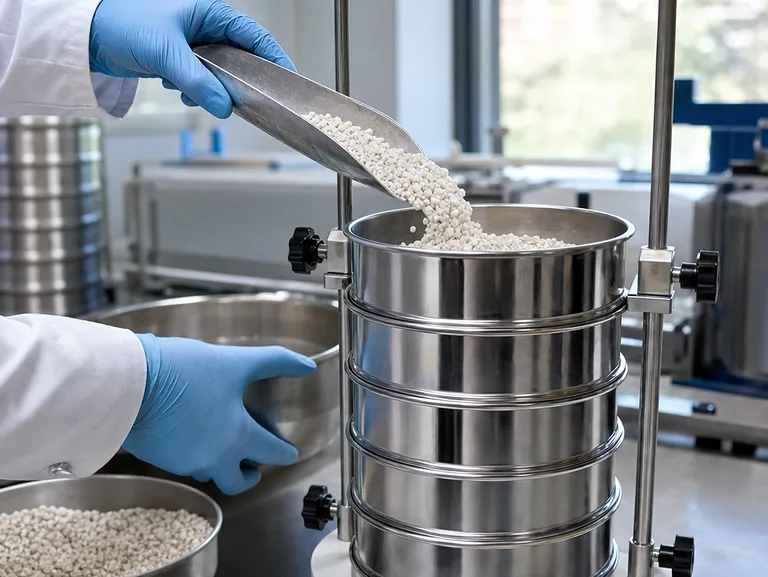
We supply a full range of test sieves certified to international norms. When you stack them in a shaker, you build a physical algorithm that sorts thousands of particles into discrete size classes in minutes. The cumulative residue on each sieve becomes the raw data for the fineness modulus calculation.
Without that standardization, you are not measuring particles. You are measuring your own inconsistencies.
The Fragility Paradox
Here is where the engineering gets delicate. Expanded perlite is fragile. Too much vibration intensity, or a cycle that runs too long, and the particles themselves begin to fracture. The sieving process starts manufacturing fines that didn't exist in the original batch.
The result is a fineness modulus that drifts artificially downward. Your data will tell you the aggregate is finer than it really is. Your mix will overcompensate with paste. Cracking will follow.
Our equipment allows precise control over vibration intensity and timer settings, so you can hit the sweet spot: enough energy for complete stratification, not a second more. Regular inspection of sieve meshes ensures no blinding or deformation distorts the measurement.
From Sieve Data to Structural Integrity
The fineness modulus translates directly to packing density. A well-graded perlite aggregate has smaller grains that fill the gaps between larger ones. Fewer voids mean less cement paste is required, and the remaining porosity shrinks.
This lowers material cost and raises compressive strength simultaneously. The number on your sieving report is literally a structural prediction. When you optimize it, you turn raw expanded perlite into an engineered lightweight component.
The table below captures the relationship:
| Factor | Role in Perlite Analysis | Impact on Final Material |
|---|---|---|
| Mechanical Vibration | Overcomes surface friction and particle stratification | Highly accurate size classification |
| Standard Testing Sieves | Provides a regulated, repeatable environment | Enables compliance with standards like BS 882 |
| Fineness Modulus Calculation | Quantifies cumulative residue per sieve level | Predicts packing density and structural integrity |
| Controlled Intensity | Prevents mechanical breakdown of fragile perlite | Maintains data integrity by reducing particle attrition |
The Complete Solution Beyond Sieving
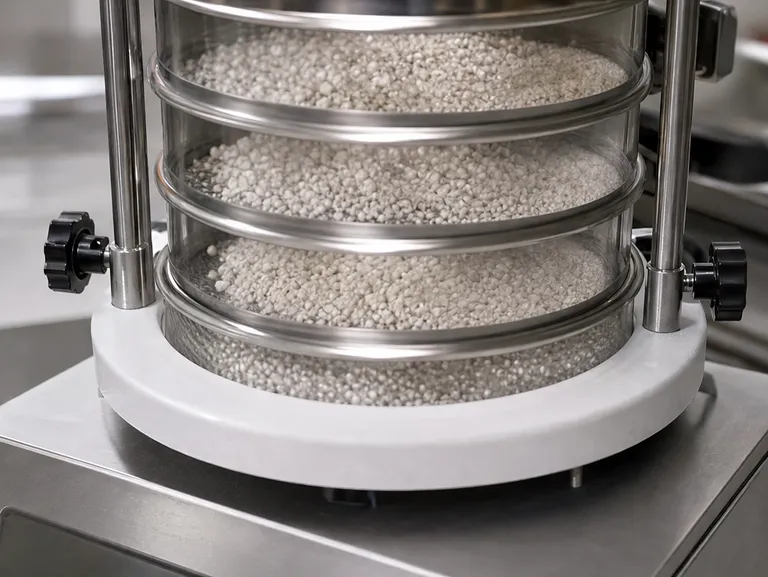
Optimizing the fineness modulus is one chapter of a larger material science story. In our experience, the labs that produce the most reliable concrete are those that control the entire preparation chain—from crushing and grinding to mixing and compaction.
We build complete sample preparation solutions for exactly that reason. Beyond vibratory sieve shakers and test sieves, our product lines include:
- Grinding & Milling: Planetary ball mills, jet mills, disc mills, and liquid nitrogen cryogenic grinders to prepare powders without altering their thermal or structural character.
- Crushing: Jaw and roll crushers that reduce feed material to precise, reproducible starting sizes.
- Mixing & Defoaming: Powder mixers that homogenize blends before sieving, ensuring your sample represents the true batch.
- Presses & Compaction: Hydraulic presses—including Cold/Warm Isostatic Presses (CIP/WIP), XRF pellet presses, and vacuum hot presses—that test how a powder will perform under real manufacturing conditions.
When your sieving data is backed by this kind of upstream consistency, the fineness modulus becomes not just a quality check, but a design lever you can pull with confidence.
Building Certainty Into Your Mix Design
Engineers are not paid to be optimistic. They are paid to close the gap between what the material should do and what it actually will do. That gap narrows only when the data feeding your calculations is physically grounded.
Expanded perlite is an elegant, high-performance aggregate—but only when its gradation is truly known. A vibratory sieve shaker and certified sieves convert that unknown into a number you can build on.
To construct a lightweight aggregate process that doesn’t depend on luck, Contact Our Experts.
Quick Links
Suggested Products
Laboratory Vibratory Test Sieve Shaker for Precision Particle Size Analysis and Powder Grading Small Laboratory Vibrating Sieve Shaker for Precise Particle Size Analysis 三维电磁微量振动筛分仪 Laboratory Air Jet Sieving Machine for Fine Powder Particle Size Analysis and Deagglomeration High Frequency Wet Three-Dimensional Vibrating Sieve Shaker for Dry and Wet Particle Size AnalysisFurther Reading
The Sieve Never Lies: How a Simple Stack of Mesh Became the Lab’s Ultimate Truth-Teller The Grain Size That Held Up Cathedrals: A Sieve Analysis Story The 0.15 mm Question: Why Sieve Grading Is the Quiet Foundation of Reliable Lightweight Mortar The Sieve and the Mind: Why Your Soil Test Results Depend on Replacing Human Fatigue with Engineered Consistency The Quiet Gravity of a Perfect Mix: How Sieves and 3D Tumblers Engineer Certainty in Drug Formulation
PowderPreparation
Last updated on May 14, 2026
Related Products

Laboratory Vibratory Test Sieve Shaker for Precision Particle Size Analysis and Powder Grading

Small Laboratory Vibrating Sieve Shaker for Precise Particle Size Analysis
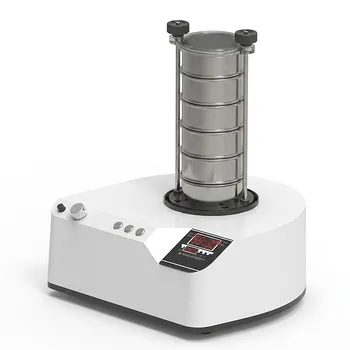
三维电磁微量振动筛分仪
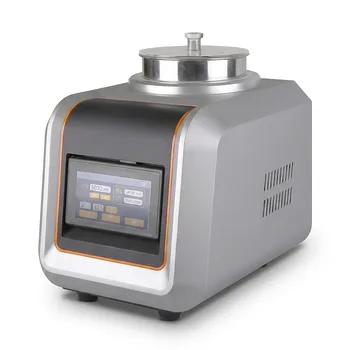
Laboratory Air Jet Sieving Machine for Fine Powder Particle Size Analysis and Deagglomeration
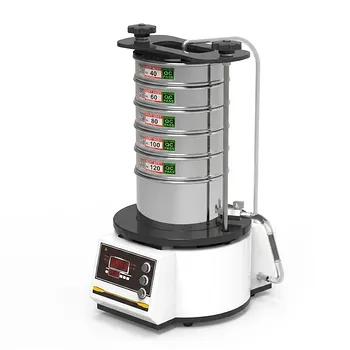
High Frequency Wet Three-Dimensional Vibrating Sieve Shaker for Dry and Wet Particle Size Analysis
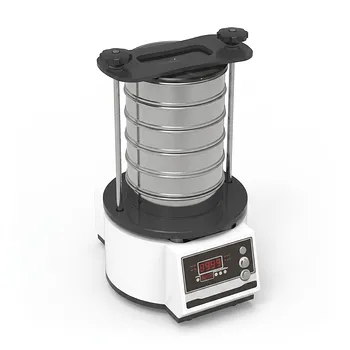
Tapping Oscillating Sieve Shaker for Dry and Wet Particle Size Analysis
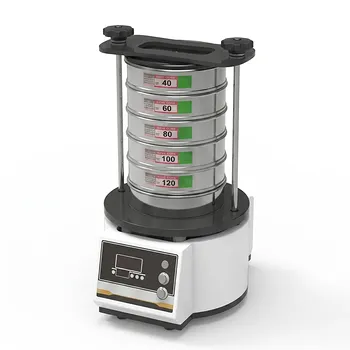
Dry Three Dimensional Vibratory Sieve Shaker

Heavy Duty Dry Three Dimensional Vibratory Sieve Shaker for Particle Separation

Stainless Steel Rotary Vibrating Sieve High Precision Circular Vibratory Separator Industrial Powder Grading Machine Multi Layer Sifting Equipment

Three Dimensional Rotary Vibrating Sieve