The Cracks You Don’t See: How Pressing Errors Sabotage Self-Reinforced Beta-Si3N4 Ceramics
Jul 21, 2026
The Moment Just Before the Furnace Opens
The young researcher doesn’t remember the last 14 hours of gas-pressure sintering. He only remembers the dread.
He dreams of what he will find inside: a perfectly densified wafer of self-reinforced Beta-Si3N4. A piece so tough that its elongated grains will deflect cracks like a microscopic forest. He opens the furnace.
Instead of a monolith, he finds a warped disc. A hairline crack runs across the surface. A crack that began not in the furnace’s heat, but hours earlier, in a hydraulic press that seemed too simple to fail.
Most ceramic failures are not born in the sintering cycle. They are pressed into existence long before the material ever sees a flame. The hydraulic laboratory press is the moment a ceramic’s destiny is written. Get it wrong, and no furnace can fix what your own hand has locked inside.
The Green Body Is a Genetic Code
A ceramic does not start as a material. It starts as an arrangement of particles.
Engineers tend to worship the sintering curve. They tweak ramp rates, hold times, and nitrogen pressures. But the furnace is just an environment. It can only express what the green body already contains.
A green body is a genetic code.
- If the code contains air gaps, the ceramic will develop porosity.
- If the code contains density gradients, the ceramic will warp.
- If the code contains internal friction damage, the ceramic will crack.
The hydraulic press is the author of that code. And writing it demands more than brute force.
The Enemy Within: Air, Density, and a Dangerous Assumption
Why Eliminating Porosity Is Not Enough
The most common mistake is to equate low porosity with high quality.
Yes, a lab press must expel trapped air. Even microscopic bubbles act as stress concentrators during phase transformation. When Beta-Si3N4 grains begin their anisotropic growth at 1800°C, a single air pocket becomes the seed of a catastrophic crack.
But here is the psychological trap: measurable density masks invisible chaos.
A sample can show excellent average density while hiding a gradient where the center is 3% less dense than the edges. You will never see it until the furnace reveals it in the form of a bend you cannot explain. The number on the density balance lies to you because it doesn’t show uniformity.
The Contact Point Betrayal
Pressing is not just about squeezing air out. It is about building bridges.
Atomic diffusion during sintering requires contact points. Every contact point is a highway for mass transport. When you apply pressure correctly, you don’t just compact powder; you knit a network of future bonds.
But if the pressure creates uneven contact—forcing powder to bond tightly near the die wall while leaving the center loose—you create two different materials in one pellet. One side is ready to sinter. The other is ready to lag. The result is internal stress that can tear a component apart before it ever leaves the furnace.
The High-Stakes Theater of the Beta-Si3N4 Phase Transition
When One Grain Grows, the System Shifts
Self-reinforced Beta-Si3N4 is a masterpiece of microstructural engineering. Its toughness comes from in-situ grown elongated beta-phase grains. These grains do not just appear; they emerge from a delicate phase transition under extreme conditions.
That transition is exquisitely sensitive to the initial state of the green body.
If your press left density gradients, those gradients become growth-rate gradients.
- Dense regions nucleate more beta grains early.
- Loose regions transform late, expanding at a different rate.
- The material tears itself apart trying to accommodate incompatible strains.
You will call it a “sintering failure.” But the sintering was perfect. It faithfully developed the flawed blueprint you gave it.
A Paradox: The Pressure That Breaks the Piece
There is a dangerous belief in materials engineering: if some pressure is good, more must be better.
The hydraulic press offers a seductive digital display. You can dial up 20 MPa, 30 MPa, even 50 MPa. And when you do, the green body looks flawless. It is hard. It handles well. Then you release the pressure.
The crack appears minutes later. Or maybe hours. This is springback. The elastic energy stored in over-compacted particles releases as soon as the constraint drops, causing microscopic delaminations. You traded trapped air for trapped strain. The furnace will convert that strain into a visible fracture, and you will blame the heating rate.
The psychology of over-compaction is a story we tell ourselves: If I just press harder, I am doing a better job. But a hydraulic press is not a vise. It is a surgeon’s scalpel. Precision matters more than magnitude.
Engineering a Flawless Blueprint: The Pressing Strategy
The Two Variables That Matter Most
For Beta-Si3N4 ceramics, a pressing strategy must control two things:
- Pressure uniformity across the entire body.
- Final green density relative to the powder’s packing and bridging behavior.
The right pressure also depends on the powder. Agglomerated powders from improper milling require higher pressure to crush soft agglomerates. Well-milled, fine particles may reach optimal contact at much lower forces. Using a fixed recipe is engineering by ritual, not by understanding.
A better strategy considers the entire powder preparation chain.
- If particle size distribution is wide: Moderate axial pressure with a die-wall lubricant prevents bridging.
- If particles are nano-sized or agglomerated: Pre-milling in a planetary ball mill ensures consistent starting morphology before pressing.
- If ultimate uniformity is non-negotiable: Uniaxial pressing alone is the enemy. Wall friction inevitably creates gradients.
Where Cold Isostatic Pressing Rewrites the Rules
For complex shapes or when you cannot afford a 1% density gradient, uniaxial lab presses reveal their limit. Friction against the die wall shields the center from the full force. This “pressure shadow” has ruined more ceramic research careers than any other single phenomenon.
The solution is to remove the wall friction entirely. Cold Isostatic Pressing (CIP) encapsulates the powder in a flexible mold and applies pressure uniformly from all directions through a fluid medium. The pressure is the same at the center, the edge, and every point in between.
When you combine the right powder processing with isostatic pressing, the green body that emerges is genuinely uniform. It carries no hidden genetic defect. It enters the furnace ready to fulfill the Beta-Si3N4 transition without war, without distortion.
From Powder to Press: A Complete Ecosystem for Certainty
A hydraulic press does not operate in isolation. The quality of the green body depends on the particle size, the mixing homogeneity, and the absence of agglomerates that entered the die. Reliability is a chain, and a chain is only as strong as its first step.
We engineer that entire chain.
Our sample preparation solutions cover the full workflow that self-reinforced ceramics demand:
- Crushing and Milling: Jaw crushers, liquid nitrogen cryogenic grinders, and planetary ball mills to achieve the exact particle size distribution your Beta-Si3N4 powder needs.
- Sieving and Mixing: Air-jet sieve shakers for precise separation and powder mixers that eliminate density-biased segregation before the die is filled.
- Compaction: A complete spectrum—from standard laboratory hydraulic presses and XRF pellet presses to advanced Cold/Warm Isostatic Presses (CIP/WIP) for gradient-free green bodies, and Vacuum Hot Presses for those who require simultaneous heat and pressure.
The furnace will always get the final word. But you must give it a sentence worth reading.
| Pressing Pitfall | Psychological Root | The Hidden Outcome |
|---|---|---|
| Chasing maximum pressure | The belief that force equals quality | Springback, laminations, stored elastic energy |
| Ignoring density gradients | Trusting a single average density number | Warped geometry after sintering |
| Poor powder dispersion | Underestimating the pre-press workflow | Non-uniform grain growth, local weaknesses |
| Rigid recipe adherence | Engineering by ritual, not by response | Inconsistent batches despite identical settings |
A green body is a hypothesis. The furnace is the experiment. The hydraulic press is your chance to get the hypothesis right.
The cracks you don’t see today will define the failure you see tomorrow. Build your ceramic from a flawless blueprint.
Quick Links
Suggested Products
Ordinary Type Rotary Tablet Press for Pharmaceutical Chemical Food Electronic Industries Hydraulic Double Shaft Disperser for High Viscosity Liquid Mixing and Dispersion Enhanced 9 Punch Rotary Tablet Press for Powder Compaction 6 Ton Variable Frequency Single Punch Tablet Press Manual Tablet Press with Dual Scale Pressure Gauge for Pharmaceutical Food Chemical Laboratory Sample PreparationFurther Reading
The Invisible Architect: How Compaction Psychology Shapes Your LSM Ceramic’s Fate The Invisible Bridge: How Controlled Pressure Shapes the Future of Ceramic-Steel Brazing The Breaking Point: What a Hydraulic Press Reveals About Concrete—and Our Own Biases The 15-Ton Truth: Why Your Elemental Analysis Is Only as Good as Your Pellet The Moment of Truth in Solid‑Lubricant Composites: Why Your Hydraulic Press Decides Everything
PowderPreparation
Last updated on May 14, 2026
Related Products
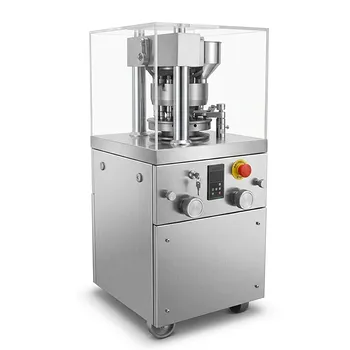
Ordinary Type Rotary Tablet Press for Pharmaceutical Chemical Food Electronic Industries
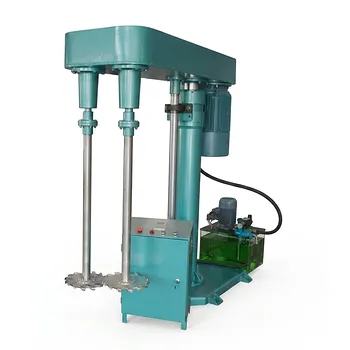
Hydraulic Double Shaft Disperser for High Viscosity Liquid Mixing and Dispersion
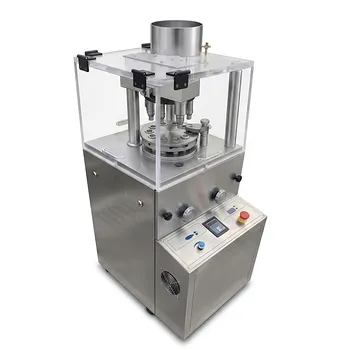
Enhanced 9 Punch Rotary Tablet Press for Powder Compaction
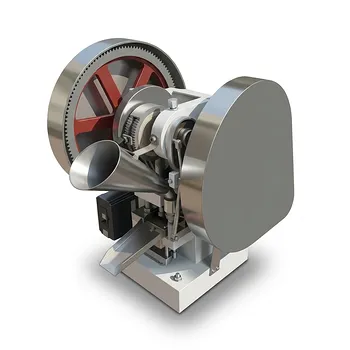
6 Ton Variable Frequency Single Punch Tablet Press
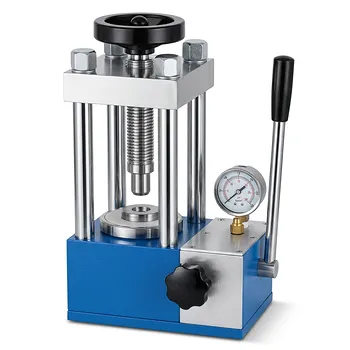
Manual Tablet Press with Dual Scale Pressure Gauge for Pharmaceutical Food Chemical Laboratory Sample Preparation
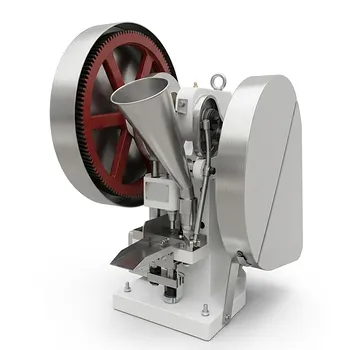
6-Ton Small Single-Punch Tablet Press — Laboratory Powder & Granule Tableting Equipment / Tablet Forming Machine