The 15-Ton Truth: Why Your Elemental Analysis Is Only as Good as Your Pellet
May 16, 2026
The Morning the Numbers Stopped Making Sense
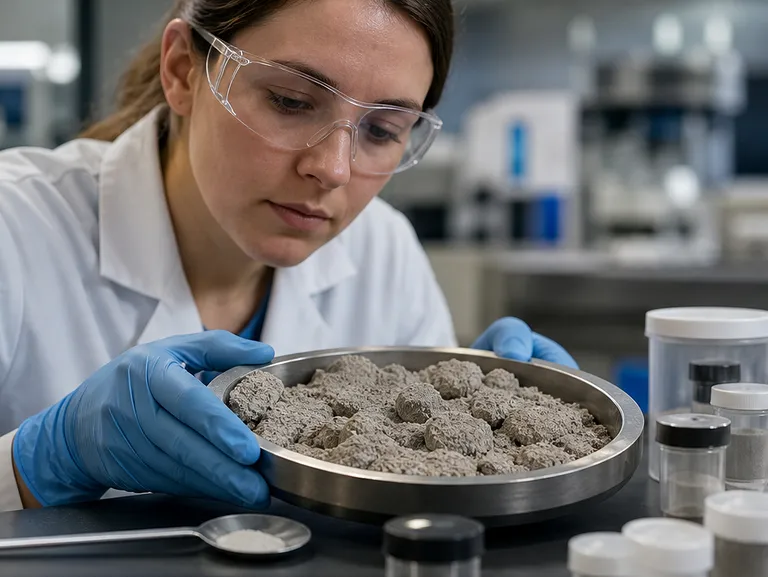
The technician stared at two sets of results from the same batch of limestone. One showed a promising 52.3% calcium oxide. The other, a dismal 48.1%. The chemical composition hadn't changed overnight. The powder was identical. But the data said otherwise.
This wasn't an instrument failure. This was a geometry problem.
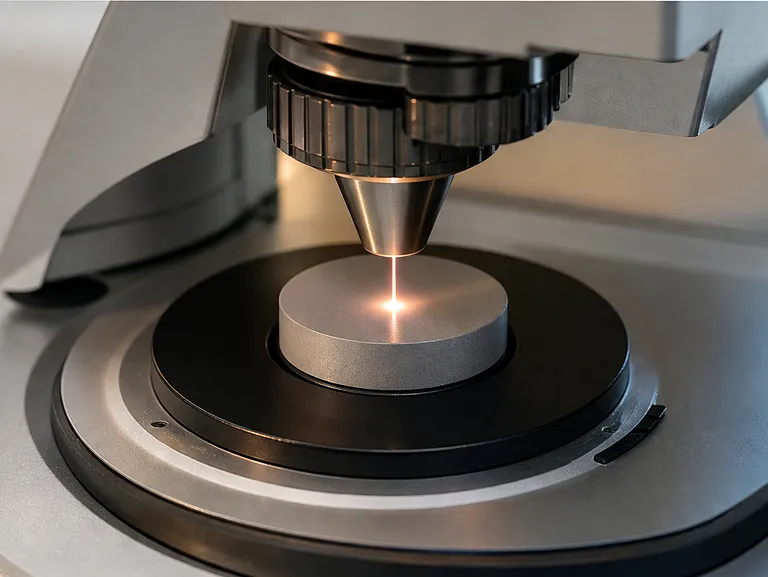
The truth that analytical chemistry textbooks often bury is this: Wavelength Dispersive X-ray Fluorescence (WD-XRF) doesn't actually measure chemistry directly. It measures the physics of X-ray interaction with a surface. And surfaces lie.
A loose powder presents the X-ray beam with a chaotic landscape of peaks, valleys, and hidden caves. Every void is a dark space where fluorescence goes to die. Every protruding particle casts a microscopic shadow over its neighbor.
You think you're measuring elemental concentration. You're actually measuring surface topography.
The Non-Intuitive Physics of a False Signal
Consider what happens when a primary X-ray beam hits loose alumina powder.
The beam penetrates theoretically to a certain depth, exciting atoms and generating characteristic fluorescence. But in a loose powder, some photons encounter air gaps instead of atoms. They pass through. Others hit surface particles at odd angles and scatter into the detector housing instead of the crystal.
The detector doesn't know the difference between "this element is present at low concentration" and "this element's signal is being physically blocked." It just counts photons.
This is the central psychological trap of elemental analysis: we mistake precision for accuracy.
An instrument will happily report concentrations to four decimal places on a terrible sample. The software doesn't know the sample is bad. The numbers look confident. They are simply wrong.
The Pellet as a Truth Machine
Standardizing the Unseen Interface
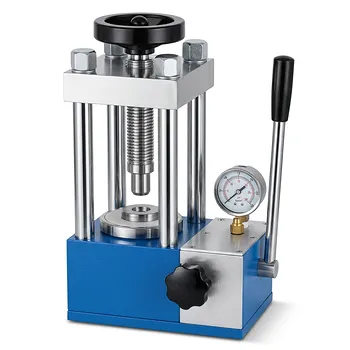
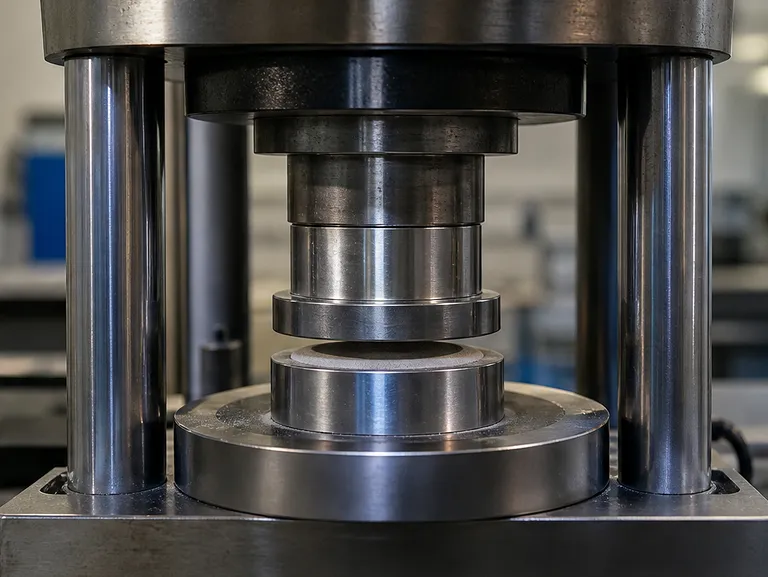
A hydraulic press solves a problem that happens at the microscopic interface between X-ray photons and matter.
When you compress powder at 15 tons of axial force, you're not just making the sample smaller. You're fundamentally rewriting the physics of the interaction. The flat circular plane created by a precision-ground pellet die becomes a standardized geometric constant across every measurement.
The incident angle of the primary beam. The take-off angle to the analyzing crystal. The distance to the detector. All of these depend on one assumption: the sample surface is a perfect plane at a known position.
Without this assumption, the entire optical geometry of the spectrometer collapses.
Density Is Signal Stability
Think of a loose powder as a sponge filled with signal-killing air. Every internal pore represents a location where the X-ray beam passes through without generating the fluorescence you're trying to measure.
Compression collapses these voids. The resulting high-density pellet presents the beam with a continuous, homogeneous path through the material. For every element—from heavy metals to light oxides—the penetration depth becomes consistent.
This matters most for the elements you're probably most interested in.
Light elements are brutally sensitive to density variations. Sodium, magnesium, aluminum—their characteristic X-rays are so low-energy that even minor surface roughness can attenuate them before they reach the detector. A smooth, dense pellet is not a luxury for light element analysis. It's the difference between detection and invisibility.
The Particle Size Effect Nobody Sees Coming
Here's the insidious part.
You can grind a powder to what appears to be a fine consistency. It flows smoothly. It looks homogeneous to the naked eye. But the X-ray beam sees what you cannot: a statistical distribution of particle sizes where larger grains effectively shield smaller ones from excitation.
This "micro-absorption" effect doesn't just reduce overall signal. It does something worse.
It selectively attenuates certain elements based on which particle size fraction they happen to concentrate in.
Perhaps your heavy minerals segregate into coarser fractions. Perhaps your light silicates dominate the fines. The X-ray beam samples only the outer surfaces of the larger particles, biasing results toward whatever elements sit there.
High-pressure compression physically forces these particles into intimate contact, minimizing the shielding effect. In combination with an appropriate binder like lithium wax or boric acid, the pellet becomes a mechanically stabilized representation of the bulk composition—not just the surface of the largest grains.
Where the Protocol Must Meet the Material
The Binding Dilemma
Every sample preparation decision involves a trade-off between structural integrity and analytical purity.
A self-supporting pellet requires either an intrinsically cohesive material or an additive that provides that cohesion. Binders like cellulose, waxes, or boric acid solve the mechanical problem perfectly. But they introduce a dilution factor that must be calculated and accounted for in final concentration determinations.
For major oxide analysis in cements or slags, this dilution is predictable and manageable. The gain in signal stability from a perfect surface far outweighs the minor correction needed.
But for trace element work at ppm levels, dilution can push already-low signals below detection limits. Here, the strategic choice is often a boric acid backing or cup—a pure structural support that never contacts the X-ray beam, leaving the analyzed surface undiluted.
The Pressure Paradox
There exists, for every material, an optimal pressure range.
Below it, voids persist. Density is insufficient. The pellet crumbles under handling.
Above it, strange things happen. Certain platy minerals like micas can re-orient under extreme pressure, creating a preferentially aligned surface that no longer represents the bulk. Worse, some pellets develop internal stress fractures on decompression—invisible cracks that scatter X-rays just as effectively as the voids you were trying to eliminate.
The ideal press offers precise, repeatable pressure control rather than simply maximum force. For most silicate materials, 15-20 tons applied gradually with adequate dwell time produces optimal density without structural damage.
A Field Guide to Pellet Strategy
Your analytical objectives should determine your preparation parameters:
Scenario 1: Major Oxide Analysis in Bulk Materials
The goal: Maximum surface quality for stable signal on silica, alumina, calcium, and iron oxides.
Use the highest achievable pressure with a wax binder. The resulting near-glass surface eliminates scattering interference almost completely. The binder dilution is easily corrected and the precision gain is dramatic.
Equipment need: A press capable of 15+ tons with a precision-ground 32mm or 40mm die set designed for XRF pelletization.
Scenario 2: Trace Element Detection in Geological Samples
The goal: ppb- to ppm-level sensitivity without contaminating the analyzed surface.
A boric acid-supported pellet provides structural integrity while keeping the measurement face pristine. The press must deliver sufficient force to compress the backing material into a durable support layer while maintaining flatness across the sample face.
Equipment need: A press with controlled pressure ramping and a pellet die compatible with boric acid cup or backing techniques.
Scenario 3: Light Element Speciation and Phosphorus Analysis
The goal: Eliminating density variations that selectively attenuate low-energy fluorescence.
These elements—phosphorus, sulfur, sodium—generate X-rays so low in energy that even minor internal porosity causes signal loss. Pressure must be sufficient to achieve near-theoretical density without causing structural failure. Dwell time matters as much as peak pressure.
Equipment need: A press with programmable pressure profiles and precise dwell control, integrated with a workflow that includes prior particle size reduction to consistent fineness.
The Workflow That Produces Truth
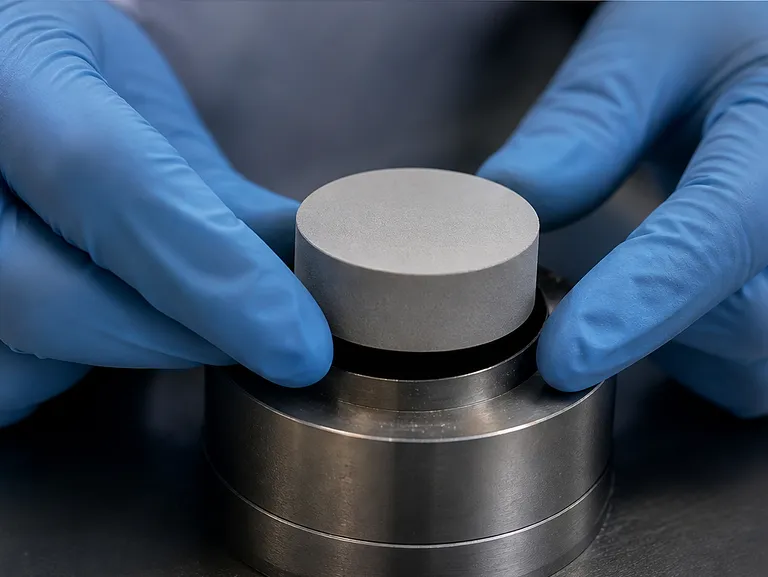
A hydraulic press does not work in isolation. It is the critical endpoint of a preparation chain that begins with crushing and grinding, proceeds through classification by sieving, and culminates in compaction.
Each step that precedes the press determines what the press can achieve.
Crushing reduces boulders to gravel. Grinding—whether by planetary ball mill, jet mill, or disc mill—reduces gravel to powder of appropriate fineness. Sieving through calibrated meshes ensures particle size distribution falls within the range where compression can produce a homogeneous pellet.
Skip any step, and the press inherits the problems of the previous operation.
This is why laboratories that achieve exceptional WD-XRF precision think in terms of complete workflow solutions, not individual instruments.
The mill that produces your powder, the sieve that classifies it, the mixer that homogenizes it with binder, and the press that compacts it—these are not separate pieces of equipment. They are stages in a single process that transforms raw earth into analytical truth.
The Investment That Compounds
Consider the economics of sample preparation.
An XRF spectrometer represents a significant capital investment. It operates on electricity, liquid nitrogen or Peltier cooling, and skilled operator time. Every hour it runs costs money whether the data is good or bad.
A poorly prepared sample that requires re-analysis doubles that cost. Worse, a poor sample that produces confident-but-wrong results erodes trust in the entire analytical program. Decisions get made on bad numbers. Deposits get mis-evaluated. Quality control specifications get missed.
The hydraulic press—positioned at the final step before analysis—acts as a quality multiplier for everything upstream. The cost of a precision press, amortized across thousands of samples, approaches zero per analysis. The cost of not having one accumulates in every unreliable result.
Modern laboratories serving material science, geology, mining, and industrial quality control increasingly standardize on integrated preparation suites that include crushers, mills (planetary ball mills for fine grinding, jet mills for contamination-sensitive work, disc and rotor mills for bulk processing), classification equipment (vibratory and air-jet sieve shakers), and a full spectrum of press technologies.
For routine XRF work, specialized pellet presses deliver the speed and repeatability required for high-throughput environments. For advanced applications requiring theoretical density or complex shapes, Cold and Warm Isostatic Presses (CIP/WIP) apply uniform pressure from all directions, eliminating the density gradients that uniaxial pressing can sometimes create.
The critical insight, whether preparing cement clinker for process control or rare-earth oxides for research, remains constant: what the X-ray beam sees is what you measure. If the beam sees a carefully prepared, flat, dense, homogeneous surface, your numbers will reflect the chemistry. If it sees chaos, so will you.
Quick Links
Suggested Products
Ordinary Type Rotary Tablet Press for Pharmaceutical Chemical Food Electronic Industries Hydraulic Double Shaft Disperser for High Viscosity Liquid Mixing and Dispersion 6-Ton Small Single-Punch Tablet Press — Laboratory Powder & Granule Tableting Equipment / Tablet Forming Machine Enhanced 9 Punch Rotary Tablet Press for Powder Compaction 5 Ton Single Punch Tablet Press Laboratory Small Batch ProductionFurther Reading
The Invisible Architect: How Compaction Psychology Shapes Your LSM Ceramic’s Fate The Cracks You Don’t See: How Pressing Errors Sabotage Self-Reinforced Beta-Si3N4 Ceramics The Invisible Bridge: How Controlled Pressure Shapes the Future of Ceramic-Steel Brazing The Breaking Point: What a Hydraulic Press Reveals About Concrete—and Our Own Biases The Moment of Truth in Solid‑Lubricant Composites: Why Your Hydraulic Press Decides Everything
PowderPreparation
Last updated on May 14, 2026
Related Products
Ordinary Type Rotary Tablet Press for Pharmaceutical Chemical Food Electronic Industries
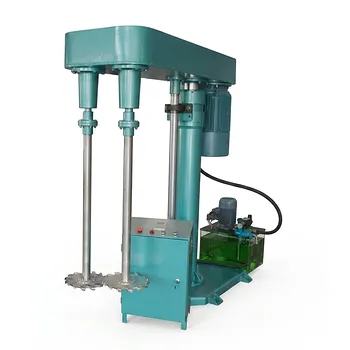
Hydraulic Double Shaft Disperser for High Viscosity Liquid Mixing and Dispersion
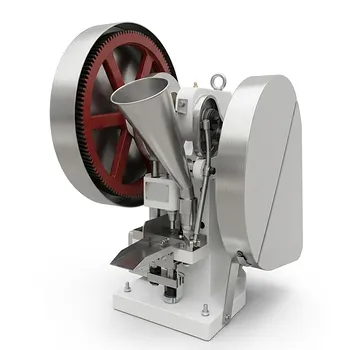
6-Ton Small Single-Punch Tablet Press — Laboratory Powder & Granule Tableting Equipment / Tablet Forming Machine
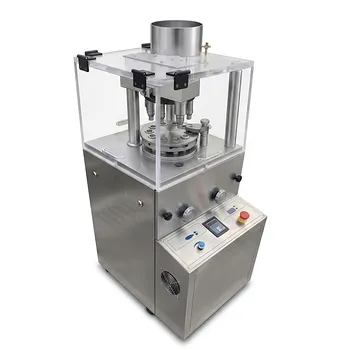
Enhanced 9 Punch Rotary Tablet Press for Powder Compaction
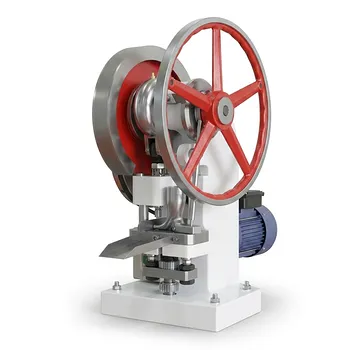
5 Ton Single Punch Tablet Press Laboratory Small Batch Production
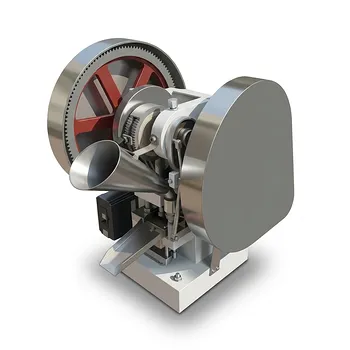
6 Ton Variable Frequency Single Punch Tablet Press