The Hidden Architecture of Waste: How Precision Grinding Unleashes the Adsorbent Inside an Eggshell
Jul 11, 2026
The Breakfast Waste That Became a Water Filter
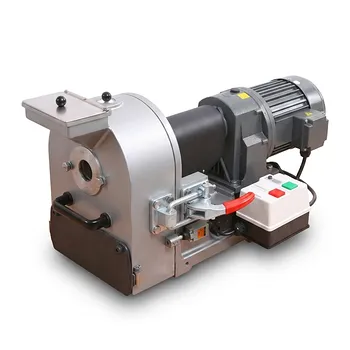
In a small materials lab, a researcher dumps a pile of cleaned eggshells into a benchtop crusher. The sound is a sharp, brittle crackle — calcium carbonate shattering under mechanical stress. What happens next is not just crushing. It is the opening act of a transformation. The eggshell, a quiet piece of household waste, is being coaxed into becoming a high-performance adsorbent for heavy metals.
Most people see grinding as a brute-force chore. Engineers see something else: the deliberate re-architecting of a solid at the micron scale. Every fracture line, every sheared edge, every particle that passes through a sieve is a design decision with consequences for surface chemistry, pore accessibility, and ultimately, how much lead or fluoride that powder can pull from poisoned water.
The difference between a mediocre adsorbent and an exceptional one often lives inside a grinding mill.
Why Size Reduction Is Really Surface Creation
The geometry of a crushed eggshell particle hides a deeper physics lesson. When you take a gram of material and break it into smaller pieces, you do not change its mass. But you radically increase the total area where atoms touch the outside world.
This is the core story of adsorption. Capture of contaminants doesn’t happen deep inside the bulk solid. It happens at the surface, on active sites of calcium carbonate, in the micro-pores left behind by organic matrix removal. Every time a grinding machine splits a particle, it gifts you more of that precious interface.
The New Math of the Powder
Think of a cube one centimeter on each side. Its total surface area is six square centimeters. Now slice it into cubes of one micron each. Suddenly you have billions of particles and a surface area that can exceed several square meters.
A lab grinder doesn’t cut with knives; it applies impact and shear forces that propagate cracks through the brittle carbonate structure. The result is a cascade of fractures — and a massive expansion of specific surface area (SSA). For adsorbents, that space is real estate, ready to be occupied by toxic ions.
Unlocking the Pores Nature Already Built
Eggshells are more than just a calcium carbonate shell. They contain a network of internal microporous structures left behind when organic fibers and gases form a pathway for the developing embryo. In raw shells, these micropores are hidden, trapped under dense layers of mineral.
When a Mill Acts Like a Key
High-energy pulverizing does something quietly profound: it exposes those buried channels. The brittle material shatters along natural fault lines, revealing pore mouths that were previously sealed. It’s as if the mill is opening thousands of tiny doors, each one ready to welcome a passing pollutant molecule.
This exposure is not incidental. It is the direct, measurable influence of laboratory grinding equipment on the physical architecture of the adsorbent. Without it, you’re working with a closed system. With it, you’re turning waste into a functional sponge.
The Uniformity Blind Spot
Ask a chemist what ruins a good experiment, and they’ll often point to inconsistency. In adsorbent research, uneven particle size is a silent saboteur. A powder that contains both fine dust and coarse grains will confuse every measurement: some particles adsorb quickly, others slowly, and the data becomes noise.
The Art of Sieving in the Grinding Process
This is where the equipment’s secondary function becomes critical. Modern laboratory grinders often work in tandem with precise classification tools, such as a 1 mm sieve or advanced air-jet sieving systems. Particles that don’t fit the target profile stay in the grinding chamber until they do.
You’re not just making powder. You’re making a standardized material, one that reacts predictably when you treat it with phosphoric acid, coat it with functional groups, or drop it into a stirred tank of contaminated water.
The Chemical Afterlife of a Ground Particle
People often separate “mechanical processing” from “chemistry” in their minds. In practice, they are inseparable. The physical state of a powder directly governs how well it will undergo subsequent treatment.
Smaller Steps to Better Modification
Take chemical quaternization or acid modification. A reagent molecule must physically reach the surface before it can bond. When particles are coarse, the reagent touches the outer shell and leaves the interior untouched. When the powder is fine and uniform, each particle becomes a small world of reactive territory. Modification is faster, more complete, and wastes less reagent.
You also get better contact efficiency in the adsorption step itself. Fine particles stay in suspension longer, offer shorter diffusion paths for ions, and create a denser cloud of active sites around each contaminant molecule. The gap between a working adsorbent and a great one narrows with every micron of particle size you control.
The Quiet Dangers of Over-Grinding
If some is good, is more always better? Not necessarily. The same grinding that increases surface energy can also push particles into agglomeration. Extremely fine powders sometimes clump together due to van der Waals forces, effectively reducing the accessible surface area you worked so hard to create.
Heat and the Hidden Change
There is also the matter of mechanical heat. High-speed mills can raise temperatures enough to alter surface chemistry — especially for biomaterials that still contain organic residues. A grinding process that ignores thermal management risks burning away the very active sites you’re trying to expose.
This is the subtle art of powder processing: not just breaking things, but breaking them with awareness of the trade-offs. Sometimes the best tool is a high-energy planetary ball mill for extreme fineness. Other times, a cryogenic grinder that keeps temperatures low is essential to preserve fragile surface functionality.
How to Match Your Equipment to Your Adsorbent Goal
Choosing a grinding technology shouldn’t start with the machine. It should start with the question: What physical property am I trying to engineer?
- If your goal is maximum total adsorption capacity: You need a system capable of ultra-fine grinding, such as a planetary ball mill or a jet mill, to drive specific surface area to its practical limit.
- If your focus is consistent chemical modification: Prioritize mills that integrate directly with high-precision classification — sieve shakers, air-jet sieves, or mesh-based screening — to deliver narrow particle size distributions.
- If your material is heat-sensitive or bio-derived: Consider liquid nitrogen cryogenic grinding to maintain structural and chemical integrity while achieving target particle sizes.
- If you are scaling from proof-of-concept to pilot batches: Look for equipment that preserves the same mechanical action (impact, shear, compression) across scales, so your surface engineering doesn’t change when your throughput does.
The Equipment Behind the Science
In our laboratory sample preparation range, these aren’t separate machines — they are a connected toolkit for surface engineering.
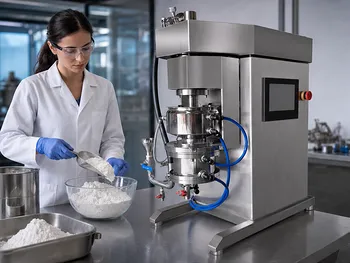
Crushers (jaw and roll) take bulk eggshells and reduce them to manageable fragments, the first stage of controlled breakdown. From there, high-energy mills — planetary ball mills, disc mills, rotor mills, and jet mills — drive the critical surface area expansion. For heat-sensitive adsorbents, liquid nitrogen cryogenic grinders provide brittle fracture conditions without chemistry-altering heat.
Particle classification systems, including vibratory and air-jet sieve shakers, ensure that only the right particles graduate to the next step. Advanced powder mixers create homogeneous feedstocks for modifications or blending, and when it’s time to form pellets for column studies, our hydraulic presses — from standard lab presses to cold isostatic presses (CIP) and vacuum hot presses — compact powder into testable geometries without destroying the porous architecture you worked so hard to create.
The result is not simply crushed eggshell. It is an architecturally optimized adsorbent whose every square meter of surface is an engineered product, not an accident.
The Psychology of the Grinder
Why does this technical story matter? Because too many labs treat sample preparation as a preliminary nuisance — something to get through before the “real” science begins. But that misunderstanding is costly. The grinder is not a black box. It is the instrument that writes the first draft of your material’s performance.
If you accept that every fracture is a design choice, you stop selecting equipment by habit and start selecting it by outcome. That shift, small as it sounds, separates incremental progress from breakthrough adsorbent performance.
The eggshell doesn’t know what it’s becoming. But the mill, and the engineer who commands it, do. Master the mechanical transformation, and you master the chemistry that follows. Contact Our Experts
Quick Links
Suggested Products
Multifunctional High Efficiency High Speed Laboratory Grinder Laboratory Desktop Ultra Fine Powder Grinder High Speed Micronizing Pulverizer Small High-Speed Laboratory Grinder for Powder Processing High Speed Laboratory Grinder Efficient Stainless Steel Powder Pulverizer Universal Material Science Mill for Sample Preparation Small High-Speed Laboratory Grinder for Rapid Sample PreparationFurther Reading
The Unspoken Art of Pulverizing: Why Your Malted Sorghum Won’t Dissolve and the Psychology of Perfect Powder The Hidden Variable in Green Chemistry: Why Your Banana Leaf Ash Fails (And How Precision Grinding Fixes It) The Energy Window: Why Better Silica Nanoparticles Aren't About Grinding Longer, But Smarter The Hidden Lever in Ceramic Composites: Why High-Energy Grinding Separates Breakthroughs from Bench Failures The Particle Size Orchestra: Engineering Precision Powders for Nutrient Enrichment Research
PowderPreparation
Last updated on May 14, 2026
Related Products
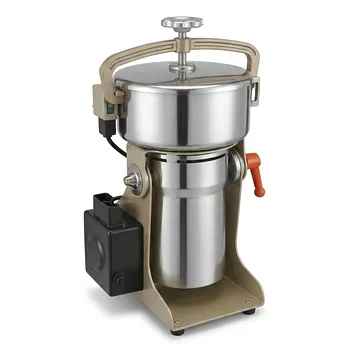
Multifunctional High Efficiency High Speed Laboratory Grinder
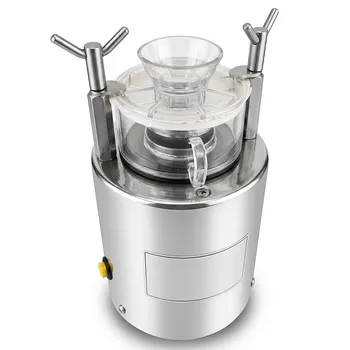
Laboratory Desktop Ultra Fine Powder Grinder High Speed Micronizing Pulverizer
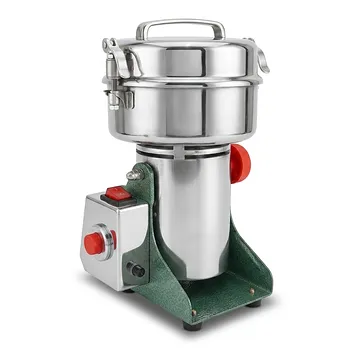
Small High-Speed Laboratory Grinder for Powder Processing
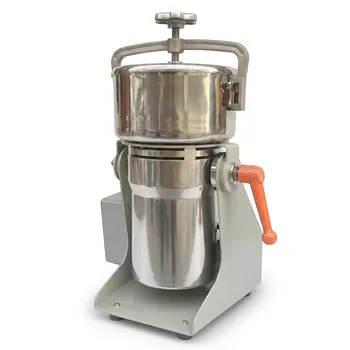
High Speed Laboratory Grinder Efficient Stainless Steel Powder Pulverizer Universal Material Science Mill for Sample Preparation
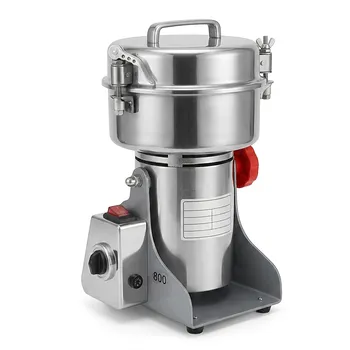
Small High-Speed Laboratory Grinder for Rapid Sample Preparation
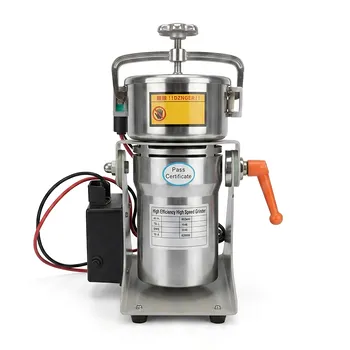
High Efficiency High Speed Grinder Laboratory Mill 1300W 25000rpm
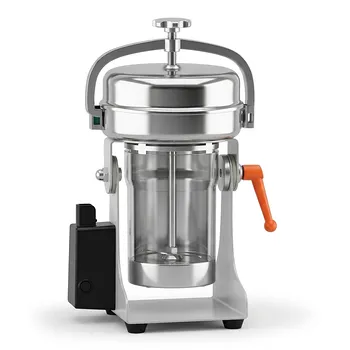
High Efficiency High Speed Grinder 2200W 25000 RPM Laboratory Sample Preparation
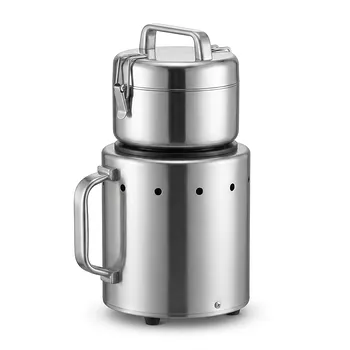
Small High Speed Grinder for Laboratory Sample Preparation
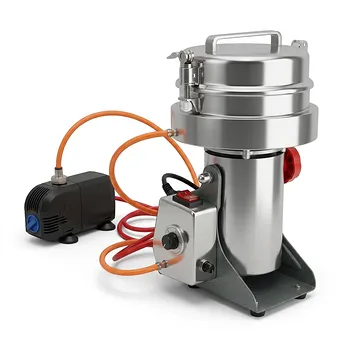
Water Cooled High Speed Grinder with Cryogenic Option for Laboratory Sample Preparation
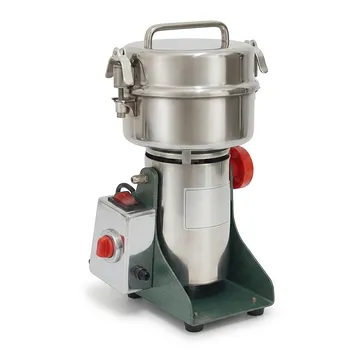
Small High Speed Grinder for Laboratory Sample Preparation
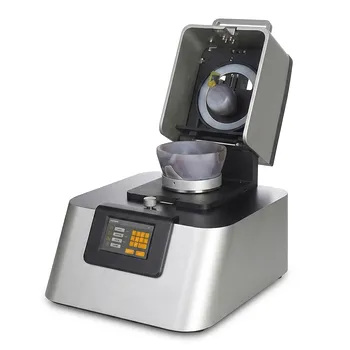
Laboratory Mortar Grinder for Sample Preparation and Cryogenic Powder Homogenization
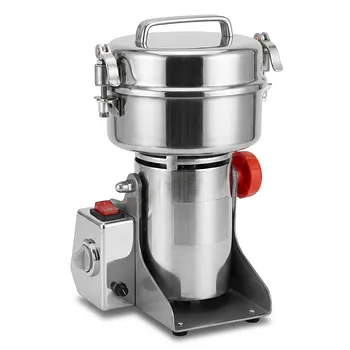
High Speed Laboratory Powder Grinder Small Batch Sample Preparation Mill
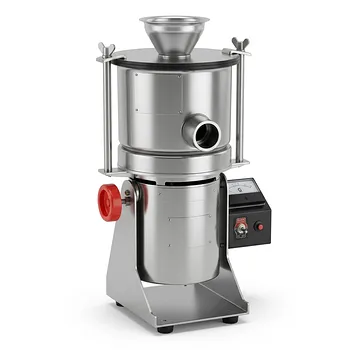
Laboratory Ultrafine Impact and Airflow Grinder for Precise Particle Size Control
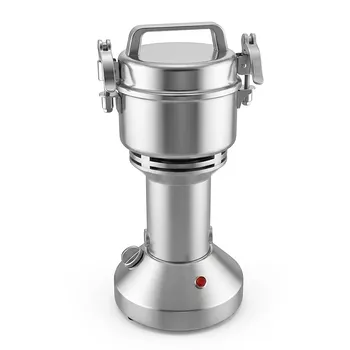
Small High Speed Upright Grinder for Laboratory Sample Preparation
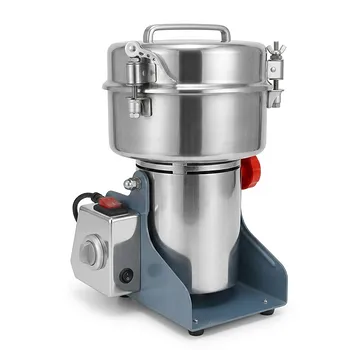
Small High-Speed Grinder for Efficient Laboratory Sample Preparation
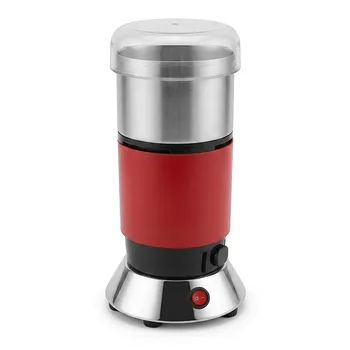
Micro Solid Sample Grinder High Speed Pulverizer for Laboratory Small Batch Grinding
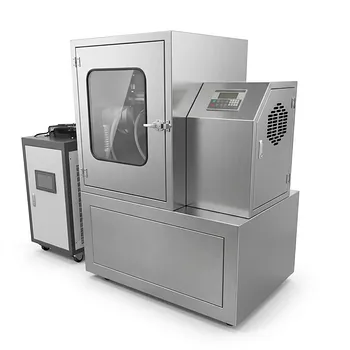
Vibratory Superfine Grinder for Ultra Fine Laboratory Powder Milling
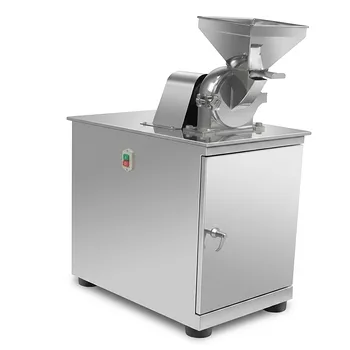
Universal Laboratory Pulverizer Grinder for Small Batch Powder Processing and Material Science Research
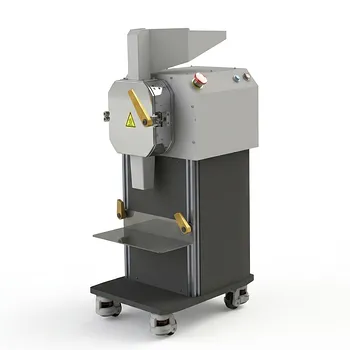
Small Laboratory Knife Crusher for Plastic Sample Preparation and Material Grinding