The 40-Mesh Covenant: Why a Simple Sieve Decides the Fate of Every Effervescent Tablet
May 27, 2026
The Fizz That Almost Wasn’t
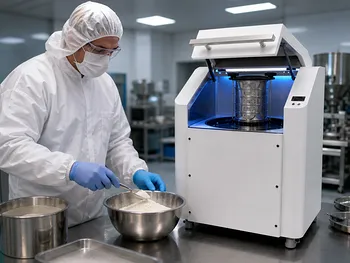
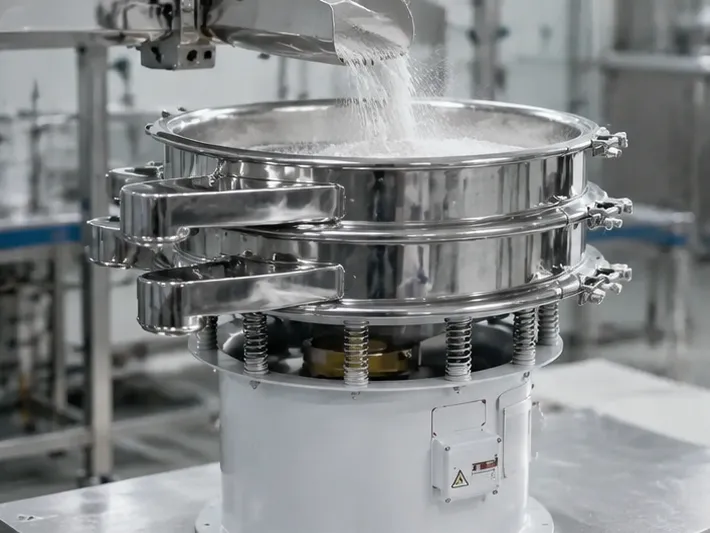
The tablet hits the water and immediately unleashes a storm of bubbles. You barely notice the uniform fizz—it’s what you paid for. But buried inside that instantaneous reaction is a quiet covenant made weeks earlier, on the floor of a production suite, when a technician forced three reactive powders through a standardized 40-mesh sieve.
If that step is rushed, ignored, or performed with worn-out equipment, the promise breaks. Some tablets will erupt violently. Others will fizzle. A few will leave a bitter, half-dissolved lump at the bottom of the glass. The patient never sees the failure coming. They just silently lose trust in the brand, or worse, receive an inconsistent dose.
The 40-mesh sieve is not simply a metal net. It is a physical gatekeeper that unifies the particle size of acids, alkalis, and active pharmaceutical ingredients (APIs) at exactly 0.425 mm. That uniformity is not a nice-to-have. It is the technical foundation that prevents particle segregation, ensures dosage accuracy, and delivers the exact sensory experience the patient expects every single time.
The Physics of Drifting Powders
The Brazil Nut Effect in a Mixing Vessel
Powders do not behave like liquids. They have memory, friction, and a stubborn instinct to separate by size. The moment you pour a mixture of coarse citric acid crystals and fine sodium bicarbonate into a hopper, physics takes over. Larger particles migrate upward, smaller ones fall through the gaps. This phenomenon, known as the Brazil Nut Effect, turns a perfectly blended formulation into a stratified mess within seconds of vibration or movement.
The result is the exact opposite of homogeneity. The first tablets pressed from the top of the hopper might contain too much acid. The last ones might contain too much alkali. In an effervescent reaction, that imbalance means unpredictable dissolution speeds, pH swings, and erratic drug release.
The Sieve as a Particle Equalizer
A 40-mesh sieve neutralizes this destructive dynamic by forcing every component to pass through the same spatial constraint. The acid source—often citric acid—and the alkali source—sodium bicarbonate—arrive on the other side with nearly identical size distributions. When they are then mixed, their physical similarity keeps them from recognizing each other as “different.” The Brazil Nut Effect has no statistical traction.
This is not just about chemistry. It is about giving the powder population a single identity. When particle size is unified, the mixture behaves like a cooperative community rather than a collection of antagonistic tribes.
Why We Underestimate the Sieve
Simplicity Looks Cheap
From a management perspective, a sieve is a passive object. It has no motor, no software, no flashy metrics. It sits on a shelf and costs very little compared to a high-shear mixer or a tablet press. For that reason, its criticality is often psychologically discounted. We assume that a tool so simple cannot be the linchpin of a high-value production line.
That assumption is expensive. In powder processing, the most profound failures often trace back to the simplest ignored steps. A blocked or deformed mesh, a lack of regular certification, or a technician’s decision to skip sieving because “the raw material looks fine” are enough to undo millions of dollars in downstream precision.
Control Is the Ultimate Risk Mitigator
Morgan Housel writes that risk is what you don’t see. In pharmaceutical powder dynamics, the unseen risk is the silent separation happening inside a static hopper. The sieve is the tangible, low-tech defense against that invisible process. It is not there to speed things up. It is there to make the rest of the expensive machinery relevant.
When you force a batch through a 40-mesh stainless steel screen, you are buying insurance for every single compressed tablet. You are guaranteeing that the label claim dose is present in unit number one and unit number one million alike.
Beyond Effervescence: The Universal Principle
Where Sieve Standardization Applies
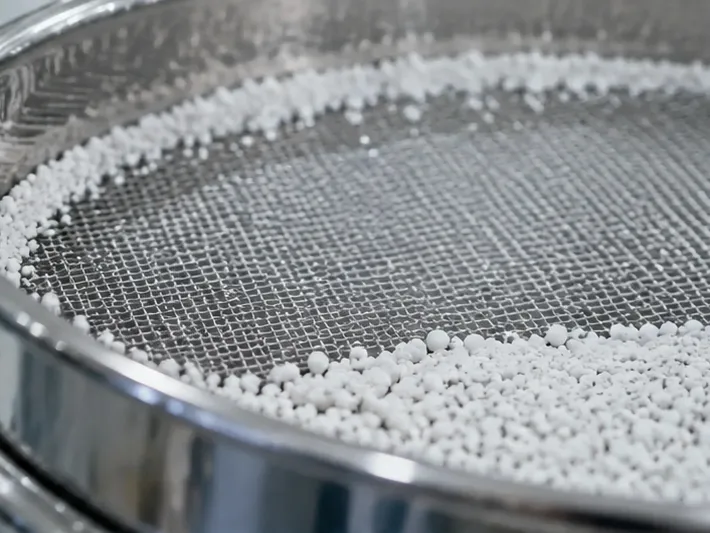
The 40-mesh rule is most famous in effervescent tablets, but the principle extends across material science. Any powder that must be mixed and then compacted—ceramic precursors for spark plugs, metal injection molding feedstocks, battery cathode materials—faces the same segregation physics. If the particle sizes of the components are not harmonized, the final sintered part will have density gradients, chemical inconsistencies, or mechanical failure points.
This is why high-quality sample preparation is not just a “grind and sieve” operation. It is a deliberate orchestration of crushing, milling, sieving, and mixing, each step building on the last to preserve the distribution of ingredients and physical properties.
The Emotional Core of Uniformity
There is an engineer’s romance in watching a powder that flows without clogging, that fills a die cavity with perfectly reproducible weight, and that compacts into a tablet with smooth, crack-free surfaces. That romance starts with the mesh. It is the first promise of order in a chaotic world of irregular particles, moisture clumps, and electrostatic clings.
Building a Bulletproof Sample Preparation Chain
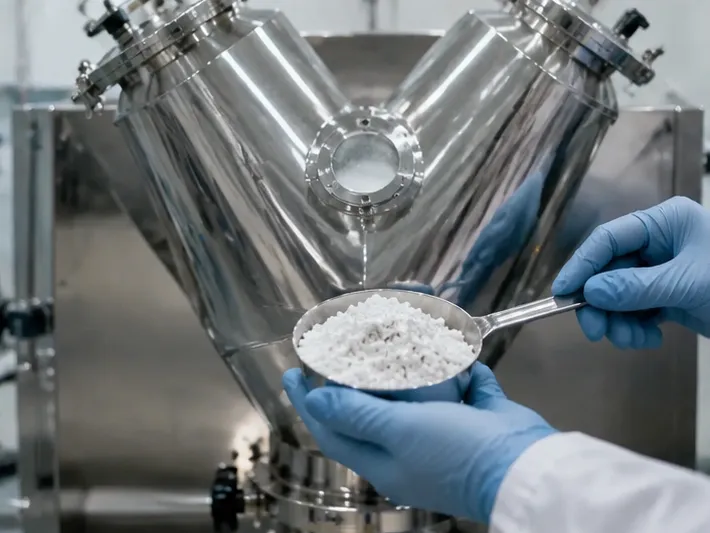
Single-step sieving cannot rescue a formulation that has been poorly milled or inconsistently blended. The 40-mesh standard is only as strong as the process that delivers the powder to the sieve. A robust sample preparation ecosystem must account for the entire journey from raw material to compacted final form.
- Crushing and Initial Size Reduction: Jaw crushers and roll crushers break down large, aggregated raw materials into manageable fragments. For heat-sensitive or volatile compounds, liquid nitrogen cryogenic grinders preserve chemical integrity while embrittling the material for clean fracture.
- Fine Grinding with Precision: Achieving target particle sizes near the 0.425 mm mark often requires planetary ball mills, jet mills, or disc mills. A planetary ball mill, for example, applies controlled impact and friction to reduce particles without over-grinding into ultra-fines that could later agglomerate.
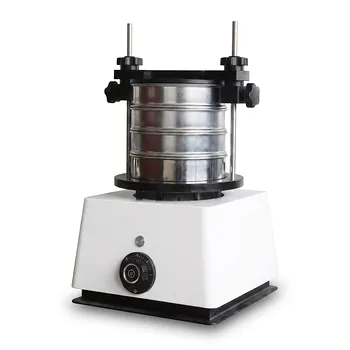
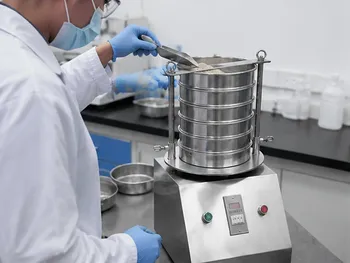
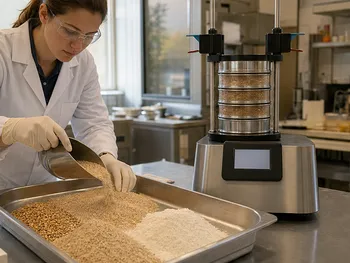
- Sieving Validation: Vibratory sieve shakers and air-jet sieving systems, fitted with certified 40-mesh test sieves, separate oversized aggregates and confirm that the entire batch meets the aperture specification. Real-time mesh inspection prevents blinding and ensures aperture consistency across thousands of cycles.
- Homogenization: After sieving, specialized powder mixers and defoaming mixers blend the standardized fractions gently. The goal is complete distribution without re-creating particle segregation through excessive shear or vibration.
- Compaction into Final Form: Once the powder mixture is stable and uniform, hydraulic presses—including Cold Isostatic Presses (CIP) for complex shapes, XRF pellet presses for analytical consistency, and vacuum hot presses for advanced materials—deliver the exact force needed to convert loose, harmonious powder into dense, mechanically reliable tablets or compacts.
Every step in this chain reinforces the 40-mesh covenant. The sieve sets the standard. The grinders and mixers make it achievable. The presses lock it into solid geometry.
| Sample Preparation Stage | Equipment Examples | Role in Uniformity |
|---|---|---|
| Primary Crushing | Jaw Crusher, Liquid Nitrogen Cryogenic Grinder | Reduces raw aggregates without altering chemical stability |
| Fine Milling | Planetary Ball Mill, Jet Mill, Disc Mill | Achieves target particle size distribution near 0.425 mm |
| Sieving & Verification | Vibratory Sieve Shaker, Air-Jet Sieve with 40-mesh Test Sieve | Guarantees all particles pass the aperture; rejects outliers |
| Mixing | Powder Mixer, Defoaming Mixer | Homogenizes multi-component blends without re-segregation |
| Compaction | Cold Isostatic Press, XRF Pellet Press, Vacuum Hot Press | Transforms uniform powder into a stable, dose-accurate solid |
The Romanticism of the Mesh

An effervescent tablet is a tiny engineering miracle. It stores reactive chemistry in perfect stillness, waiting for water to unlock it. The miracle is not the reaction itself—acids and bases have fizzled for centuries. The miracle is that the reaction happens exactly the same way, in millions of glasses, across different climates and shipping conditions.
The 40-mesh sieve is the quiet anchor of that reliability. It does not move. It does not compute. It simply refuses passage to any particle that would break the covenant of uniformity. In an era of artificial intelligence and real-time sensors, there is something deeply reassuring about a piece of woven steel that stands between chaos and the patient.
When you build your sample preparation workflow around this principle—integrating high-precision crushers, mills, sieve shakers, mixers, and hydraulic presses—you are not just processing powder. You are manufacturing trust, one mesh opening at a time. [Contact Our Experts](#ContactForm)
Quick Links
Suggested Products
Three Dimensional Rotary Vibrating Sieve Laboratory Air Jet Sieving Machine for Fine Powder Particle Size Analysis and Deagglomeration Stainless Steel Rotary Vibrating Sieve High Precision Circular Vibratory Separator Industrial Powder Grading Machine Multi Layer Sifting Equipment Stainless Steel Laboratory Vibratory Test Sieve Shaker Small Laboratory Vibratory Sieve Shaker for Powder Gradation and Particle Size AnalysisFurther Reading
The 0.5mm Gateway: Why Bulk Density Is a Measure of Flow, Not Just Weight The 0.033-Inch Gatekeeper: What a Precision Sieve Teaches Us About Life-Saving Powders The Sieve Deception: How Blind Trust in Mesh Numbers Ruins Black Silicon Carbide Performance The Sieve Never Lies: How a Simple Stack of Mesh Became the Lab’s Ultimate Truth-Teller The Hidden Geometry of Grain: What Multi-Dimensional Sieving Reveals About Process, Nutrition, and Consistency
PowderPreparation
Last updated on May 15, 2026
Related Products
Three Dimensional Rotary Vibrating Sieve
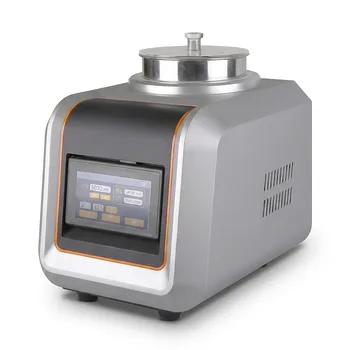
Laboratory Air Jet Sieving Machine for Fine Powder Particle Size Analysis and Deagglomeration
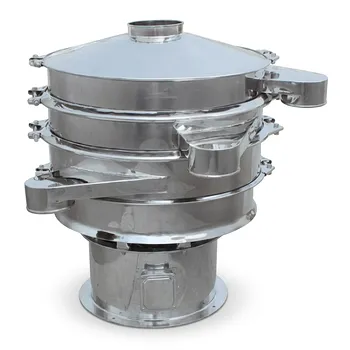
Stainless Steel Rotary Vibrating Sieve High Precision Circular Vibratory Separator Industrial Powder Grading Machine Multi Layer Sifting Equipment
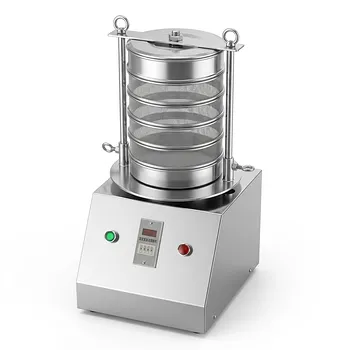
Stainless Steel Laboratory Vibratory Test Sieve Shaker
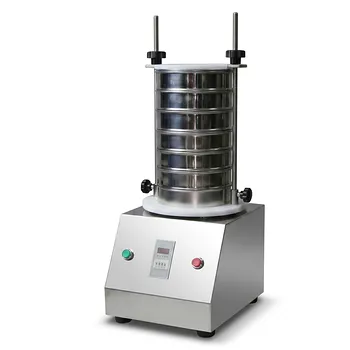
Small Laboratory Vibratory Sieve Shaker for Powder Gradation and Particle Size Analysis
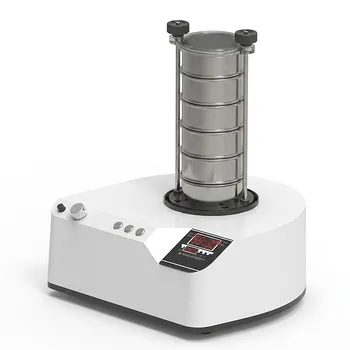
三维电磁微量振动筛分仪
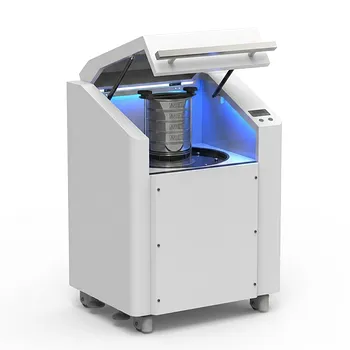
High Frequency Cabinet Type Three-Dimensional Rotary Vibrating Sieve Shaker for Dry Sieving and Particle Classification
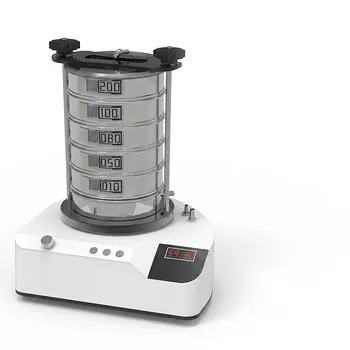
Heavy Duty Dry Three Dimensional Vibratory Sieve Shaker for Particle Separation
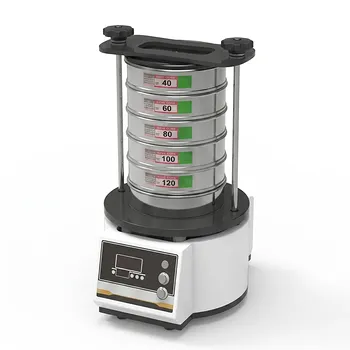
Dry Three Dimensional Vibratory Sieve Shaker