The 200 Micron Decision: Why Geopolymer Strength Starts with a Sieve
Sep 16, 2026
The crack didn’t appear during loading.
It was already there, invisible, born in the mixing bowl.
In a corner of a materials lab, a researcher stared at two geopolymer specimens. Same halloysite source. Same TiO₂ additive. Same calcination cycle. Yet one cylinder crumbled at 32 MPa while its twin held past 58 MPa. The difference, it would turn out, was not chemistry. It was geometry—a handful of particles barely large enough to feel between your fingers. Specifically, anything bigger than 200 microns.
This is the threshold where art becomes infrastructure. It’s where raw clay, dug from the earth, becomes an engineered precursor capable of predictable, high-strength geopolymerization. And the tool that enforces it is deceptively simple: a precision test sieve.
The Hidden Asymmetry in Raw Halloysite
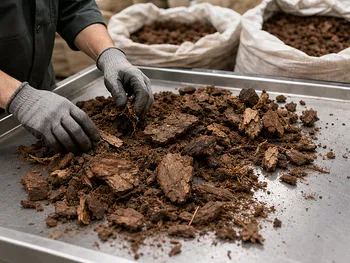
Natural halloysite is a nanotube-rich aluminosilicate with enormous potential for sustainable cements and 3D-printed ceramics. But nature deals in disorder. A bag of crushed halloysite clay contains a riot of particle sizes—from sub‑micron fines to grit-sized aggregates. Buried inside that distribution are coarse quartz grains, iron‑oxide specks, and agglomerates that will never fully react.
When you ignore this, you bake inconsistency into your precursor. One batch might flow beautifully; the next may thirst for extra water, throwing off the water‑to‑solid ratio and leaving behind micro‑porosity. Worse, those oversized particles survive calcination with an unreacted core, becoming stress concentrators that turn a monolithic geopolymer into a jigsaw puzzle of weak interfaces.
A 200‑micron sieve is a scalpel. It slices away the “what ifs” before they harden into “why did it fail?”
Decoding the 200-Micron Threshold
Why 200 microns?
Because that’s roughly the boundary where two worlds collide:
- Diffusion distance: A particle larger than 200 µm can’t fully dehydroxylate in the center during practical calcination times. You get a shell of meta‑halloysite around a relic of raw clay—a dormant flaw.
- Surface‑area economics: Below 200 µm, specific surface area accelerates ion dissolution in alkali activator. Reactivity becomes a function of surface chemistry, not just bulk composition.
- Stress homogenization: In the final matrix, particles act as aggregate filler. Particles above 200 µm create stiffness mismatches that invite crack propagation.
In short: sieving at 200 µm doesn’t just remove dirt. It synchronizes the thermal, chemical, and mechanical histories of every grain that enters your precursor.
A Tale of Two Particles
Imagine two grains that begin side by side in a furnace.
- Grain A: 180 µm. Heat penetrates evenly. Within minutes, the entire particle reaches calcination temperature. Structural water escapes uniformly, leaving a nano‑porous meta‑halloysite sponge ready to dissolve in alkaline solution.
- Grain B: 320 µm. The outer 40 µm converts to meta‑halloysite quickly. But the interior remains cool and hydrated. By the time it catches up, the shell is over‑calcined—partially sintered and chemically sluggish. In the activator bath, Grain A starts donating Si and Al within seconds. Grain B hesitates. It dissolves unevenly, creating a local chemical gradient that later manifests as an interfacial void.
Now multiply Grain B by thousands. That’s a scattered network of defects you’ll never see until it’s too late.
The Calcination Conundrum
Precision sieving converts calcination from a gamble into a process.
When every particle sits below 200 µm, you can program your furnace for a single thermal regime. No more guessing how much extra dwell time to add for the larger fraction. No more worrying that the surface area of the product will drift between batches. The meta‑halloysite emerges uniform—a reliable precursor that behaves predictably in the next stage.
This is the quiet power of standardization. It’s not glamorous, but it’s the difference between a material you can publish a paper about and one you can license to industry.
Where Additives Meet Precision
For functionalized geopolymers—those doped with TiO₂ for photocatalytic properties or with carbon nanotubes for conductivity—the 200‑micron gate is even more critical. Additives coat surfaces. A narrow particle‑size distribution means a narrow distribution of coating thicknesses. TiO₂ doesn’t clump into islands. It spreads across the available area like a monolayer, maximizing catalytic sites while minimizing weight fraction.
Without that sieving step, fine TiO₂ particles preferentially adhere to the finest clay fractions, leaving coarse particles bare. You get a patchwork material where half the surface is active and half is inert. The result: a third of the expected degradation rate for an air‑purifying panel, or puzzling variability in electrical resistivity.
The Unforgiving Economics of Sieving
Morgan Housel likes to remind us that the most dramatic outcomes come from small, unsexy decisions applied consistently. Sieving is exactly that. It’s also where lab ambitions often collide with practical pain.
Two challenges dominate: yield and blinding.
- Yield: Strictly removing everything above 200 µm can waste 15–30% of your milled product. That loss looks like wasted money—until you price the cost of a failed 3D‑printed mold or a creep‑cracked panel in an accelerating aging test.
- Blinding: Fine particles clog the mesh, reducing throughput and, worse, letting oversized particles slip through when pressure builds. An air‑jet sieve shaker or vibratory system with intermittent amplitude bursts keeps the apertures open and the cut point honest.
Ignoring these realities turns your sieve into a random number generator. Embracing them turns it into the most reliable quality‑control tool in your workflow.
The Sieve’s Role Across the Process Chain
| Process Stage | What The 200‑µm Sieve Enforces | Consequence for Geopolymer |
|---|---|---|
| Pre‑mixing | Removes aggregates and impurities | Guarantees homogeneous additive distribution and paste uniformity |
| Calcination | Standardizes thermal‑diffusion paths | Predictable, complete dehydroxylation without over‑sintering |
| Alkali activation | Maximizes reactive surface area | Faster, more complete dissolution of Si and Al ions |
| Shaping / 3D printing | Controls particle‑size distribution | Stable rheology, low water demand, and layer‑to‑layer fusion |
This isn’t a single‑point filter. It’s a control lever that propagates through every subsequent step, quietly constraining the variability that kills reproducibility.
From Quarry to Quality: A Complete Workflow
The 200‑micron decision doesn’t happen in isolation. It starts the moment the raw halloysite enters the crusher.
- Primary breakage: Jaw and roll crushers reduce meter‑scale blocks to centimeter‑scale chips, liberating clay from hard‑rock gangue.
- Fine grinding: Depending on your sensitivity to heat or contamination, planetary ball mills, jet mills, or even liquid‑nitrogen cryogenic grinders take those chips down to a powder fine enough to approach the 200‑µm target. Disc and rotor mills handle high‑throughput scenarios, while bead and sand mills push into sub‑micron territory for niche formulations.
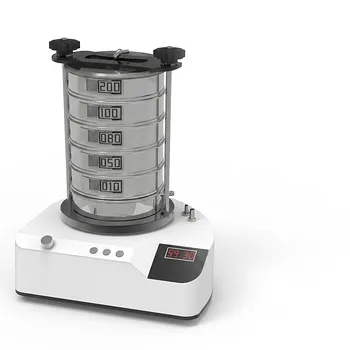
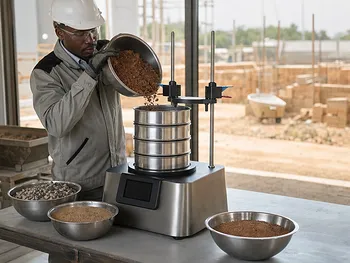
- Classification: This is where vibratory and air‑jet sieve shakers—equipped with certified test sieves—perform the final cut. The mesh doesn’t just sort; it audits your grinding circuit. If oversize levels rise, you adjust the mill. If blinding appears, you tweak amplitude. The sieve becomes a real‑time sensor.
- Mixing and degassing: Once the powder passes, powder mixers and defoaming mixers homogenize it with additives, preparing a paste with exactly the right consistency.
- Consolidation: When you’re ready to turn precursor into part, a full spectrum of hydraulic presses steps in. Cold and warm isostatic presses (CIP/WIP) densify the powder into complex green bodies without anisotropy. Hot presses and vacuum hot presses lock in the final microstructure, ensuring the care you took at 200 microns translates directly into mechanical performance.
This integrated chain—crushers, mills, sieves, mixers, and presses—is not a wish list. It’s the practical reality of making geopolymer research reproducible and scalable. Every instrument must talk to the others, because a single weak link will shatter the 200‑micron discipline you’ve worked to maintain.
Why the Sieve Remains the Unlikely Hero
In an era of AI‑designed molecules and femtosecond lasers, a woven wire mesh seems almost embarrassing. But the sieve possesses a peculiar psychological advantage: it makes invisible risk visible. The pile of coarse reject tells a story. If it’s growing, your mill is drifting. If it’s disappearing, your grinding is dialed in. That immediate feedback loop trains your intuition and shrinks the gap between operator and outcome.
It’s a lesson in humility. The performance of your geopolymer—the strength of a bridge panel, the photoactivity of a smog‑eating tile—depends less on the exotic additive and more on the boring reliability of a 200‑micron aperture.
Engineered materials are not born from raw ingredients; they are sculpted by constraints. The sieve is the gentle gatekeeper that ensures every grain entering the reaction carries the same passport: size, purity, readiness. Without it, you are not engineering a material. You are gambling with dirt.
To build a geopolymer that defies flaws instead of hiding them, your workflow must be as precise as your vision. Contact Our Experts
Quick Links
Suggested Products
三维电磁微量振动筛分仪 Mass Production Nano Sand Mill for Industrial Nanomaterial Grinding and Dispersion Stainless Steel Rotary Vibrating Sieve High Precision Circular Vibratory Separator Industrial Powder Grading Machine Multi Layer Sifting Equipment Laboratory Air Jet Sieving Machine for Fine Powder Particle Size Analysis and Deagglomeration Small Laboratory Vibrating Sieve Shaker for Precise Particle Size AnalysisFurther Reading
The Sieve and the Mind: Why Your Soil Test Results Depend on Replacing Human Fatigue with Engineered Consistency The Quiet Gravity of a Perfect Mix: How Sieves and 3D Tumblers Engineer Certainty in Drug Formulation The Particle Whisperer: How a Vibratory Sieve Shaker Decodes Pine Bark into a Predictable Engineering Material The Hidden Geometry of Strength: Why 20 MPa Really Begins With a Sieve The 75-Micron Mystery: How the Humble Sieve Decides Whether Your Brick Becomes a Wall or Returns to Dust
PowderPreparation
Last updated on May 14, 2026
Related Products
三维电磁微量振动筛分仪
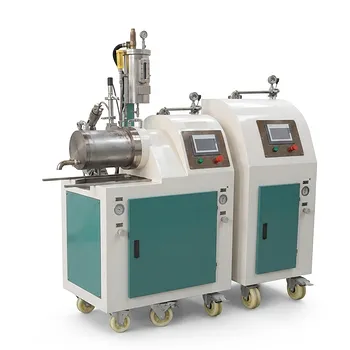
Mass Production Nano Sand Mill for Industrial Nanomaterial Grinding and Dispersion
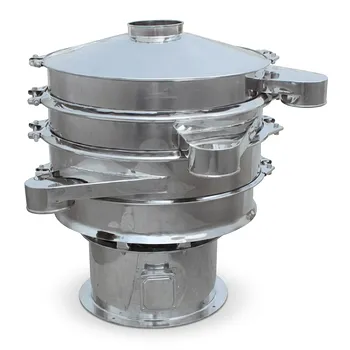
Stainless Steel Rotary Vibrating Sieve High Precision Circular Vibratory Separator Industrial Powder Grading Machine Multi Layer Sifting Equipment
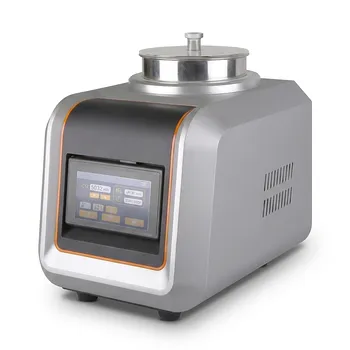
Laboratory Air Jet Sieving Machine for Fine Powder Particle Size Analysis and Deagglomeration
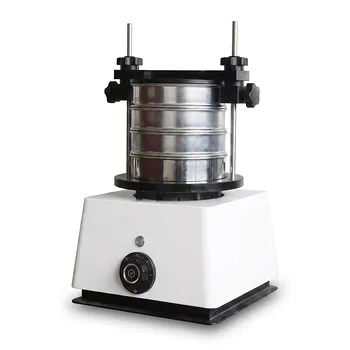
Small Laboratory Vibrating Sieve Shaker for Precise Particle Size Analysis
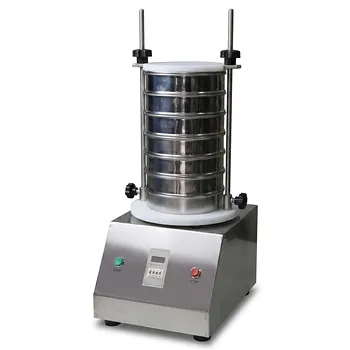
Laboratory Vibratory Test Sieve Shaker for Precision Particle Size Analysis and Powder Grading
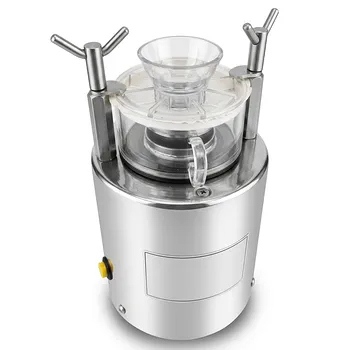
Laboratory Desktop Ultra Fine Powder Grinder High Speed Micronizing Pulverizer
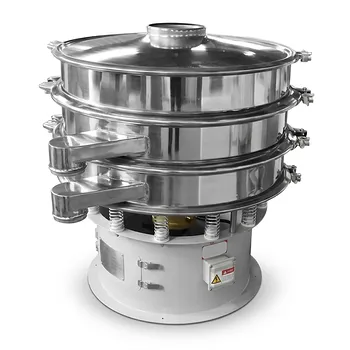
Three Dimensional Rotary Vibrating Sieve
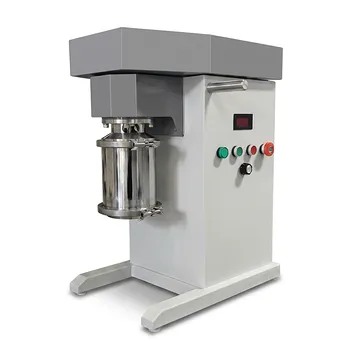
Nano Laboratory Bead Mill Desktop Sub Micron Sand Mill Screenless Seal Less Powder Grinder
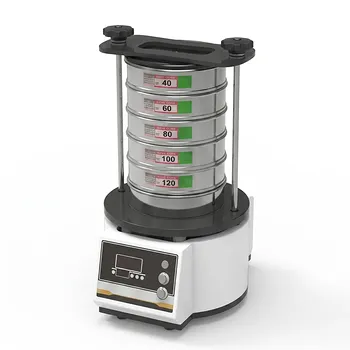
Dry Three Dimensional Vibratory Sieve Shaker
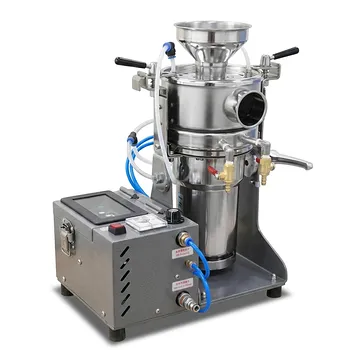
Water Cooled Pulse Jet Ultrafine Grinder

Micro Solid Sample Grinder High Speed Pulverizer for Laboratory Small Batch Grinding
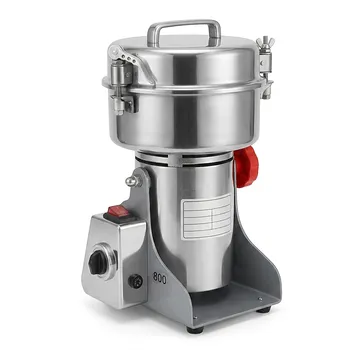
Small High-Speed Laboratory Grinder for Rapid Sample Preparation

High Frequency Wet Three-Dimensional Vibrating Sieve Shaker for Dry and Wet Particle Size Analysis