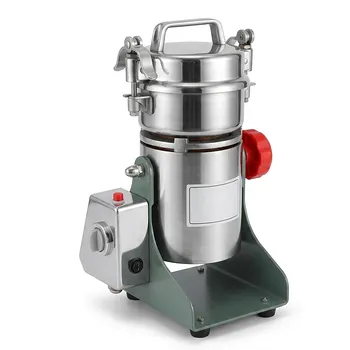
Why should a laboratory hydraulic hot press be equipped with a cooling cycle when molding particleboards? Prevent Defects
Updated 5 months ago
A cooling cycle is critical for ensuring the structural integrity and dimensional stability of molded particleboards. By reducing the board temperature to approximately 90 °C while maintaining mechanical pressure, the press allows binders to solidify and prevents internal steam pressure from causing catastrophic defects during decompression.
Core Takeaway: A cooling cycle facilitates "cooling under pressure," a process that prevents bubbling, delamination, and thickness spring-back by ensuring adhesives and natural lignins are fully set before the mold is opened.
The Role of Controlled Solidification
Stabilizing Lignin and Synthetic Binders
During the high-temperature pressing phase (typically 160–180 °C), natural lignins and synthetic resins like urea-formaldehyde reach a fluid or reactive state.
The cooling cycle brings the temperature below the glass transition point of these materials (approximately 150 °C for lignin). This transition forms "hard solid bridges" between particles, which are essential for the mechanical integrity and compressive strength of the final board.
Managing Internal Vapor Pressure
Hot-pressing generates significant internal steam and gas pressure as moisture in the particles evaporates.
If the press is opened while the board is still at peak temperature, this internal pressure can cause the board to bubble or delaminate instantly. Cooling the board to 90 °C before decompression allows these internal vapors to stabilize, ensuring the board remains intact when the platens are retracted.
Enhancing Dimensional Stability and Density
Eliminating Thickness "Spring-back"
Wood particles and fibers undergo plastic deformation under heat and pressure, but they naturally seek to return to their original shape.
"Cooling under pressure" effectively fixes the compression deformation, significantly reducing the "set-recovery" or spring-back that occurs when the board is exposed to moisture. This results in a product with superior dimensional stability and standardized thickness.
Achieving Uniform Density and Mechanical Strength
The continuous application of pressure during the cooling phase ensures the exclusion of internal air and forces adhesives to penetrate deeply into the material.
This process eliminates internal voids and cracks, ensuring the composite reaches its required density (often exceeding 560 kg/m³). Precise cooling ensures that the modulus of rupture and bending strength are consistent across the entire specimen.
Understanding the Trade-offs
Impact on Cycle Time and Throughput
While a cooling cycle is essential for quality, it significantly increases the total processing time for each specimen. In a laboratory setting, this may limit the number of samples produced per day compared to a "hot-in, hot-out" process.
Resource and Equipment Requirements
Implementing a cooling cycle requires a circulating water system and more complex thermal management within the press platens. This can lead to higher energy consumption and requires robust maintenance to prevent thermal fatigue or scaling within the internal cooling channels.
How to Apply This to Your Project
Making the Right Choice for Your Goal
- If your primary focus is Research & Development: A cooling cycle is mandatory to ensure repeatable results and to accurately study the mechanical properties of new resin formulations.
- If your primary focus is Dimensional Stability: Prioritize "cooling under pressure" to minimize thickness swelling and ensure the board remains stable under varying humidity levels.
- If your primary focus is High-Density Composites: Use the cooling phase to fix the dense internal structure and prevent internal cracking during the transition from the mold.
Equipping your laboratory press with a cooling cycle is the single most effective way to eliminate common molding defects and achieve industrial-grade specimen quality.
Summary Table:
| Key Phase | Mechanism | Benefit for Particleboards |
|---|---|---|
| Binder Stabilization | Lowers temp below glass transition point | Solidifies resins to ensure mechanical integrity |
| Vapor Management | Stabilizes internal steam & gas pressure | Prevents bubbling, delamination, and blow-outs |
| Pressure Fixing | Fixes plastic deformation during cooling | Eliminates thickness "spring-back" and swelling |
| Density Optimization | Continuous pressure during solidification | Ensures uniform density and higher modulus of rupture |
Optimize Your Material Research with Precision Lab Presses
Achieving industrial-grade specimen quality requires more than just heat—it requires precise control. At [Brand Name], we provide complete laboratory sample preparation solutions for material science, specializing in advanced powder processing and compaction equipment.
Our extensive product line includes:
- High-Performance Presses: Cold/Warm Isostatic Presses (CIP/WIP), XRF pellet presses, and advanced Vacuum Hot Presses with integrated cooling cycles.
- Material Processing: Jaw/roll crushers, cryogenic grinders, and a variety of mills (planetary, jet, and disc).
- Refining Tools: Sieve shakers, powder mixers, and defoaming mixers.
Whether you are studying new resin formulations or high-density composites, our equipment is designed to eliminate common molding defects and ensure repeatable results. Contact our technical team today to discuss how our hydraulic press solutions can enhance your laboratory's capabilities!
References
- Ramūnas Tupčiauskas, Gunars Pavlovics. Physical–Mechanical Properties of Innovative Biobased Particleboards for Application in External Building Façades. DOI: 10.3390/f16081359
Mentioned Products
- 5 Ton Single Punch Tablet Press Laboratory Small Batch Production
- 6-Ton Small Single-Punch Tablet Press — Laboratory Powder & Granule Tableting Equipment / Tablet Forming Machine
- Manual Tablet Press with Dual Scale Pressure Gauge for Pharmaceutical Food Chemical Laboratory Sample Preparation
- 6 Ton Variable Frequency Single Punch Tablet Press
- High Shear Laboratory Emulsifier for Mixing and Homogenization
People Also Ask
- What is the function of a laboratory press in assessing the hydrophobic performance of modified vermiculite fillers?
- What is the core function of a laboratory press in the forming of ceramic filter element green bodies? Maximize Density.
- What is the function of a laboratory press in Cr-Ti alloy evaluation? Quantify Fracture Stress & Strength
- Why is vacuum sealing and flexible packaging necessary for Aluminum Titanate powders during CIP? Ensure Peak Density
- Why is a laboratory hydraulic press required for FT-IR KBr pellets? Achieve Precise Sample Clarity for ZrC–SiC Analysis

Tech Team · PowderPreparation
Last updated on May 14, 2026
Related Products
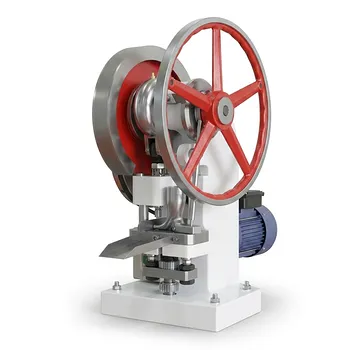
5 Ton Single Punch Tablet Press Laboratory Small Batch Production
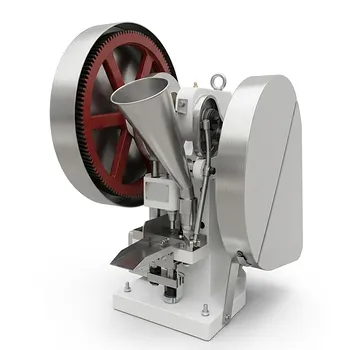
6-Ton Small Single-Punch Tablet Press — Laboratory Powder & Granule Tableting Equipment / Tablet Forming Machine
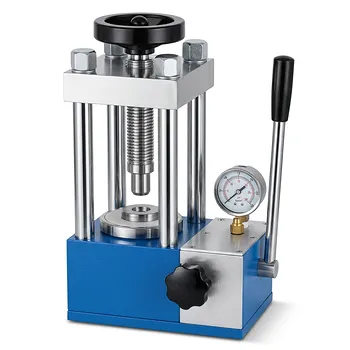
Manual Tablet Press with Dual Scale Pressure Gauge for Pharmaceutical Food Chemical Laboratory Sample Preparation
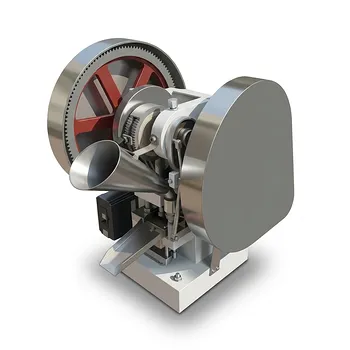
6 Ton Variable Frequency Single Punch Tablet Press

High Shear Laboratory Emulsifier for Mixing and Homogenization