Why is precisely controlling the grinding time critical in the milling process of feldspar minerals? Optimize Efficiency
Updated 5 months ago
Optimizing the milling duration of feldspar is a delicate balancing act between mineral liberation and particle degradation. Precisely controlling this variable ensures that iron-bearing impurities are effectively released from the feldspar matrix without creating excessive "fines" or mineral slime. Proper timing is the only way to maintain a high recovery rate while managing the chemical and physical stability of the downstream processing pulp.
The core challenge in feldspar milling is identifying the "sweet spot" where grinding duration is long enough to liberate impurities but short enough to prevent the formation of mineral slime, which otherwise consumes excess reagents and introduces equipment contaminants.
Achieving Optimal Mineral Liberation
Releasing Iron Impurities
The primary goal of grinding feldspar is to separate it from the iron minerals embedded within its matrix. Precise timing ensures the mechanical energy is sufficient to break these bonds, allowing for cleaner separation in later stages.
Controlling Particle Size Distribution
In the initial stages of milling, energy input causes a rapid drop from micron-level to nano-level particles. Precise control allows operators to hit a specific size target that meets performance indicators while maintaining a uniform distribution.
Regulating Internal Energy Density
The duration of the grind, combined with the filling rate of grinding media, determines the energy density within the chamber. Maintaining an exact time window prevents the generation of surplus frictional heat, which can damage equipment or alter the physical state of the material.
Preventing the Consequences of Over-Grinding
The Impact of Mineral Slime
Excessive grinding time leads to the formation of mineral slime, an ultra-fine byproduct that complicates pulp processing. This slime alters the rheology of the mixture, making it significantly harder to handle in subsequent flotation or separation steps.
Increased Chemical Reagent Consumption
When minerals are over-ground, their total surface area increases exponentially. This requires a much higher volume of chemical reagents to achieve the same processing effect, driving up operational costs and reducing efficiency.
Declining Recovery Rates
Over-grinding directly correlates with a reduced recovery rate of the target minerals. The presence of excessive fines makes it physically difficult to capture the feldspar, leading to significant material loss during the washing or flotation phases.
Understanding the Trade-offs and Pitfalls
Media Wear and Iron Contamination
While hardened steel grinding media is durable, it is not invincible. If the milling duration is too long, the physical wear of the balls and jars introduces additional iron impurities into the feldspar, defeating the purpose of the initial purification.
Energy Efficiency vs. Throughput
Extending grinding time for marginal gains in fineness often leads to a "point of diminishing returns." At this stage, the energy cost and equipment wear outweigh any benefits in particle size, making the process economically unviable.
The Buffering Effect of Loading Quantity
The ball-to-powder ratio must be balanced with time. If the loading quantity is too high, it creates a buffering effect that necessitates longer grind times, which in turn increases the risk of media wear and thermal stress on the system.
How to Apply Precise Timing to Your Milling Project
Effective control requires aligning your milling duration with your specific output requirements and equipment constraints.
- If your primary focus is high chemical purity: Limit grinding time to the minimum required for liberation to prevent the introduction of iron contaminants from the grinding media itself.
- If your primary focus is minimizing operational costs: Strictly avoid over-grinding to reduce the consumption of expensive chemical reagents in the downstream pulp processing phase.
- If your primary focus is customized material kinetics: Adjust the grinding frequency and duration in tandem to control the crystallinity of the material, ensuring the final product meets specific release or reaction profiles.
Mastering the duration of the milling cycle is the most effective way to protect mineral integrity while maximizing the economic efficiency of your production line.
Summary Table:
| Milling Parameter | Under-Grinding | Optimal Timing | Over-Grinding |
|---|---|---|---|
| Mineral Liberation | Incomplete separation | Maximum impurity release | Mineral degradation |
| Particle Size | Coarse & non-uniform | Target micron/nano range | Excessive ultra-fines (Slime) |
| Iron Contamination | High (Residual iron) | Minimum | High (Media wear iron) |
| Reagent Costs | Standard | Highly efficient | Extremely high |
| Recovery Rate | Low (Poor liberation) | Maximum yield | Low (Loss in fines) |
Achieve Perfect Particle Precision with Our Material Processing Solutions
Mastering the 'sweet spot' of feldspar milling requires more than just timing—it requires high-performance equipment designed for precision and durability. At our company, we provide complete laboratory sample preparation solutions for material science, specializing in advanced powder processing and compaction technology.
Whether you need to optimize mineral liberation or prevent particle degradation, our extensive equipment line is built to handle your toughest challenges:
- Advanced Milling: Planetary ball mills, jet mills, and disc mills for exact size control.
- Preparation & Sizing: Jaw/roll crushers and vibratory/air-jet sieve shakers for consistent feedstocks.
- Compaction & Synthesis: A full spectrum of hydraulic presses, including Cold/Warm Isostatic Presses (CIP/WIP), vacuum hot presses, and XRF pellet presses.
- Mixing Excellence: Powder and defoaming mixers to ensure chemical and physical stability.
Ready to enhance your recovery rates and minimize material loss?
Contact our technical experts today to find the ideal solution for your laboratory or production line!
References
- S. Tinesha, C. H. Voon. BENEFICIATION METHOD AND IRON REMOVAL FROM FELDSPAR ORE. DOI: 10.54554/jet.2025.16.1.016
Mentioned Products
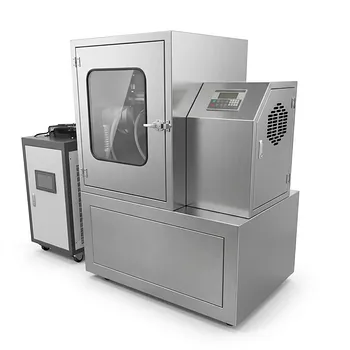
- Vibratory Superfine Grinder for Ultra Fine Laboratory Powder Milling
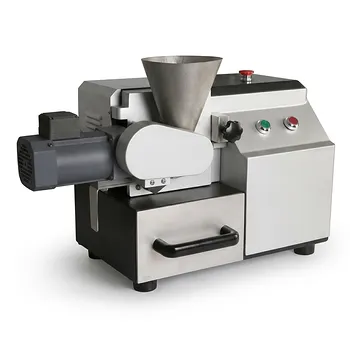
- Laboratory Hammer Mill for Coal Quality Analysis and Brittle Mineral Grinding
People Also Ask
- What role does a laboratory grinder play in the pretreatment of sunflower seed shell-based adsorbents? Boost Efficiency.
- How does a laboratory grinder or mill enhance the adsorption performance of agricultural waste materials? Boost Surface Area
- What is the function of a laboratory vibratory mill? Master StPh/MMT Nanocomposite Preparation via Mechanochemistry
- Why is high-efficiency ultra-fine grinding required for Portland cement before XRD? Get Accurate Rietveld Results
- How does the size of grinding media influence the vibratory milling efficiency? Achieve Optimal Pharmaceutical Fineness

Tech Team · PowderPreparation
Last updated on May 14, 2026