Why use tungsten carbide (WC-Co) media for milling WC powders? Achieve Zero Contamination & High Purity
Updated 5 months ago
The use of tungsten carbide (WC-Co) grinding jars and balls is the industry standard for milling WC-based powders primarily to prevent foreign material contamination. Because the grinding media and the target powder share the same chemical composition, any unavoidable wear during the high-energy milling process introduces only "friendly" impurities that are already part of the material system. This ensures the chemical purity and mechanical integrity of the final cemented carbide product are never compromised by heterogeneous metals like iron or chrome.
Core Takeaway: To achieve high-purity results in tungsten carbide processing, you must match the chemistry of your milling tools to your powder. This strategy eliminates foreign contamination and utilizes the material's high density to deliver the kinetic energy required for efficient particle size reduction.
Maintaining Absolute Chemical Purity
Eliminating Heterogeneous Contamination
When milling exceptionally hard materials like tungsten carbide, standard hardened steel tools are prone to flaking and erosion. This introduces iron (Fe) and other metallic impurities into the powder, which can drastically alter the thermodynamic stability and mechanical properties of the final alloy. By using WC-Co media, you ensure that any wear particles are chemically identical to the primary phase of your mixture.
The Advantage of "Friendly" Wear
High-energy ball milling inherently involves collisions that cause minute amounts of media wear. When the media is WC-Co, these wear particles act as trace additives rather than contaminants. This controlled transfer of material can even enhance the integration of carbide components into the composite system, supporting the overall physical properties of the powder.
Protecting Thermodynamic Research
In research environments focusing on nanocrystalline alloys, even parts-per-million levels of foreign metal can skew experimental data. Utilizing tungsten carbide jars and balls prevents external elements from interfering with the study of grain growth and phase stability. This makes WC-Co the only viable choice for high-purity synthesis of tungsten-based composites.
Maximizing Grinding Efficiency and Performance
Leveraging Extreme Hardness
Tungsten carbide is one of the hardest engineered materials, allowing it to withstand high-intensity collisions for 10 hours or more without significant deformation. This hardness ensures that the kinetic energy of the mill is spent breaking down the powder particles rather than wearing down the grinding balls.
Utilizing High Density for Kinetic Energy
The density of cemented carbide is significantly higher than that of stainless steel or ceramic media. This increased mass translates to higher impact energy at the same milling speed, which is essential for effectively processing hard, ceramic-based powders.
Enhancing Sintering Densification
The high-energy impact provided by dense WC-Co media increases the surface activity of the resulting powder. Research indicates that powders processed with these high-density tools can reach a densification of up to 92% during the sintering phase, leading to a more robust and less porous final part.
Understanding the Trade-offs
The Cost of Premium Media
Tungsten carbide grinding jars and balls represent a significant capital investment compared to stainless steel or alumina. While the upfront cost is higher, the longevity and purity benefits often offset the expense in high-performance applications.
Equipment Stress and Weight
The high density that makes WC-Co effective also makes the jars and balls exceptionally heavy. Users must ensure their planetary mills or vibratory mills are rated for the increased load to avoid premature motor failure or mechanical strain.
Brittleness and Impact Sensitivity
While extremely hard, cemented carbide is more brittle than steel. It is susceptible to fracturing if dropped or if the mill is operated at extreme speeds without sufficient powder buffering, requiring careful handling and optimized milling parameters.
How to Apply This to Your Project
Recommendations Based on Your Objectives
The decision to use WC-Co media depends on your final performance requirements and the nature of your powder.
- If your primary focus is high-purity alloy synthesis: You must use WC-Co jars and balls to prevent iron contamination and ensure the chemical integrity of the nanocrystalline structure.
- If your primary focus is maximum sintering density: Choose WC-Co media for its high-density impact, which activates the powder surface more effectively than lighter materials.
- If your primary focus is cost-sensitive industrial production: Evaluate if the performance gains in hardness and wear resistance justify the higher initial tooling costs compared to standard hardened alloys.
By aligning the chemistry and density of your milling media with your powder, you ensure a high-performance, contamination-free material that meets the most rigorous technical standards.
Summary Table:
| Feature | Advantage of WC-Co Media | Impact on Final Product |
|---|---|---|
| Chemical Purity | Eliminates foreign metal (Fe, Cr) contamination | Maintains alloy integrity and thermodynamic stability |
| High Density | Higher kinetic energy at identical speeds | More efficient particle size reduction |
| Extreme Hardness | Resists deformation during high-energy collisions | Minimal media wear and long-term durability |
| Sintering Result | Increases powder surface activity | Achieves superior densification (up to 92%) |
Elevate Your Material Research with Professional Processing Solutions
At MSE Supplies, we provide complete laboratory sample preparation solutions for material science, specializing in high-performance powder processing and compaction equipment. To achieve the absolute chemical purity required for your research, we offer a specialized range of equipment including:
- Advanced Milling: Planetary ball mills, jet mills, and disc mills with high-purity tungsten carbide (WC-Co) jars and media.
- Sample Prep: Jaw/roll crushers and liquid nitrogen cryogenic grinders.
- Powder Processing: Sieve shakers (vibratory/air-jet) and high-precision powder mixers.
- Compaction Solutions: A full spectrum of hydraulic presses, including Cold/Warm Isostatic Presses (CIP/WIP), hot presses, and vacuum hot presses.
Don't let foreign contamination compromise your results. Contact our technical team today to find the perfect equipment configuration for your high-purity powder synthesis!
References
- Kangwei Xu, Yongxin Jian. Microstructure, Mechanical Properties and Wear Behaviors of Ultrafine-Grain WC-Based Cermets with Different Binder Phases Fabricated by Spark Plasma Sintering. DOI: 10.3390/ma17030659
Mentioned Products
- Vertical Production Planetary Ball Mill for High Throughput Powder Processing
- Heavy Duty Horizontal Planetary Ball Mill for Efficient Industrial Grinding and Sample Preparation
- Small High-Speed Laboratory Grinder for Powder Processing
- High Energy Omnidirectional Planetary Ball Mill 16L
- 8L Planetary Ball Mill for Laboratory Grinding and Sample Preparation
People Also Ask
- What is the function of a high-performance planetary ball mill in AMZ laminates? Master Ceramic Homogenization.
- What is the role of a planetary ball mill in Al–Si3N4 nanocomposite prep? Achieve Uniform Homogenization
- What is the function of a planetary ball mill in lanthanum hexaaluminate synthesis? Master Micron-Level Homogenization
- What role does a planetary ball mill play in the synthesis of Er-doped PMN-PT ceramics? Enhancing Homogeneity & Purity
- What are the advantages of using a planetary ball mill for the fine grinding of barium silicate glass powder? Peak Results

Tech Team · PowderPreparation
Last updated on May 14, 2026
Related Products

Vertical Production Planetary Ball Mill for High Throughput Powder Processing
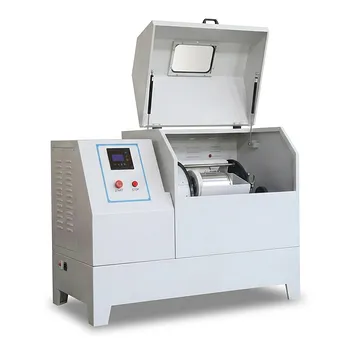
Heavy Duty Horizontal Planetary Ball Mill for Efficient Industrial Grinding and Sample Preparation
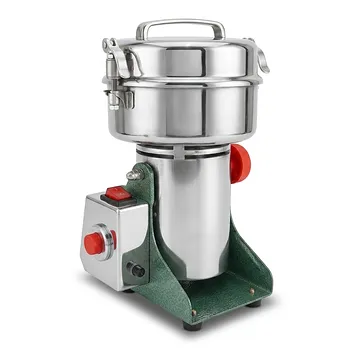
Small High-Speed Laboratory Grinder for Powder Processing

High Energy Omnidirectional Planetary Ball Mill 16L
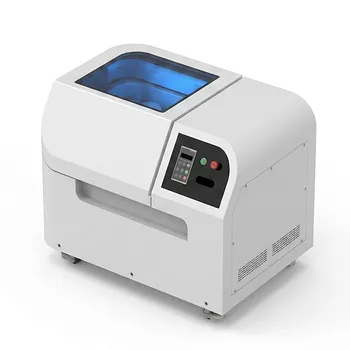
8L Planetary Ball Mill for Laboratory Grinding and Sample Preparation
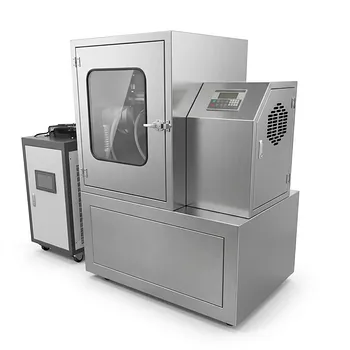
Vibratory Superfine Grinder for Ultra Fine Laboratory Powder Milling
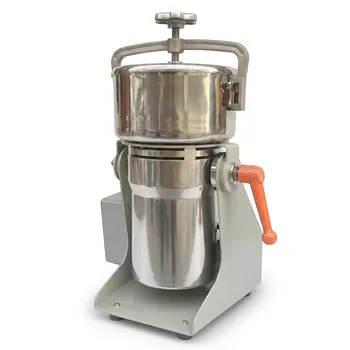
High Speed Laboratory Grinder Efficient Stainless Steel Powder Pulverizer Universal Material Science Mill for Sample Preparation

Vertical Square Planetary Ball Mill for Laboratory Sample Preparation and Nanoscale Grinding
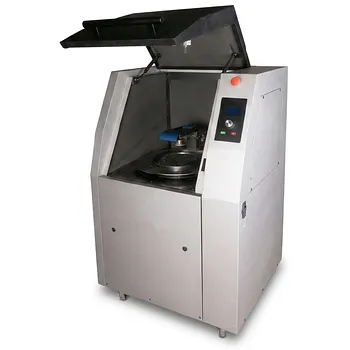
High Speed Vibratory Disc Mill for Spectral Analysis Sample Preparation and Rapid Powder Grinding

High Energy Laboratory Planetary Ball Mill for Nano Grinding and Material Science Sample Preparation
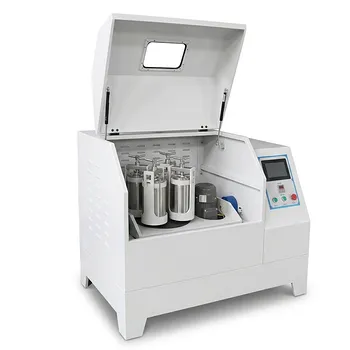
360° Rotating Omnidirectional Laboratory Planetary Ball Mill for Homogeneous Ultra-Fine Grinding and Mixing
