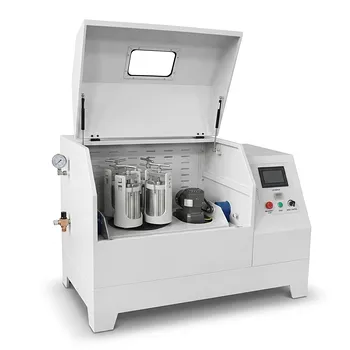
Why is it necessary to use a rotary mill for nanocellulose grinding before FTIR or XRD? Achieve peak analytical precision.
Updated 5 months ago
The necessity of using a rotary mill for nanocellulose preparation lies in achieving extreme physical homogeneity and particle size reduction. This process transforms irregular, freeze-dried nanocellulose blocks into an ultra-fine, uniform powder. Such refinement is critical for ensuring that analytical instruments can capture high-resolution spectral features and clear diffraction peaks, which are mandatory for calculating the Crystallinity Index (CrI) accurately.
Fine grinding is not merely a preparation step but a technical requirement to eliminate physical artifacts, such as preferred orientation and poor light penetration, that otherwise compromise the integrity of XRD and FTIR data.
Achieving Analytical Precision through Homogeneity
Transforming Material Morphology
Freeze-dried nanocellulose often exists in porous, low-density blocks or aggregates that are unsuitable for direct analysis. A rotary mill mechanically breaks these structures down into a consistent micron-level powder.
Ensuring Representative Sampling
High-precision grinding ensures that the minute quantity of material used in a sample holder is truly representative of the bulk material. This consistency is vital for identifying complex chemical bonds and mineral phases reliably.
Optimizing Signal Resolution
Ultra-fine particles allow for better packing within analytical instruments. This leads to high-resolution spectral features in FTIR and sharper, more defined peaks in XRD, which are essential for quantitative calculations.
The Impact of Grinding on XRD Analysis
Eliminating Preferred Orientation Effects
Large or irregularly shaped particles tend to align in specific directions when loaded into a sample holder. This "preferred orientation" distorts peak intensities; fine grinding ensures a random, disordered orientation of grains for accurate diffraction data.
Improving Peak Intensity Accuracy
By reducing the sample to a uniform state, the XRD equipment can accurately capture the intensities of crystalline phases. This is the only way to achieve a precise phase quantification for materials like nanocellulose or complex silicates.
Precision in Crystallinity Calculations
The accuracy of the Crystallinity Index (CrI) depends entirely on the clarity of the diffraction peaks. Without the fine grinding provided by a rotary mill, the overlap of poorly defined peaks can lead to significant errors in determining the ratio of crystalline to amorphous regions.
Enhancing FTIR Spectroscopy Outcomes
Increasing Specific Surface Area
Grinding significantly increases the specific surface area of the nanocellulose. This allows infrared light to penetrate the sample more effectively, rather than being scattered by large, irregular surfaces.
Detecting Functional Groups
Finer particles facilitate the detection of characteristic absorption peaks, such as hydrocarbon bonds (CH2, CH3) and carboxylate groups. This is critical for confirming successful molecular grafting or chemical modifications in the cellulose structure.
Improving Light Path Consistency
Uniform powder ensures a consistent path length for the infrared beam. This consistency reduces noise in the spectra, making it easier to distinguish between closely related chemical signals.
Understanding the Trade-offs and Risks
Potential for Structural Damage
While fine grinding is necessary, excessive mechanical energy can generate heat or stress that may damage the crystal structure. It is often necessary to use a liquid medium, such as ethanol, or controlled milling speeds to minimize this risk.
Sample Loss and Contamination
Working with ultra-fine powders increases the risk of material adhering to the milling chamber or media. Users must balance the need for extreme fineness with the practicalities of recovering enough sample for analysis without introducing impurities from the mill itself.
How to Apply This to Your Analysis
Making the Right Choice for Your Goal
- If your primary focus is Crystallinity Index (CrI) accuracy: Use a rotary mill to achieve a particle size below 30 microns to ensure random grain distribution and eliminate orientation bias.
- If your primary focus is Detecting Chemical Modifications via FTIR: Prioritize increasing surface area through fine grinding to ensure maximum infrared light penetration and signal clarity.
- If your primary focus is Analyzing Heat-Sensitive Samples: Utilize a mill that allows for wet grinding or offers temperature control to prevent the degradation of the nanocellulose structure during processing.
Proper mechanical refinement is the foundational step that ensures your analytical results reflect the true molecular nature of the nanocellulose rather than the limitations of its physical form.
Summary Table:
| Analysis Method | Primary Benefit of Fine Grinding | Impact on Data Quality |
|---|---|---|
| XRD Analysis | Eliminates preferred orientation effects | Sharpens diffraction peaks for accurate CrI calculation |
| FTIR Spectroscopy | Increases specific surface area | Enhances light penetration and functional group detection |
| General Prep | Transforms blocks into micron-level powder | Ensures the sample is representative of the bulk material |
| Sample Handling | Optimizes particle packing | Reduces noise and improves signal-to-noise ratio |
Optimize Your Nanocellulose Research with Professional Sample Preparation
Precise analytical data begins with superior sample preparation. Whether you are calculating the Crystallinity Index (CrI) via XRD or identifying chemical modifications through FTIR, our high-performance grinding solutions ensure the homogeneity your research demands.
As specialists in material science laboratory solutions, we provide a comprehensive range of equipment to refine your workflow:
- Advanced Milling: Rotary mills, planetary ball mills, jet mills, and cryogenic grinders for ultra-fine particle reduction.
- Powder Processing: Sieve shakers, powder mixers, and defoaming mixers for consistent material quality.
- Pellet Preparation: A full spectrum of hydraulic presses, including Cold Isostatic Presses (CIP) and XRF pellet presses, to create perfect samples for spectroscopy.
Ready to elevate your lab's efficiency? Contact our experts today to find the perfect milling or pressing solution for your specific application.
References
- Erwin C. Sumarago, Kendra Felizimarie Magsico. Production and Characterization of Nanocellulose from Maguey (Agave cantala) Fiber. DOI: 10.3390/polym16101312
Mentioned Products
- Industrial Rotor Beater Mill for High Speed Impact and Shear Grinding in Laboratory Sample Preparation
- 360° Rotating Omnidirectional Laboratory Planetary Ball Mill for Homogeneous Ultra-Fine Grinding and Mixing
- Vibratory Disc Mill for Rapid Fine Grinding and High Throughput Sample Preparation of Hard and Brittle Materials
- Portable Cutting Mill for Laboratory Sample Preparation and RoHS WEEE Compliance Testing
- Stainless Steel Rotary Vibrating Sieve High Precision Circular Vibratory Separator Industrial Powder Grading Machine Multi Layer Sifting Equipment
People Also Ask
- How does a high-speed rotor mill contribute to the preparation of hard biomass seeds for thermal processing? Optimize Yield
- What is the function of a rotary mill for Inconel 625 & carbide composites? Achieve Perfect Powder Homogeneity
- What is the purpose of employing impact mills and precision sieves during the pulverization of solid dispersions? Enhance Drug Bioavailability
- What are the advantages of using high-speed rotating ball mills for woody biomass? Maximize Reactivity & Efficiency
- What function does an industrial-grade impact hammer mill serve in turning mango kernels into powder? High-Efficiency Micronization

Tech Team · PowderPreparation
Last updated on May 14, 2026
Related Products
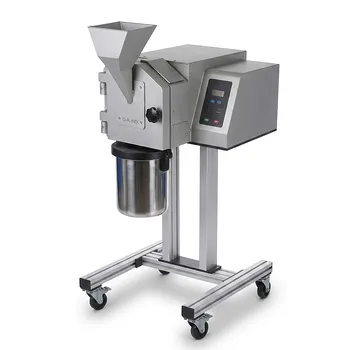
Industrial Rotor Beater Mill for High Speed Impact and Shear Grinding in Laboratory Sample Preparation
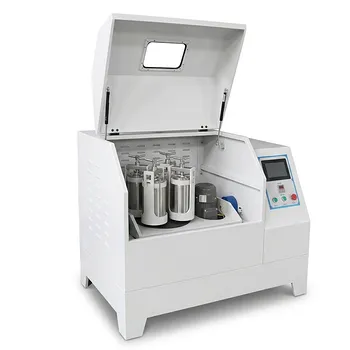
360° Rotating Omnidirectional Laboratory Planetary Ball Mill for Homogeneous Ultra-Fine Grinding and Mixing
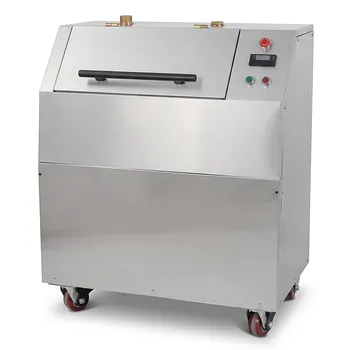
Vibratory Disc Mill for Rapid Fine Grinding and High Throughput Sample Preparation of Hard and Brittle Materials
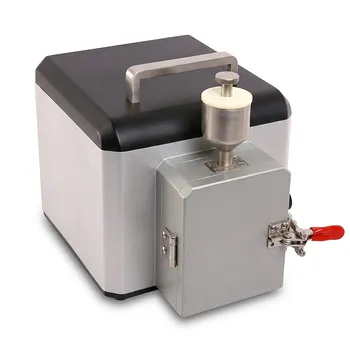
Portable Cutting Mill for Laboratory Sample Preparation and RoHS WEEE Compliance Testing

Stainless Steel Rotary Vibrating Sieve High Precision Circular Vibratory Separator Industrial Powder Grading Machine Multi Layer Sifting Equipment
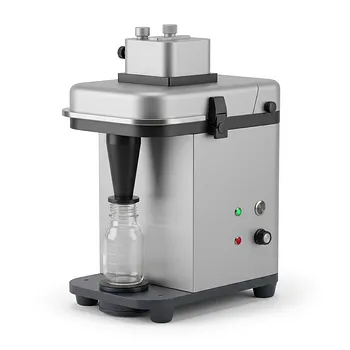
Cyclonic Laboratory Mill for NIR Spectroscopy Sample Preparation Food and Feed Grinding
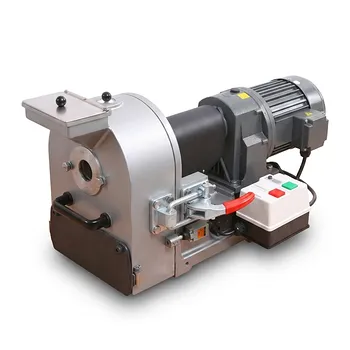
Laboratory Disc Mill for Fine Sample Preparation of Hard and Brittle Materials
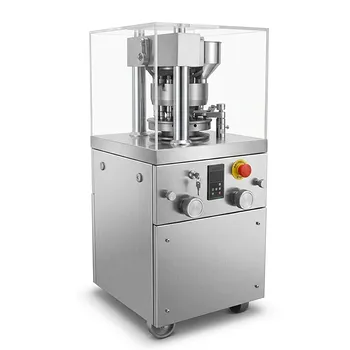
Ordinary Type Rotary Tablet Press for Pharmaceutical Chemical Food Electronic Industries
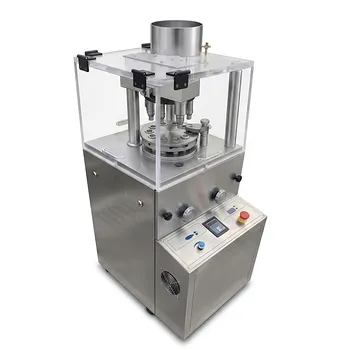
Enhanced 9 Punch Rotary Tablet Press for Powder Compaction
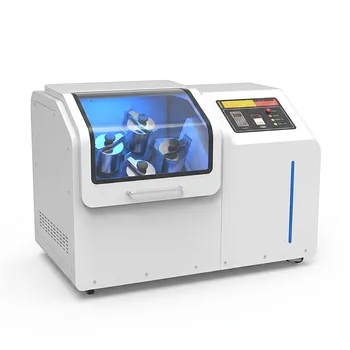
High Energy Omnidirectional Planetary Ball Mill 16L
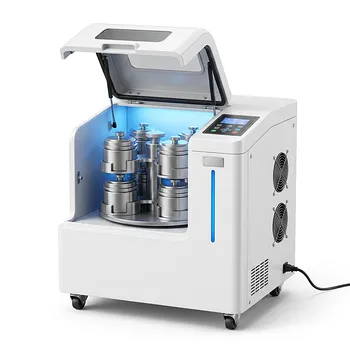
High Energy Omnidirectional Planetary Ball Mill 20L
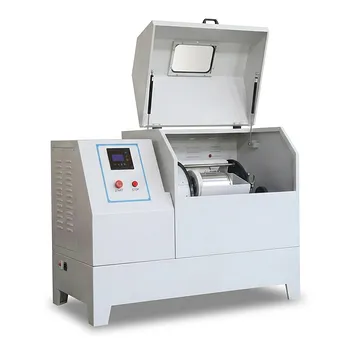
Heavy Duty Horizontal Planetary Ball Mill for Efficient Industrial Grinding and Sample Preparation
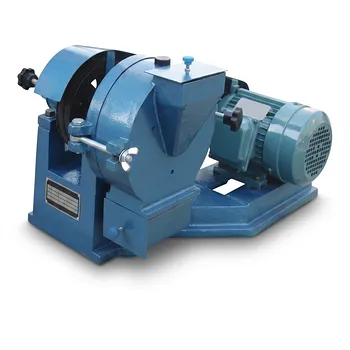
Laboratory Disc Mill for Ore and Mineral Sample Preparation
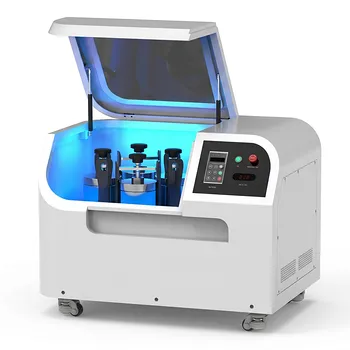
Planetary Ball Mill 12L
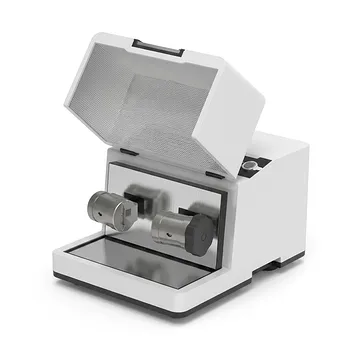
Heating Temperature Controlled High Energy Vibratory Ball Mill
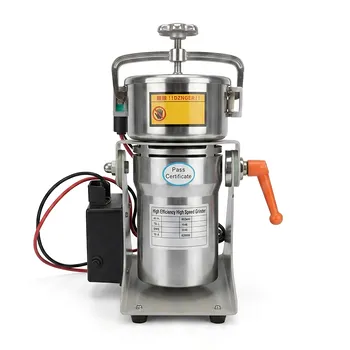
High Efficiency High Speed Grinder Laboratory Mill 1300W 25000rpm

Vertical Square Planetary Ball Mill for Laboratory Sample Preparation and Nanoscale Grinding
Single Tank High Energy Vibratory Ball Mill for Laboratory Grinding and Mixing
Miniature Planetary Ball Mill with Vacuum Grinding and High Efficiency for Laboratory Sample Preparation