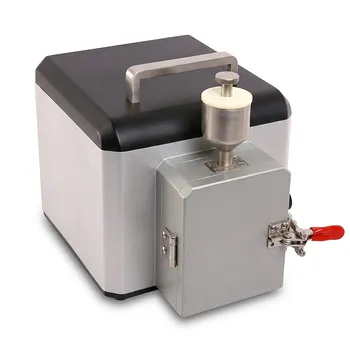
Why is it necessary to use a micronizing mill before QXRD analysis? Ensure Accuracy & Rietveld Precision
Updated 3 months ago
Precision in quantitative X-ray diffraction (QXRD) hinges on sample preparation. Using a micronizing mill is necessary because it reduces sintered particles to a uniform, ultra-fine size—typically below 10 micrometers—while eliminating preferred orientation effects. This refinement ensures that the diffraction intensities accurately reflect the true phase content of the material rather than the accidental alignment of large grains.
The central takeaway is that micronizing mills transform coarse, heterogeneous sintered products into an ideal powder state that satisfies the statistical requirements of the Rietveld method. Without this step, directional biases and poor particle statistics will lead to significant errors in phase quantification.
Overcoming the "Preferred Orientation" Challenge
The Problem with Directional Bias
In sintered products, crystals often align in specific directions during cooling or processing, a phenomenon known as preferred orientation. If these large or aligned grains are not randomized, the X-ray beam will hit certain crystal planes more than others, artificially inflating or deflating peak intensities.
Achieving Random Grain Distribution
A micronizing mill uses high-frequency collisions and grinding media to break these directional bonds. By reducing the sample to a micron-level fineness, the mill ensures that millions of tiny crystallites are oriented in every possible direction.
Enhancing Statistical Representation
For QXRD to be accurate, a sufficient number of crystallites must participate in the diffraction process. Micronizing significantly increases the surface area and the total number of grains exposed to the X-ray beam, which stabilizes the diffraction intensity and improves data reliability.
Preserving Crystal Integrity through Advanced Milling
The Role of Wet Grinding
Most micronizing mills employ wet grinding technology, often using an ethanol or aqueous medium. This liquid acts as a coolant and a lubricant, preventing the local heat buildup that can occur during dry grinding.
Avoiding Mechanical Amorphization
Unlike high-energy planetary mills that can "smash" crystal lattices into an amorphous state, micronizing mills typically use low-energy grinding. This preserves the underlying crystalline structure of sensitive minerals, such as clay or Calcium Silicate Hydrate (C-S-H), which is vital for accurate Rietveld refinement.
Ensuring Chemical Homogeneity
The liquid medium also helps in achieving a highly homogeneous slurry. This ensures that internal standards—added to quantify amorphous content—are perfectly distributed throughout the sample before the final analysis.
Understanding the Trade-offs and Pitfalls
The Risk of Over-Grinding
While fineness is the goal, excessive milling time can eventually lead to lattice strain or surface amorphization. If the grinding duration is not optimized, the diffraction peaks may broaden or lose intensity, leading to an overestimation of the amorphous phase.
Medium Compatibility
Choosing the wrong grinding liquid can lead to unintended chemical reactions. For example, using water with certain sintered cements can trigger premature hydration, necessitating the use of anhydrous liquids like isopropanol or ethanol.
Contamination from Grinding Media
The choice of grinding elements, such as agate or corundum, is a trade-off between hardness and potential contamination. While harder media grind faster, they may introduce trace elements into the sample that interfere with the diffraction pattern of the sintered product.
How to Apply This to Your Project
Making the Right Choice for Your Goal
- If your primary focus is high-precision Rietveld refinement: Use a micronizing mill with an ethanol medium to reach a particle size of <10 micrometers to ensure peak intensity stability.
- If your primary focus is quantifying amorphous phases: Ensure you use a low-energy setting and an internal standard to avoid damaging the crystal structure during the refinement process.
- If your primary focus is high-throughput industrial testing: Optimize grinding times to the shortest duration possible that still eliminates preferred orientation to maintain efficiency without sacrificing data quality.
By mastering the micronization process, you transform X-ray diffraction from a qualitative "snapshot" into a rigorous, quantitative tool for material science.
Summary Table:
| Feature | Benefit for QXRD Analysis | Impact on Results |
|---|---|---|
| Particle Size <10μm | Eliminates grain size effects | Stable, reproducible diffraction intensities |
| Randomized Orientation | Removes directional/preferred bias | Accurate phase quantification (Rietveld) |
| Wet Grinding Technology | Prevents mechanical amorphization | Preserves sensitive crystalline structures |
| Homogeneous Slurry | Uniform internal standard distribution | Reliable measurement of amorphous content |
Optimize Your Material Analysis with Expert Sample Preparation
Precise QXRD results depend on perfect sample preparation. We provide complete laboratory sample preparation solutions for material science, specializing in high-performance powder processing and compaction equipment.
Whether you need to eliminate preferred orientation or achieve ultra-fine uniformity, our extensive product lines have you covered:
- Milling & Grinding: Micronizing mills, planetary ball mills, jet mills, and liquid nitrogen cryogenic grinders.
- Sizing: Sieve shakers (vibratory/air-jet) and high-precision test sieves.
- Compaction: A full spectrum of hydraulic presses, including Cold/Warm Isostatic Presses (CIP/WIP), XRF pellet presses, and vacuum hot presses.
- Mixing: Advanced powder and defoaming mixers for chemical homogeneity.
Contact us today to discover how our specialized equipment can enhance your laboratory's efficiency and data accuracy.
References
- Tobin Harvey, Tom Honeyands. Effect of Temperature, Time, and Cooling Rate on the Mineralogy, Morphology, and Reducibility of Iron Ore Sinter Analogues. DOI: 10.1007/s11837-020-04452-6
Mentioned Products
- Laboratory Desktop Ultra Fine Powder Grinder High Speed Micronizing Pulverizer
- Water Cooled Pulse Jet Ultrafine Grinder
- High Throughput Micro Ball Mill for Cryogenic Grinding and Laboratory Cell Disruption
- Nano Laboratory Bead Mill Desktop Sub Micron Sand Mill Screenless Seal Less Powder Grinder
- Laboratory Micro Vibration Grinding Mill for Trace Sample Preparation
People Also Ask
- What role does a laboratory grinder play in the pretreatment of sunflower seed shell-based adsorbents? Boost Efficiency.
- How does a laboratory grinder or mill enhance the adsorption performance of agricultural waste materials? Boost Surface Area
- What is the function of a laboratory high-speed pulverizer in the preparation of eggshell powder? Essential Pretreatment
- Why is high-efficiency ultra-fine grinding required for Portland cement before XRD? Get Accurate Rietveld Results
- What is the function of a laboratory pulverizer in Boerhavia diffusa-based adsorbent prep? Maximize Surface Area

Tech Team · PowderPreparation
Last updated on Jun 03, 2026
Related Products
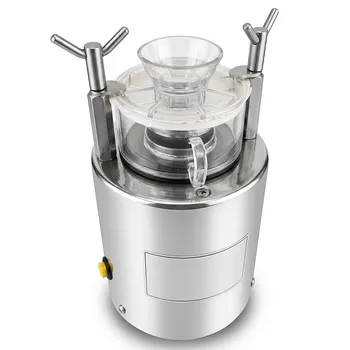
Laboratory Desktop Ultra Fine Powder Grinder High Speed Micronizing Pulverizer
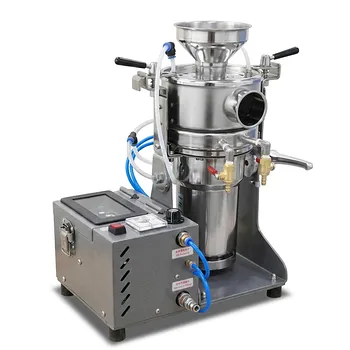
Water Cooled Pulse Jet Ultrafine Grinder
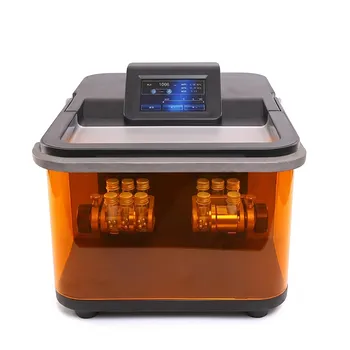
High Throughput Micro Ball Mill for Cryogenic Grinding and Laboratory Cell Disruption
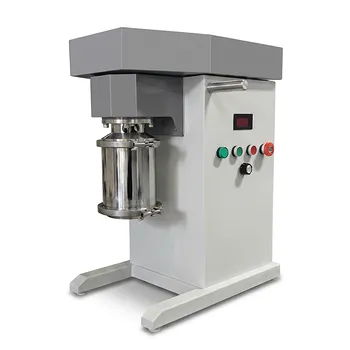
Nano Laboratory Bead Mill Desktop Sub Micron Sand Mill Screenless Seal Less Powder Grinder
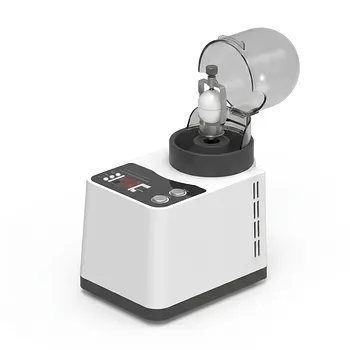
Laboratory Micro Vibration Grinding Mill for Trace Sample Preparation
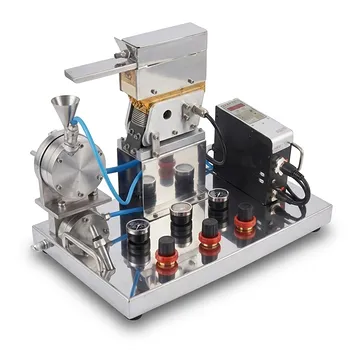
Benchtop Micro Air Jet Mill for Ultrafine Grinding of High Value Powders
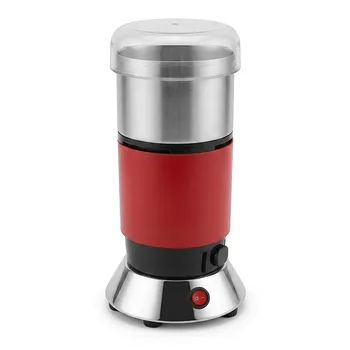
Micro Solid Sample Grinder High Speed Pulverizer for Laboratory Small Batch Grinding
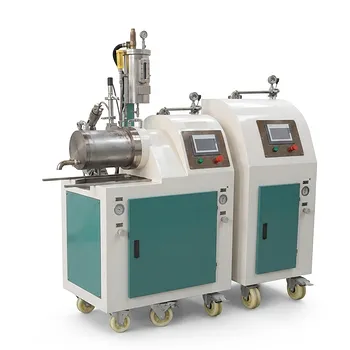
Mass Production Nano Sand Mill for Industrial Nanomaterial Grinding and Dispersion
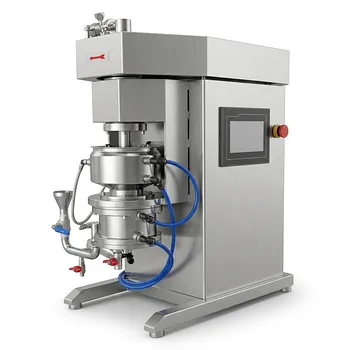
Small Ceramic Structure Laboratory Sand Mill Nanoscale Grinding Dispersion Equipment Seal-less Screen-less Design
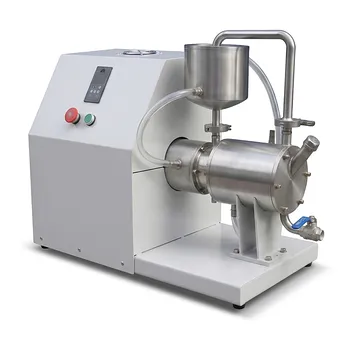
Laboratory Small Horizontal Sand Mill for Nano Materials Wet Grinding
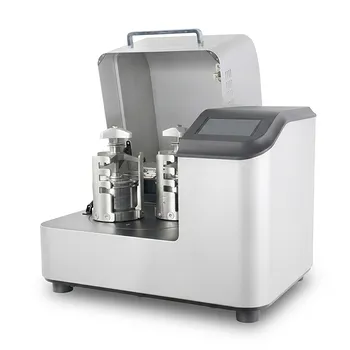
High Energy Planetary Ball Mill for Nano Scale Grinding and Mechanical Alloying
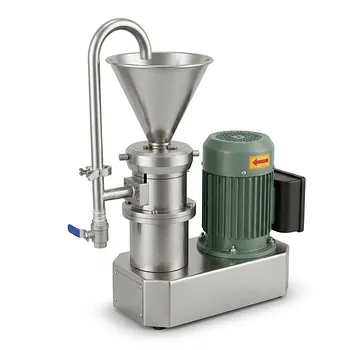
Small Laboratory Colloid Mill for Ultra-Fine Wet Grinding and Emulsification
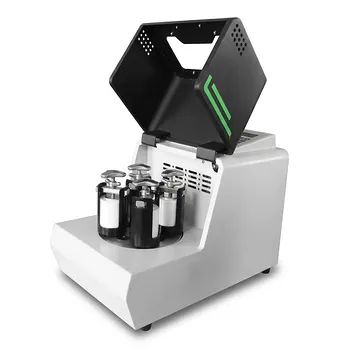
Miniature Planetary Ball Mill with Vacuum Grinding and High Efficiency for Laboratory Sample Preparation
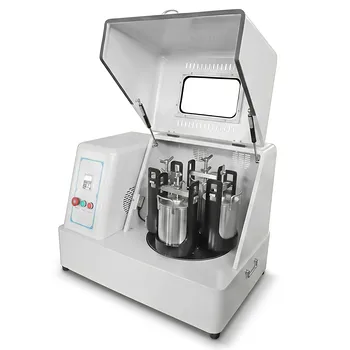
Vertical Square Planetary Ball Mill for Laboratory Sample Preparation and Nanoscale Grinding
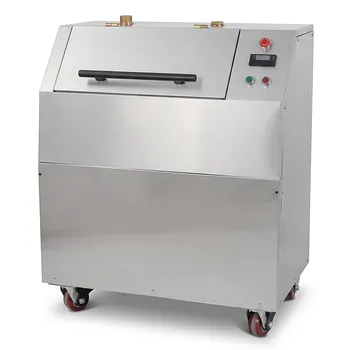
Vibratory Disc Mill for Rapid Fine Grinding and High Throughput Sample Preparation of Hard and Brittle Materials
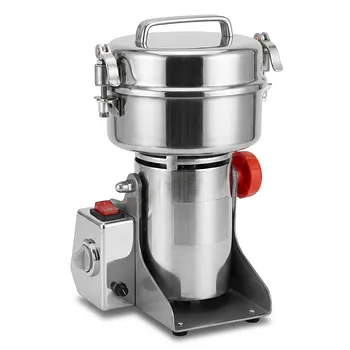
High Speed Laboratory Powder Grinder Small Batch Sample Preparation Mill
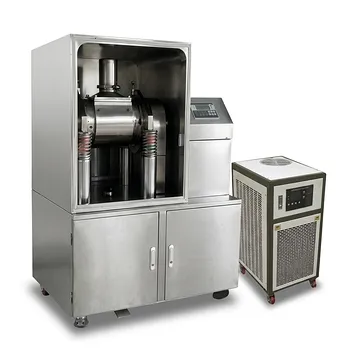
Small Vibrating Ultrafine Grinder for Traditional Chinese Medicine
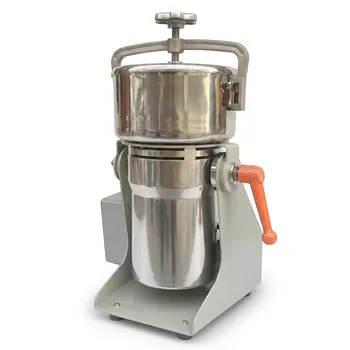
High Speed Laboratory Grinder Efficient Stainless Steel Powder Pulverizer Universal Material Science Mill for Sample Preparation
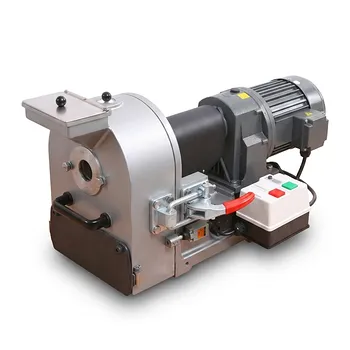
Laboratory Disc Mill for Fine Sample Preparation of Hard and Brittle Materials