Why is high-frequency vibration integrated into hydraulic presses used for artificial stone slab pressing? Maximize Density
Updated 5 months ago
Integrating high-frequency vibration into hydraulic presses is essential for maximizing the packing density of artificial stone slabs. This process facilitates the precise rearrangement of aggregate particles within the mold, allowing fine particles to migrate into the small spaces between larger aggregates. The result is a highly dense, void-free internal structure that significantly improves the slab's physical and mechanical performance.
High-frequency vibration serves as a critical catalyst in the compaction process by ensuring that raw materials are not just compressed, but optimally organized. This organizational efficiency is the foundation for creating artificial stone with superior structural integrity and aesthetic consistency.
The Mechanics of Particle Rearrangement
Overcoming Internal Friction
Aggregates in an artificial stone mix often resist movement due to internal friction and the viscosity of binders. High-frequency vibration temporarily "fluidizes" the mixture, reducing this friction and allowing particles to slide past one another more freely.
The Role of Fine Particle Migration
Under the dual influence of gravity and hydraulic pressure, vibration encourages fine particles to settle into the interstices (gaps) between coarse aggregates. This filling of gaps is what transforms a loose mixture into a solid, cohesive mass.
Synergy Between Pressure and Vibration
While hydraulic pressure provides the force necessary for compaction, vibration provides the kinetic energy required for optimal positioning. Together, they achieve a level of density that static pressure alone cannot produce.
Achieving Structural Integrity
Eliminating Internal Voids
The presence of air pockets or "voids" is a primary cause of structural failure in stone slabs. Vibration-assisted pressing forces air to the surface and ensures that every cubic millimeter of the mold is filled with material.
Enhancing Physical-Mechanical Properties
A dense internal structure directly correlates to higher compressive strength and lower water absorption. By increasing packing density, manufacturers ensure the final product can withstand the stresses of cutting, polishing, and long-term use.
Ensuring Aesthetic Uniformity
Beyond strength, the rearrangement of particles prevents "clumping" or uneven distribution of color and texture. This ensures that the visual appearance of the slab is consistent across its entire surface and through its entire thickness.
Understanding the Trade-offs
Mechanical Stress on Equipment
The same high-frequency energy that compacts the stone also puts significant stress on the press components. Maintaining such a system requires more frequent inspections of bolts, welds, and hydraulic seals compared to static presses.
Risk of Material Segregation
If the vibration frequency is not correctly calibrated to the specific aggregate mix, segregation can occur. This is where heavy particles sink too quickly and fine particles rise, leading to an inconsistent slab that is weak on one side.
Energy and Calibration Requirements
Implementing vibration increases the operational complexity and energy consumption of the manufacturing process. Operators must precisely tune the frequency and amplitude to match the specific moisture content and grain size of the raw materials.
How to Apply This to Your Production Goal
Making the Right Choice for Your Goal
To get the most out of a vibration-integrated hydraulic press, your approach should vary based on your specific quality and output targets.
- If your primary focus is Maximum Durability: Ensure the vibration frequency is tuned specifically to the size of your smallest fines to eliminate all microscopic voids.
- If your primary focus is High-Volume Throughput: Use a synchronized vibration-pressure cycle that reaches peak density quickly to reduce the total dwell time in the mold.
- If your primary focus is Aesthetic Consistency: Focus on the "fluidization" phase of vibration to ensure that pigments and decorative aggregates are evenly distributed before full pressure is applied.
By mastering the balance between vibration and pressure, you can produce artificial stone that rivals or exceeds the physical properties of natural materials.
Summary Table:
| Key Mechanism | Primary Function | Benefit for Stone Slabs |
|---|---|---|
| Particle Rearrangement | Reduces internal friction and fluidizes the mix | Achieves maximum packing density |
| Fine Particle Migration | Fills interstices between coarse aggregates | Creates a void-free internal structure |
| Pressure-Vibration Synergy | Combines kinetic energy with hydraulic force | Enhances compressive strength |
| Air Evacuation | Forces trapped air pockets to the surface | Improves structural integrity & aesthetics |
Elevate Your Material Processing with Precision Compaction Solutions
At [Brand Name], we provide complete laboratory sample preparation solutions tailored for material science. We specialize in high-performance powder processing and compaction equipment designed to help you achieve superior structural integrity and consistency in every sample.
Our extensive product range includes:
- Advanced Crushing & Milling: Jaw/roll crushers, liquid nitrogen cryogenic grinders, and planetary ball, jet, and rotor mills.
- Sizing & Mixing: Vibratory/air-jet sieve shakers, powder mixers, and defoaming mixers.
- Full Spectrum Hydraulic Presses: Including Cold/Warm Isostatic Presses (CIP/WIP), standard lab presses, XRF pellet presses, and high-temperature vacuum hot presses.
Whether you are optimizing artificial stone production or conducting advanced material research, our equipment ensures the density and uniformity your project demands.
Contact our experts today to find your ideal solution!
References
- Thaís Leal da Cruz Silva, Carlos Maurício Fontes Vieira. Characterization of Artificial Stone Developed with the Incorporation of Granite and Mirror Wastes in an Epoxy Matrix. DOI: 10.1590/1980-5373-mr-2022-0561
Mentioned Products
- Vibratory Disc Mill for Rapid Fine Grinding and High Throughput Sample Preparation of Hard and Brittle Materials
- High Frequency Wet Three-Dimensional Vibrating Sieve Shaker for Dry and Wet Particle Size Analysis
- High Speed Vibratory Disc Mill for Spectral Analysis Sample Preparation and Rapid Powder Grinding
- 6 Ton Variable Frequency Single Punch Tablet Press
- Nano High Energy Vibratory Ball Mill for Laboratory Sample Preparation
People Also Ask
- Why is a vibratory disc mill utilized for the pretreatment of alum shale waste samples in phase analysis? Ensure XRD Accuracy
- What is the primary function of a vibrating disc mill in the pretreatment of raw clay samples? Achieve Micron-Level Precision
- What is the primary function of a laboratory disc mill for oyster shells? Boost Reactivity & Analytical Precision
- How does the size of grinding media influence the vibratory milling efficiency? Achieve Optimal Pharmaceutical Fineness
- What is the function of a laboratory vibratory mill? Master StPh/MMT Nanocomposite Preparation via Mechanochemistry

Tech Team · PowderPreparation
Last updated on May 14, 2026
Related Products
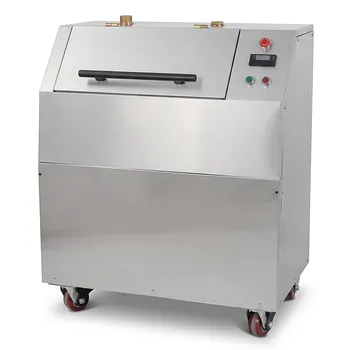
Vibratory Disc Mill for Rapid Fine Grinding and High Throughput Sample Preparation of Hard and Brittle Materials

High Frequency Wet Three-Dimensional Vibrating Sieve Shaker for Dry and Wet Particle Size Analysis
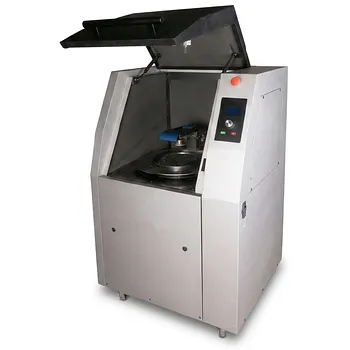
High Speed Vibratory Disc Mill for Spectral Analysis Sample Preparation and Rapid Powder Grinding
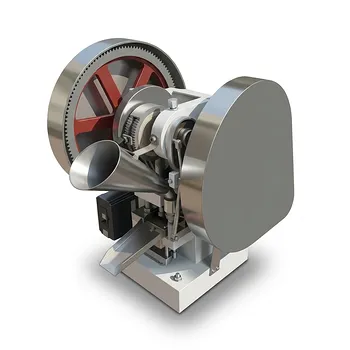
6 Ton Variable Frequency Single Punch Tablet Press

Nano High Energy Vibratory Ball Mill for Laboratory Sample Preparation