Why is a two-stage operation required for a drum mixer? Optimize Vanadium-Titanium Magnetite Sintering Results
Updated 4 months ago
The two-stage operation of a drum mixer is essential for balancing structural integrity with gas permeability in the sintering bed. This specific sequence ensures that fine materials have sufficient time to form stable "green balls" before larger particles are introduced to create necessary air voids. Without this separation, the larger particles would likely degrade the pre-formed pellets, leading to a dense, impermeable bed that hinders the sintering process.
The core insight of the two-stage process is the protection of the "green ball" structure while engineering specific void spaces. By staging the introduction of return fines based on size, operators can optimize the bed structure for maximum airflow and reaction efficiency.
Phase One: Establishing the Material Foundation
The Role of Fine Return Fines
The first stage focuses on blending raw materials with fine return fines (less than 3mm). These smaller particles act as the nuclei and binding agents necessary for the granulation process.
Achieving Granulation Equilibrium
This phase typically requires approximately five minutes of continuous mixing. This duration allows the moisture and fine particles to collide and adhere, forming what are known as base pellets or "green balls."
Consistency and Density
During these five minutes, the drum mixer ensures the material reaches a uniform consistency. A well-mixed base provides the mechanical strength required to withstand the weight of the material layers above it in the sintering machine.
Phase Two: Optimizing Sintering Bed Permeability
Integrating Large Embedding Fines
In the second stage, larger embedding return fines (greater than 3mm) are introduced into the mixer. These larger particles are not intended to be granulated into the pellets but rather to sit between them.
The 15-Second Critical Window
This stage is intentionally short, lasting only about 15 seconds. This brief duration is long enough to distribute the large fines throughout the mixture but short enough to prevent them from physically bashing or grinding down the base pellets already formed.
Creating Strategic Voids
The primary goal here is to place these larger particles within the gaps of the pre-formed pellets. These particles act as spacers, creating essential "voids" in the sintering bed that allow air and gases to flow freely during the subsequent thermal processing.
Understanding the Trade-offs and Pitfalls
The Risk of Over-Mixing
If the second stage exceeds the recommended 15-second window, the mechanical energy of the drum can become destructive. The larger, heavier return fines will begin to crush the delicate green balls, leading to a "fines-heavy" mixture that chokes airflow.
Complexity in Control
Implementing a two-stage process requires more precise timing and feed controls compared to a single-stage batch. Any failure in the timing of the second addition can result in a bed that is either too dense (poor permeability) or too fragile (poor sinter quality).
Material Segregation Issues
While creating voids is necessary, improper staging can lead to material segregation. If the large fines are not distributed evenly during that short 15-second burst, the sintering bed will have uneven permeability, leading to "cold spots" and inconsistent product quality.
How to Apply This to Your Process
Achieving the perfect balance in Vanadium-Titanium Magnetite processing depends on your specific operational priorities and equipment capabilities.
- If your primary focus is Maximizing Bed Permeability: Ensure the second-stage addition of >3mm fines is strictly timed to avoid pellet degradation, as maintaining large interstitial voids is the priority.
- If your primary focus is High Pellet Mechanical Strength: Prioritize the full five-minute duration of the first stage to ensure base pellets are sufficiently compacted and uniform before adding larger materials.
- If your primary focus is Throughput Efficiency: Consider automated feeding systems that can precisely inject the larger return fines at the end of the mixing cycle without halting the drum.
By mastering the transition between pellet formation and void creation, you ensure a highly permeable sintering bed that optimizes the processing of complex ores.
Summary Table:
| Operation Phase | Material Input | Duration | Primary Objective |
|---|---|---|---|
| Phase One | Fine Return Fines (<3mm) | ~5 Minutes | Granulation & stable "green ball" formation |
| Phase Two | Large Embedding Fines (>3mm) | ~15 Seconds | Creating strategic voids for gas permeability |
| Risk Factor | Over-mixing in Phase Two | >15 Seconds | Mechanical degradation of pre-formed pellets |
Elevate Your Material Processing with Precision Equipment
Optimizing complex processes like Vanadium-Titanium Magnetite sintering requires equipment that delivers consistency and control. At [Brand Name], we provide complete laboratory sample preparation solutions for material science, specializing in high-performance powder processing and compaction equipment.
Whether you need to refine raw materials or create high-density samples, our extensive product line supports every stage of your workflow:
- Size Reduction: Jaw and roll crushers, liquid nitrogen cryogenic grinders, and various mills (planetary ball, jet, sand/bead, disc, rotor).
- Classification & Mixing: Sieve shakers (vibratory/air-jet), powder mixers, and advanced defoaming mixers.
- Compaction & Pressing: A full spectrum of hydraulic presses, including Cold/Warm Isostatic Presses (CIP/WIP), standard lab presses, XRF pellet presses, and vacuum hot presses.
Ready to enhance your lab's efficiency and product quality?
Contact our experts today to find the perfect solution for your application!
References
- Shi-hong Peng, Guang Wang. Effect of Return Fines Embedding on the Sintering Behaviour of Vanadium Titanium Magnetite Concentrates. DOI: 10.3390/met13010062
Mentioned Products
- V-Type Powder Mixer for Uniform Blending of Dry Powders and Granules
- High Viscosity Planetary Centrifugal Mixing and Vacuum Defoaming Machine for Laboratory Material Preparation
- High Efficiency Vacuum Planetary Centrifugal Mixer and Defoaming Machine for Industrial Material Research and Precise Laboratory Powder Dispersion
- Multi Dimensional Universal Mixer for High Uniformity Powder Blending
- High Viscosity Planetary Centrifugal Vacuum Mixer for Material Defoaming and Uniform Mixing
People Also Ask
- Why is a media-free and ball-free V-type powder mixer used for Al2O3/Inconel 718? Preserve Purity & Shape
- How does a V-type powder mixer facilitate the blending of oxidizers and catalysts? Safe & Uniform Mixing Solutions
- Why is it necessary to consider the influence of static walls in powder mixing experiment design? Optimize Uniformity.
- What role does powder mixing play in Al2O3-Er3Al5O12 ceramics? Achieve Precise Homogeneity and Phase Control
- How do powder mixers and additives influence ZTA ceramics? Optimize microstructure for superior toughness and density

Tech Team · PowderPreparation
Last updated on Jun 03, 2026
Related Products
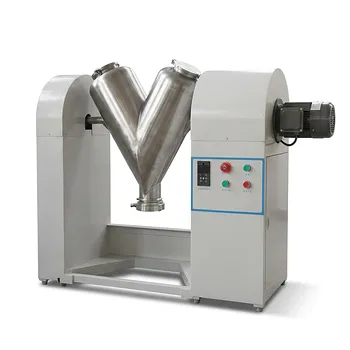
V-Type Powder Mixer for Uniform Blending of Dry Powders and Granules
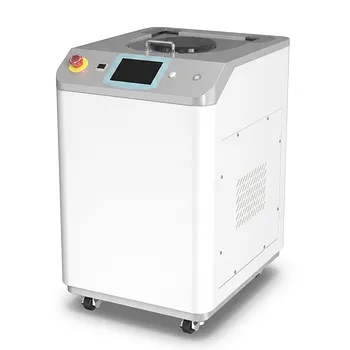
High Viscosity Planetary Centrifugal Mixing and Vacuum Defoaming Machine for Laboratory Material Preparation
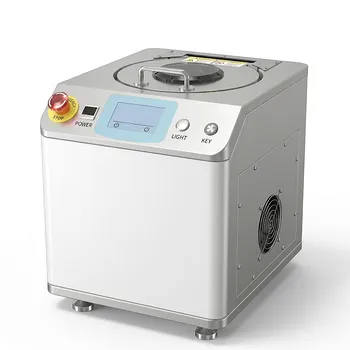
High Efficiency Vacuum Planetary Centrifugal Mixer and Defoaming Machine for Industrial Material Research and Precise Laboratory Powder Dispersion
Multi Dimensional Universal Mixer for High Uniformity Powder Blending
High Viscosity Planetary Centrifugal Vacuum Mixer for Material Defoaming and Uniform Mixing