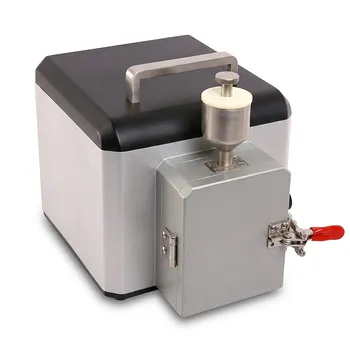
Why is a micronizing mill equipped with agate grinding jars necessary? Perfect XRD Analysis & Zero Impurities
Updated 4 months ago
Micronizing mills equipped with agate grinding jars are essential because they reduce sediment particles to a uniform, sub-10-micron size without introducing metallic contamination. This specific level of refinement is the only way to eliminate "preferred orientation" and "micro-absorption" effects, which are the primary causes of error in X-ray diffraction (XRD) data. By ensuring a completely random arrangement of crystals, this equipment allows for the high-fidelity diffraction patterns required for precise semi-quantitative mineralogical calculations.
To achieve accurate mineralogical evaluation, a sample must be both chemically pure and physically isotropic. Micronization with agate components provides the sub-micron particle size necessary to eliminate structural biases in XRD analysis while preserving the geochemical integrity of the sediment.
Overcoming Physical Barriers to Accuracy
Eliminating Preferred Orientation
Many minerals in sediment, such as clays or micas, have plate-like shapes that tend to align in a single direction during sample preparation.
A micronizing mill breaks these minerals into particles smaller than 5 to 10 microns, forcing a random arrangement of crystals.
This randomness is a prerequisite for semi-quantitative calculations, as it ensures that X-rays interact with all crystal planes equally rather than favoring specific orientations.
Reducing Micro-absorption and Increasing Precision
Coarse particles cause "micro-absorption," where X-rays are absorbed unevenly across the sample surface, leading to distorted peak intensities.
By refining the powder to a sub-micron level, the mill increases the number of crystallites participating in the diffraction process.
This homogenization significantly improves the measurement precision and reproducibility of results for major phases like calcite, quartz, and feldspar.
Maintaining Chemical Integrity with Agate
Preventing Metallic Contamination
Standard industrial grinding media, such as steel or tungsten carbide, can shed trace amounts of iron (Fe), chromium (Cr), or nickel (Ni) into the sample.
Agate is a high-hardness, chemically inert material that prevents the introduction of these impurities during high-energy impact.
Using agate ensures that the original elemental and mineralogical composition of the sediment remains unchanged, which is critical for subsequent geochemical or Rietveld refinement analysis.
Optimizing Surface Area for Analysis
Micronizing mills often utilize wet grinding with aids like ethanol to prevent the powder from clumping or overheating.
This process maximizes the specific surface area of the particles, which is vital for ensuring thorough contact between minerals and solvents in further chemical extractions.
The smooth surface of agate also reduces the adhesion of fine powders, ensuring high sample recovery and preventing cross-contamination between batches.
Understanding the Trade-offs
The Risk of Over-Grinding
While fine grinding is necessary, excessive milling can lead to amorphization, where the crystalline structure of the mineral is physically destroyed.
If the grinding time is not carefully controlled, the sample may lose its diffraction signal, leading to an overestimation of the "amorphous content" in the sediment.
Processing Time and Volume Constraints
Agate-equipped micronizing mills generally process smaller sample volumes and take longer than traditional planetary mills.
This trade-off is often necessary for high-precision analytical work, but it may limit throughput in high-volume commercial testing environments.
Making the Right Choice for Your Goal
When deciding on your sample preparation workflow, consider the specific requirements of your downstream analysis.
- If your primary focus is high-precision Rietveld refinement: Use a micronizing mill with agate beads to ensure sub-5-micron particles and zero metallic interference.
- If your primary focus is general mineral identification: Standard agate mortar and pestle grinding may suffice, though it will lack the uniformity of mechanical micronization.
- If your primary focus is chemical sequential extraction: Micronize the sample to maximize surface area, ensuring complete and consistent release of heavy metals from the mineral matrix.
By utilizing a micronizing mill with agate components, you ensure that your analytical data reflects the true mineralogical nature of the sediment rather than artifacts of the preparation process.
Summary Table:
| Feature | Technical Benefit | Impact on Analysis |
|---|---|---|
| Sub-10μm Grinding | Eliminates preferred orientation & micro-absorption | High-fidelity, reproducible XRD patterns |
| Agate Grinding Media | Chemically inert, high-hardness material | Zero metallic contamination (Fe, Cr, Ni) |
| Wet Grinding Capability | Prevents clumping and sample amorphization | Maximized surface area and sample recovery |
| Isotropic Refinement | Forces random crystal arrangement | Accurate semi-quantitative mineral calculations |
Elevate Your Analytical Precision with Professional Sample Prep
At [Company Name], we provide complete laboratory sample preparation solutions for material science, specializing in high-performance powder processing and compaction equipment. Whether you are performing high-precision Rietveld refinement or complex geochemical extractions, our equipment ensures your data reflects the true nature of your materials.
Our extensive product lines include:
- Advanced Milling: Micronizing mills, planetary ball mills, jet mills, and disc mills with premium agate, zirconia, and tungsten carbide options.
- Crushing & Sieving: Jaw/roll crushers and vibratory/air-jet sieve shakers for precise size distribution.
- Material Compaction: A full spectrum of hydraulic presses, including Cold/Warm Isostatic Presses (CIP/WIP), standard lab presses, and vacuum hot presses.
- Mixing Solutions: High-efficiency powder mixers and vacuum defoaming mixers.
Don't let sample preparation artifacts compromise your research results. Contact our technical experts today to find the ideal configuration for your sediment analysis or material development needs!
References
- Bruno Molino, Raffaele Cioffi. Recycling of Clay Sediments for Geopolymer Binder Production. A New Perspective for Reservoir Management in the Framework of Italian Legislation: The Occhito Reservoir Case Study. DOI: 10.3390/ma7085603
Mentioned Products
- Laboratory Desktop Ultra Fine Powder Grinder High Speed Micronizing Pulverizer
- Water Cooled Pulse Jet Ultrafine Grinder
- High Throughput Micro Ball Mill for Cryogenic Grinding and Laboratory Cell Disruption
- Nano Laboratory Bead Mill Desktop Sub Micron Sand Mill Screenless Seal Less Powder Grinder
- Laboratory Micro Vibration Grinding Mill for Trace Sample Preparation
People Also Ask
- What role does a laboratory grinder play in the pretreatment of sunflower seed shell-based adsorbents? Boost Efficiency.
- How does a laboratory grinder or mill enhance the adsorption performance of agricultural waste materials? Boost Surface Area
- What is the function of a laboratory high-speed pulverizer in the preparation of eggshell powder? Essential Pretreatment
- Why is high-efficiency ultra-fine grinding required for Portland cement before XRD? Get Accurate Rietveld Results
- What is the function of a laboratory pulverizer in Boerhavia diffusa-based adsorbent prep? Maximize Surface Area

Tech Team · PowderPreparation
Last updated on Jun 03, 2026
Related Products
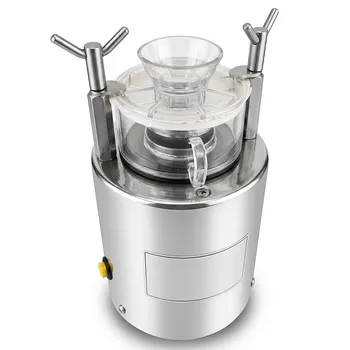
Laboratory Desktop Ultra Fine Powder Grinder High Speed Micronizing Pulverizer
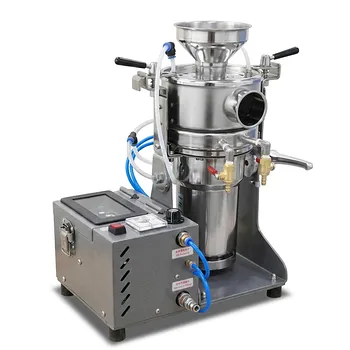
Water Cooled Pulse Jet Ultrafine Grinder
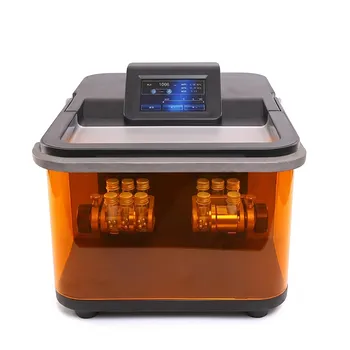
High Throughput Micro Ball Mill for Cryogenic Grinding and Laboratory Cell Disruption
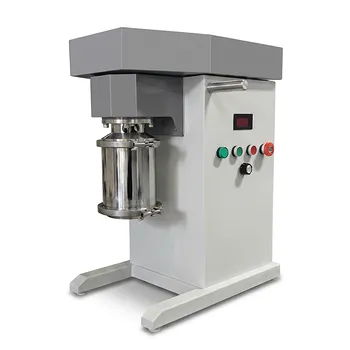
Nano Laboratory Bead Mill Desktop Sub Micron Sand Mill Screenless Seal Less Powder Grinder
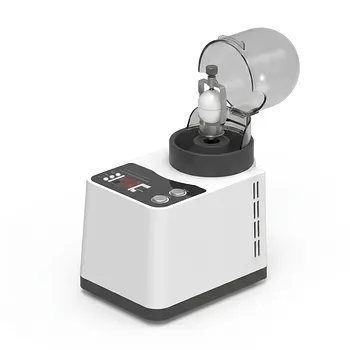
Laboratory Micro Vibration Grinding Mill for Trace Sample Preparation
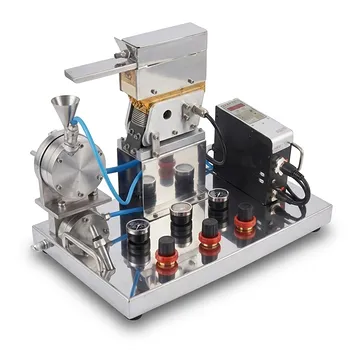
Benchtop Micro Air Jet Mill for Ultrafine Grinding of High Value Powders
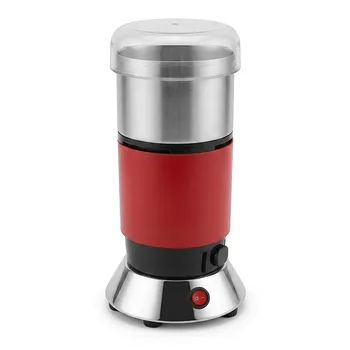
Micro Solid Sample Grinder High Speed Pulverizer for Laboratory Small Batch Grinding
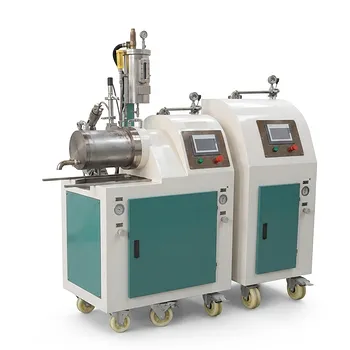
Mass Production Nano Sand Mill for Industrial Nanomaterial Grinding and Dispersion
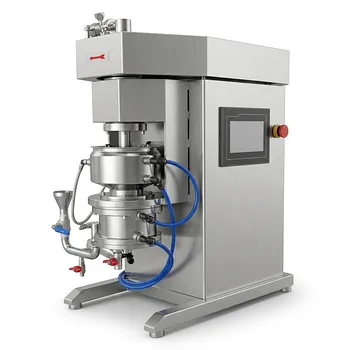
Small Ceramic Structure Laboratory Sand Mill Nanoscale Grinding Dispersion Equipment Seal-less Screen-less Design
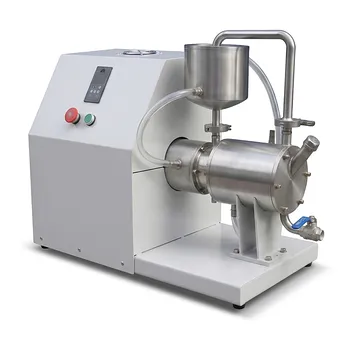
Laboratory Small Horizontal Sand Mill for Nano Materials Wet Grinding
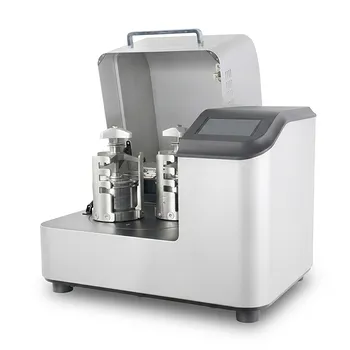
High Energy Planetary Ball Mill for Nano Scale Grinding and Mechanical Alloying
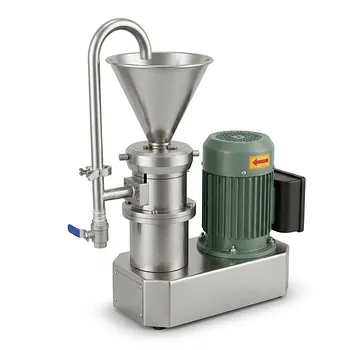
Small Laboratory Colloid Mill for Ultra-Fine Wet Grinding and Emulsification
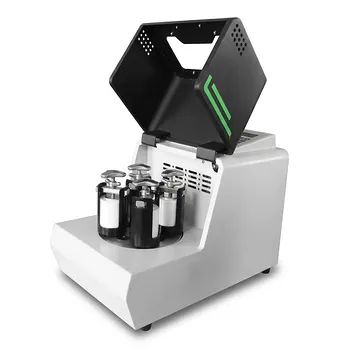
Miniature Planetary Ball Mill with Vacuum Grinding and High Efficiency for Laboratory Sample Preparation
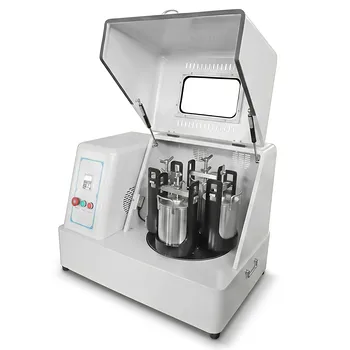
Vertical Square Planetary Ball Mill for Laboratory Sample Preparation and Nanoscale Grinding
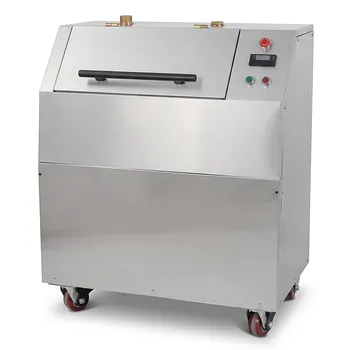
Vibratory Disc Mill for Rapid Fine Grinding and High Throughput Sample Preparation of Hard and Brittle Materials
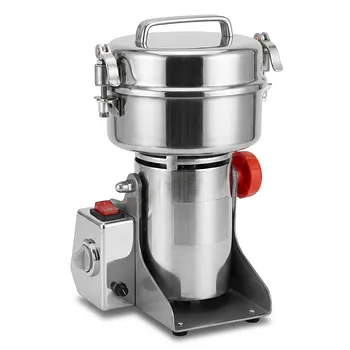
High Speed Laboratory Powder Grinder Small Batch Sample Preparation Mill
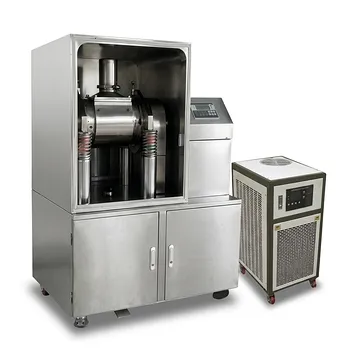
Small Vibrating Ultrafine Grinder for Traditional Chinese Medicine
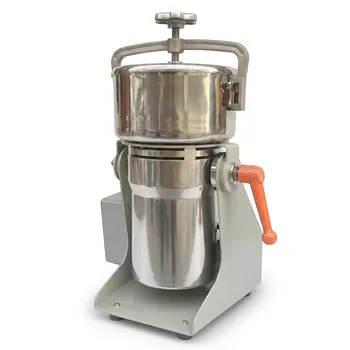
High Speed Laboratory Grinder Efficient Stainless Steel Powder Pulverizer Universal Material Science Mill for Sample Preparation
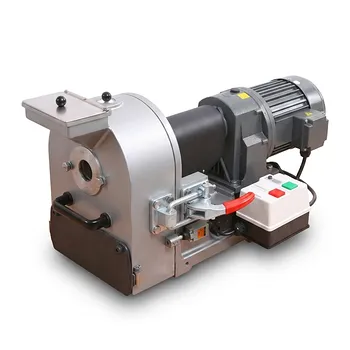
Laboratory Disc Mill for Fine Sample Preparation of Hard and Brittle Materials