Why is a manual hydraulic press necessary before performing FTIR on zinc fluoride solids? Achieve Precise Results
Updated 5 months ago
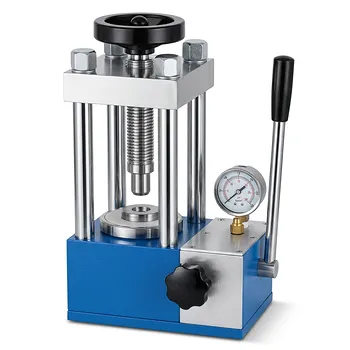
A manual hydraulic press is essential for FTIR analysis of zinc fluoride because it transforms opaque solid powders into transparent pellets. By applying several tons of pressure to a mixture of the sample and potassium bromide (KBr), the press eliminates air gaps and ensures the infrared beam can penetrate the material to detect specific chemical bonds.
Core Takeaway: The hydraulic press is the bridge between a raw solid sample and a readable spectrum; without it, infrared light would scatter off the powder particles, resulting in "noise" rather than a clear identification of molecular structures like Zn-F or Zn-O.
Overcoming Optical Obstacles in Solid-State Analysis
Eliminating Infrared Scattering
In their natural state, zinc fluoride solids are crystalline powders that reflect and scatter infrared light in every direction.
A manual hydraulic press applies axial pressure to compress these particles, removing internal voids and air pockets that cause light to bounce.
This process results in a semi-transparent or transparent disc, which allows the spectrometer's light beam to pass through the sample uniformly.
Creating the KBr Matrix
Zinc fluoride is typically mixed with potassium bromide (KBr), a salt that is entirely transparent to infrared radiation.
The hydraulic press forces the zinc fluoride particles to become highly dispersed within this KBr matrix, creating a homogeneous medium.
This dispersion is critical for ensuring that the infrared light interacts with individual molecules rather than large, opaque clumps of material.
Ensuring Signal Precision
High-quality FTIR spectra require a high signal-to-noise ratio to distinguish subtle vibrational bands.
The stable, high pressure provided by the press ensures the pellet has a uniform thickness, which is a prerequisite for accurate quantitative analysis.
This precision allows researchers to clearly identify functional groups such as Zn-F, Zn-O, and -OH, even when they exist in trace amounts or as surface dopants.
Understanding the Trade-offs and Pitfalls
The Risk of Atmospheric Moisture
Potassium bromide is hygroscopic, meaning it rapidly absorbs moisture from the air during the pressing process.
If the pelletizing takes too long or is done in a humid environment, water interference bands may appear in the spectrum, potentially masking the -OH or Zn-O signals.
To mitigate this, many technicians use a vacuum-equipped die during the pressing process to exclude ambient air and moisture.
Calibrating Pressure Levels
Applying too little pressure results in an opaque pellet that blocks the infrared beam entirely, leading to a flat-line spectrum.
Conversely, excessive pressure can cause the KBr to "flow" or even crack the pellet, making it impossible to handle or insert into the spectrometer.
Finding the "sweet spot"—typically between 150 kg/cm² and 8 tons of gauge pressure—is vital for maintaining structural integrity and optical clarity.
How to Apply This to Your Analysis
Making the Right Choice for Your Goal
- If your primary focus is high-resolution structural identification: Use a manual hydraulic press to create a 13mm KBr pellet with a sample concentration of approximately 1%, ensuring maximum light penetration.
- If your primary focus is detecting surface oxidation (Zn-O): Ensure the pressing environment is dry and the pressure is held for at least 60 seconds to eliminate all air scattering that could mimic surface defects.
- If your primary focus is rapid screening of multiple samples: Pre-grind your zinc fluoride to a fineness of less than 75 micrometers to speed up the homogenization process within the press.
Proper sample preparation through hydraulic compression remains the gold standard for achieving the clarity and detail necessary for definitive zinc fluoride characterization.
Summary Table:
| Feature | Purpose in FTIR Analysis | Key Benefit |
|---|---|---|
| High Axial Pressure | Eliminates internal voids and air pockets | Minimizes light scattering for clear beams |
| KBr Matrix Formation | Disperses sample molecules uniformly | Creates a transparent path for IR radiation |
| Controlled Compression | Ensures consistent pellet thickness | Improves signal-to-noise ratio and precision |
| Vacuum Integration | Excludes ambient moisture/humidity | Prevents interference from water/oxidation bands |
Optimize Your FTIR Sample Preparation with Precision Equipment
Achieving high-resolution spectral data starts with flawless sample preparation. At [Brand Name], we provide complete laboratory sample preparation solutions for material science, specializing in high-performance powder processing and compaction equipment.
Whether you are analyzing zinc fluoride or advanced ceramics, our extensive range ensures your samples meet the highest optical standards:
- Hydraulic Presses: A full spectrum including standard lab presses, XRF pellet presses, Hot Presses, and Cold/Warm Isostatic Presses (CIP/WIP).
- Size Reduction: High-efficiency mills (planetary ball, jet, sand/bead, disc, rotor) and crushers (jaw/roll) for ultra-fine grinding.
- Sieve & Mixers: Sieve shakers, powder mixers, and defoaming mixers for perfect homogeneity.
Ready to enhance your lab's efficiency and accuracy? Contact our experts today to find the perfect pressing solution for your research and production needs!
References
- Ummi Nazhiroh, Irmina Kris Murwani. The Correlation Between Crystal Phase and Acidity in Nickel Doped Zinc Fluoride Solid. DOI: 10.12962/j25493736.v7i1.12491
Mentioned Products
- Manual Tablet Press with Dual Scale Pressure Gauge for Pharmaceutical Food Chemical Laboratory Sample Preparation
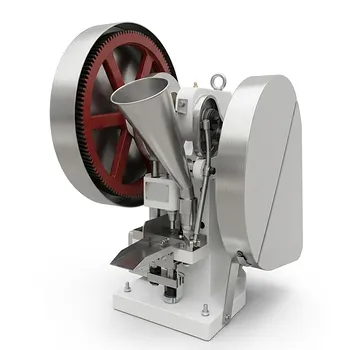
- 6-Ton Small Single-Punch Tablet Press — Laboratory Powder & Granule Tableting Equipment / Tablet Forming Machine
People Also Ask
- What is the function of a laboratory press in Cr-Ti alloy evaluation? Quantify Fracture Stress & Strength
- What is the function of a laboratory press in assessing the hydrophobic performance of modified vermiculite fillers?
- What is the core function of a laboratory press in the forming of ceramic filter element green bodies? Maximize Density.
- What is the function of a laboratory press in the preparation of ceramic feed rods? Master Density and Precision
- Why is vacuum sealing and flexible packaging necessary for Aluminum Titanate powders during CIP? Ensure Peak Density

Tech Team · PowderPreparation
Last updated on May 14, 2026