Why is a laboratory plate hot press essential for the molding of composite material specimens? Ensure Precise Results.
Updated 5 months ago
The laboratory plate hot press is the definitive tool for composite specimen preparation because it provides the precise, simultaneous control of high temperature and high pressure required to achieve material densification. This equipment ensures that the polymer matrix reaches a consistent melt state to flow fully within a mold, eliminating internal air pockets and producing standardized specimens with the uniform thickness and dense internal structures necessary for valid analytical testing.
The laboratory hot press transforms raw composite mixtures into high-quality test specimens by combining thermal melting with mechanical compaction. This synergy is essential for eliminating structural defects and ensuring that the material’s physical properties are a result of its composition rather than inconsistencies in the molding process.
Achieving Optimal Material Flow and Densification
The Role of Controlled Thermal Environments
A hot press creates a stable thermal environment, often ranging from 150°C to 185°C, which is critical for reducing the viscosity of the polymer matrix. This heat allows the matrix—such as Polyamide 6 or TPU—to transition into a molten state, ensuring it can effectively wet reinforcements and fill every corner of the mold cavity.
Mechanical Compaction and Air Elimination
Applying high pressures, typically between 20 MPa and 45 MPa, is necessary to force out residual air and minimize micro-bubble defects. This high-pressure environment densifies the material, ensuring the tight arrangement of fibers and a dense microstructure that is free from internal voids which would otherwise compromise mechanical strength.
Synergistic Molding Phases
The process involves distinct stages: preheating to soften the material, pressure-holding to compact the melt, and controlled cooling to solidify the structure. This sequence ensures the material flows adequately before it begins to set, preventing premature solidification and "short shots" within the mold.
Engineering the Microstructure and Properties
Influence on Crystallization and Cross-Linking
The hot press allows for the adjustment of the matrix's crystallization behavior through precisely controlled cooling rates, which directly impacts the specimen's final stiffness. In specialized applications like rubber-slag mixtures, the press provides the thermal energy required for vulcanization, determining the final cross-link density and elastic modulus.
Alignment and Directional Properties
Precision pressing can guide functional fillers, such as boron nitride nanosheets, into specific directional alignments along the planar direction. This controlled densification reduces thermal resistance and maximizes the mechanical or thermal improvements provided by advanced functionalized materials.
Structural Integrity for Specialized Testing
For advanced evaluations like microwave absorption performance, the elimination of internal micropores and air gaps is vital. By ensuring a uniform density and high structural integrity, the hot press ensures that test results accurately reflect the material's interaction with electromagnetic waves rather than structural flaws.
Ensuring Standardization and Repeatability
Dimensional Precision
Laboratory hot presses are designed to produce sheets of uniform thickness, typically between 1 mm and 2 mm. Maintaining precise dimensional stability across multiple specimens is mandatory for meeting the standardized requirements of tensile, impact, and deformation testing.
Surface Flatness and Quality
The polished plates of a hot press ensure that specimens have high surface flatness, which is critical for the interface between the specimen and testing grips or sensors. Consistent surface quality reduces stress concentrations during mechanical tests, leading to more reliable data.
Understanding the Trade-offs and Limitations
Thermal Degradation Risks
Maintaining a material at high temperatures for too long during the preheating or pressure-holding phases can lead to thermal degradation of the polymer matrix. This can weaken the specimen and lead to misleading results that do not reflect the material's true potential.
Pressure-Induced Fiber Damage
While high pressure is necessary for densification, excessive force can cause fiber crushing or unintended migration of reinforcements within the mold. Finding the specific "sweet spot" for pressure is required to ensure a dense structure without damaging the composite's internal architecture.
Cooling Rate Variability
If the cooling phase is not uniform across the plate, it can introduce internal residual stresses or warping in the specimen. Inconsistent cooling rates can also lead to variations in crystallinity across a single batch, undermining the repeatability of experimental results.
How to Optimize Your Molding Process
To achieve the best results with a laboratory plate hot press, your approach should vary based on your specific research or production goals.
- If your primary focus is mechanical strength: Prioritize the pressure-holding phase and high compaction (up to 45 MPa) to ensure a void-free, dense internal structure with maximum fiber-matrix adhesion.
- If your primary focus is thermal or electrical conductivity: Focus on the precise alignment of fillers by controlling the flow velocity of the melt through specific temperature-pressure ramps.
- If your primary focus is material standardization for ASTM/ISO: Utilize a press with high-precision thickness spacers and circulating water cooling to ensure uniform dimensions and consistent crystallinity across all samples.
By mastering the balance of heat, pressure, and time, you ensure that every specimen produced is a true representation of your material’s engineered capabilities.
Summary Table:
| Feature | Function in Molding | Impact on Specimen Quality |
|---|---|---|
| Thermal Control | Reduces polymer viscosity (150°C-185°C) | Ensures full mold wetting and matrix flow |
| High Pressure | Mechanical compaction (20-45 MPa) | Eliminates voids, micro-bubbles, and air pockets |
| Controlled Cooling | Manages crystallization rates | Ensures dimensional stability and uniform stiffness |
| Precision Plates | Uniform heat/pressure distribution | Produces consistent thickness (1-2mm) for ISO/ASTM |
| Phase Sequencing | Preheating, holding, and cooling | Prevents internal stress and structural defects |
Elevate Your Material Research with Precision Molding Solutions
Achieving reliable analytical results starts with perfect specimen preparation. At our expert laboratory division, we provide complete sample preparation solutions tailored for material science. We specialize in high-performance powder processing and compaction equipment designed to meet the rigorous demands of modern R&D.
Our extensive product lines include:
- Hydraulic Presses: A full spectrum featuring Cold/Warm Isostatic Presses (CIP/WIP), standard lab presses, XRF pellet presses, and advanced vacuum hot presses for void-free molding.
- Milling & Grinding: Planetary ball mills, jet mills, disc mills, and liquid nitrogen cryogenic grinders for superior particle size control.
- Processing Equipment: Crushers (jaw/roll), sieve shakers (vibratory/air-jet), and high-efficiency powder or defoaming mixers.
Whether you are engineering advanced composites or optimizing powder metallurgy, our equipment ensures the structural integrity and repeatability your work deserves. Contact us today to find the perfect solution for your lab!
References
- Sharmeeni Murugan, Yamuna Munusamy. Impact of Weathering on the Mechanical and Weight Reduction Properties of High-density Polyethylene (HDPE) Composites Filled with Treated and Untreated Eggshell Powder (ESP) Fillers. DOI: 10.21315/jes2019.15.2.8
Mentioned Products
- 6-Ton Small Single-Punch Tablet Press — Laboratory Powder & Granule Tableting Equipment / Tablet Forming Machine
- Manual Tablet Press with Dual Scale Pressure Gauge for Pharmaceutical Food Chemical Laboratory Sample Preparation
- 5 Ton Single Punch Tablet Press Laboratory Small Batch Production
- 6 Ton Variable Frequency Single Punch Tablet Press
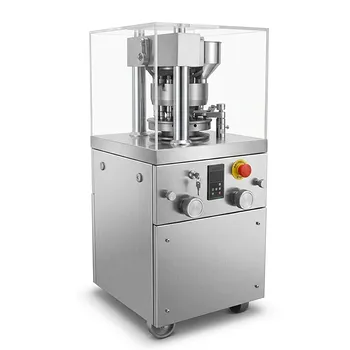
- Ordinary Type Rotary Tablet Press for Pharmaceutical Chemical Food Electronic Industries
People Also Ask
- What is the function of a laboratory press in Cr-Ti alloy evaluation? Quantify Fracture Stress & Strength
- What is the function of a laboratory press in assessing the hydrophobic performance of modified vermiculite fillers?
- What is the core function of a laboratory press in the forming of ceramic filter element green bodies? Maximize Density.
- What is the function of a laboratory press in the preparation of ceramic feed rods? Master Density and Precision
- Why is vacuum sealing and flexible packaging necessary for Aluminum Titanate powders during CIP? Ensure Peak Density

Tech Team · PowderPreparation
Last updated on May 14, 2026
Related Products
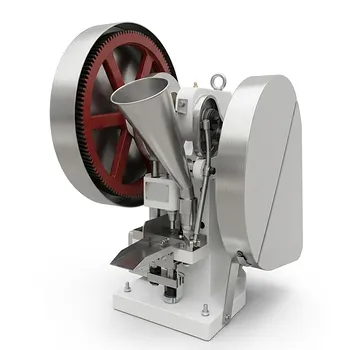
6-Ton Small Single-Punch Tablet Press — Laboratory Powder & Granule Tableting Equipment / Tablet Forming Machine
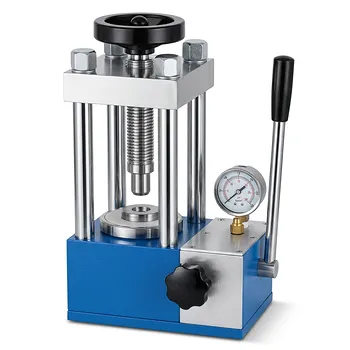
Manual Tablet Press with Dual Scale Pressure Gauge for Pharmaceutical Food Chemical Laboratory Sample Preparation
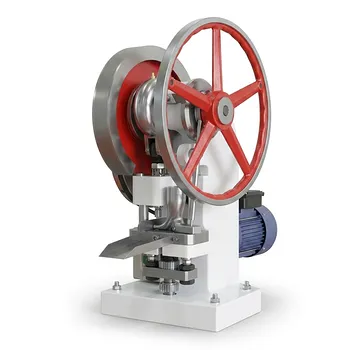
5 Ton Single Punch Tablet Press Laboratory Small Batch Production
6 Ton Variable Frequency Single Punch Tablet Press