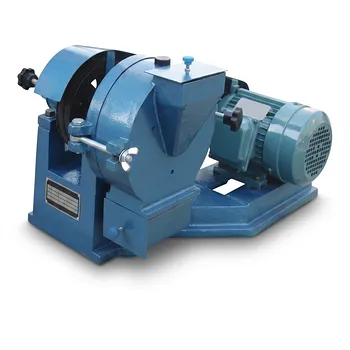
Why is a laboratory micronizing mill necessary for the fine-scale pretreatment of plant samples? Ensure XRF/XRD Accuracy
Updated 4 months ago
Precision analysis begins with particle uniformity. A laboratory micronizing mill is essential for plant sample pretreatment because it reduces pre-ground particles into micron-level powders, typically smaller than 53 μm. This high degree of fineness ensures extreme chemical homogeneity, which is vital for eliminating particle size effects and ensuring that analytical results are representative of the entire sample.
A micronizing mill transforms plant material from coarse fragments into a homogenous micron-scale powder to ensure that high-sensitivity analytical measurements—such as XRF and XRD—reflect the true chemical composition rather than physical artifacts or structural inconsistencies of the sample.
Achieving Chemical and Physical Homogeneity
Eliminating Particle Size Effects
In techniques like X-ray fluorescence (XRF), larger particles can cause shading or uneven absorption of X-rays. By refining plant particles to the micron level, the mill creates a uniform surface that allows for the precise detection of light elements.
Ensuring Representative Sampling
Plants are inherently heterogeneous, containing varying concentrations of nutrients or contaminants in different tissues. Micronization blends these components at a molecular scale, ensuring that even a tiny sub-sample used for testing is statistically representative of the bulk material.
Increasing Specific Surface Area
Reducing particle size exponentially increases the specific surface area of the plant matter. This allows chemical reagents to react more fully and rapidly with the sample, which is critical for processes like Kjeldahl nitrogen analysis.
Enhancing Structural and Thermal Analysis
Improving Diffraction Statistics
For X-ray diffraction (XRD), a micron-level powder increases the number of crystallites that participate in diffraction. This significantly improves measurement precision and the reproducibility of diffraction peak intensities, which are often muddied in coarser samples.
Reducing Preferred Orientation
Coarse plant fibers often align in specific directions, leading to "preferred orientation" errors in structural analysis. Micronizing the sample into ultra-fine, random shapes eliminates these effects, allowing for more accurate phase composition quantification through methods like Rietveld refinement.
Optimizing Heat Transfer
In differential thermal analysis (DTA), uniform particle size is necessary for consistent heat transfer throughout the sample. This ensures that phase transitions or chemical reactions (like the decomposition of calcium compounds) are recorded with high resolution and accuracy.
Understanding the Trade-offs
Risk of Cross-Contamination
The high-energy collision of grinding media can introduce impurities from the mill components themselves. To mitigate this, advisors recommend using agate linings or specific ceramic media when the detection of trace metals is the primary objective.
Thermal Degradation of Samples
The high-frequency vibration used in micronizing can generate significant heat, which may degrade sensitive biological compounds or volatile organic matter. In these cases, wet grinding with aids like ethanol is often employed to dissipate heat and prevent the "caking" of oily plant residues.
Yield Loss and Recovery
Processing very small quantities of plant material in a large micronizing mill can lead to significant sample loss as powder adheres to the vessel walls. Users must balance the need for extreme fineness with the practical requirements of their total sample volume.
Making the Right Choice for Your Goal
How to Apply This to Your Project
- If your primary focus is elemental quantification (XRF): Prioritize reaching a particle size below 53 μm to ensure the repeatability of light element detection.
- If your primary focus is structural mineralogy (XRD): Use wet-grinding with a micronizing mill to reach sub-10 μm sizes, which minimizes micro-absorption and enhances peak resolution.
- If your primary focus is chemical extraction (Kjeldahl): Focus on maximizing surface area through high-speed cutting and milling to ensure reagents can fully penetrate the cellulose matrix.
- If your primary focus is thermal stability (DTA): Ensure the mill is used to create a uniform micron-level slurry to maintain consistent heat transfer during temperature ramps.
By mastering the transition from coarse organic matter to stabilized micron-level powder, you provide the foundation for analytical data that is both defensible and precise.
Summary Table:
| Analytical Method | Requirement for Micronization | Key Benefit |
|---|---|---|
| XRF Analysis | Particle size < 53 μm | Eliminates shading; improves light element detection |
| XRD Analysis | Sub-10 μm particles | Improves diffraction statistics; reduces preferred orientation |
| Chemical Extraction | High specific surface area | Faster reagent reaction; statistically representative sampling |
| Thermal (DTA) | Uniform particle distribution | Ensures consistent heat transfer and high-resolution data |
Elevate Your Analytical Precision with Professional Sample Prep
Achieving defensible and reproducible results starts with superior sample homogeneity. At [Brand Name], we provide complete laboratory sample preparation solutions tailored for material science and biological research.
Our specialized equipment range includes:
- Advanced Milling: Micronizing mills, planetary ball mills, jet mills, and liquid nitrogen cryogenic grinders for heat-sensitive plant matter.
- Sizing & Mixing: Vibratory/air-jet sieve shakers and high-efficiency powder/defoaming mixers.
- Compaction & Pressing: A full spectrum of hydraulic presses, including XRF pellet presses, Hot Presses, and Cold/Warm Isostatic Presses (CIP/WIP).
Whether you are refining plant fibers for XRF or preparing powders for XRD, our experts can help you select the right tools to minimize cross-contamination and thermal degradation.
Ready to optimize your lab workflow? Contact us today to find the perfect solution!
References
- Erick K. Towett, B Lee Drake. Plant elemental composition and portable X‐ray fluorescence (pXRF) spectroscopy: quantification under different analytical parameters. DOI: 10.1002/xrs.2678
Mentioned Products
- Laboratory Desktop Ultra Fine Powder Grinder High Speed Micronizing Pulverizer
- Laboratory Micro Vibration Grinding Mill for Trace Sample Preparation
- Micro Solid Sample Grinder High Speed Pulverizer for Laboratory Small Batch Grinding
- Small High Speed Grinder for Laboratory Sample Preparation
- High Speed Laboratory Grinder Efficient Stainless Steel Powder Pulverizer Universal Material Science Mill for Sample Preparation
People Also Ask
- What role does a laboratory grinder play in the pretreatment of sunflower seed shell-based adsorbents? Boost Efficiency.
- How does a laboratory grinder or mill enhance the adsorption performance of agricultural waste materials? Boost Surface Area
- What is the function of a laboratory high-speed pulverizer in the preparation of eggshell powder? Essential Pretreatment
- Why is high-efficiency ultra-fine grinding required for Portland cement before XRD? Get Accurate Rietveld Results
- What is the function of a laboratory pulverizer in Boerhavia diffusa-based adsorbent prep? Maximize Surface Area

Tech Team · PowderPreparation
Last updated on Jun 03, 2026
Related Products
Laboratory Desktop Ultra Fine Powder Grinder High Speed Micronizing Pulverizer
Laboratory Micro Vibration Grinding Mill for Trace Sample Preparation
Micro Solid Sample Grinder High Speed Pulverizer for Laboratory Small Batch Grinding

Small High Speed Grinder for Laboratory Sample Preparation
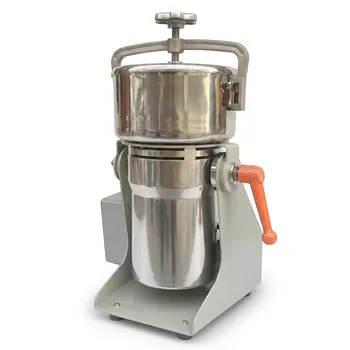
High Speed Laboratory Grinder Efficient Stainless Steel Powder Pulverizer Universal Material Science Mill for Sample Preparation
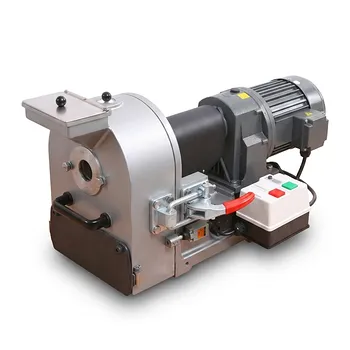
Laboratory Disc Mill for Fine Sample Preparation of Hard and Brittle Materials
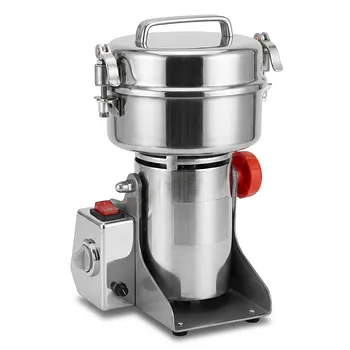
High Speed Laboratory Powder Grinder Small Batch Sample Preparation Mill
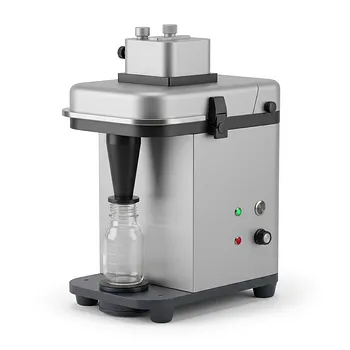
Cyclonic Laboratory Mill for NIR Spectroscopy Sample Preparation Food and Feed Grinding

Miniature Planetary Ball Mill with Vacuum Grinding and High Efficiency for Laboratory Sample Preparation
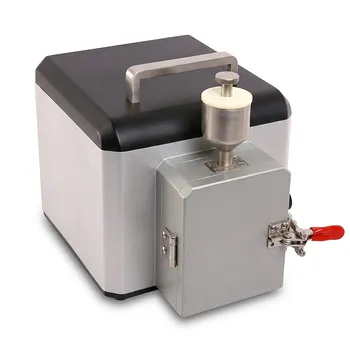
Portable Cutting Mill for Laboratory Sample Preparation and RoHS WEEE Compliance Testing
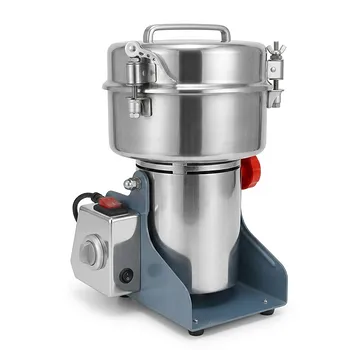
Small High-Speed Grinder for Efficient Laboratory Sample Preparation
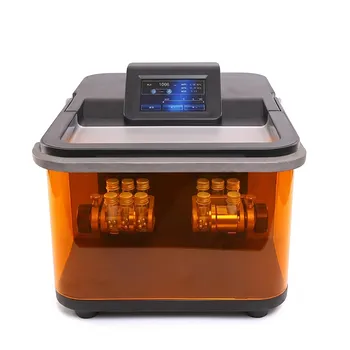
High Throughput Micro Ball Mill for Cryogenic Grinding and Laboratory Cell Disruption
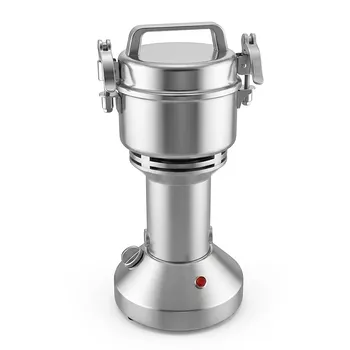
Small High Speed Upright Grinder for Laboratory Sample Preparation
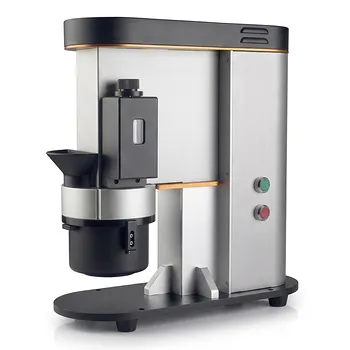
Precision Soil Disc Mill for Laboratory Fine Grinding and Environmental Sample Preparation
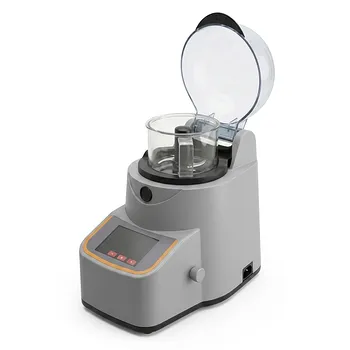
Industrial Knife Mill for Food and Biological Sample Preparation High Speed Laboratory Homogenizer
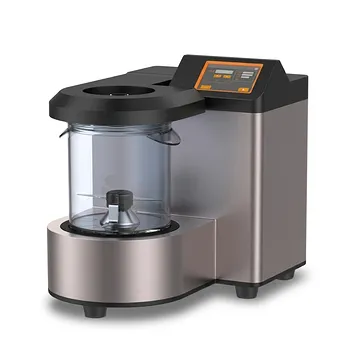
Laboratory Knife Mill for Large Volume Sample Homogenization and Food Preparation
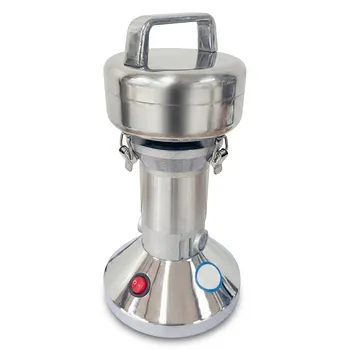
Small Trace Sample High Speed Pulverizer Grinder Laboratory Powder Mill

8L Planetary Ball Mill for Laboratory Grinding and Sample Preparation
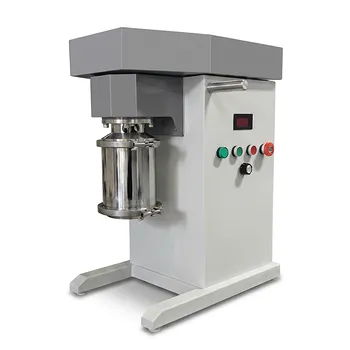
Nano Laboratory Bead Mill Desktop Sub Micron Sand Mill Screenless Seal Less Powder Grinder