Why is a laboratory hydraulic press essential for XRF oxide analysis? Ensure High-Precision Sample Preparation
Updated 4 months ago
The laboratory hydraulic press is the fundamental tool for transforming loose powders into stable, standardized specimens. By applying significant axial pressure—typically ranging from 200 kN to 25 tons—the press compresses oxide powders and binders into dense, flat-surfaced pellets. This process eliminates internal voids and surface irregularities that would otherwise cause X-ray scattering, ensuring the fluorescence intensity accurately reflects the sample's chemical composition.
Core Takeaway: A laboratory hydraulic press is essential because it standardizes sample density and geometry, eliminating the physical "matrix effects" and voids that compromise the accuracy and repeatability of quantitative XRF analysis.
Eliminating Physical Interference in Powder Samples
The Removal of Inter-Particle Voids
In their loose state, oxide powders contain significant air gaps and pores that interfere with X-ray penetration. High-pressure compaction forces these particles together, creating a structurally dense pellet with uniform internal density. This uniformity is a critical step for the quantitative analysis of components like metakaolin or mineral ores.
Achieving Surface Planarity and Smoothness
XRF instruments require a perfectly flat surface to maintain a consistent distance between the sample and the X-ray source. The hydraulic press, used in conjunction with polished specialized pellet dies, produces a mirror-like finish on the sample disc. This smoothness reduces scattering interference, which is vital for obtaining high-precision elemental data.
Enhancing Mechanical Stability
Many oxide samples are fragile and cannot be analyzed without a structural substrate. The press molds the powder—often mixed with a binder like wax or cellulose—into a durable circular disc. This prevents the sample from cracking or shedding dust inside the sensitive XRF vacuum chamber.
Optimizing the X-ray Interaction Path
Minimizing Matrix Effects
"Matrix effects" occur when the physical structure of a sample influences the X-ray signal independently of its chemistry. By ensuring a consistent packing fraction, the hydraulic press minimizes these effects, allowing the detector to receive a clear signal from the target elements. This is particularly important for detecting major and minor elements in complex mineral matrices.
Geometric Consistency with the Excitation Source
For XRF to be repeatable, every sample must be presented to the X-ray beam at the exact same angle and distance. The standardized dimensions of a pressed pellet ensure perfect geometric alignment with the excitation source. This consistency serves as a technical prerequisite for comparing different samples against a calibration curve.
Improving Trace Element Detection
When analyzing trace elements like Cr or Pb, even minor surface roughness can mask the weak signals of these heavy metals. The high-precision molding process provides a compact surface that enhances the signal-to-noise ratio. This allows for the accurate detection of low-concentration elements within filling materials or lead-zinc ores.
Understanding the Trade-offs
Sample Dilution vs. Stability
While binders are necessary to hold a pellet together, they act as a diluent that can slightly lower the overall signal intensity. Choosing the correct binder-to-sample ratio is a balancing act between mechanical strength and the need for a strong fluorescent signal.
The Risk of Cross-Contamination
The steel dies used in hydraulic presses are subject to wear and can potentially introduce trace contaminants to the sample. Rigorous cleaning protocols and the use of tungsten carbide or hardened steel liners are required to maintain the integrity of oxide component analysis.
Mineralogical Effects and Particle Size
A hydraulic press cannot entirely correct for "particle size effects" if the sample is not finely ground before pressing. To achieve the highest accuracy, the powder must be milled to a uniform fineness (typically <75 microns) before the compaction process begins.
How to Apply This to Your Laboratory Workflow
Recommendations for Sample Preparation
- If your primary focus is routine oxide analysis (e.g., Cement or Slag): Use a standard axial pressure of 200 kN with a cellulose binder to ensure rapid, repeatable pellet formation.
- If your primary focus is trace element detection in minerals: Opt for higher pressures (up to 25 tons) and longer dwell times to maximize density and minimize scattering from voids.
- If your primary focus is analyzing rare-earth dopants or synthesized crystals: Ensure the use of high-polish dies and specialized binders to achieve the geometric consistency required for high-precision spectral analysis.
Standardizing your pellet-pressing procedure is the single most effective way to guarantee the reliability of your XRF analytical data.
Summary Table:
| Feature | Impact on XRF Analysis | Key Benefit |
|---|---|---|
| Void Removal | Eliminates air gaps and pores | Ensures uniform internal density |
| Surface Planarity | Consistent X-ray source distance | Reduces scattering and interference |
| Mechanical Stability | Durable pellet formation | Prevents cracking in vacuum chambers |
| Geometric Consistency | Standardized sample alignment | Enables repeatable quantitative data |
| Matrix Effect Control | Consistent packing fraction | Enhances signal-to-noise ratio |
Elevate Your Material Analysis with Precision Sample Preparation
Achieving reliable XRF data starts with a perfect pellet. We provide complete laboratory sample preparation solutions tailored for material science, specializing in high-performance powder processing and compaction equipment.
Our extensive product lines are designed to meet the rigorous demands of modern laboratories:
- Advanced Hydraulic Presses: Specialized XRF pellet presses, standard lab presses, Cold/Warm Isostatic Presses (CIP/WIP), and vacuum hot presses for high-density compaction.
- Powder Processing & Milling: Jaw/roll crushers, liquid nitrogen cryogenic grinders, and high-energy mills (planetary ball, jet, and disc mills).
- Sizing & Mixing: Vibratory/air-jet sieve shakers, powder mixers, and defoaming mixers to ensure sample homogeneity.
Ready to eliminate matrix effects and optimize your laboratory workflow?
Contact Our Experts Today to find the ideal equipment solution for your specific oxide component analysis needs.
References
- Ezekiel A. Adetoro, Benjamin Ayowole Alo. Potential of Carica Papaya Stem Activated Carbon in Removal of Undesired Compounds from Metakaolin. DOI: 10.48048/tis.2024.7457
Mentioned Products
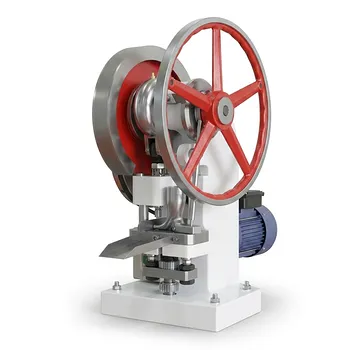
- 6 Ton Variable Frequency Single Punch Tablet Press
- Manual Tablet Press with Dual Scale Pressure Gauge for Pharmaceutical Food Chemical Laboratory Sample Preparation
- Laboratory Vibratory Test Sieve Shaker for Precision Particle Size Analysis and Powder Grading
- 6-Ton Small Single-Punch Tablet Press — Laboratory Powder & Granule Tableting Equipment / Tablet Forming Machine
- Automatic Vibrating Powder Feeder for Laboratory Material Processing Precision Vibratory Hopper Feeder for Granular and Powder Material Handling Industrial Grade Vibrating Tray Feeder for Consistent Material Sample Preparation
People Also Ask
- Why is a laboratory hydraulic press required for FT-IR KBr pellets? Achieve Precise Sample Clarity for ZrC–SiC Analysis
- Why is vacuum sealing and flexible packaging necessary for Aluminum Titanate powders during CIP? Ensure Peak Density
- What are the advantages of using hardened steel molds and graphite spray for titanium powder? Ensure structural integrity
- Why is a laboratory hydraulic press required to compress oyster shell powder before XRF analysis? Improve Data Accuracy.
- What role does a high-strength stainless steel mold kit play in the uniaxial die compaction process? Ensuring Precision

Tech Team · PowderPreparation
Last updated on May 14, 2026
Related Products
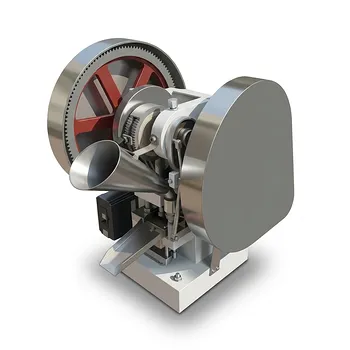
6 Ton Variable Frequency Single Punch Tablet Press
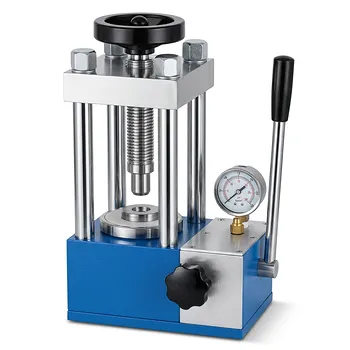
Manual Tablet Press with Dual Scale Pressure Gauge for Pharmaceutical Food Chemical Laboratory Sample Preparation
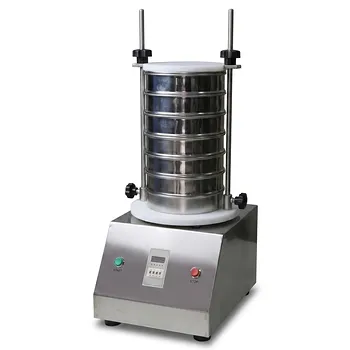
Laboratory Vibratory Test Sieve Shaker for Precision Particle Size Analysis and Powder Grading
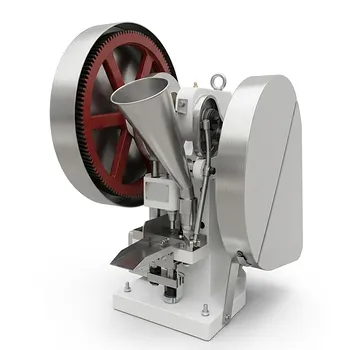
6-Ton Small Single-Punch Tablet Press — Laboratory Powder & Granule Tableting Equipment / Tablet Forming Machine
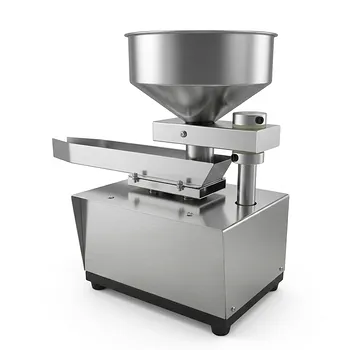
Automatic Vibrating Powder Feeder for Laboratory Material Processing Precision Vibratory Hopper Feeder for Granular and Powder Material Handling Industrial Grade Vibrating Tray Feeder for Consistent Material Sample Preparation