Why is a laboratory high-pressure hydraulic press required for molding sodium battery ceramic electrolyte pellets? Tips
Updated 5 months ago
A laboratory high-pressure hydraulic press is essential for achieving the high-density "green bodies" required for efficient sodium-ion transport. By applying uniform axial pressure, the press forces solid electrolyte powder particles to overcome internal friction and rearrange into a tightly packed structure. This process minimizes porosity and ensures the final sintered ceramic possesses the mechanical strength and electrochemical pathways necessary for accurate battery testing.
The primary role of a high-pressure hydraulic press is to eliminate internal voids and maximize particle contact area. This physical densification is the critical foundation for reducing electrochemical impedance and ensuring structural integrity during the high-temperature sintering process.
Achieving Critical Density and Particle Rearrangement
Overcoming Internal Friction
Solid electrolyte powders possess natural resistance to movement due to inter-particle friction. High axial pressure provides the mechanical energy necessary for these particles to slide past one another and fill empty spaces.
Eliminating Interstitial Voids
A hydraulic press effectively expels air trapped between powder particles, forcing them into a high-density green body. Without this pressure, the resulting "loose" pellet would contain excessive voids that inhibit efficient ion movement.
Facilitating Plastic Deformation
At higher pressure ranges, typically between 250 MPa and 500 MPa, powder particles may undergo plastic deformation. This deformation allows the material to fill internal microscopic gaps, replacing "point-contact" interfaces with continuous surface contacts.
The Impact on Sintering and Structural Integrity
Reducing Sintering Shrinkage
Ceramics naturally shrink during the high-temperature calcination process. Pre-compacting the powder with a hydraulic press significantly reduces the shrinkage rate, which helps maintain the intended dimensions of the electrolyte.
Preventing Structural Defects
High-pressure molding ensures that internal stress is distributed uniformly throughout the pellet. This uniformity is vital for preventing cracks and deformations that can occur during handling or the intense thermal stress of sintering.
Enhancing Reaction Kinetics
Dense packing increases the contact area between mixed powder particles, which accelerates solid-state diffusion. This leads to more efficient phase evolution and the formation of the desired crystalline structures in the sodium-based electrolyte.
Ensuring Electrochemical Accuracy
Establishing Transport Channels
For an all-solid-state battery to function, it requires continuous ion and electron transport channels. The high-pressure environment establishes these pathways by ensuring there are no physical gaps that would block the flow of sodium ions.
Minimizing Bulk Impedance
Low-density pellets often suffer from "stray impedance" during measurements. A hydraulic press ensures high bulk density, allowing researchers to obtain clear bulk charge transfer characteristics during electrochemical impedance spectroscopy (EIS).
Validating Ionic Conductivity
Without sufficient density, calculated ionic conductivity data will be artificially low due to poor physical contact. A hydraulic press provides the physical structural foundation required to measure the true steady-state ionic conductivity of the material.
Understanding the Trade-offs and Pitfalls
Pressure Limits and Over-Compaction
While high pressure is necessary, exceeding the material's structural limits can lead to "lamination" or internal shearing. If the pressure is too high for a specific mold or powder, the pellet may delaminate into thin layers upon release from the press.
Stress Non-Uniformity
If the pressure is not applied uniformly, the green body will have varying density levels. This leads to differential shrinkage during sintering, which is a primary cause of warping and structural failure in ceramic electrolytes.
Mold Contamination and Wear
Using extremely high pressures accelerates the wear on precision-machined molds. Researchers must balance the need for high MPa levels with the risk of metallic contamination from the mold walls, which can degrade the electrochemical purity of the sodium battery.
Applying Pressure Parameters to Your Research
Making the Right Choice for Your Goal
- If your primary focus is accurate ionic conductivity data: Use pressures between 150 MPa and 500 MPa to ensure maximum particle contact and eliminate point-contact phenomena.
- If your primary focus is preventing cracks during sintering: Prioritize a steady, constant pressure (e.g., 15 MPa to 150 MPa) to ensure uniform stress distribution and a stable green strength.
- If your primary focus is material synthesis and phase evolution: Focus on high-pressure pre-compaction to enhance solid-state diffusion kinetics during high-temperature calcination.
By precisely controlling the molding pressure, you transform a loose powder into a high-performance ceramic component capable of supporting efficient sodium-ion transport.
Summary Table:
| Compaction Objective | Mechanism | Scientific Benefit |
|---|---|---|
| Densification | Overcomes internal particle friction | Maximizes green body density |
| Void Removal | Expels trapped interstitial air | Minimizes porosity for ion transport |
| Deformation | Plastic deformation (250-500 MPa) | Creates continuous surface contacts |
| Structural Integrity | Uniform stress distribution | Prevents cracks and sintering defects |
| Electrochemical Accuracy | Established transport channels | Ensures reliable ionic conductivity data |
Optimize Your Sodium Battery Research with Precision Compaction
At [Brand Name], we provide complete laboratory sample preparation solutions specifically designed for material science and advanced energy research. Achieving the perfect ceramic electrolyte requires precise pressure control and high-purity processing.
Our comprehensive equipment line includes:
- Hydraulic Presses: Standard lab presses, Cold/Warm Isostatic Presses (CIP/WIP), XRF pellet presses, and vacuum hot presses.
- Powder Processing: High-performance crushers (jaw/roll) and precision mills (planetary ball, jet, and cryogenic grinders).
- Sieving & Mixing: Advanced sieve shakers and high-efficiency powder/defoaming mixers.
Whether you need to eliminate interstitial voids or enhance solid-state diffusion, our equipment ensures the structural integrity and electrochemical accuracy of your samples. Contact us today to discuss how our powder processing and compaction solutions can accelerate your laboratory results!
References
- Renjie Liu, Anthony R. West. Electrochemical impedance spectroscopy of battery systems, including sodium materials. DOI: 10.1016/j.coelec.2025.101800
Mentioned Products
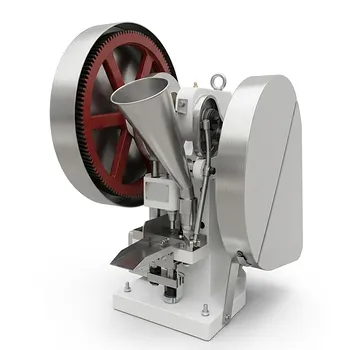
- 6-Ton Small Single-Punch Tablet Press — Laboratory Powder & Granule Tableting Equipment / Tablet Forming Machine
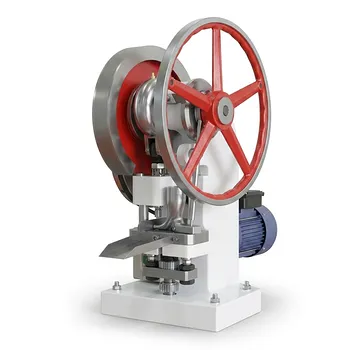
- 5 Ton Single Punch Tablet Press Laboratory Small Batch Production
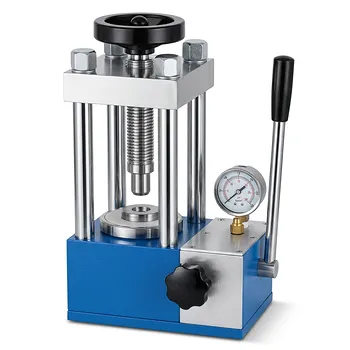
- Manual Tablet Press with Dual Scale Pressure Gauge for Pharmaceutical Food Chemical Laboratory Sample Preparation
People Also Ask
- What is the function of a laboratory press in Cr-Ti alloy evaluation? Quantify Fracture Stress & Strength
- What is the function of a laboratory press in assessing the hydrophobic performance of modified vermiculite fillers?
- What is the core function of a laboratory press in the forming of ceramic filter element green bodies? Maximize Density.
- What is the function of a laboratory press in the preparation of ceramic feed rods? Master Density and Precision
- Why is vacuum sealing and flexible packaging necessary for Aluminum Titanate powders during CIP? Ensure Peak Density

Tech Team · PowderPreparation
Last updated on May 14, 2026