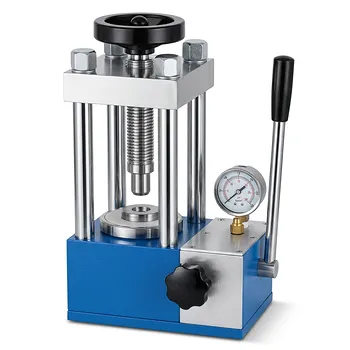
Why is a laboratory Cold Isostatic Press (CIP) preferred for medical ceramics? Achieve High Density and Precision
Updated 5 months ago
The laboratory Cold Isostatic Press (CIP) is preferred because it eliminates the internal density gradients and stress concentrations inherent in traditional pressing methods. It uses a fluid medium to apply equal, omnidirectional pressure to ceramic powders, ensuring that the resulting "green body" has a uniform internal structure. This uniformity is vital for medical and dental components because it prevents warping, cracking, and dimensional inaccuracy during the high-temperature sintering process.
A laboratory CIP provides the isotropic compaction necessary to achieve near-theoretical density and exceptional structural homogeneity. For medical-grade ceramics, this translates to superior mechanical reliability and the precise dimensional control required for implants and prosthetics.
Overcoming the Limitations of Uniaxial Pressing
Eliminating Mold Wall Friction
Traditional dry pressing suffers from friction between the powder and the rigid mold walls. This friction creates uneven pressure distribution, leading to weak spots and "stress concentrations" within the ceramic component.
Resolving Density Gradients
A CIP applies pressure through a liquid medium, ensuring every surface of the component receives the exact same force regardless of shape. This removes the density gradients that typically cause ceramic parts to shrink unevenly or fail during post-processing.
Achieving Isotropic Compaction
Because the pressure is omnidirectional (isotropic), the powder particles are forced into an extremely tight, uniform arrangement. This creates a "green body" that is far more stable and predictable than those produced by unidirectional hydraulic presses.
Ensuring Structural Integrity for Medical Applications
Minimizing Sintering Deformation
Medical implants, such as hip ball heads or dental crowns, require extreme precision. Because CIP creates a uniform green density, the component shrinks consistently in all directions during sintering, maintaining its intended geometry.
Achieving Near-Theoretical Density
By applying ultra-high pressures (often 200–250 MPa), CIP can help ceramics reach over 99% relative density. This eliminates the micro-pores that would otherwise act as failure points under the repetitive mechanical stress of the human body.
Preventing Internal Micro-Cracks
The balanced nature of isostatic pressure prevents the formation of internal micro-cracks during the molding stage. This is a critical requirement for high-entropy oxide ceramics and zirconia used in load-bearing medical applications.
Versatility in Complex Geometry and Post-Processing
Forming Intricate Dental Shapes
Dental prosthetics often involve complex, non-linear surfaces that are difficult to press evenly with metal dies. The flexible molds used in CIP allow for uniform compaction across these intricate geometries without damaging the part.
Enhancing Additive Manufacturing Results
Ceramics produced via 3D printing often contain high levels of internal porosity. Using a CIP as a post-processing step compresses these pores, significantly improving the mechanical properties and reliability of 3D-printed medical components.
Precision Radial Gap Design
For components like acetabular cups or ball heads, CIP ensures that dimensional shrinkage remains consistent. This allows engineers to meet the strict radial gap requirements necessary for the proper fit and function of joint replacements.
Understanding the Trade-offs
Lower Production Throughput
CIP is generally slower than uniaxial pressing because it requires sealing the powder in a flexible bag and submerging it in a pressurized fluid chamber. This makes it a specialized tool for high-value precision parts rather than mass-market commodity ceramics.
Surface Finish Limitations
Since CIP uses flexible molds (like rubber or silicone), the "as-pressed" surface finish is often rougher than parts made with polished steel dies. This usually necessitates secondary machining or finishing steps to reach the final required medical-grade smoothness.
Initial Tooling and Setup
Designing and preparing flexible molds for isostatic pressing can be more complex than traditional die sets. The process requires careful handling to ensure no fluid leaks into the powder, which would contaminate the medical-grade material.
Selecting the Right Strategy for Your Goal
How to Apply This to Your Project
- If your primary focus is Dimensional Precision: Use CIP to ensure uniform shrinkage during sintering, which is critical for meeting strict tolerances in dental crowns and orthopedic implants.
- If your primary focus is Maximum Mechanical Strength: Leverage the ultra-high, omnidirectional pressure of a CIP to eliminate internal micro-cracks and achieve near-theoretical density.
- If your primary focus is Complex Geometries: Utilize CIP's flexible mold system to form intricate shapes that cannot be achieved with traditional rigid-die pressing.
Ultimately, the laboratory CIP is the definitive tool for transforming raw ceramic powders into high-performance, medical-grade components with uncompromising structural reliability.
Summary Table:
| Feature | Laboratory CIP | Uniaxial Pressing |
|---|---|---|
| Pressure Direction | Omnidirectional (Isotropic) | Unidirectional (One-way) |
| Density Uniformity | High (Eliminates gradients) | Lower (Affected by friction) |
| Geometric Versatility | High (Intricate/Dental shapes) | Limited (Simple geometries) |
| Sintering Behavior | Consistent shrinkage; No warping | Risk of cracks and deformation |
| Ideal Application | Medical implants & prosthetics | High-volume commodity parts |
Elevate Your Material Research with Precision Compaction Solutions
Are you looking to achieve near-theoretical density and uncompromising structural reliability for your advanced ceramics? Contact our experts today to find the perfect fit for your laboratory needs.
At our core, we provide complete laboratory sample preparation solutions for material science, specializing in high-performance powder processing and compaction equipment. Our extensive product lines are designed to support every stage of your workflow:
- Advanced Pressing Technology: We manufacture a full spectrum of hydraulic presses, including Cold/Warm Isostatic Presses (CIP/WIP), standard lab presses, XRF pellet presses, hot presses, and vacuum hot presses.
- Powder Processing & Milling: Our range includes crushers (jaw/roll), liquid nitrogen cryogenic grinders, and various mills (planetary ball, jet, sand/bead, disc, rotor).
- Sizing & Mixing: We offer vibratory and air-jet sieve shakers with specialized meshes, alongside high-efficiency powder and defoaming mixers.
Whether you are developing medical-grade implants or high-entropy oxide ceramics, our equipment provides the precision and durability required for world-class results. Reach out now to request a quote or consultation!
References
- Antonio Adrián Arciénaga Morales, Britta Thomsen. Some insights into nanotechnology innovation processes and patterns for advanced materials. DOI: 10.22201/fca.24488410e.2019.1805
Mentioned Products
- Ordinary Type Rotary Tablet Press for Pharmaceutical Chemical Food Electronic Industries
- 6-Ton Small Single-Punch Tablet Press — Laboratory Powder & Granule Tableting Equipment / Tablet Forming Machine
- Manual Tablet Press with Dual Scale Pressure Gauge for Pharmaceutical Food Chemical Laboratory Sample Preparation
People Also Ask
- Why is a laboratory hydraulic press required for FT-IR KBr pellets? Achieve Precise Sample Clarity for ZrC–SiC Analysis
- Why is a laboratory hydraulic press required to compress oyster shell powder before XRF analysis? Improve Data Accuracy.
- Why is vacuum sealing and flexible packaging necessary for Aluminum Titanate powders during CIP? Ensure Peak Density
- What are the advantages of using hardened steel molds and graphite spray for titanium powder? Ensure structural integrity
- What role does a high-strength stainless steel mold kit play in the uniaxial die compaction process? Ensuring Precision

Tech Team · PowderPreparation
Last updated on May 14, 2026
Related Products
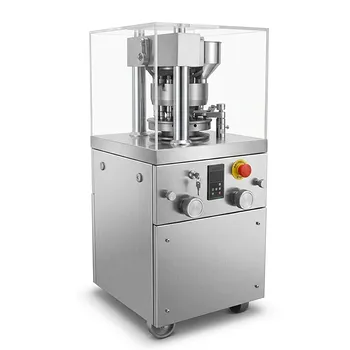
Ordinary Type Rotary Tablet Press for Pharmaceutical Chemical Food Electronic Industries
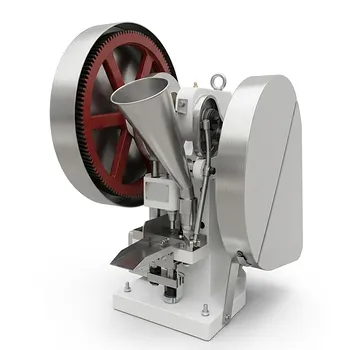
6-Ton Small Single-Punch Tablet Press — Laboratory Powder & Granule Tableting Equipment / Tablet Forming Machine