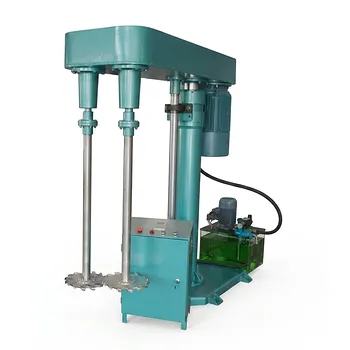
Why is a high-speed planetary vacuum defoaming mixer required before molding Al2O3-Cu-Ni slurries? Ensure Max Density
Updated 5 months ago
The requirement for a high-speed planetary vacuum defoaming mixer is driven by the need for absolute structural density. Utilizing this specialized equipment is essential to remove microbubbles introduced during the ball milling and stirring of $Al_2O_3-Cu-Ni$ slurries. By combining high-speed centrifugal forces with a vacuum environment, the mixer eliminates air pockets that would otherwise manifest as pore defects, ensuring the final sintered composite achieves its required mechanical and microstructural integrity.
The use of a planetary vacuum mixer is a non-negotiable step to prevent internal voids. It ensures that the slurry transitions from a mixed state to a molded state with the uniformity and density necessary for high-performance ceramic-metal applications.
The Critical Problem of Entrapped Air
Origins of Microbubbles
During the preparation of $Al_2O_3-Cu-Ni$ slurries, the processes of ball milling and mechanical stirring naturally introduce air. These tiny microbubbles become trapped within the high-viscosity fluid, especially when high filler loads of ceramic and metal powders are involved.
Impact on the Green Body
If these bubbles are not removed before molding, they remain in the "green body" (the unfired part). These air pockets act as discontinuities that compromise the material's structural consistency before it even enters the furnace.
Stress Concentrations and Failure
In the final sintered product, these entrapped bubbles transform into internal pores. These pores serve as stress concentration points, significantly reducing the tensile strength and potentially leading to catastrophic structural failure under load.
The Mechanism of Planetary Defoaming
Dual-Action Centrifugal Force
A planetary mixer operates through simultaneous revolution and rotation (often at speeds like 1800 rpm). This generates powerful centrifugal forces that push the heavier slurry components outward while forcing lighter air bubbles to the surface.
The Role of High Vacuum
The vacuum environment creates a negative pressure that expands microbubbles, making them easier to extract from the viscous slurry. This is particularly important for nanoporous or high-viscosity mixtures where air cannot escape through gravity alone.
Achieving Molecular-Level Uniformity
Beyond simple de-aeration, the high-speed motion ensures that the copper, nickel, and alumina particles are distributed with molecular-level uniformity. This prevents phase separation, which is vital for the consistent performance of ceramic-metal composites.
Understanding the Trade-offs
Heat Generation
The high-speed rotation required for effective defoaming can generate significant frictional heat. If the temperature is not monitored, it may affect the rheology of the slurry or cause premature curing in certain resin-based systems.
Volatile Evaporation
Operating under a high vacuum can lead to the evaporation of volatile solvents or binders within the slurry. This loss of mass can alter the carefully calibrated chemical composition of the $Al_2O_3-Cu-Ni$ mixture.
Equipment Complexity
Planetary vacuum mixers are more complex and expensive to maintain than standard atmospheric stirrers. The necessity for specialized containers and vacuum seals increases the operational overhead of the manufacturing process.
How to Apply This to Your Project
Before proceeding to the molding stage, evaluate your slurry's viscosity and the required final density of your composite.
- If your primary focus is Maximum Mechanical Strength: Prioritize a longer vacuum cycle to ensure all micro-bubbles are eliminated, as even tiny pores can act as fracture initiation sites.
- If your primary focus is Microstructural Uniformity: Focus on the rotation-to-revolution speed ratio to ensure the metal and ceramic phases are perfectly dispersed without sedimentation.
- If your primary focus is Rapid Prototyping: Use shorter, high-intensity mixing bursts (e.g., 1800 rpm) to achieve quick de-aeration without excessive heat buildup.
Eliminating internal air through vacuum defoaming is the only way to ensure your $Al_2O_3-Cu-Ni$ composite reaches its full theoretical density and performance potential.
Summary Table:
| Feature | Mechanism | Impact on Al2O3-Cu-Ni Slurry |
|---|---|---|
| Dual-Action Rotation | Simultaneous revolution & rotation | Forces air to the surface and ensures molecular-level uniformity. |
| High Vacuum System | Negative pressure environment | Expands and extracts trapped microbubbles from high-viscosity fluids. |
| Centrifugal Force | High-speed motion (up to 1800 rpm) | Prevents phase separation between ceramic and metal particles. |
| Structural Result | De-aerated green body | Eliminates stress concentration points to prevent structural failure. |
Optimize Your Material Performance with Precision Equipment
Achieving the theoretical density of Al2O3-Cu-Ni composites requires more than just mixing; it demands professional-grade preparation. At our facility, we provide complete laboratory sample preparation solutions tailored for material science.
From our high-performance planetary vacuum defoaming mixers that eliminate internal voids to our extensive line of mills (planetary ball, jet, rotor) and crushers (jaw/roll), we ensure your powders are processed to perfection. We also specialize in compaction equipment, manufacturing a full spectrum of hydraulic presses, including Cold/Warm Isostatic Presses (CIP/WIP), hot presses, and vacuum hot presses for superior sintering results.
Ready to enhance your lab’s efficiency and material integrity?
Contact our experts today to find the ideal equipment for your specific application!
References
- Justyna Zygmuntowicz, W. Kaszuwara. Microstructure and mechanical properties of Al2O3-Cu-Ni hybrid composites fabricated by slip casting. DOI: 10.2298/pac2001001z
Mentioned Products
- 非介入式材料均质机真空脱泡行星搅拌高粘度混合设备
- High Viscosity Planetary Centrifugal Vacuum Mixer for Material Defoaming and Uniform Mixing
- High Efficiency Vacuum Planetary Centrifugal Mixer and Defoaming Machine for Industrial Material Research and Precise Laboratory Powder Dispersion
- High Viscosity Planetary Centrifugal Mixing and Vacuum Defoaming Machine for Laboratory Material Preparation
- High Speed Vacuum Planetary Centrifugal Mixer and Defoamer for Industrial Paste Processing
People Also Ask
- How does a planetary vacuum defoaming mixer help magnesium calcium phosphate slurries? Achieve Flawless 3D Printed Bone
- Why is vacuum defoaming necessary for PDMS mixtures before microwave irradiation curing? Key to Structural Integrity
- What role does a vacuum defoaming mixer play in BNT MLCC slurry? Ensure High Dielectric Strength & Pinhole-Free Prep
- Why is a vacuum defoaming mixer essential for DLP 3D printing ceramic slurries? Key to Structural Integrity
- What is the purpose of using a high-vacuum defoaming mixer for SiC/Cf composites? Optimize Density and Strength

Tech Team · PowderPreparation
Last updated on May 14, 2026
Related Products
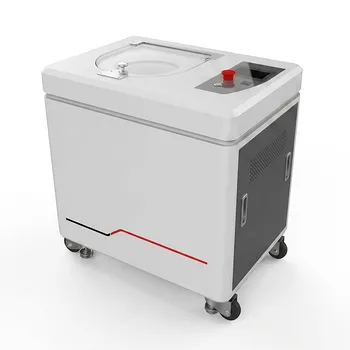
非介入式材料均质机真空脱泡行星搅拌高粘度混合设备
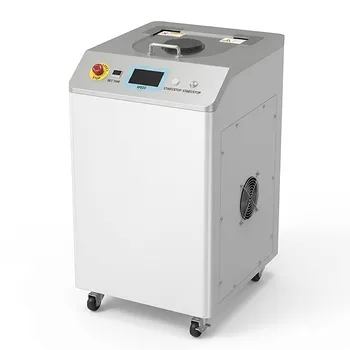
High Viscosity Planetary Centrifugal Vacuum Mixer for Material Defoaming and Uniform Mixing
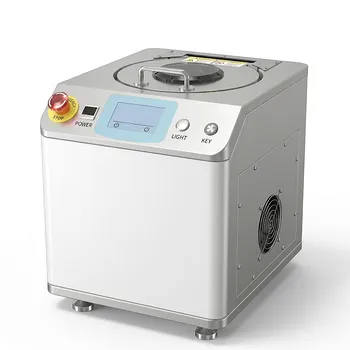
High Efficiency Vacuum Planetary Centrifugal Mixer and Defoaming Machine for Industrial Material Research and Precise Laboratory Powder Dispersion
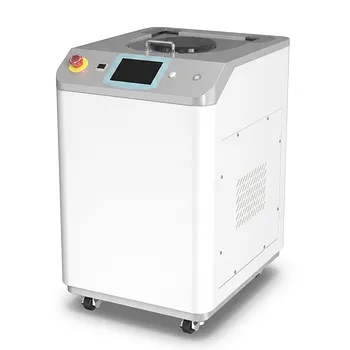
High Viscosity Planetary Centrifugal Mixing and Vacuum Defoaming Machine for Laboratory Material Preparation
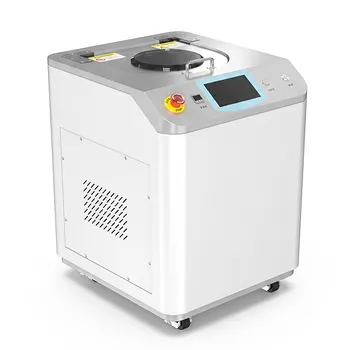
High Speed Vacuum Planetary Centrifugal Mixer and Defoamer for Industrial Paste Processing
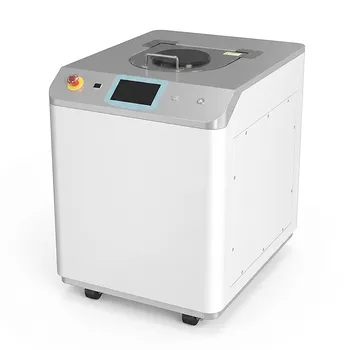
Industrial Planetary Centrifugal Vacuum Defoaming Mixer for High Viscosity Paste and Advanced Material Science
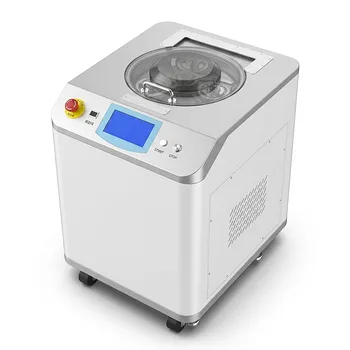
Dual Cup Vacuum Centrifugal Mixer Planetary Paste Defoaming Machine Industrial Material Processor
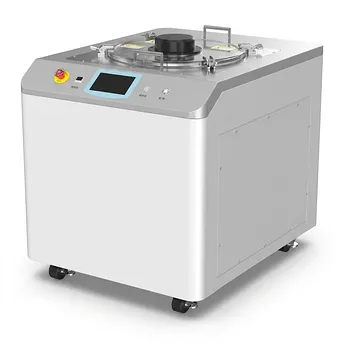
Industrial Planetary Centrifugal Vacuum Defoaming Mixer for High Viscosity Paste and Powder Homogenization
Horizontal Ribbon Mixer for Uniform Powder and Slurry Mixing
Horizontal Ribbon Mixer for Dry Powder and Slurry Blending
Miniature Planetary Ball Mill with Vacuum Grinding and High Efficiency for Laboratory Sample Preparation
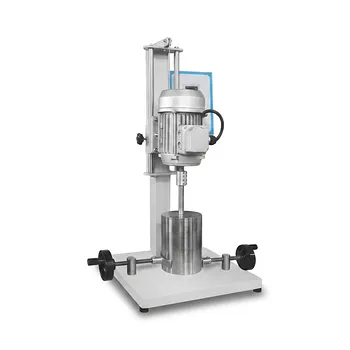
Laboratory Basket Sand Mill for Wet Grinding and Dispersion of Viscous Slurries
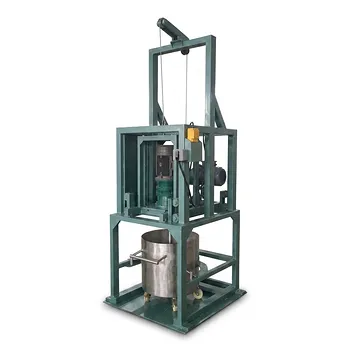
High-Speed Simple Disperser for Efficient Mixing, Dispersion, and Emulsification
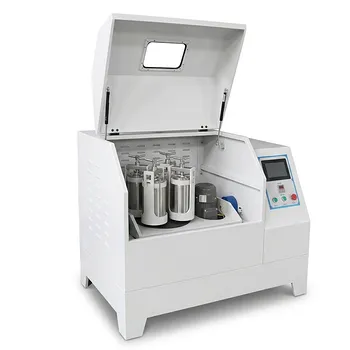
360° Rotating Omnidirectional Laboratory Planetary Ball Mill for Homogeneous Ultra-Fine Grinding and Mixing
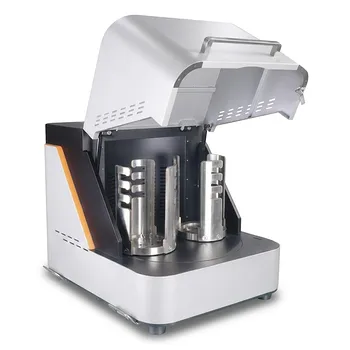
High Energy Laboratory Planetary Ball Mill for Nano Grinding and Colloidal Mixing of Hard and Brittle Materials
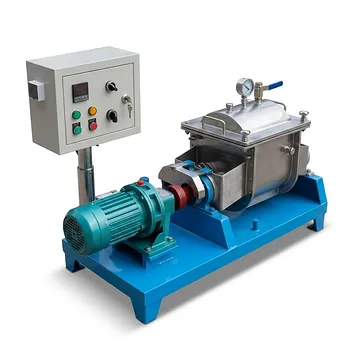
Industrial Vacuum Kneader for High-Viscosity Silicone, Rubber, and Compound Mixing
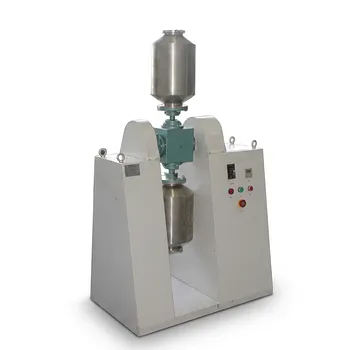
Multi Dimensional Universal Mixer for High Uniformity Powder Blending
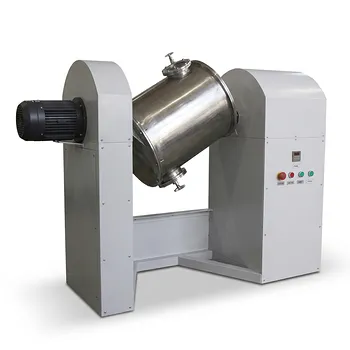
Inclined Mixer for Homogeneous Powder Blending and Grinding
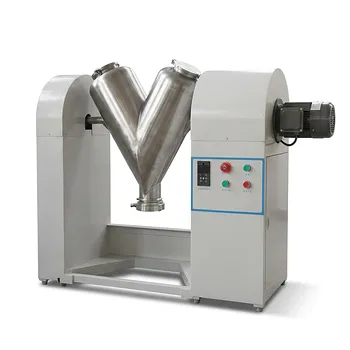
V-Type Powder Mixer for Uniform Blending of Dry Powders and Granules