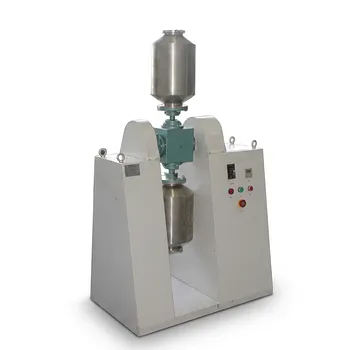
Why is a high-shear planetary mixer required for the mixing process of Copper(I) sulfide (Cu2S) DIW ink? Expert Insights
Updated 4 months ago
High-shear planetary mixers are essential for Copper(I) sulfide ($Cu_2S$) inks because they provide the mechanical energy required to overcome particle-to-particle attraction and achieve molecular-level uniformity. These mixers utilize a dual-action motion—simultaneous revolution and rotation—to generate intense shear forces that deagglomerate $Cu_2S$ particles and thoroughly integrate them with methylcellulose binders and water. This process is critical for preventing nozzle clogging and ensuring the electrical and structural connectivity of the final printed thermoelectric components.
A high-shear planetary mixer is the bridge between raw powder and a printable ink. It ensures that high-solid-content slurries reach a state of uniform dispersion and ideal rheology, which is physically impossible to achieve with standard low-energy mixing methods.
The Mechanics of High-Shear Particle Dispersion
Breaking Down Particle Agglomerates
Copper(I) sulfide powders, especially at the micro or nano-scale, naturally tend to clump together due to van der Waals forces. High-speed rotation generates the mechanical shear necessary to physically tear these clusters apart, ensuring every particle is isolated and available for coating.
Ensuring Uniform Wetting
$Cu_2S$ particles often have a high specific surface area that must be completely "wetted" by the liquid medium. The mixer’s high-energy environment forces the methylcellulose binder and water into the microscopic spaces between particles, creating a stable, homogeneous suspension.
Molecular-Level Distribution of Binders
In Direct Ink Writing (DIW), the binder must be distributed perfectly to act as a lubricant during extrusion and a "glue" after drying. The complex motion path of a planetary mixer ensures that the viscosity modifiers are evenly dispersed at a molecular level throughout the $Cu_2S$ matrix.
Optimizing Rheology for Direct Ink Writing (DIW)
Inducing Shear-Thinning Behavior
For successful DIW, the ink must exhibit shear-thinning behavior, meaning it flows under pressure but stays rigid once deposited. High-shear mixing helps align the internal structure of the slurry to achieve this specific rheological profile, ensuring the ink flows smoothly through the print head.
Preventing Nozzle Clogging
Any remaining agglomerates or "dry spots" in the ink will immediately lead to nozzle failure in the fine-gauge needles used for DIW. By achieving a high degree of particle uniformity, the high-shear mixer guarantees a continuous, uninterrupted extrusion process.
Microstructural Connectivity
The performance of a thermoelectric material depends on the contact between its particles. Thorough mixing ensures that as the water evaporates during the drying phase, the $Cu_2S$ particles settle into a dense, interconnected network rather than leaving voids or clusters that would degrade performance.
Understanding the Trade-offs and Limitations
Heat Generation During Mixing
The intense friction generated by high-speed revolution can lead to significant internal heat buildup. If not monitored, this heat can prematurely dry the ink or alter the chemical properties of temperature-sensitive binders like methylcellulose.
Risk of Material Degradation
Excessive shear forces can sometimes lead to the mechanical milling of the particles, unintentionally changing their size or shape. It is vital to balance the mixing duration and speed to achieve dispersion without damaging the base $Cu_2S$ material.
Equipment Cost and Complexity
Compared to standard stirrers, high-shear planetary mixers represent a higher capital investment and require more rigorous maintenance. However, for the high-solid-content slurries required in DIW, the quality of the output typically justifies the increased overhead.
How to Apply This to Your Project
Making the Right Choice for Your Goal
Success in printing $Cu_2S$ depends on matching your mixing parameters to your specific performance requirements.
- If your primary focus is nozzle reliability: Prioritize longer mixing cycles at moderate shear to ensure every possible agglomerate is eliminated.
- If your primary focus is thermoelectric efficiency: Optimize for the highest possible solid loading (high $Cu_2S$ to binder ratio) which requires the maximum shear capabilities of the mixer.
- If your primary focus is structural integrity: Focus on the uniform distribution of the methylcellulose binder to prevent cracking or delamination during the drying phase.
By mastering the high-shear mixing process, you ensure that your $Cu_2S$ ink is not just a mixture, but a highly engineered material ready for precision manufacturing.
Summary Table:
| Mixing Challenge | High-Shear Mixer Solution | Benefit for DIW Printing |
|---|---|---|
| Particle Agglomeration | Intense mechanical shear | Prevents nozzle clogging and needle failure |
| Binder Distribution | Molecular-level dispersion | Ensures structural integrity and steady flow |
| Rheological Profile | Induces shear-thinning behavior | Optimizes ink extrusion and shape retention |
| Microstructure | High-energy wetting | Improves density and thermoelectric efficiency |
Elevate Your Material Research with Precision Mixing
At Our Laboratory Solutions, we provide complete laboratory sample preparation solutions for material science, specializing in advanced powder processing and compaction equipment. Whether you are developing high-performance $Cu_2S$ thermoelectric inks or complex ceramics, our high-shear planetary and defoaming mixers ensure the molecular uniformity required for successful Direct Ink Writing (DIW).
Beyond mixing, our extensive product line supports your entire workflow:
- Powder Processing: Crushers (jaw/roll), liquid nitrogen cryogenic grinders, and diverse mills (planetary ball, jet, sand, disc, rotor).
- Sizing & Classification: Vibratory and air-jet sieve shakers with precision test sieves.
- Compaction & Pressing: A full spectrum of hydraulic presses, including Cold/Warm Isostatic Presses (CIP/WIP), XRF pellet presses, and vacuum hot presses.
Ready to optimize your ink rheology and eliminate nozzle clogging? Contact us today to find the perfect equipment configuration for your lab!
References
- Raden Gustinvil, Emrah Çelik. Enhancing Conversion Efficiency of Direct Ink Write Printed Copper (I) Sulfide Thermoelectrics via Sulfur Infusion Process. DOI: 10.3390/machines11090881
Mentioned Products
- High Speed Vacuum Planetary Centrifugal Mixer and Defoamer for Industrial Paste Processing
- 非介入式材料均质机真空脱泡行星搅拌高粘度混合设备
- High Efficiency Vacuum Planetary Centrifugal Mixer and Defoaming Machine for Industrial Material Research and Precise Laboratory Powder Dispersion
- High Viscosity Planetary Centrifugal Vacuum Mixer for Material Defoaming and Uniform Mixing
- High Shear Laboratory Emulsifier for Mixing and Homogenization
People Also Ask
- Why increase revolution radius for high-viscosity materials? Optimize Mixing Performance with Centrifugal Acceleration
- What is the function of a planetary centrifugal mixer in electrode slurry prep? Achieve high-energy, uniform dispersion.
- Why is a planetary centrifugal mixer utilized for wood powder and HPMC? Achieve uniform dispersion & rapid defoaming.
- How does a planetary centrifugal mixer contribute to the preparation of magnetic polymer composites? Expert Guide
- How does a planetary centrifugal mixer address key challenges in Tyr-CDs@EVA optical films? Ensure Optical Clarity.

Tech Team · PowderPreparation
Last updated on Jun 03, 2026
Related Products
High Speed Vacuum Planetary Centrifugal Mixer and Defoamer for Industrial Paste Processing
非介入式材料均质机真空脱泡行星搅拌高粘度混合设备
High Efficiency Vacuum Planetary Centrifugal Mixer and Defoaming Machine for Industrial Material Research and Precise Laboratory Powder Dispersion
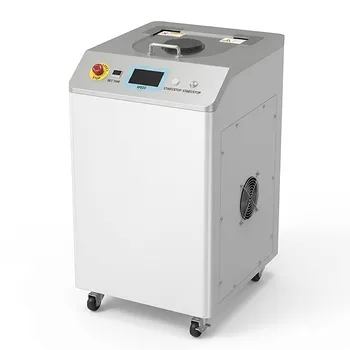
High Viscosity Planetary Centrifugal Vacuum Mixer for Material Defoaming and Uniform Mixing
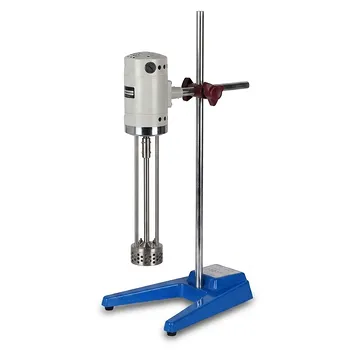
High Shear Laboratory Emulsifier for Mixing and Homogenization
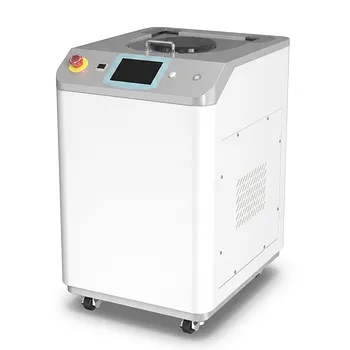
High Viscosity Planetary Centrifugal Mixing and Vacuum Defoaming Machine for Laboratory Material Preparation
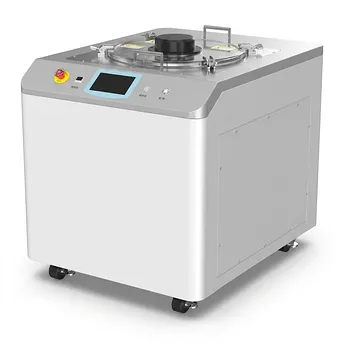
Industrial Planetary Centrifugal Vacuum Defoaming Mixer for High Viscosity Paste and Powder Homogenization
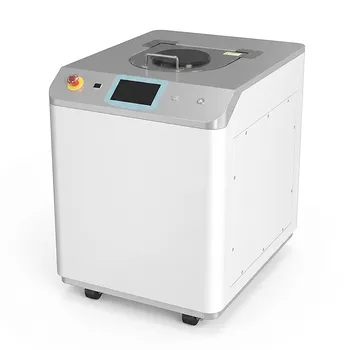
Industrial Planetary Centrifugal Vacuum Defoaming Mixer for High Viscosity Paste and Advanced Material Science
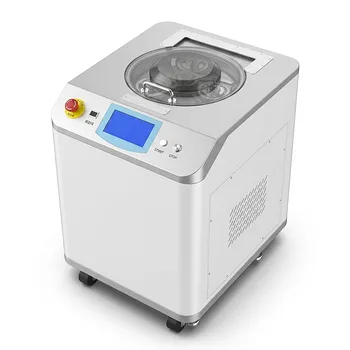
Dual Cup Vacuum Centrifugal Mixer Planetary Paste Defoaming Machine Industrial Material Processor
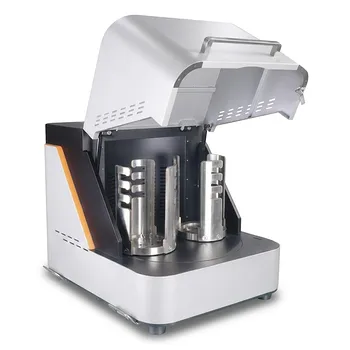
High Energy Laboratory Planetary Ball Mill for Nano Grinding and Colloidal Mixing of Hard and Brittle Materials
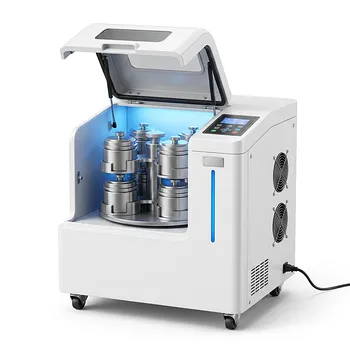
High Energy Omnidirectional Planetary Ball Mill 20L
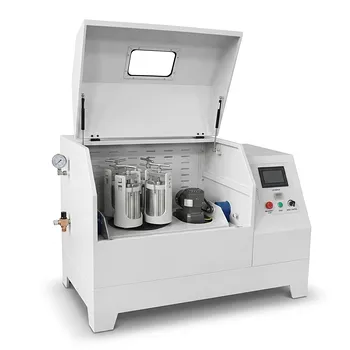
Vertical Production Planetary Ball Mill for High Throughput Powder Processing
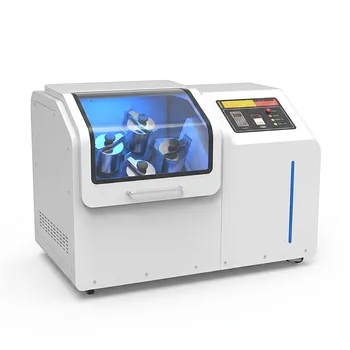
High Energy Omnidirectional Planetary Ball Mill 16L
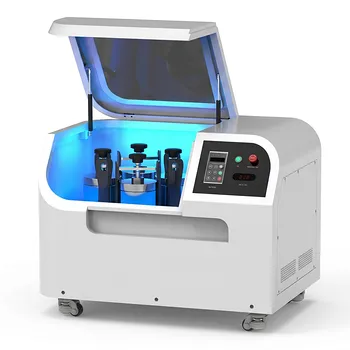
Planetary Ball Mill 12L
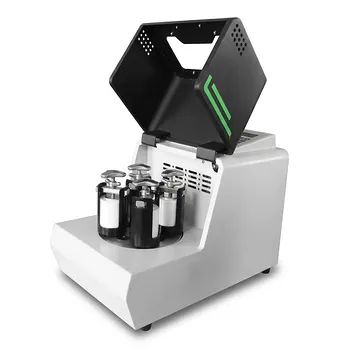
Miniature Planetary Ball Mill with Vacuum Grinding and High Efficiency for Laboratory Sample Preparation
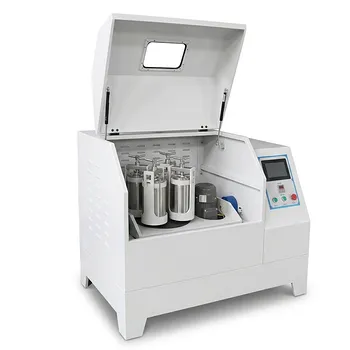
360° Rotating Omnidirectional Laboratory Planetary Ball Mill for Homogeneous Ultra-Fine Grinding and Mixing
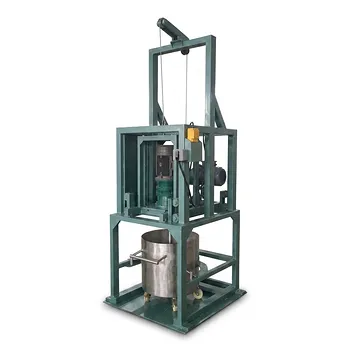
High-Speed Simple Disperser for Efficient Mixing, Dispersion, and Emulsification
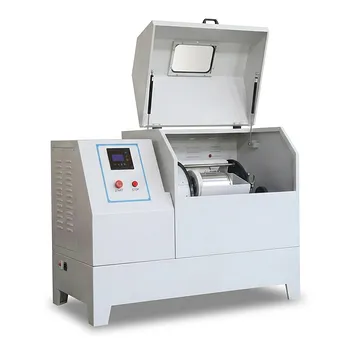
Heavy Duty Horizontal Planetary Ball Mill for Efficient Industrial Grinding and Sample Preparation
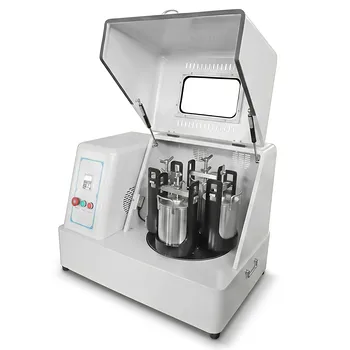
Vertical Square Planetary Ball Mill for Laboratory Sample Preparation and Nanoscale Grinding