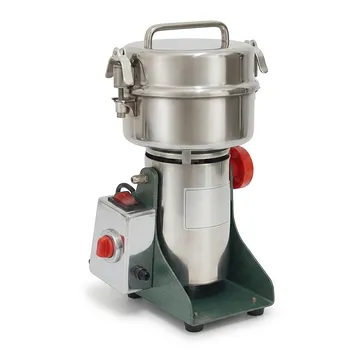
Why is a 400 MPa hydraulic press needed for Cr2O3/Fe2O3/glass composites? Achieve Superior High-Density Green Bodies
Updated 3 months ago
The requirement for 400 MPa of uniaxial pressure is driven by the need for particle-level reorganization and pre-sintering densification. A laboratory hydraulic press provides the extreme, controlled force necessary to overcome inter-particle friction, expel entrapped air, and maximize the contact area between the chromium oxide, iron oxide, and glass phases. This creates a structurally stable "green body" with the high initial density required to facilitate solid-state reactions and prevent failure during the subsequent firing process.
Applying 400 MPa of pressure ensures that powder particles achieve the intimate contact necessary for chemical diffusion while establishing mechanical integrity. This high-pressure environment is the critical foundation for producing defect-free composites that maintain their shape and strength after sintering.
Overcoming Physical Resistance in the Composite Mix
Neutralizing Inter-Particle Friction
At the microscopic level, $Cr_2O_3$ and $Fe_2O_3$ particles resist movement due to inter-particle friction and surface irregularities. The 400 MPa force provided by a hydraulic press is necessary to overcome these forces, allowing particles to slide past one another into a tightly packed arrangement.
Expulsion of Entrapped Air and Voids
Loose powder contains significant amounts of air that can create internal voids and structural weaknesses. High-pressure compaction effectively expels this air, reducing the presence of bridging pores that would otherwise lead to macroscopic defects or cracking in the final ceramic.
Achieving Geometric Precision
The use of a uniaxial press within a precision mold ensures the powder takes on a specific, defined shape—typically a cylindrical pellet. This directional force ensures the green body has sufficient green strength to be handled and moved into the furnace without crumbling.
Preparing the Green Body for Sintering
Maximizing Contact Area for Diffusion
The success of the sintering process depends on solid-state reactions and atomic diffusion between the oxides and the glass phase. By applying 400 MPa, you significantly increase the effective contact area between particles, which serves as the primary pathway for diffusion during heating.
Facilitating Plastic Deformation
Under extreme pressure, some powder particles may undergo plastic deformation, changing shape to fill the tiny gaps between their neighbors. This deformation increases the bonding force between the $Cr_2O_3/Fe_2O_3$ particles and the glass binder, resulting in a more cohesive composite structure.
Controlling Dimensional Shrinkage
High initial "green density" is a prerequisite for dimensional stability. By achieving maximum compaction at the start, you minimize the volume shrinkage that occurs when the particles fuse together at high temperatures, preventing warping or severe distortion.
Understanding the Trade-offs and Constraints
The Risk of Lamination and Capping
While high pressure is beneficial, exceeding the material's limits can cause elastic recovery when the pressure is released. This can lead to "capping" or "lamination," where the pellet develops horizontal cracks due to the internal stresses stored during the 400 MPa compression.
Mold Wear and Friction Management
Applying 400 MPa places immense stress on the hardened steel or carbide molds used in the press. Without proper lubrication or high-quality mold materials, the friction between the powder and the mold walls can lead to uneven density distributions within the green body.
Pressure Uniformity Limits
In uniaxial pressing, pressure is applied from one (or two) directions, which can lead to a pressure gradient throughout the sample. For very tall samples, the density at the center may be lower than at the ends, potentially causing differential shrinkage during the sintering phase.
Applying Compaction Strategy to Your Project
Recommendations Based on Your Goal
- If your primary focus is maximizing chemical reactivity: Use the full 400 MPa to ensure the highest possible particle-to-particle contact for faster diffusion during solid-state reactions.
- If your primary focus is preventing structural cracks: Ensure a slow release of pressure (depressurization) to allow the green body to settle without undergoing sudden elastic expansion.
- If your primary focus is dimensional accuracy: Monitor the green density before sintering to predict and account for the specific shrinkage ratio of the $Cr_2O_3/Fe_2O_3/glass$ mix.
Properly calibrated high-pressure compaction is the essential bridge between raw powder precursors and a high-performance, dense composite ceramic.
Summary Table:
| Key Factor | Function of 400 MPa Pressure | Impact on Final Composite |
|---|---|---|
| Particle Friction | Overcomes resistance to allow tight packing | Increases green density and structural integrity |
| Air Voids | Expels entrapped air and removes bridging pores | Prevents internal cracking and macroscopic defects |
| Contact Area | Maximizes particle-to-particle interface | Facilitates rapid solid-state diffusion and reaction |
| Deformation | Triggers plastic deformation of oxide particles | Enhances bonding force between particles and glass binder |
| Shrinkage | Minimizes volume change during firing | Ensures dimensional stability and prevents warping |
Elevate Your Material Research with Precision Sample Preparation
Achieving perfect 400 MPa compaction requires more than just force—it requires precision and reliability. [Brand Name] provides complete laboratory sample preparation solutions for material science, specializing in high-performance powder processing and compaction equipment.
Whether you are working on advanced ceramic composites or metallurgical samples, our extensive product line ensures your research is backed by the best technology:
- Advanced Milling: Planetary ball mills, jet mills, and cryogenic grinders for perfect particle size distribution.
- Precision Pressing: A full spectrum of hydraulic presses, including Cold/Warm Isostatic Presses (CIP/WIP), standard lab presses, and XRF pellet presses.
- Thermal Processing: Hot presses and vacuum hot presses for integrated sintering solutions.
- Powder Handling: Specialized mixers (vibratory/defoaming) and sieve shakers for consistent feedstock.
Ready to optimize your lab’s workflow? Contact our technical experts today to find the ideal high-pressure solution for your specific material requirements!
References
- Dina H.A. Besisa, Amira M.M. Amin. Synthesis of new Cr2O3/Fe2O3/glass composites from industrial wastes; from undesired to advanced optical products. DOI: 10.1007/s11356-022-21694-w
Mentioned Products
- 5 Ton Single Punch Tablet Press Laboratory Small Batch Production
- Manual Tablet Press with Dual Scale Pressure Gauge for Pharmaceutical Food Chemical Laboratory Sample Preparation
- 6-Ton Small Single-Punch Tablet Press — Laboratory Powder & Granule Tableting Equipment / Tablet Forming Machine
- 6 Ton Variable Frequency Single Punch Tablet Press
- High Viscosity Planetary Centrifugal Mixing and Vacuum Defoaming Machine for Laboratory Material Preparation
People Also Ask
- What is the function of a laboratory press in assessing the hydrophobic performance of modified vermiculite fillers?
- What is the core function of a laboratory press in the forming of ceramic filter element green bodies? Maximize Density.
- What is the function of a laboratory press in Cr-Ti alloy evaluation? Quantify Fracture Stress & Strength
- Why is vacuum sealing and flexible packaging necessary for Aluminum Titanate powders during CIP? Ensure Peak Density
- Why is a laboratory hydraulic press required for FT-IR KBr pellets? Achieve Precise Sample Clarity for ZrC–SiC Analysis

Tech Team · PowderPreparation
Last updated on Jun 03, 2026
Related Products
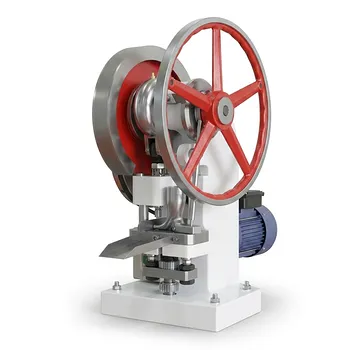
5 Ton Single Punch Tablet Press Laboratory Small Batch Production
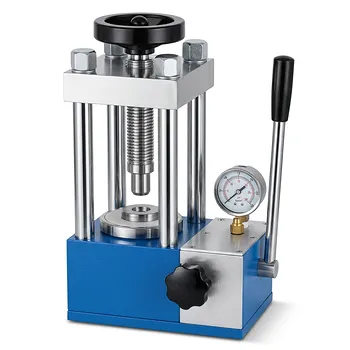
Manual Tablet Press with Dual Scale Pressure Gauge for Pharmaceutical Food Chemical Laboratory Sample Preparation
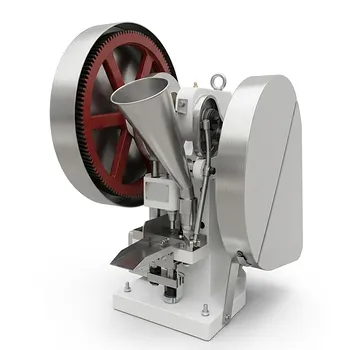
6-Ton Small Single-Punch Tablet Press — Laboratory Powder & Granule Tableting Equipment / Tablet Forming Machine
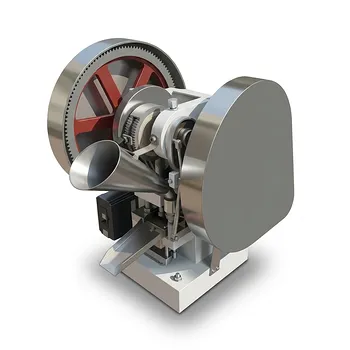
6 Ton Variable Frequency Single Punch Tablet Press
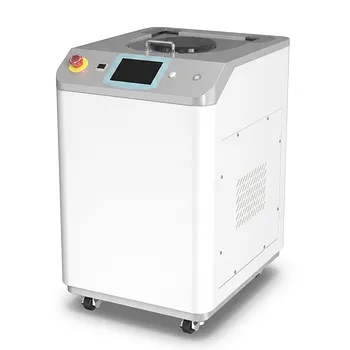
High Viscosity Planetary Centrifugal Mixing and Vacuum Defoaming Machine for Laboratory Material Preparation
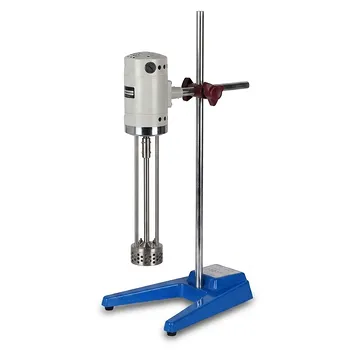
High Shear Laboratory Emulsifier for Mixing and Homogenization
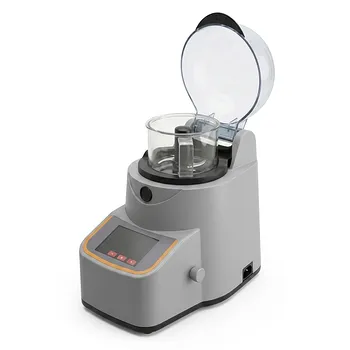
Industrial Knife Mill for Food and Biological Sample Preparation High Speed Laboratory Homogenizer
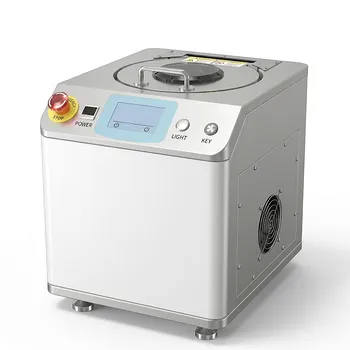
High Efficiency Vacuum Planetary Centrifugal Mixer and Defoaming Machine for Industrial Material Research and Precise Laboratory Powder Dispersion
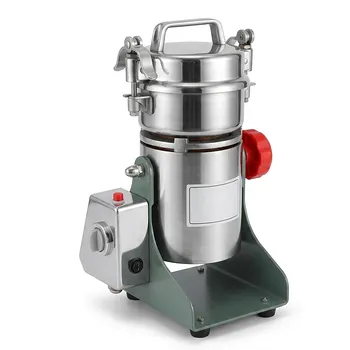
High Speed Swing Type Laboratory Pulverizer for Fine Powder Grinding and Sample Preparation
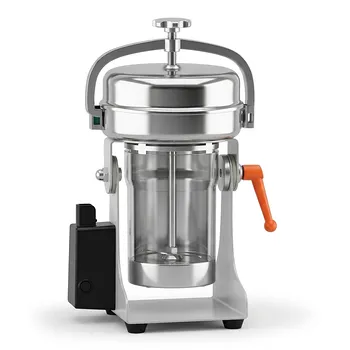
High Efficiency High Speed Grinder 2200W 25000 RPM Laboratory Sample Preparation
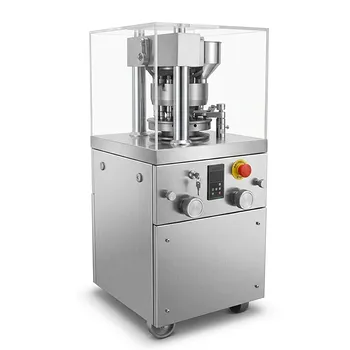
Ordinary Type Rotary Tablet Press for Pharmaceutical Chemical Food Electronic Industries