Why is a high-precision laboratory hydraulic press necessary for SiOC cold pressing? Ensure Dense, Crack-Free Ceramics
Updated 4 months ago
High-precision laboratory hydraulic presses are essential for SiOC green body fabrication because they provide the exact axial force—often up to 440 MPa—required to achieve dense particle packing while preventing internal structural failure.
This specific equipment ensures that cross-linked polymer powder particles undergo necessary rearrangement and plastic deformation. Without this level of control, the green body will lack the structural integrity needed to survive the subsequent transition from a polymer state to a ceramic state during pyrolysis.
Core Takeaway: A high-precision press is the fundamental tool for regulating green body density and internal porosity, which directly determines the final material's strength, shrinkage uniformity, and resistance to cracking during high-temperature processing.
The Mechanics of Powder Densification
A high-precision press serves as the primary driver for transforming loose powder into a cohesive solid through mechanical force.
Particle Rearrangement and Packing
The press applies stable axial pressure to force cross-linked polymer particles to shift and fill interstitial voids. This rearrangement is critical for achieving the highest possible packing density within the mold.
Elimination of Internal Voids
By applying precise mechanical force, the press eliminates air trapped between particles. This creates a continuous physical foundation that increases particle contact points, which is vital for later solid-phase reactions.
Plastic Deformation of Precursors
High-precision systems allow particles to undergo plastic deformation and displacement. This ensures that the green body reaches a state of "dense packing," which is required for the material to maintain its shape after being removed from the mold.
Structural Integrity and Pyrolysis Preparation
The quality of the "green" (unfired) body dictates whether the final ceramic will be a functional component or a pile of fragments.
Controlling Initial Porosity
Precise pressure control determines the initial porosity of the green body. In processes like melt infiltration, this porosity regulates the volume of secondary phases (like metallic silicon), ensuring the final product meets the exact stoichiometric ratio.
Minimizing Density Gradients
A high-precision press provides uniform pressure distribution, which minimizes internal density gradients. If density is non-uniform, the sample will suffer from uneven shrinkage during sintering, leading to warping or catastrophic deformation.
Preventing Pyrolysis Failure
The transition from polymer to SiOC ceramic involves significant stress. If the initial pressing pressure is too low, the body lacks strength; if it is too high (exceeding thresholds like 440 MPa), it can lead to internal micro-cracks that expand and shatter the sample during pyrolysis.
Understanding the Trade-offs and Pitfalls
Achieving the "perfect" green body is a balancing act where more pressure is not always better.
The Danger of Over-Pressurization
Exceeding the material-specific pressure limit (such as 440 MPa for certain SiOC formulations) can cause latent internal stresses. These stresses may not be visible in the green state but will manifest as cracks once the material is heated and the polymer network begins to reorganize.
The Risk of Elastic Recovery
If pressure is not held stably or if it is released too quickly, the polymer particles may undergo elastic recovery. This "spring-back" effect can de-bond the compacted particles, resulting in a fragile green body that lacks the necessary mechanical handling strength.
Accuracy vs. Repeatability
In a laboratory setting, repeatability is as important as accuracy. Lower-quality presses may drift in pressure, leading to inconsistent green densities across different batches, which makes it impossible to standardize the subsequent sintering or pyrolysis protocols.
Applying Precise Pressure to Your Workflow
Selecting the right pressing parameters depends entirely on your final material requirements and the characteristics of your precursor powder.
Strategic Recommendations
- If your primary focus is maximum density and strength: Use a press capable of maintaining stable axial pressure near the 440 MPa threshold to ensure full particle rearrangement.
- If your primary focus is preventing deformation in complex shapes: Prioritize a press with high-precision control to minimize internal density gradients and ensure uniform shrinkage during sintering.
- If your primary focus is stoichiometric precision (e.g., for melt infiltration): Use the press to strictly regulate initial porosity, as this defines the volume percentage of infiltrants in the final composite.
Ultimately, the high-precision hydraulic press is the "gatekeeper" of quality, ensuring that the transition from a loose polymer powder to a dense ceramic body is both predictable and successful.
Summary Table:
| Key Factor | Role in SiOC Fabrication | Impact on Final Ceramic |
|---|---|---|
| Axial Force (Up to 440 MPa) | Drives particle rearrangement and plastic deformation. | Maximizes packing density and structural integrity. |
| Precision Control | Regulates initial porosity and eliminates air voids. | Determines stoichiometric precision and secondary phase volume. |
| Pressure Uniformity | Minimizes internal density gradients. | Prevents warping, cracking, and uneven shrinkage during sintering. |
| Stability & Repeatability | Maintains consistent pressure and controlled release. | Eliminates elastic recovery (spring-back) and ensures batch consistency. |
Elevate Your Material Research with Precision Powder Compaction
Achieving the perfect silicon oxycarbide (SiOC) green body requires more than just force—it requires absolute control. At [Company Name], we provide complete laboratory sample preparation solutions for material science, specializing in high-performance powder processing and compaction equipment designed to prevent internal structural failure and ensure pyrolysis success.
Our extensive manufacturing line includes:
- Hydraulic Presses: A full spectrum featuring Cold/Warm Isostatic Presses (CIP/WIP), standard lab presses, XRF pellet presses, and vacuum hot presses.
- Sample Preparation: High-efficiency crushers (jaw/roll), liquid nitrogen cryogenic grinders, and advanced mills (planetary ball, jet, and rotor).
- Powder Handling: Vibratory/air-jet sieve shakers, various test meshes, and precision powder/defoaming mixers.
Whether you are regulating porosity for melt infiltration or maximizing density for structural ceramics, our equipment delivers the repeatability your research demands. Contact our experts today to find the ideal pressing solution for your laboratory workflow!
References
- Nedunchezhian Srinivasan, Ravi Kumar. Processing and characterization of polymer precursor derived silicon oxycarbide ceramic foams and compacts. DOI: 10.1007/s40145-013-0078-5
Mentioned Products
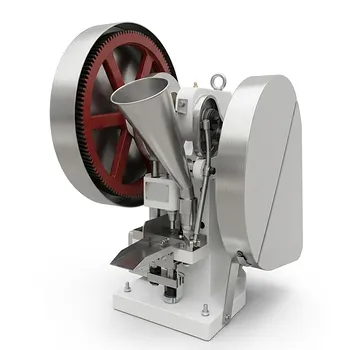
- 6-Ton Small Single-Punch Tablet Press — Laboratory Powder & Granule Tableting Equipment / Tablet Forming Machine
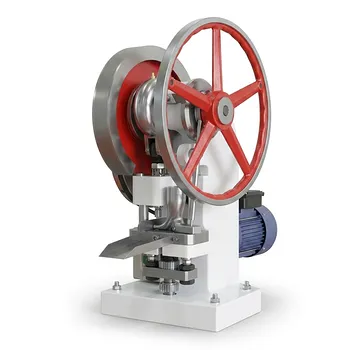
- 5 Ton Single Punch Tablet Press Laboratory Small Batch Production
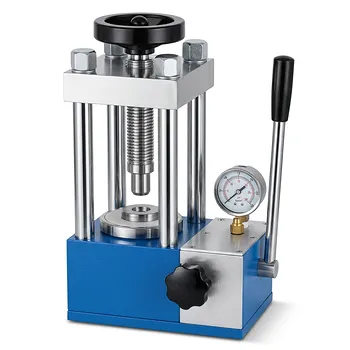
- Manual Tablet Press with Dual Scale Pressure Gauge for Pharmaceutical Food Chemical Laboratory Sample Preparation
- Laboratory Ultrafine Impact and Airflow Grinder for Precise Particle Size Control
- 6 Ton Variable Frequency Single Punch Tablet Press
People Also Ask
- What is the function of a laboratory press in Cr-Ti alloy evaluation? Quantify Fracture Stress & Strength
- What is the function of a laboratory press in assessing the hydrophobic performance of modified vermiculite fillers?
- What is the core function of a laboratory press in the forming of ceramic filter element green bodies? Maximize Density.
- What is the function of a laboratory press in the preparation of ceramic feed rods? Master Density and Precision
- Why is vacuum sealing and flexible packaging necessary for Aluminum Titanate powders during CIP? Ensure Peak Density

Tech Team · PowderPreparation
Last updated on Jun 03, 2026
Related Products
6-Ton Small Single-Punch Tablet Press — Laboratory Powder & Granule Tableting Equipment / Tablet Forming Machine
5 Ton Single Punch Tablet Press Laboratory Small Batch Production
Manual Tablet Press with Dual Scale Pressure Gauge for Pharmaceutical Food Chemical Laboratory Sample Preparation
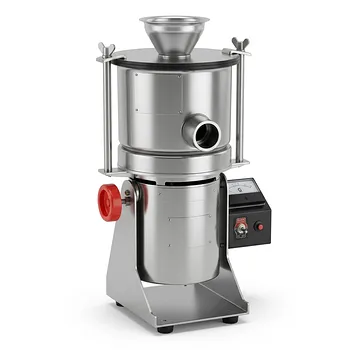
Laboratory Ultrafine Impact and Airflow Grinder for Precise Particle Size Control
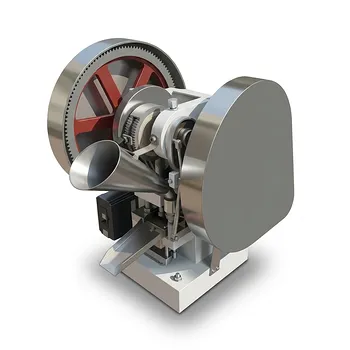
6 Ton Variable Frequency Single Punch Tablet Press
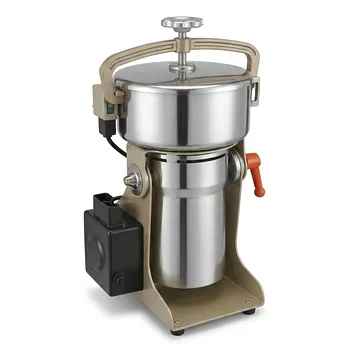
Multifunctional High Efficiency High Speed Laboratory Grinder
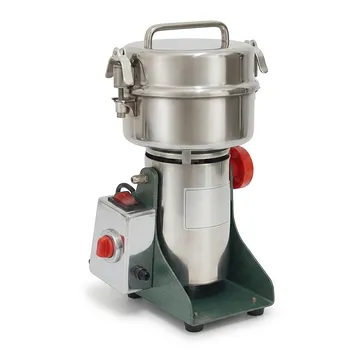
Small High Speed Grinder for Laboratory Sample Preparation
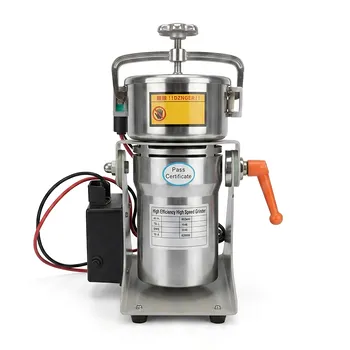
High Efficiency High Speed Grinder Laboratory Mill 1300W 25000rpm
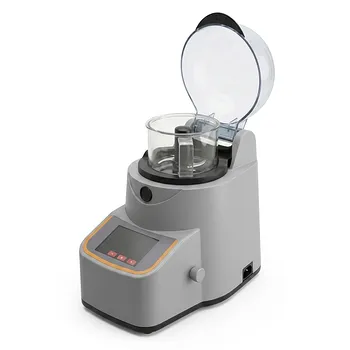
Industrial Knife Mill for Food and Biological Sample Preparation High Speed Laboratory Homogenizer
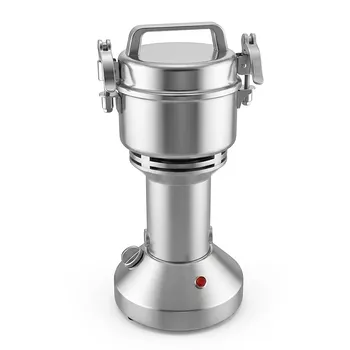
Small High Speed Upright Grinder for Laboratory Sample Preparation
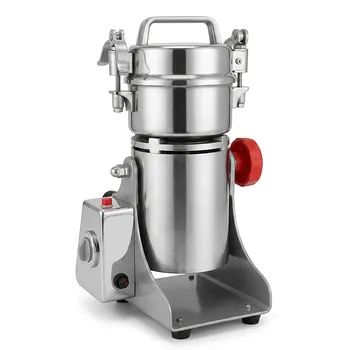
Industrial High Speed Small Sample Pulverizer Swing Type Laboratory Grinder for Powder Processing
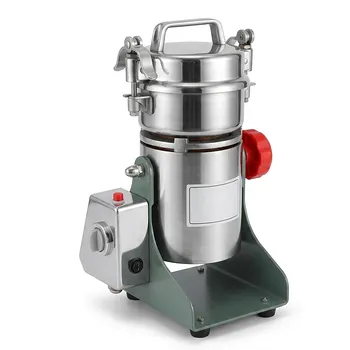
High Speed Swing Type Laboratory Pulverizer for Fine Powder Grinding and Sample Preparation
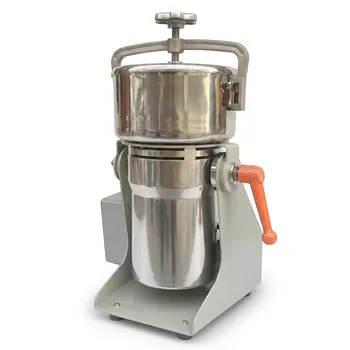
High Speed Laboratory Grinder Efficient Stainless Steel Powder Pulverizer Universal Material Science Mill for Sample Preparation
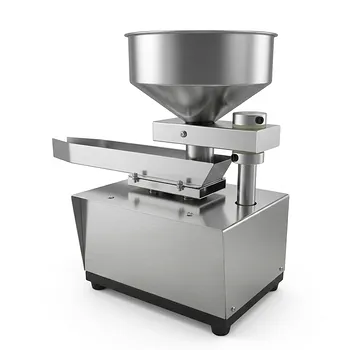
Automatic Vibrating Powder Feeder for Laboratory Material Processing Precision Vibratory Hopper Feeder for Granular and Powder Material Handling Industrial Grade Vibrating Tray Feeder for Consistent Material Sample Preparation
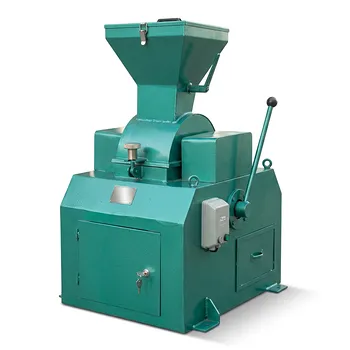
Laboratory Sealed Hammer Blade Crusher Divider for High Hardness Sample Preparation
Continuous Feeding Grinder High Efficiency Pulverizer for Lab Sample Preparation