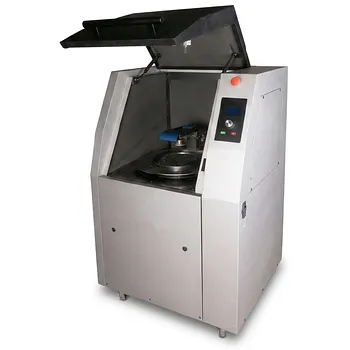
Why Use Tungsten Steel Mills for Ancient Ceramic Analysis? Ensure High-Purity Results and XRD Precision
Updated 4 months ago
High-hardness tungsten steel mills are the preferred choice for pulverizing ancient ceramics due to their extreme wear resistance and ability to produce high-purity, micron-sized powders. These mills efficiently break down hard ceramic matrices into a uniform state without introducing significant metallic contamination from the grinding media. This level of purity and refinement is essential for sensitive analytical techniques like XRD and FT-IR, where foreign particles or uneven grain sizes could skew mineralogical data.
The use of tungsten steel mills ensures that ancient ceramic samples are refined into ultra-fine powders while maintaining the integrity of their chemical and mineralogical profile. This process balances rapid pulverization with minimal contamination, which is critical for accurate scientific analysis.
The Mechanics of Material Refinement
Superior Wear Resistance and Impact Strength
Tungsten steel is engineered to withstand the abrasive nature of fired clay and mineral inclusions found in ancient ceramics. Its high impact strength allows it to crush hard fragments quickly without the grinding media itself degrading into the sample.
Achieving Micron-Sized Particle Uniformity
Effective mineral analysis requires samples to be reduced to micron-sized powder to ensure the analytical beam interacts with a representative volume. The efficiency of tungsten steel ensures that even the hardest inclusions are pulverized to the same degree as the softer clay matrix.
High Sample Representativeness
By refining the entire fragment into a fine, homogenous powder, the mill ensures that the small portion used in testing accurately represents the whole object. This homogenization is vital when dealing with ancient ceramics that may have varied compositions across a single shard.
Protecting Analytical Integrity
Minimizing Sample Contamination
One of the greatest risks in mineral analysis is cross-contamination from the grinding equipment itself. Because tungsten steel is incredibly hard, the amount of material shed into the ceramic powder is negligible, preserving the original chemical signature of the artifact.
Enhancing XRD and FT-IR Results
Methods like X-ray diffraction (XRD) depend on random crystal orientation, which is only possible with very fine, high-purity powders. A high-purity sample ensures that the resulting spectra reflect the ancient ceramic’s true composition rather than artifacts introduced during the grinding process.
Maintaining Chemical Purity
In Fourier-transform infrared (FT-IR) spectroscopy, even minor impurities can create "noise" that masks the functional groups of the minerals. Tungsten steel provides the high-purity environment necessary to capture clear, actionable data from precious archaeological samples.
Understanding the Trade-offs
Cost and Maintenance Considerations
Tungsten steel components are significantly more expensive than standard stainless steel or ceramic grinding media. While durable, these mills require specialized cleaning protocols to prevent carry-over between different ancient samples, as their density can make fine dust difficult to remove.
Potential for Excessive Heat
The high-energy impact required for rapid pulverization can generate heat, which might affect certain volatile components in rare cases. Researchers must balance grinding speed with the need to maintain the thermal stability of the mineral phases being studied.
Applying This to Your Research
Choosing the right pulverization method depends on the hardness of your sample and your final analytical goals.
- If your primary focus is mineral phase identification (XRD): Use tungsten steel to ensure the fine, uniform particle size necessary for high-resolution diffraction patterns and random orientation.
- If your primary focus is trace element purity: Prioritize tungsten steel to minimize the introduction of iron, chromium, or nickel contaminants often found in standard stainless steel mills.
Ultimately, the use of high-hardness tungsten steel is a technical necessity for researchers who require absolute precision and representativeness in ancient material science.
Summary Table:
| Key Feature | Benefit for Ancient Ceramics | Impact on Analytical Results |
|---|---|---|
| Extreme Hardness | Resists abrasion from hard mineral inclusions | Prevents metallic contamination in samples |
| High Impact Strength | Rapidly reduces fragments to micron-size | Ensures random crystal orientation for XRD |
| Superior Density | Efficient homogenization of varied shards | Improves sample representativeness and repeatability |
| Wear Resistance | Long-lasting grinding media integrity | Maintains chemical purity for sensitive FT-IR scans |
Elevate Your Material Research with Professional Sample Preparation
Precise mineralogical analysis demands high-purity samples free from contamination. At [Company Name], we provide complete laboratory sample preparation solutions specifically engineered for material science and archaeology.
Whether you need to pulverize hard ancient ceramics or process advanced powders, our extensive equipment line ensures industry-leading results:
- Advanced Milling: Planetary ball mills, jet mills, and disc mills featuring high-hardness tungsten steel components.
- Size Reduction: Heavy-duty jaw and roll crushers for initial fragmentation.
- Classification: Precision sieve shakers (vibratory and air-jet) for uniform particle distribution.
- Compaction Excellence: A full spectrum of hydraulic presses, including Cold/Warm Isostatic Presses (CIP/WIP), XRF pellet presses, and vacuum hot presses.
Don't let sample impurities skew your data. Contact our technical experts today to discuss how our powder processing and compaction solutions can enhance your research accuracy and laboratory efficiency.
References
- Ki Suk Park, Sabine Reinhold. Pyrometamorphic process of ceramic composite materials in pottery production in the Bronze/Iron Age of the Northern Caucasus (Russia). DOI: 10.1038/s41598-019-47228-y
Mentioned Products
- Laboratory Disc Mill for Fine Sample Preparation of Hard and Brittle Materials
- Heavy Metal Free RoHS WEEE Testing Sample Pretreatment Cutting Mill Industrial Solid Waste Grinder for Plastics and Electronics
- Laboratory Disc Mill for Ore and Mineral Sample Preparation
- Vibratory Disc Mill for Rapid Fine Grinding and High Throughput Sample Preparation of Hard and Brittle Materials
- Cross Beater Mill for Brittle Material Grinding and Continuous Fine Crushing Industrial Sample Preparation
People Also Ask
- What is the primary function of a laboratory disc mill for oyster shells? Boost Reactivity & Analytical Precision
- What is the purpose of using a laboratory mill to grind dried precipitates? Optimize TiO2/AuNRs Catalyst Homogeneity
- What role does a laboratory mill play in the study of lignite coal co-combustion? Optimizing Fuel Blends and Reactivity
- What is the function of a laboratory mill in Cassia tora L. seed analysis? Master Precision Thermal Data Prep.
- What function does a laboratory mill serve in corn starch saccharification experiments? Optimize Surface Area & Reactions

Tech Team · PowderPreparation
Last updated on May 14, 2026
Related Products
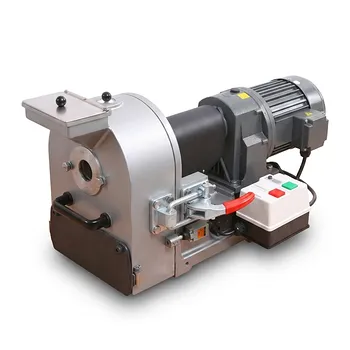
Laboratory Disc Mill for Fine Sample Preparation of Hard and Brittle Materials
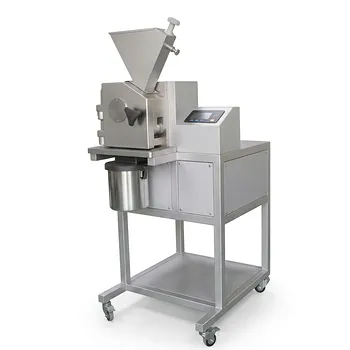
Heavy Metal Free RoHS WEEE Testing Sample Pretreatment Cutting Mill Industrial Solid Waste Grinder for Plastics and Electronics
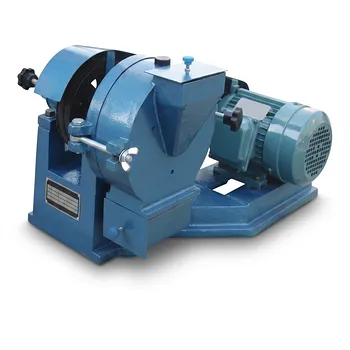
Laboratory Disc Mill for Ore and Mineral Sample Preparation
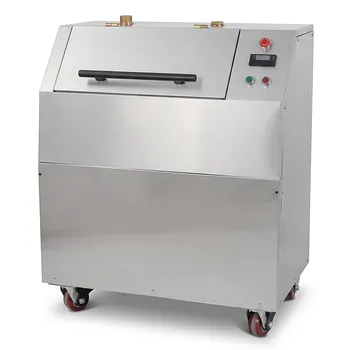
Vibratory Disc Mill for Rapid Fine Grinding and High Throughput Sample Preparation of Hard and Brittle Materials
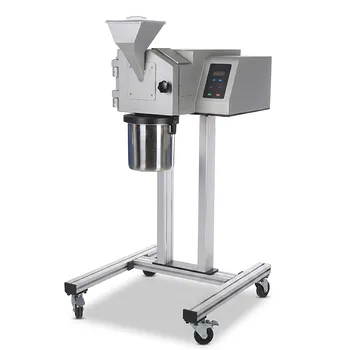
Cross Beater Mill for Brittle Material Grinding and Continuous Fine Crushing Industrial Sample Preparation
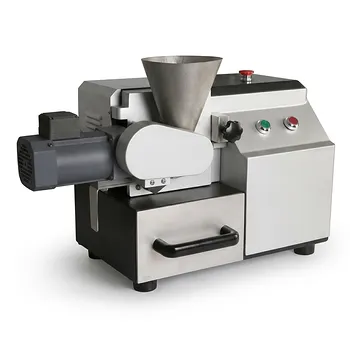
Laboratory Hammer Mill for Coal Quality Analysis and Brittle Mineral Grinding
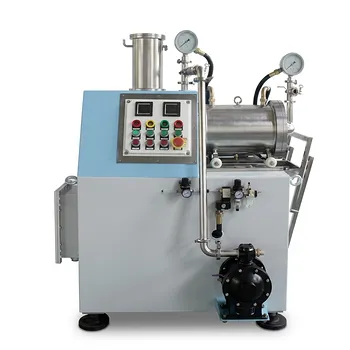
Horizontal Bead Mill for Nanoscale Grinding and Advanced Material Powder Processing
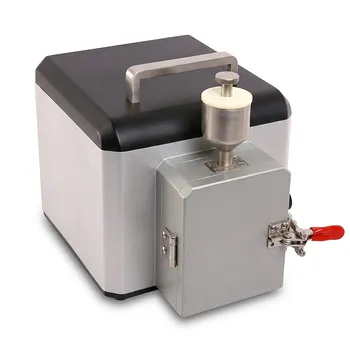
Portable Cutting Mill for Laboratory Sample Preparation and RoHS WEEE Compliance Testing
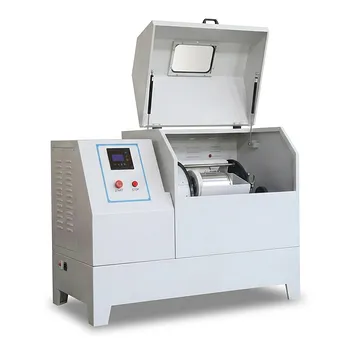
Heavy Duty Horizontal Planetary Ball Mill for Efficient Industrial Grinding and Sample Preparation