Why is a Cold Isostatic Press (CIP) used for advanced ceramics? Ensure Uniform Density & High Strength in AlN & SiC
Updated 4 months ago
A Cold Isostatic Press (CIP) is used because it applies equal, isotropic pressure from all directions, effectively eliminating internal density gradients within the ceramic powder. This process ensures that advanced ceramics like aluminum nitride (AlN) and silicon carbide (SiC) achieve a uniform microstructure, which prevents warping, cracking, and non-uniform shrinkage during the high-temperature sintering process.
Core Takeaway: By utilizing a liquid medium to apply uniform pressure (up to 300 MPa), CIP creates a high-density "green body" with consistent internal stress. This uniformity is the critical foundation required to produce high-strength, defect-free ceramic components capable of withstanding extreme thermal and mechanical environments.
The Mechanics of Isotropic Pressure
Eliminating Internal Density Gradients
Traditional uniaxial pressing applies force along a single axis, which often leads to uneven compaction due to friction between the powder and the mold walls. Cold Isostatic Pressing (CIP) overcomes this by using a liquid medium to transmit pressure equally to all surfaces of the component.
This isotropic pressure ensures that the density is consistent throughout the entire volume of the material. For advanced ceramics like AlN and SiC, removing these "soft spots" is essential for maintaining structural integrity.
Achieving High Green Density
CIP can reach extremely high pressures, often exceeding 200 to 300 MPa, which forces the rearrangement of particles into a highly compacted state. This high "green density" reduces the volume of internal pores before the material ever enters a furnace.
The result is a dense green body that requires less volume reduction during sintering. This density serves as the microstructural foundation for the final product's mechanical properties.
Impact on the Sintering Process
Preventing Deformation and Warping
Advanced ceramics like Silicon Carbide often require sintering temperatures exceeding 1900°C. At these temperatures, any variation in internal density will cause the material to shrink at different rates, leading to significant warping or dimensional distortion.
Because CIP ensures uniform density, the material shrinks symmetrically during sintering. This allows manufacturers to produce large-scale components or complex geometries that remain within tight dimensional tolerances.
Mitigating Internal Stress and Micro-cracks
Non-uniform density in a pressed part creates internal stress concentrations that often manifest as micro-cracks during the heating or cooling phases of sintering. CIP eliminates these stress imbalances by ensuring the particles are packed uniformly.
By preventing these microscopic flaws, CIP significantly enhances the mechanical strength and fracture toughness of the final ceramic part. This is particularly vital for AlN used in high-power electronics where thermal management and reliability are paramount.
Advanced Applications and Geometry
Facilitating Complex and Large-Scale Shapes
Unlike rigid die pressing, which is limited to relatively simple geometries, CIP is essential for manufacturing large-sized or complex-shaped components. This includes items like silicon nitride crucibles or large structural SiC parts.
The use of flexible molds in a liquid medium allows the pressure to reach deep into intricate features. This ensures that even complex parts have the same structural density as simple blocks.
Post-Processing for Additive Manufacturing
Ceramic parts produced via Three-Dimensional Printing (3DP) often suffer from high porosity and low initial density. CIP is frequently used as a post-processing step to compress these 3D-printed green bodies.
The isotropic pressure forces the rearrangement of the printed layers, significantly increasing green density and ensuring the final sintered part meets high-performance standards.
Understanding the Trade-offs
Process Complexity and Tooling
While CIP provides superior material properties, it involves a more complex workflow than standard dry pressing. It requires flexible elastomer molds and a liquid containment system, which can increase the initial setup time.
Dimensional Precision and Machining
Because the molds used in CIP are flexible, the "as-pressed" dimensions are generally less precise than those achieved with rigid metal dies. This often necessitates secondary machining in the green state or after sintering to reach final specifications.
Cost and Cycle Time
CIP is typically a batch process, which can be slower and more expensive than high-speed uniaxial pressing. However, for high-performance ceramics where failure is not an option, the increase in reliability and material quality justifies the higher production costs.
How to Apply This to Your Project
Making the Right Choice for Your Goal
- If your primary focus is maximum mechanical strength: Utilize CIP to ensure the elimination of micro-cracks and to achieve near-theoretical density in the final sintered part.
- If your primary focus is large or complex geometries: Use CIP with flexible tooling to ensure uniform compaction that cannot be achieved with traditional axial die pressing.
- If your primary focus is high-volume production of simple shapes: Consider if standard uniaxial pressing meets your density requirements before investing in the CIP process.
- If your primary focus is additive manufacturing (3DP): Incorporate CIP as a mandatory post-processing step to consolidate layers and remove porosity before sintering.
Cold Isostatic Pressing is the definitive solution for ensuring the structural homogeneity required for high-performance advanced ceramics.
Summary Table:
| Feature | Cold Isostatic Pressing (CIP) | Impact on AlN & SiC |
|---|---|---|
| Pressure Type | Isotropic (Equal from all directions) | Eliminates internal density gradients and soft spots |
| Green Density | High (Up to 300 MPa) | Reduces porosity and volume shrinkage during sintering |
| Sintering Result | Symmetrical Shrinkage | Prevents warping, cracking, and dimensional distortion |
| Shape Capability | Complex and Large Geometries | Enables production of crucibles and intricate components |
| Microstructure | Homogeneous Particle Packing | Enhances mechanical strength and fracture toughness |
Elevate Your Material Performance with Professional Sample Prep
Are you looking to eliminate defects and achieve near-theoretical density in your advanced ceramics? At [Brand Name], we provide complete laboratory sample preparation solutions for material science.
We specialize in high-performance powder processing and compaction equipment tailored for research and industrial production. Our extensive lines include:
- Compaction Solutions: Cold/Warm Isostatic Presses (CIP/WIP), standard lab presses, XRF pellet presses, and vacuum hot presses.
- Powder Processing: Crushers (jaw/roll), liquid nitrogen cryogenic grinders, and advanced mills (planetary ball, jet, rotor).
- Refinement & Mixing: Sieve shakers, powder mixers, and defoaming mixers.
Whether you are working with aluminum nitride, silicon carbide, or innovative 3D-printed ceramics, our team is ready to help you find the right equipment to ensure structural integrity and reliability.
Contact our technical experts today to optimize your lab workflow!
References
- Kai Li, Lucun Guo. Normalized evaluation of thermal shock resistance for ceramic materials. DOI: 10.1007/s40145-014-0118-9
Mentioned Products
- 6-Ton Small Single-Punch Tablet Press — Laboratory Powder & Granule Tableting Equipment / Tablet Forming Machine
- Manual Tablet Press with Dual Scale Pressure Gauge for Pharmaceutical Food Chemical Laboratory Sample Preparation
- 5 Ton Single Punch Tablet Press Laboratory Small Batch Production
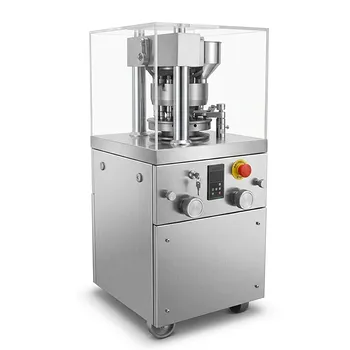
- Ordinary Type Rotary Tablet Press for Pharmaceutical Chemical Food Electronic Industries
People Also Ask
- What is the function of a laboratory press in Cr-Ti alloy evaluation? Quantify Fracture Stress & Strength
- What is the function of a laboratory press in assessing the hydrophobic performance of modified vermiculite fillers?
- What is the core function of a laboratory press in the forming of ceramic filter element green bodies? Maximize Density.
- What is the function of a laboratory press in the preparation of ceramic feed rods? Master Density and Precision
- Why is vacuum sealing and flexible packaging necessary for Aluminum Titanate powders during CIP? Ensure Peak Density

Tech Team · PowderPreparation
Last updated on May 14, 2026
Related Products
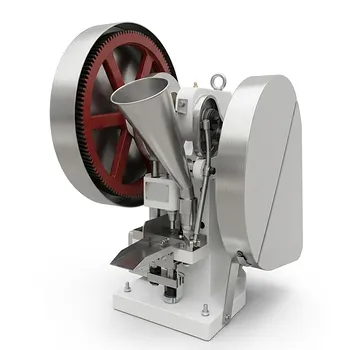
6-Ton Small Single-Punch Tablet Press — Laboratory Powder & Granule Tableting Equipment / Tablet Forming Machine
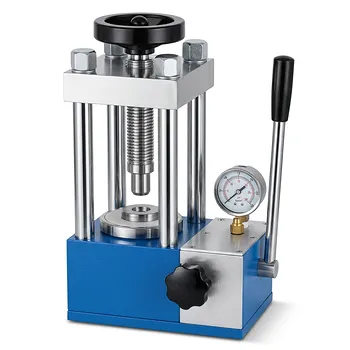
Manual Tablet Press with Dual Scale Pressure Gauge for Pharmaceutical Food Chemical Laboratory Sample Preparation
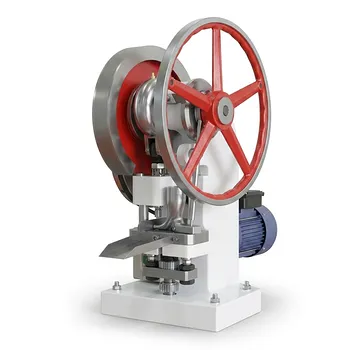
5 Ton Single Punch Tablet Press Laboratory Small Batch Production